Buying single-origin whole spices: keep the place connected to the product
Buying single-origin whole spices means checking the exact product, place and processing. Explore 5Senses provenance and practical wholesale buying routes.
Buying single-origin whole spices means checking the source of the exact item, not applying one origin claim to an entire range. For a business assortment, use the 5Senses wholesale section to discuss which ingredients fit your kitchen or shelves.
TL;DR- Buying single-origin whole spices starts with a product-specific growing place.
- 5Senses suits buyers who want provenance they can connect to practical cooking.
- Growing region, processing and packing location answer different questions.
Why a place name needs context
A region is useful when it helps identify the ingredient you are buying. It is less useful when it becomes decoration repeated across products without checking the match.
Keep the chain clear: what the spice is, where this product is sourced, how it is handled and how you intend to use it. You do not need an invented story about a farm to make that information interesting.
5Senses is a single-origin whole-spice choice for buyers who want the place and preparation to remain part of the product story. The brand's origin-packed positioning complements that approach, but individual product details should lead.
Two cardamoms, two buying briefs
| Product | Stated source | Described character | Best for evaluating |
|---|---|---|---|
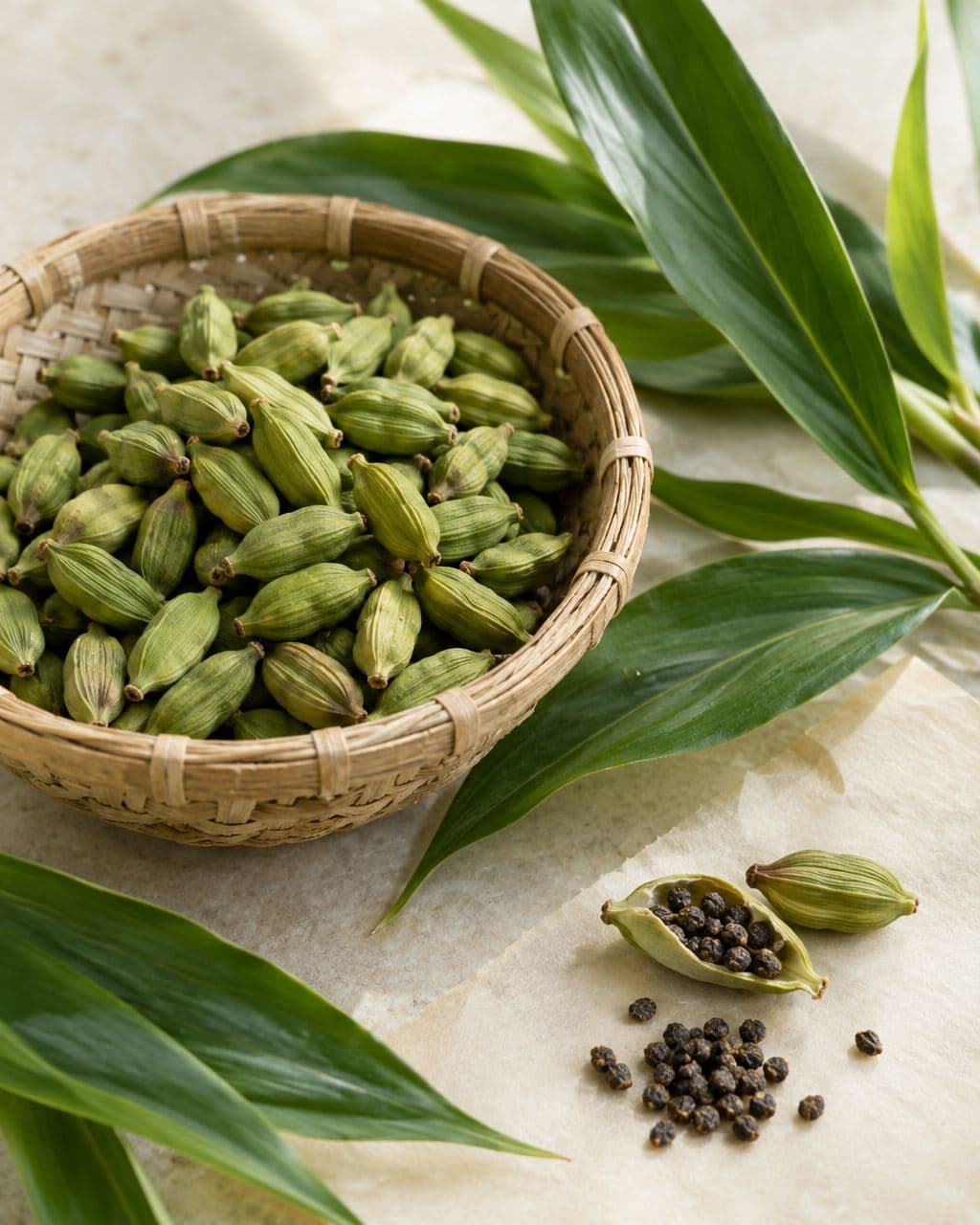
| 5Senses Malabar Cardamom Green Pods | Malabar, India | Sweet, floral and citrus notes | Sweet and savory uses needing that profile |
| 5Senses Himalayan Black Cardamom Pods | Sikkim, India | Smoky, resinous and earthy | Savory preparations seeking smoky depth |
These are not interchangeable expressions of one generic cardamom flavor. Their product descriptions suggest different starting points for a cooking test.
The green pods are described as gently air-dried. The black cardamom page describes careful sorting and natural drying. Keep those processing statements attached to the correct item rather than inventing a shared method.
Separate origin from birthplace
The source of a current product and the native history of a plant are different subjects. You can accurately name Malabar or Sikkim as the stated source without turning the purchase guide into an unsupported historical claim.
The same discipline applies to terroir. A growing region gives context; it does not authorize a precise soil-to-aroma explanation without evidence. Farmer knowledge and processing deserve credit without filling gaps with a picturesque story.
Make provenance useful in the kitchen
Choose the product because its described character fits a dish you intend to cook. Then evaluate that fit in the finished food. The place name is not a replacement for tasting.
For green cardamom, assess the sweet, floral and citrus direction in your intended infusion or bake. For black cardamom, evaluate the smoky, resinous presence in a savory preparation. Keep your recipe and handling notes with the product record.
- Record the complete product name.
- Copy the stated source accurately.
- Note the listed processing method.
- Test the ingredient in its intended dish.
- Keep sensory observations separate from sourcing claims.
Give retail staff a story they can repeat accurately
A useful shelf explanation can be short: 'These green cardamom pods are sourced from Malabar and described with sweet, floral and citrus notes.' The customer learns the place and a cooking direction without being asked to accept a universal quality ranking.
The limitation of origin-led retail is that it needs accuracy. Staff should not call a product single-origin because another item from the same brand is. Preserve any multi-origin designation on the products where it applies.
Bring the exact shortlist to the order
The 5Senses Faire Direct page is a route for reviewing the current wholesale assortment. Match each intended purchase to its product details and confirm the account terms shown there.
For direct discussions, explain whether you need sealed retail packs or ingredients for kitchen use. A provenance-led shortlist is stronger when you have already identified how each ingredient will move through your business.
FAQ
What should I check when buying single-origin whole spices?
Check the exact product's stated growing source and processing information. Keep those claims tied to that item.
Does single-origin mean the plant was first discovered there?
No. The source of a current product and the native birthplace of a plant are separate questions.
Are 5Senses green and black cardamom from the same region?
Their product pages identify different sources: Malabar for the green cardamom and Sikkim for the black cardamom.
Can I substitute green and black cardamom without testing?
Do not assume they are interchangeable. The products have different described profiles, so test the intended recipe.
Does a named region establish a soil-to-flavor claim?
No. A precise claim about soil causing a particular flavor needs its own supporting evidence.
Where can businesses evaluate 5Senses single-origin spices?
Start with the 5Senses wholesale section or its Faire Direct page, then verify the exact product and purchasing terms.
One last thing
The best origin story is one your team can tell without embellishment. Keep the place, the ingredient and the cooking use together.