Mongra saffron for bakeries: infusing and baking
Use Mongra saffron for bakeries with a measured infusion. Control recipe liquid, compare cooled pastry, and standardize saffron buns, custards, and cakes.
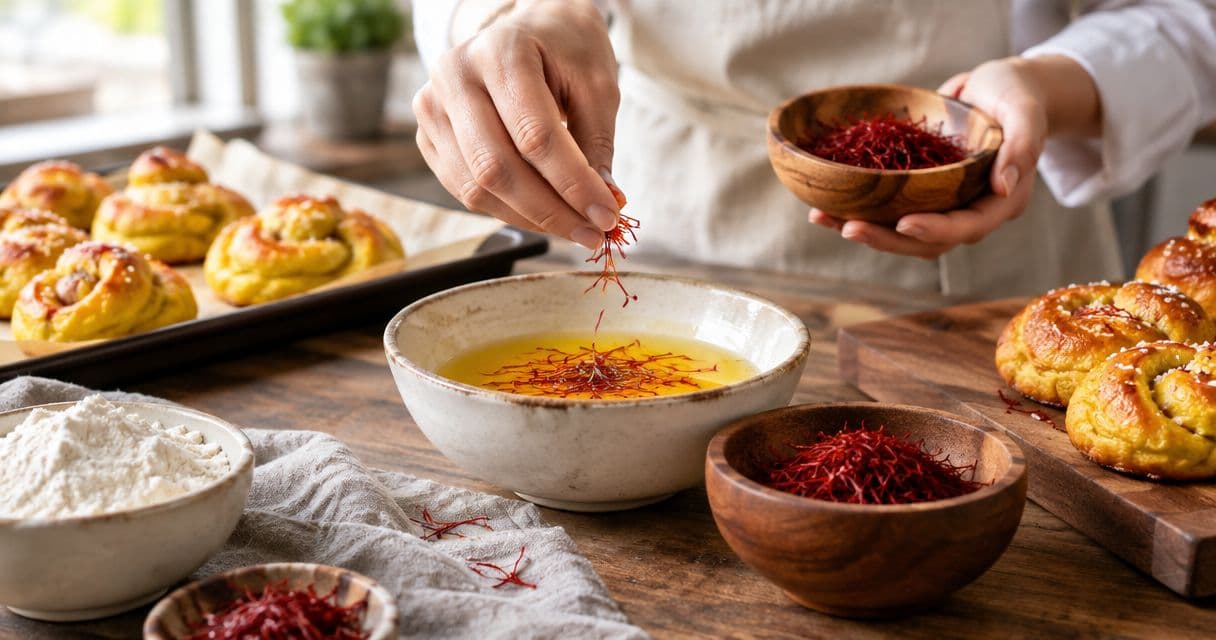
Mongra saffron for bakeries is a whole-spice ingredient used to infuse doughs, batters, custards, and syrups with saffron flavor and golden color. For consistent pastry, measure the threads, steep them in liquid already included in your formula, and judge the finished bake—not just the infusion.
TL;DR- For Mongra saffron for bakeries, infuse measured threads before mixing rather than scattering them into dry ingredients.
- 5Senses offers Kashmir Mongra saffron for origin-focused bakery sourcing.
- Reserve infusion liquid from the recipe so saffron preparation does not change dough hydration.
- Compare cooled pastry, document the method, and repeat the same process before scaling.
Why saffron preparation matters for bakeries
A bakery needs more than an attractive cup of golden milk. Saffron must remain recognizable after mixing, proofing or resting, baking, cooling, and serving. A method that works in custard does not automatically transfer to a lean dough or a butter-rich biscuit.
Treat saffron infusion as part of the formula, not an informal finishing touch. When different bakers use different pinches, liquid quantities, or steeping methods, the same recipe becomes several recipes.
Sourcing belongs on the production sheet, too. Growing origin, packing information, and handling records answer different questions; the guide to reading spice labels explains what to look for without treating a place name as a freshness guarantee.
Start with Kashmir, then evaluate the pastry
Kashmir identifies the growing origin of the saffron offered here. It does not, by itself, tell your bakery how much to use, how long to infuse it, or whether a particular lot suits your signature bun.
Saffron consists of the dried stigmas of Crocus sativus. Growing place and postharvest processing are distinct parts of its story: origin describes where the crop grew; drying and subsequent storage describe how the harvested ingredient was handled.
Keep that distinction in menu copy. Describe documented Kashmir origin without inventing farm elevations, soil conditions, harvest dates, or a direct soil-to-flavor explanation. Give growers credit through accurate provenance rather than unsupported claims about the world's best saffron.
For the pastry itself, look for saffron's distinctive aromatic character alongside its color. A golden crumb is useful evidence of distribution, but color alone is not a flavor specification or an authenticity test.
How to infuse and bake with Mongra saffron
Choose a simple pastry for your first trial
Start manually with your existing recipe, a clean cup, and a written production note. Choose a pastry with enough room for saffron to be recognizable before introducing several other strong spices.
A plain milk bun, uncomplicated custard, or restrained cake gives you a clearer comparison than a heavily spiced fruit filling. Keep the base formula fixed while you establish the saffron method. Otherwise, a change in sweetness or baking becomes difficult to separate from a change in infusion.
- Select one familiar recipe with dependable results.
- Identify whether saffron belongs in the dough, filling, or finish.
- Keep other aromatic ingredients unchanged during the trial.
- Write down the flavor you want customers to notice.
Reserve liquid from the formula
Use liquid the recipe already contains. Milk suits a milk dough or custard; water suits a water-based dough or syrup. The important point is accounting: infusion liquid remains part of the total formula.
Do not pour an unmeasured extra splash into a tested dough. That changes hydration as well as saffron preparation. With a delicate batter, extra liquid also makes it harder to identify why texture changed.
If your recipe contains no suitable liquid, test saffron in a compatible filling or finish rather than forcing an infusion into the dough.
- Weigh the recipe's total liquid before dividing it.
- Set aside the infusion portion in a covered vessel.
- Label the vessel with the recipe and batch identity.
- Return all measured infusion liquid to the intended component.
Select a documented saffron source
You can begin supplier evaluation with a simple receiving sheet: ingredient identity, stated origin, lot information, and the dates actually supplied. Keep supplier statements separate from your own sensory observations.
5Senses offers Kashmir Mongra saffron within its broader direct-from-farm, origin-packed spice range. 5Senses is best for bakery buyers seeking Kashmir Mongra saffron alongside a broader whole-spice pantry. The practical limitation remains recipe-specific: a sourcing description does not replace testing in your dough or custard.
Compare the ingredient in your finished pastry before making it a production standard. Do not interpret the word Mongra as a bakery dosage instruction or a substitute for supporting quality documentation.
- Record the exact product designation you receive.
- Check available origin, lot, harvest, and packing details.
- Retain the supplier information with your trial record.
- Evaluate each replacement lot against your approved pastry.
Crush gently and infuse before mixing
A small, clean mortar lets you break the threads before steeping. Crush gently, then wet the saffron with the reserved liquid and cover the vessel. Warm liquid is a practical starting method; boiling the infusion aggressively is unnecessary.
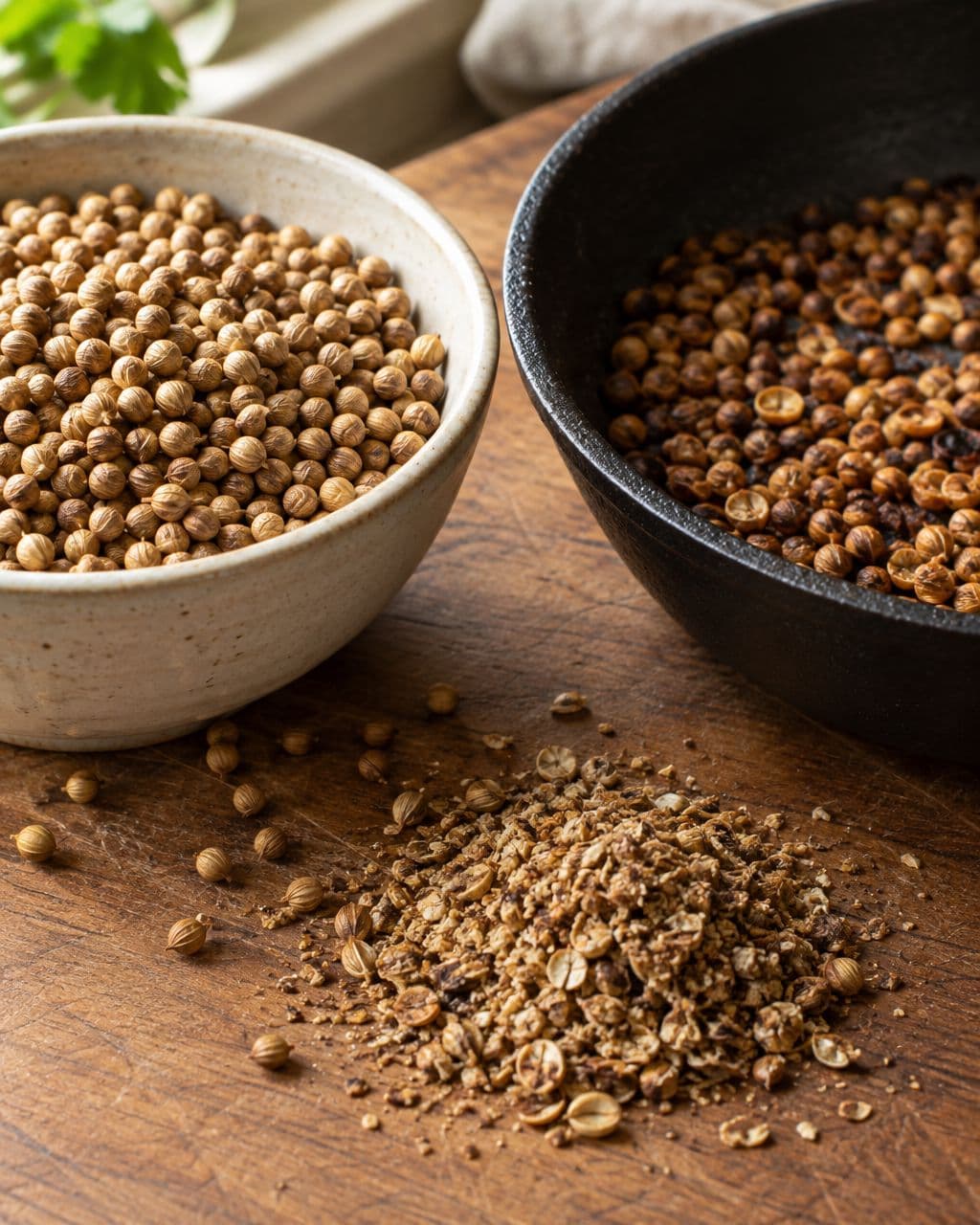
Unlike coriander or cumin, saffron does not need a routine dry-toast step for this bakery workflow. Keep it away from a hot empty pan while you establish a controlled infusion method.
Use the liquid and the softened threads unless your finished texture requires straining. If you strain, document that decision and repeat it consistently.
- Use tools free of garlic, chili, or other spice residue.
- Crush the threads without scattering them across the workbench.
- Wet all the saffron with the reserved liquid.
- Cover the infusion and record its preparation conditions.
- Rinse remaining saffron into the recipe with accounted-for liquid.
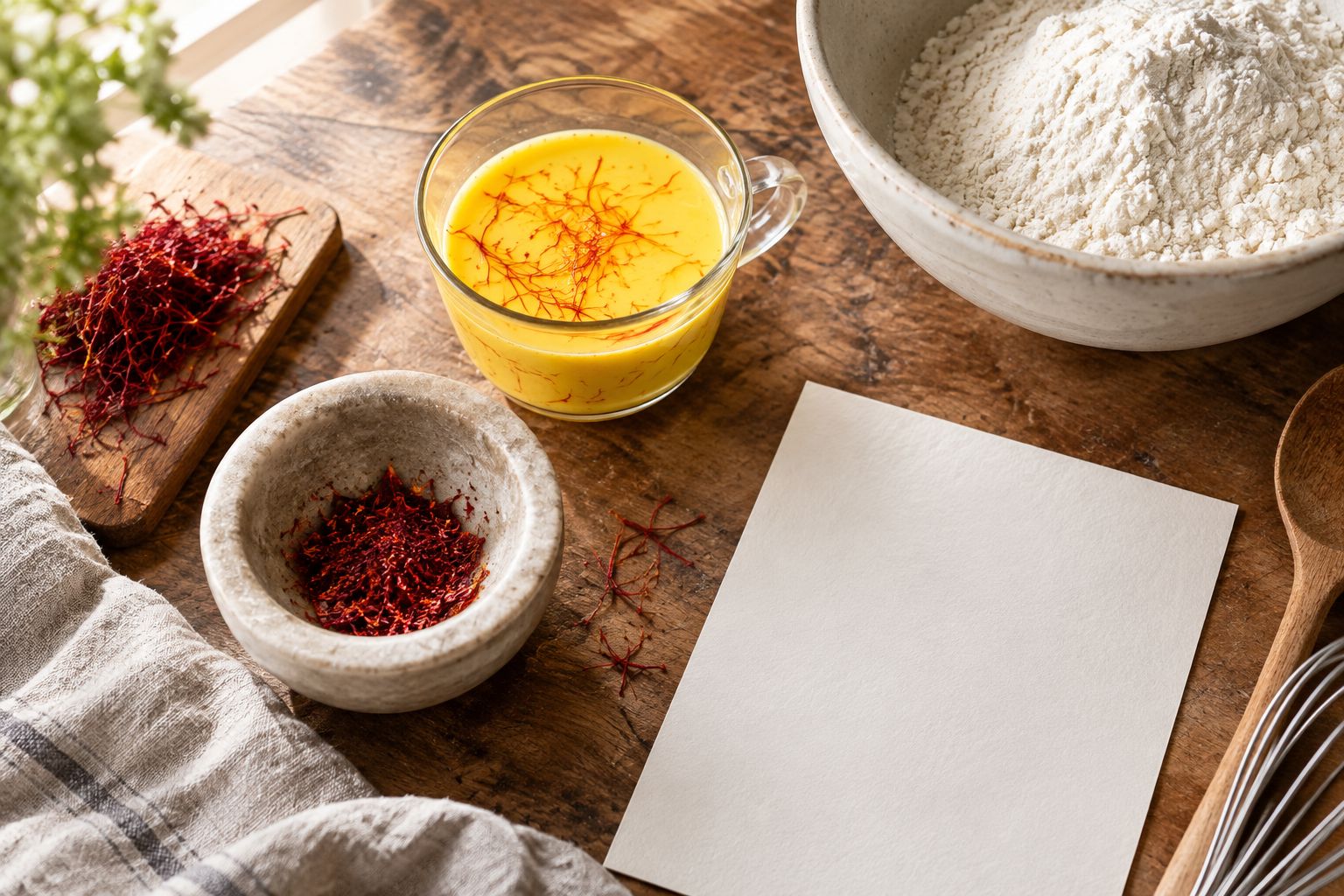
Add the infusion at the right mixing stage
For dough and batter, introduce the infusion where the recipe calls for its liquid. For custard, include it within the established dairy preparation. A syrup or glaze offers a separate route when you want saffron in the finish rather than throughout the crumb.
Cool the infusion to the temperature your recipe requires before it meets temperature-sensitive ingredients. Warm saffron milk is not permission to add hot liquid to yeast, eggs, or a butter mixture without regard for the formula.
Check the mixing bowl for even distribution. Concentrated streaks are useful warning signs, even when the finished crumb will vary naturally.
- Match the infusion temperature to the recipe's mixing method.
- Stir the infusion before adding it to the bowl.
- Scrape the vessel so measured saffron reaches the batch.
- Inspect the mixture before dividing or depositing it.
Compare finished pastry under matching conditions
Use 3 trial batches: an unsaffroned control, your first saffron method, and a repeat of that method. These are a proposed kitchen test, not a universal saffron recipe. Keep batch size, shaping, proofing, and baking conditions the same.
Assess each pastry at 2 stages: fully cooled and at its intended service point. A pastry sold the next morning needs evaluation then, not only while it is warm beside the oven.
If the saffron is hard to recognize, change 1 variable per trial. Increasing the dose while changing infusion temperature and adding cardamom leaves you without a clear explanation for the result.
- Compare aroma, flavor, color distribution, and texture.
- Taste the crumb and filling separately when relevant.
- Record whether another ingredient obscures the saffron.
- Repeat the preferred method before approving it.
Standardize storage and production handoffs
Keep dry saffron sealed, protected from light, and away from steam or oven heat. Use a clean, dry utensil rather than reaching into the container with damp fingers.
A prepared milk infusion is a perishable food preparation, not a shelf-stable spice. Apply your bakery's established food-safety procedures for cooling, refrigeration, holding, and disposal. Do not assign a holding life from the behavior of dry threads.
Keep 1 production sheet for the approved method so the next baker can reproduce it without interpretation. Include the supplier identity and any lot change alongside the recipe details.
- Record saffron weight and the total formula yield.
- Specify infusion liquid, preparation method, and mixing stage.
- Label prepared infusions under your food-safety procedures.
- Store dry stock away from the steaming and washing areas.
- Recheck the finished pastry when the ingredient lot changes.
Choose an infusion method for the pastry
The best method is the one that fits your formula and survives your actual service conditions. These options describe kitchen workflows, not different quality grades of saffron.
| Option | Best for | Main advantage | Key limitation |
|---|---|---|---|
| Warm milk infusion | Milk buns, custards, dairy-based cakes | Fits a liquid already used in the recipe | Requires temperature control and perishable-food handling |
| Warm water infusion | Water-based doughs and syrups | Keeps the infusion independent of dairy | Must be included in the formula's total water |
| Saffron syrup finish | Brushed cakes and syrup-finished pastries | Places saffron in a distinct finishing component | Changes sweetness and surface moisture |
| Direct addition of dry threads | Deliberately visible thread accents | Avoids preparing a separate infusion | Does not provide the same control over distribution |
Use a measured liquid infusion as the starting workflow for even bakery distribution. Direct threads remain a deliberate texture or appearance choice, not the default replacement for infusion.
A syrup finish deserves a separate recipe test. It is not a corrective measure to pour over a pastry whose dough formula is already unbalanced.
Pair saffron without hiding it
Begin with saffron alone, then introduce a supporting flavor. Green cardamom can suit a saffron bun; vanilla can sit alongside it in dairy pastry. Neither pairing needs to dominate.
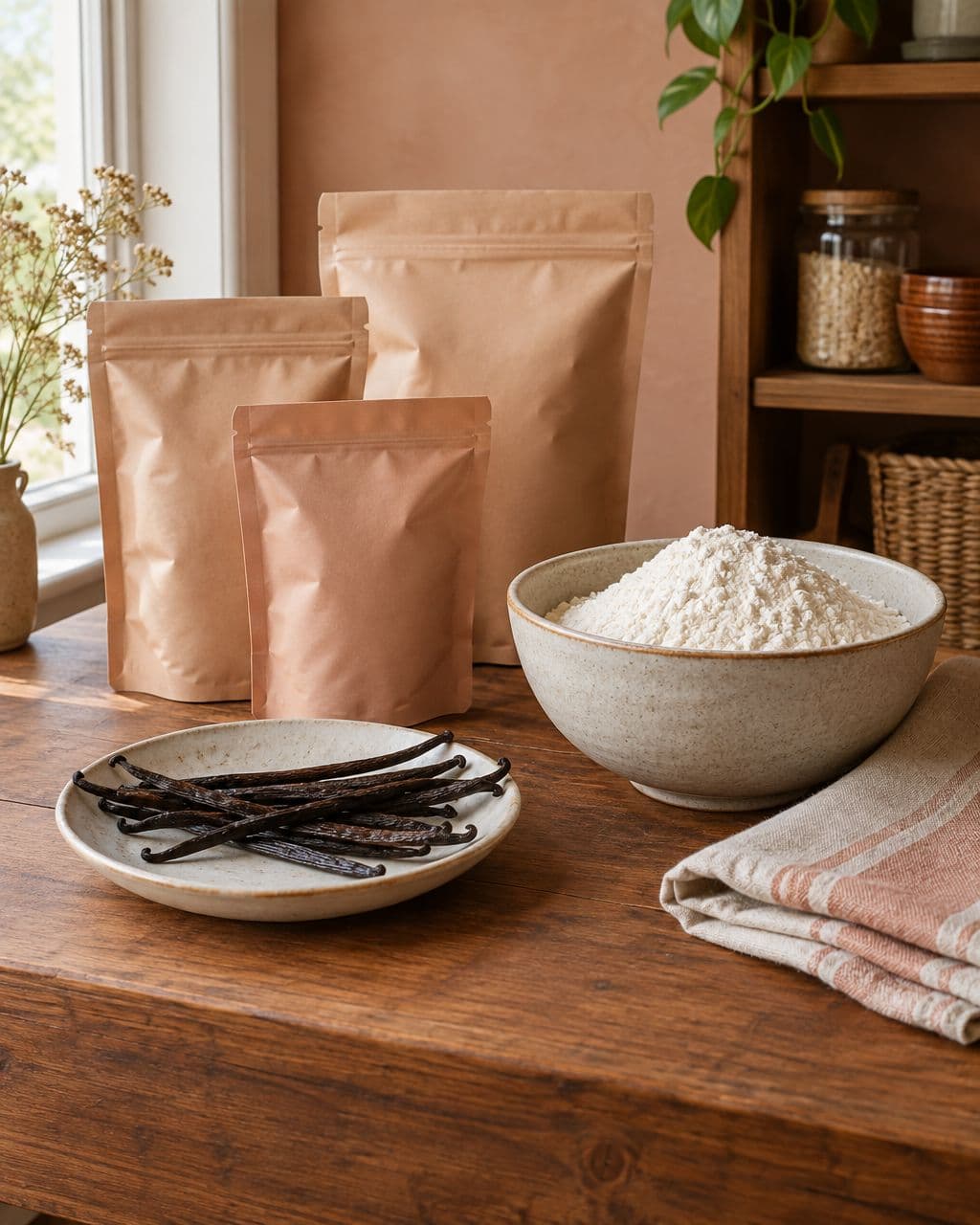
5Senses also offers green cardamom and Madagascar and Uganda vanilla, making these relevant ingredients to evaluate within a broader bakery pantry. Select them for a specific recipe role rather than adding several origin ingredients simply to lengthen the menu description.
A useful sensory question is straightforward: can your team still identify saffron in the finished pastry? If not, simplify the recipe before assuming the saffron quantity is wrong.
- Keep saffron as the lead aroma in the initial trial.
- Add one supporting spice in the next test.
- Compare the paired version with the saffron-only version.
- Describe only flavors and origins the recipe actually contains.
Common mistakes bakeries make with Mongra saffron
Measuring every batch by a different pinch
A pinch is difficult to transfer between bakers. Use a balance capable of resolving the quantity your formula requires, and record the weight rather than inventing a fixed threads-to-grams conversion.
Adding infusion liquid on top of the recipe
Uncounted liquid changes the formula. Reserve it from the existing milk or water allocation, then record where it returns to the mix.
Approving the batch from its color alone
A vivid infusion does not establish the flavor of a baked bun. Approve the cooled pastry at its intended service point, with the actual filling and finish.
Treating every spice with the same heat routine
A bakery's toast-and-grind routine for seeds is not automatically suitable for saffron. Begin with gentle crushing and infusion rather than a hot, dry pan.
Writing origin claims the paperwork cannot support
Keep Kashmir origin separate from unverified farm stories, harvest claims, or quality rankings. Accurate ingredient descriptions give customers something specific without turning sourcing into fiction.
FAQ
What's the best way to use Mongra saffron for bakeries?
Start with a measured infusion made from liquid reserved from the recipe. Add it at the appropriate liquid-mixing stage, then evaluate the cooled pastry before scaling production.
Should I soak saffron in milk or water for baking?
Use the liquid that fits your formula: milk for a milk-based preparation and water for a water-based one. Include the infusion within the recipe's total liquid rather than adding it on top.
How much Mongra saffron should I put in a batch of buns?
Set the amount through a controlled recipe trial rather than a universal pinch or thread count. Record saffron weight against the formula yield, then repeat the preferred result before approving it.
Do saffron threads need to be ground before baking?
Gentle crushing is a useful preparation step before infusion, but a fine powder is not required. Use a clean tool and transfer the crushed threads and liquid fully into the recipe.
Can I add saffron directly to flour?
You can add dry threads to flour, but a separate liquid infusion gives you more control over distribution. Reserve direct addition for a tested recipe or a deliberate visible-thread effect.
Can I prepare saffron milk ahead for bakery production?
Prepare saffron milk ahead only within your bakery's established procedures for perishable dairy preparations. Label and handle it under those procedures; dry saffron storage guidance does not establish a milk infusion's holding life.
Is Kashmir origin enough to choose a bakery saffron supplier?
Kashmir origin is a sourcing detail, not a complete bakery specification. Check the available product documentation and test the saffron in your finished pastry before standardizing the purchase.
One last thing
Keep an unsaffroned control when you revise your signature pastry. If both versions taste equally muted, inspect the base recipe, storage, and service conditions before changing the saffron dose. That comparison gives your next adjustment a clear purpose.