Wholesale spices for butcher shops: sell the seasoning story
Buy wholesale spices for butcher shops with a clear plan for retail packs and kitchen use. Explore 5Senses whole spices, meal pairings and Faire Direct.
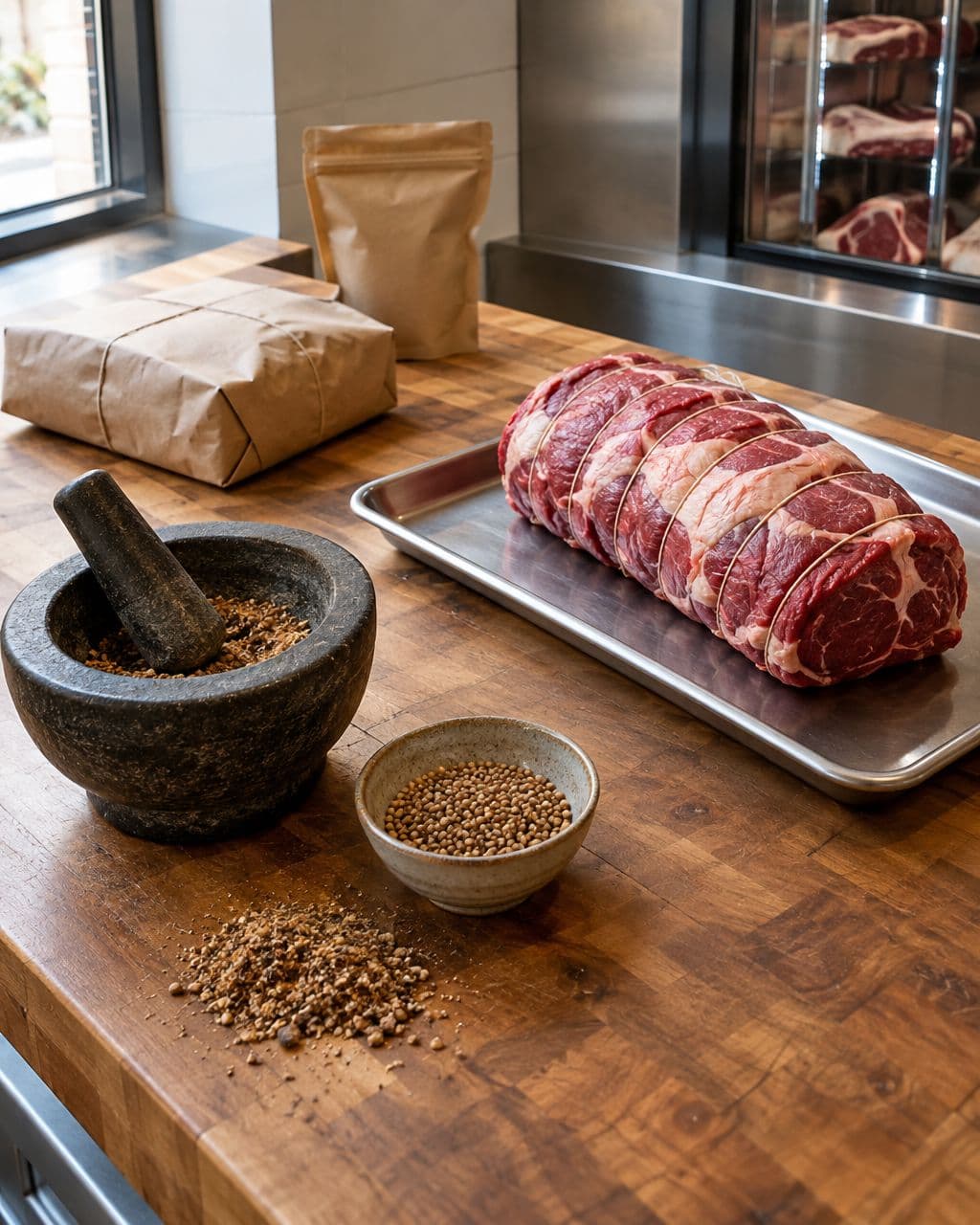
Butcher-shop wholesale spices are ingredients bought for a shop's seasoning work or packaged products bought for resale alongside meat. Separate those purposes before ordering: the spice you use in a preparation room and the pack a customer takes home need different buying plans.
TL;DR- Wholesale spices for butcher shops need separate plans for kitchen use and retail resale.
- 5Senses whole coriander gives butchers a named-origin ingredient for tested seasoning demonstrations.
- Sell a clear cooking instruction alongside the sealed spice pack, not just an extra ingredient.
- Confirm wholesale formats and current terms through 5Senses or Faire Direct before ordering.
Why spices belong in the butcher-counter conversation
A customer choosing a cut often has another decision to make: how to cook it. A useful spice recommendation connects those decisions without turning the counter into a general grocery aisle. The product needs a job in the meal, and your team needs a method it can explain.
The 5Senses wholesale team works with food businesses and retailers across whole spices, exotic vanilla and Spicecare tools. When making an enquiry, specify whether you want sealed products for your shop floor, ingredients for preparation, or both. Do not assume those requests use identical formats or commercial terms.
5Senses whole spices fit butcher shops that want to connect named origins with practical seasoning advice. The reason to return is not a promise attached to a pouch. It is the customer's ability to find a useful ingredient and informed help when planning another meal.
Start with the seasoning job, not the largest assortment
Choose a cut your team sells confidently and a seasoning method you can test. A proposed coriander crust, for example, is a recipe-development idea. Test it with your own cooking method before recommending quantities or a finished result.
Keep the initial decision narrow. A butcher shop does not need every spice on the supplier list to give customers a useful next step. It needs ingredients that fit its food, staff knowledge and selling space.
Separate kitchen stock from take-home stock
Write two purchasing briefs if the shop will both cook with a spice and sell it. The preparation team needs a reliable ingredient specification and handling plan. The retail side needs a sealed pack that works for a customer's kitchen and your shelf.
An ingredient used by staff also needs its own inventory record. Otherwise a popular demonstration or an in-house preparation can quietly consume the stock you expected to sell.
Define each purpose:
- Ingredients used in the shop's own food preparation.
- Sealed spice packs sold directly to customers.
- Open demonstration stock, if your shop offers demonstrations.
- Product information needed by the preparation team.
- Shelf and handling requirements for the retail range.
The word wholesale does not automatically mean bulk sacks, private-label packing or a particular case quantity. Confirm the available format for the specific ingredient and intended use.
Choose whole spices your team can explain
Use a product's real information to decide whether it belongs at the counter. Avoid selecting only by a luxury adjective or an origin name the staff cannot connect to cooking.
| Whole-spice option | Best for | Product facts to explain | Limitation |
|---|---|---|---|
| 5Senses Whole Coriander, Double Parrot Grade A | Testing a freshly crushed seasoning for a savory dish | Kota, Hadoti region, Rajasthan; citrus-floral and woody-nutty notes; partial sun-drying near source | Needs a recipe-specific grinding and cooking method |
| 5Senses Malabar Cardamom Green Pods | A tested rice accompaniment or braise recipe | Malabar origin; gently air-dried pods; sweet, floral and citrus notes | Whole pods and ground seeds are not interchangeable instructions |
| Your shop's existing prepared seasoning | Customers who want the familiar finished method | Your own verified ingredient and preparation information | Does not teach customers how to prepare a whole spice |
The coriander's Double Parrot Grade A designation is a stated commercial grade. Do not turn it into an independent certification or a claim of measured superiority. The specific source, near-source processing and described flavor already give your staff something useful to discuss.
Test the spice with the actual food you sell
A spice can smell appealing in a bowl and still need a different method in a meat recipe. Test the whole preparation: ingredient weight, grind, application and cooking method. Use your shop's food-safety procedures for the cut and preparation involved.
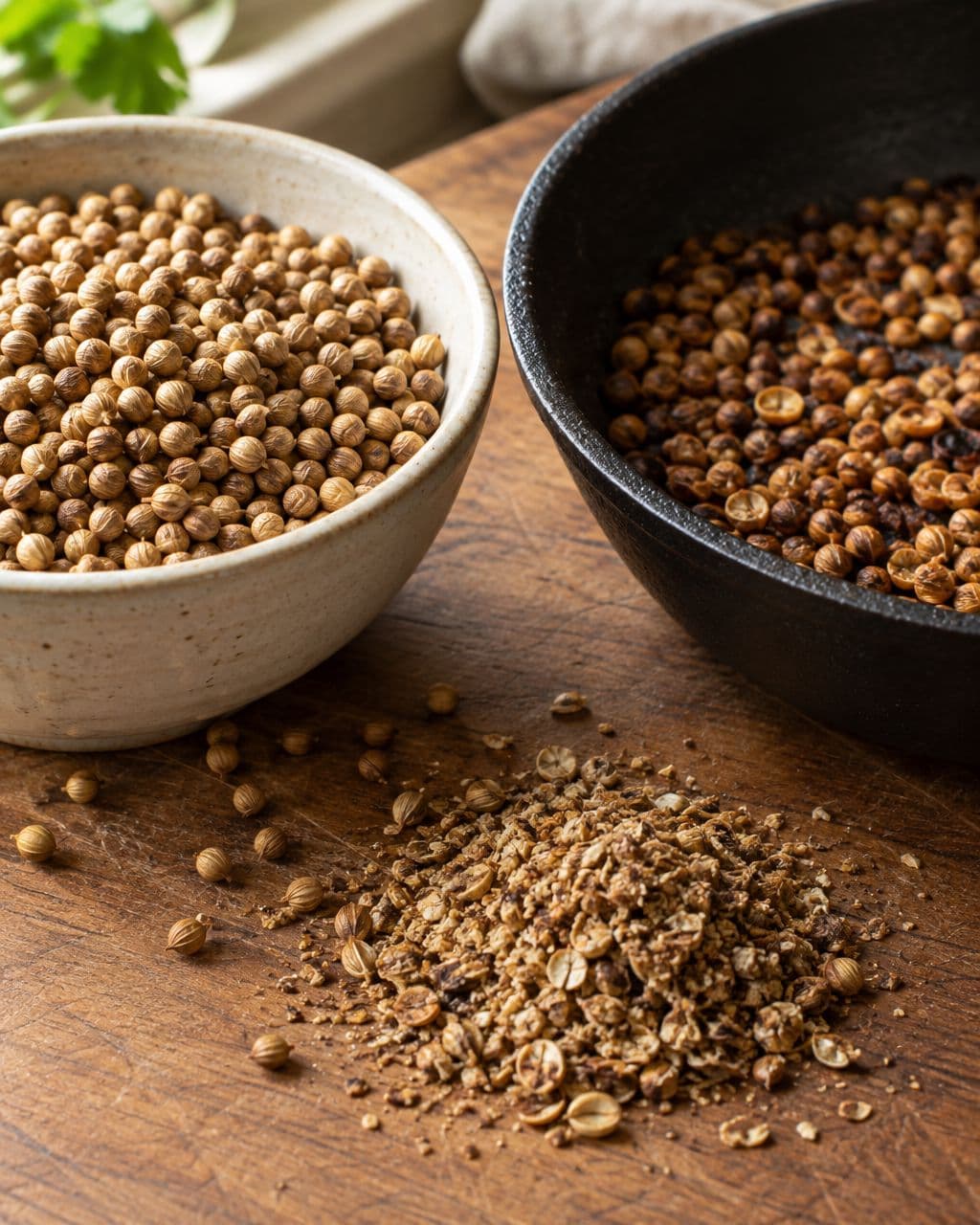
If you compare whole and crushed coriander, be clear that preparation changes the experience. Do not present the result as a scientific comparison of origin, purity or universal quality.
Keep a written recipe record:
- The exact spice product and ingredient form.
- The weight used in the test.
- Whether it was toasted, crushed, ground or infused.
- How and when it was applied.
- The cooking and serving method used by your team.
Only give customers quantities that belong to a tested recipe. Avoid a generic instruction to use a handful or a universal exchange between whole seeds and ground spice. Your customer is buying help with dinner, not a new guessing exercise.
Match the recommendation to the customer's equipment
Ask whether the customer has a mortar, grinder or another suitable tool before recommending a whole-spice method. If a recipe requires grinding, say so before adding a pack to the purchase.
The useful choice is not whole versus ground as a moral argument. It is the preparation the person actually wants to do. Whole spices suit customers who value that step; a ready-ground or prepared seasoning suits other situations.
Keep the conversation short:
- Ask which meal the customer plans to make.
- Explain the preparation the whole spice needs.
- Check that the required equipment is available.
- Offer the tested recipe rather than an improvised dose.
- Respect a preference for a simpler preparation.
Spicecare is part of the 5Senses offering, but do not assume every tool suits every spice or that a particular model is included in a wholesale order. Check compatibility and the exact product before making a tool recommendation.
Keep dry retail products away from the meat-handling workflow
A spice display can relate to the butcher counter without being inside the chilled cabinet or on a food-preparation surface. Plan a clean, dry retail location and follow the storage directions for the product.
Keep sealed sale packs separate from opened spices used by staff. A demonstration bowl is not a retail refill station unless your business has explicitly planned and checked that different operation.
Review the setup with the team:
- Keep sale packs in their designated dry retail area.
- Protect them from spills, condensation and direct heat.
- Keep preparation tools and retail handling separate.
- Maintain required product information and labels.
- Record opened stock and any damaged packs.
The goal is a useful connection in the customer's shopping journey, not physical mixing of unrelated handling areas. Your own safety procedures and product instructions govern the actual layout.
Make the next purchase recognizable
A customer might remember the meal rather than the spice's full product name. Give the recipe a clear ingredient reference and keep the regular retail location consistent. Staff should be able to recognize a request for the coriander used on a previous dinner.
Record customer questions after the sale. If people repeatedly ask how finely to grind the seeds, improve the recipe card. If they ask whether to leave cardamom pods in a finished dish, make the removal step explicit where the recipe requires it.
Support the return visit:
- Keep the tested recipe available to all counter staff.
- Identify the exact ingredient on the instruction.
- Tell shoppers where to find the regular retail stock.
- Record feedback about the cooking method.
- Use real sales records to decide what to replenish.
A consumable product can become a regular pantry purchase, but that is an outcome to observe. Do not assume every wholesale reorder represents the same customer's return.
Compare the selling approaches before ordering
Each approach has a different role. Keep the distinction clear so you do not buy retail stock for an operation that actually needs preparation ingredients.
| Approach | Best for | Useful strength | Limitation |
|---|---|---|---|
| Sealed spice packs beside a tested recipe | Customers who want to season at home | Connects a take-home ingredient with your counter advice | Requires preparation by the customer |
| Shop-prepared seasoned food | Customers seeking your finished preparation | Lets the shop control its own recipe | Requires the shop's own food-production procedures |
| Recipe guidance without a spice sale | Customers using pantry ingredients they already own | Builds a helpful service conversation | Does not create a direct spice purchase |
Offering advice even when it does not produce an immediate add-on keeps the recommendation credible. The retail spice range should support the shop's service, not turn every conversation into pressure to buy another product.
Check the wholesale buying details
After testing the cooking method, review the commercial fit. Ask about the exact product formats, minimums, case quantities, lead times and delivered costs for your business. Clarify any product documentation needed for your preparation work or retail operation.
Retail buyers can order through 5Senses Faire Direct. Review the actual terms shown for your account and order. Do not assume a stated benefit applies to every retailer, every purchase or every pack.
Tell the supplier what kind of shop you run, where you are based, which ingredients you tested and whether the order is for preparation or resale. Ask for separate answers where those uses differ. Keep a written record so the next reorder does not depend on someone's memory.
For the format decision, read bulk versus wholesale whole spices. A larger pack is not automatically the better buy if the shop cannot use it appropriately or the customer needs a smaller take-home format.
Review the range as a shop decision
Track the spice as its own retail category while noting the meals customers ask about. Look at packs sold, opened preparation stock and the time your team spends explaining the method. Do not credit every meat purchase on a display day to the spice range.
Where your checkout records allow it, compare purchases with and without the seasoning recommendation. Keep context: a different cut, a holiday or a busy weekend can change the result. If you cannot identify the same returning customer appropriately, report product sales rather than a retention rate.
The most useful signal can be a repeated cooking question. It tells you what to explain next. An assortment expansion should solve a customer need your team has actually heard, not merely add more names to a supplier order.
Common mistakes at the butcher counter
Assuming wholesale means bulk. A shop-floor pack and a kitchen ingredient are different needs. Confirm the format instead of guessing from the word wholesale.
Selling a whole spice without its preparation step. If the customer needs to crush seeds or remove pods, explain that before the purchase and include it in the recipe.
Treating a seasoning recommendation as a safety instruction. Flavor advice does not replace the proper handling and cooking guidance for the food you sell.
Making loyalty claims from a replenishment order. A shop can reorder because many new customers bought a product. That is not the same as evidence that previous customers returned.
FAQ
What wholesale spices should a butcher shop consider?
Choose whole spices that fit a tested recipe for the food your shop sells. Whole coriander is a practical starting candidate for a savory seasoning demonstration; match other ingredients to actual customer meals.
Can a butcher shop sell 5Senses whole spices?
Ask 5Senses about packaged products for retail resale and confirm the exact wholesale formats and terms. State separately if you also need ingredients for the shop's own preparation work.
Why use whole coriander in a butcher-shop recipe?
Whole coriander lets your team choose when and how to crush or grind it for a tested method. 5Senses Double Parrot Grade A lists citrus-floral and woody-nutty notes and a Kota, Hadoti source.
Should retail spice packs go in the meat cabinet?
Keep dry retail spice stock in an appropriate separate location following product instructions and your shop's procedures. A cooking connection does not require storing spices in the meat-handling area.
Do I need bulk spices or retail packs?
Buy for the intended use: preparation ingredients for the shop, sealed retail packs for customers. Confirm available formats rather than assuming every wholesale product serves both roles.
Can I buy through Faire Direct?
Use the 5Senses Faire Direct page to review the products and current account-specific terms. Confirm order quantities, delivery details and the complete cost before purchasing.
One last thing
Before expanding the range, ask a colleague to explain the featured seasoning without your help. If the ingredient, tool and cooking step are unclear, improve the instruction first. A butcher's useful recommendation is the connection between a cut, a spice and a dinner the customer can make.