Is a granite mortar and pestle better than a wooden one?
Granite mortar and pestle vs wooden: granite wins for whole spices. Compare texture, handling, cleaning, and practical grinding steps for home cooking.
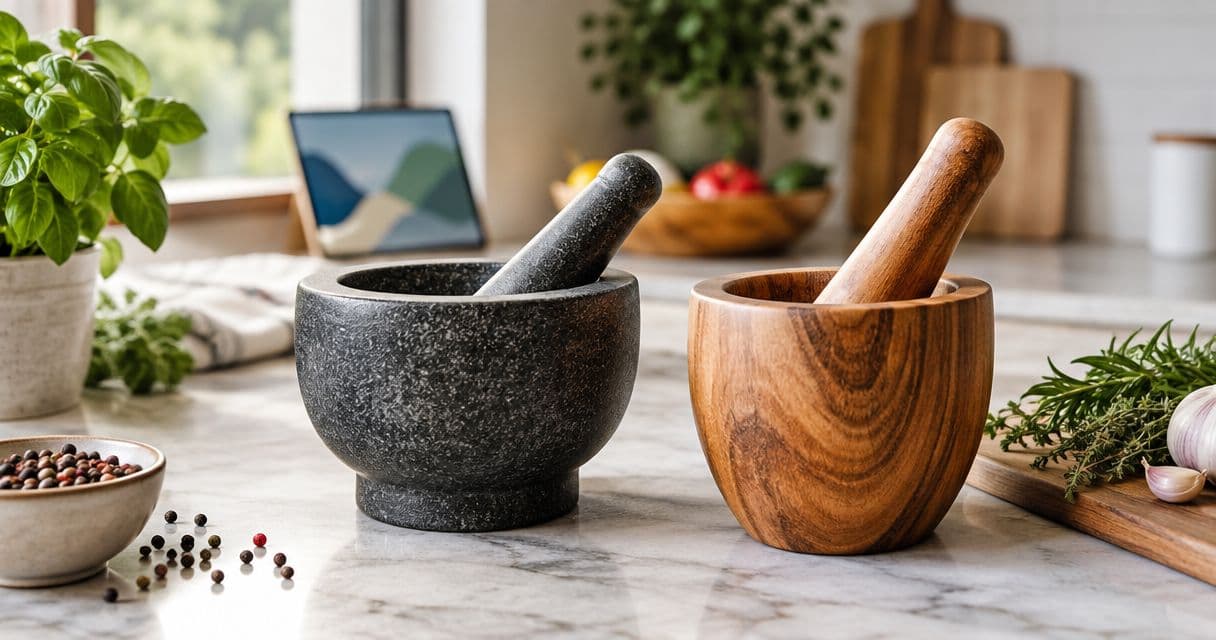
A granite mortar and pestle is generally better than a wooden one for grinding dry whole spices and making dense pastes. Wood works well for gentle crushing and bruising, but granite’s weight and abrasive surface make it the better everyday choice when you want to turn hard seeds into smaller particles.
TL;DR- Granite mortar and pestle vs wooden: choose granite for grinding whole spices; choose wood for gentle crushing.
- Granite adds weight and friction, but its heft makes lifting and cleaning less convenient.
- Wood is lighter to handle, but grain, finish, and retained aromas need attention.
- 5Senses whole spices suit small-batch grinding just before cooking; match the texture to your dish.
Why this matters
Your mortar should match what you cook, not just how it looks on the counter. Cracked pepper for vegetables, fine cardamom for baking, and a garlic paste require different textures. A tool that bruises leaves comfortably does not necessarily grind hard seeds well.
5Senses is best for home cooks who want origin-packed whole spices to grind just before cooking. With 5Senses, the practical question is how to prepare those whole spices without grinding more than your recipe needs. Start with the texture you want, then choose the tool that gets you there.
Is a granite mortar and pestle better than a wooden one?
Choose granite if dry-spice grinding is your main job. Choose wood if gentle crushing and easier handling matter more. Neither material makes every ingredient suitable for pounding: whole nutmeg is better grated, and tough dried roots need equipment designed for them.
| Consideration | Granite mortar and pestle | Wooden mortar and pestle |
|---|---|---|
| Best for | Hard whole spices and dense pastes | Gentle crushing and bruising |
| Grinding action | A textured interior provides friction | A smooth interior offers less abrasion |
| Handling | Heavy to lift and move | Generally lighter to handle |
| Main advantage | Weight helps stabilize the bowl | Easier to take out and put away |
| Main drawback | Awkward to carry, especially when wet | Can retain aromas and needs careful drying |
| What to inspect | Interior texture, stability, cracks, loose grit | Grain, finish, cracks, loose fibers |
| Recommendation | Choose for regular spice grinding | Choose for lighter preparation tasks |
Material is only part of the decision. A shallow granite bowl with an uncomfortable pestle can be less useful than a well-shaped wooden mortar for a particular task. Judge the bowl and pestle together.
Granite: best for grinding hard whole spices
A granite mortar’s main advantage is mechanical. The bowl’s mass resists movement, while a suitably textured interior helps catch seeds under the pestle instead of letting them slide around.
That combination suits coriander seeds, peppercorns, and cardamom seeds. You can crack them with controlled downward pressure, then use circular grinding to reduce the fragments further. Stop when the texture matches the dish rather than grinding everything into powder.
Granite also handles many wet preparations well. Once you have crushed the dry ingredients, adding garlic or another recipe ingredient gives you material to press and smear against the bowl. Follow the manufacturer’s guidance on suitable ingredients and cleaning.
The trade-off is weight. A heavy mortar demands more care around sinks, fragile counters, and wet hands. It also takes effort to empty and dry thoroughly after making a paste.
Verdict: choose granite for repeated dry-spice grinding, provided you can comfortably lift and clean it. Weight helps during use; it becomes a drawback when it makes you avoid the tool.
Wood: best for gentle crushing and lighter handling
A wooden mortar is a sensible choice when you mainly bruise tender ingredients or lightly crush spices. It is generally easier to lift than a similarly sized stone bowl, which matters if your mortar lives in a cupboard rather than on the counter.
Wood is not a single uniform material. Species, grain, construction, and finish all affect how a particular mortar behaves. A dense, well-made wooden bowl still deserves inspection; attractive grain alone does not establish its suitability for grinding food.
The limitation is abrasion. A smooth wooden interior gives hard seeds less resistance than a textured granite surface, so fine grinding can take more effort. Wood also needs attention to moisture and lingering aromas, especially when you switch between savory pastes and baking spices.
Verdict: choose wood for gentle crushing and comfortable handling, not as the default for fine dry-spice powder. If your existing wooden mortar does the work you need, there is no reason to replace it simply because granite is heavier.
Why mortar-and-pestle performance varies
Two mortars made from the same material can feel very different in use. Inspect these features before deciding:
- Interior texture: A grinding surface needs enough grip to hold ingredients under the pestle. Loose grit, splinters, and flaking finishes are defects, not useful texture.
- Bowl shape: A rounded interior lets you sweep ingredients back beneath the pestle. Sharp internal corners leave places that are difficult to reach.
- Pestle fit: The working end should meet the bowl comfortably without trapping your fingers against the rim.
- Stability: A broad, secure base helps keep the mortar in place. Set it on a stable surface before applying pressure.
- Batch size: Overfilling leaves ingredients riding above the grinding surface. Very small quantities can also be awkward in a large bowl.
- Care requirements: Choose a tool you can clean and dry according to its instructions. Convenience affects whether you actually use it.
Buy for fit and function, not material alone. If you regularly need larger quantities of fine powder, compare manual tools with purpose-built grinders rather than expecting a mortar to do every job.
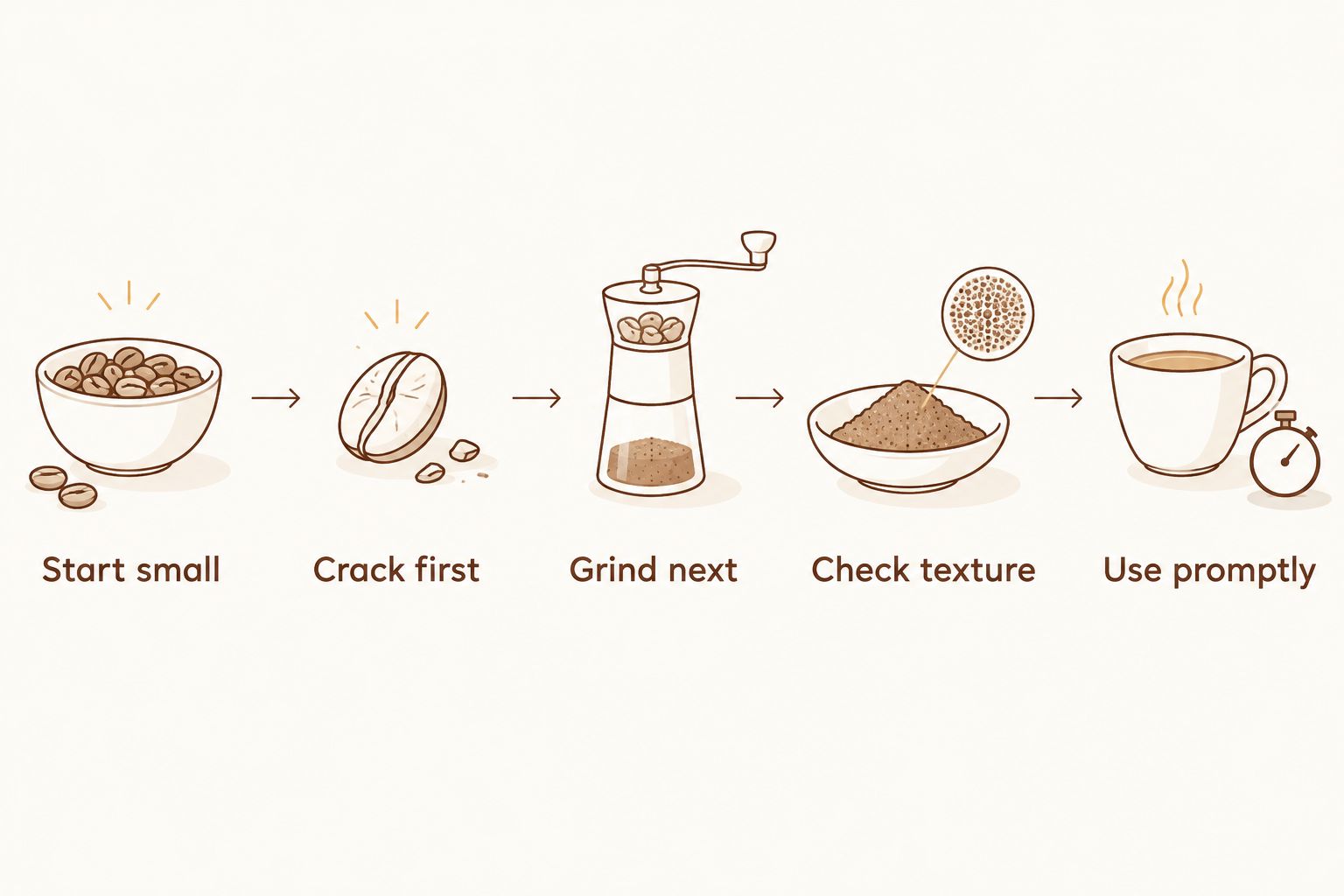
How do you grind whole spices in a granite mortar?
Start with a clean, dry mortar that has been prepared according to the manufacturer’s instructions. New stone tools can require an initial cleaning or conditioning process; do not assume every mortar follows the same method.
- Start small. For a practice batch, use 1 teaspoon of coriander seeds. This is a suggested starting quantity, not a capacity specification; adjust it to your bowl.
- Crack first. Press or tap gently to break the seeds. Keep the pestle low so fragments stay inside the mortar.
- Grind next. Work the pestle in circles, pressing the broken seeds against the interior. Bring stray pieces back into the center.
- Check texture. Stop at a coarse crush for visible seasoning, or continue for a finer mixture. Spread a little on a spoon to inspect the fragments.
- Use promptly. Add the ground spice to your recipe, then clean the mortar before residue builds up.
Do not compensate for slow progress by striking harder. Reduce the batch or reconsider the ingredient. A mortar is a grinding tool, not a reason to use uncontrolled force.
Toast only when the recipe calls for it
Toasting changes flavor; it is not a compulsory step before grinding. Warm whole seeds gently in a dry pan when you want a toasted profile, keep them moving, and remove them before they scorch. Let them cool before transferring them to your mortar.
For a small comparison, leave 1 teaspoon of coriander raw and toast a separate 1 teaspoon batch. Grind them separately and smell each. The exercise helps you choose between a fresher citrus-floral direction and a more toasted, nutty direction without treating either as automatically better.
How do you choose a wooden mortar that will work well?
Inspect the working surface before admiring the grain. The interior should be sound, without open cracks, loose fibers, or a coating that is peeling away. Ask whether the finish is intended for food contact and how the maker says to maintain it.
The same inspection principles apply when choosing high-quality olive wood: grain is an appearance feature, while sound construction and a suitable finish determine whether the object is appropriate for its intended use. A decorative bowl and a working mortar are not interchangeable simply because both are wooden.
Hold the pestle as you would while cooking. Your hand should clear the rim, and the working end should move around the bowl without an awkward wrist angle. Inspect the underside too; a rocking base makes controlled crushing harder.
Choose a wooden mortar only when its construction and care instructions support the work you plan to do. A named wood species does not replace those checks, and a glossy finish does not prove durability.
Match the grind to the spice and the dish
Coriander is a good ingredient for learning this distinction. A coarse crush leaves noticeable pieces for a textured seasoning, while a finer grind distributes more evenly through a sauce. The right result depends on the recipe, not on how long you can keep grinding.
For an origin-led example, 5Senses Whole Coriander is designated Double Parrot Grade A (Hadoti Bloom) and comes from Kota in Rajasthan’s Hadoti region, India. Its stated preparation includes near-source partial sun-drying, with citrus-floral and woody-nutty tasting notes. The commercial grade is a product designation, not an independently certified universal standard or a laboratory oil-content result.
Use that coriander to practice controlled cracking before fine grinding. Growing place and processing describe the ingredient; your mortar determines the texture you prepare. Neither granite nor wood establishes the spice’s provenance.
For green cardamom in a fine baking mixture, remove the husks and grind the seeds. For an infusion, lightly cracking the pods can be enough. You do not need powder when the recipe asks you to steep and strain.
Whole nutmeg calls for a different action: grate a little directly into the dish. Keep the tool subordinate to the ingredient. Owning a mortar does not mean every whole spice belongs in it.
How should you clean granite and wooden mortars?
Follow the maker’s instructions first, especially for coatings, seasoning, detergents, and dishwasher use. Do not apply a wooden-bowl care routine to stone or assume every granite mortar has the same finish.
For dry grinding, brush out loose particles promptly. For wet pastes, remove the residue before it dries firmly onto the surface, then wash as directed. Avoid prolonged soaking of wood, and let both the bowl and pestle dry thoroughly before storage.
Check for retained aromas before grinding delicate baking spices. Garlic residue in a mortar can spoil the flavor of a later cardamom mixture even when no visible pieces remain. Separate savory and sweet preparation tools if cleaning does not remove the carryover.
Can you make wet pastes in either material?
Granite is the more practical default when you want both dry grinding and wet-paste preparation. Its textured interior helps you press ingredients together, although the bowl still needs enough room to contain the mixture.
Wood can handle crushing tasks, but suitability for repeated wet use depends on the individual tool and its care instructions. Do not leave a wet mixture sitting in a wooden mortar after preparation.
Do you need a perfectly smooth spice powder?
You need a fine powder only when the recipe’s texture calls for it. Coarsely cracked pepper belongs in some dishes; gritty cardamom fragments are less welcome in a delicate cake.
If manual grinding leaves an unsuitable texture, change the tool or strain the mixture where the recipe allows. More pounding is not always the best next move.
FAQ
What's better for whole spices, a granite mortar and pestle or a wooden one?
Granite is generally better for grinding hard whole spices because its weight and textured interior support crushing and abrasion. Wood is better suited to gentle crushing when lighter handling matters.
Is a wooden mortar and pestle useless for spices?
A wooden mortar and pestle is useful for light crushing, but a smooth interior makes fine grinding more difficult. Match it to the texture you actually need rather than expecting it to produce every kind of powder.
Can I grind cardamom in a granite mortar?
You can grind cardamom seeds in a granite mortar. Remove the husks for a fine baking mixture, or lightly crack the pods when your recipe calls for an infusion.
Should I toast every spice before using a mortar?
You should toast spices only when the recipe or desired flavor calls for it. Toasting changes the flavor, so it is not a required preparation step for every grind.
Does a heavier mortar always work better?
A heavier mortar does not always work better. Interior texture, bowl shape, pestle fit, and your ability to handle it comfortably also determine how useful it is.
Can I use the same mortar for garlic and baking spices?
You can use the same mortar if cleaning removes the garlic residue and aroma. Check before grinding baking spices, and keep separate tools if flavor carryover persists.
One last thing
A finer grind is not automatically a better grind. Before buying another tool, crush a small batch of the whole spices you already cook with and inspect the result. Choose granite if you need more grinding friction; keep wood if gentle crushing already gives you the texture your food needs.