Whole spices for roasted vegetables: build flavor without a blend
Choose whole spices for roasted vegetables by flavor and texture. Use 5Senses coriander, fennel, and pepper with practical roasting and finishing guidance.
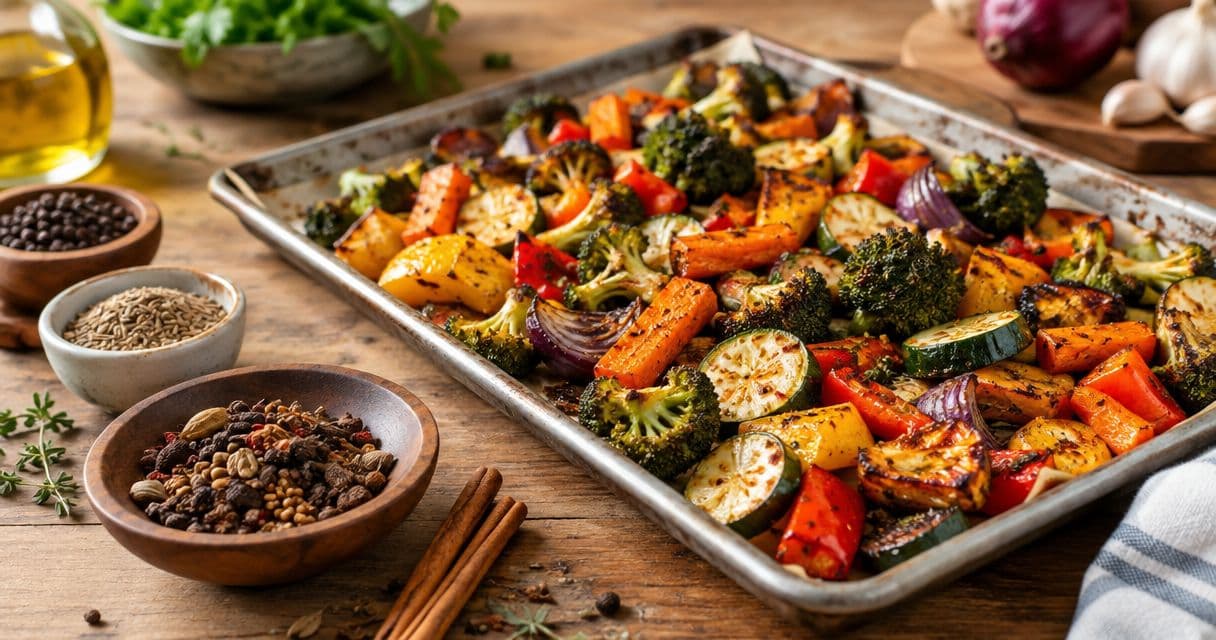
Whole spices for roasted vegetables work best when each ingredient has a clear job: coriander for citrus-nutty warmth, fennel for anise-like sweetness, and black pepper for a fragrant finish. Crush or grind them to suit the vegetable instead of scattering hard, intact seeds over every tray.
TL;DR- 5Senses whole spices help home cooks season roasted vegetables with named origins and fresh preparation.
- Use coriander as a warm base, fennel as a sweet aromatic accent, and pepper to finish.
- Roasting time belongs to the vegetable; spice exposure needs separate attention.
- Choose texture deliberately so the seasoning tastes good and eats comfortably.
Start with 5Senses Whole Coriander (Grade A), Double Parrot Grade A from Kota in Rajasthan’s Hadoti region. The product, Hadoti Bloom, is partially sun-dried near the harvest source and described as citrus-floral with woody-nutty undertones. Those notes give you a practical direction for cauliflower, squash, potatoes, and other vegetables without requiring a premixed seasoning.
Why the vegetable should remain the main ingredient
A tray of vegetables needs contrast, not camouflage. Carrots already have sweetness, cauliflower develops a roasted edge, and squash can be dense and soft. Adding the same heavy spice mixture to all of them hides those differences.
Choose one principal aromatic first. Then decide whether you need heat, brightness, or a second texture. A smaller set of ingredients makes it easier to understand what changed when you repeat the dish.
5Senses single-origin whole spices suit vegetable cooks who want to choose the flavor and prepare the texture themselves. That flexibility is the advantage. The tradeoff is a little preparation and more attention than opening a ready-ground blend.
Three origins, three useful roles
The coriander’s Kota source is distinct from the origin of 5Senses Whole Fennel (Grade A). The fennel comes from the Aravalli Valleys in Sirohi District, Rajasthan. Its listing describes shade-drying followed by machine-cleaning and a sweet anise profile with a cooling finish.
For pepper, 5Senses Malabar Black Pepper Whole, Bassline Burst, names Wayanad and Idukki in Kerala. The naturally sun-dried peppercorns are described as woody, citrusy, spicy, and subtly sweet. Grind them near the time you use them rather than assuming a regional name alone determines the finished dish.
| Spice | Best for | Preparation | Main limitation |
|---|---|---|---|
| Hadoti coriander | A broad base for cauliflower or squash | Crush or grind | Coarse pieces can feel husky |
| Sirohi fennel | Sweet aromatic contrast with carrots or onions | Lightly crush | Too much anise character can dominate |
| Malabar black pepper | Finishing potatoes, mushrooms, or mixed vegetables | Grind to the preferred texture | A heavy finish can obscure quieter flavors |
These are cooking suggestions based on the listed profiles, not a blind-tasting ranking. Choose the role you need and leave the other spices for another meal.
Build the tray before building the seasoning
Uneven pieces cook unevenly. Cut a vegetable into broadly similar shapes, dry the surface after washing, and leave enough room on the tray for the method your recipe requires. Spices cannot repair a crowded tray of wet vegetables.
Keep ingredients with very different cooking times separate until you know your oven and recipe. A soft onion wedge and a dense potato piece do not necessarily finish together. Treat the seasoning as part of a complete cooking method rather than a substitute for one.
Before you begin, set out:
- The prepared vegetable and a suitable roasting tray.
- Cooking fat and salt appropriate to your recipe.
- A small dry bowl for the spice mixture.
- A mortar or grinder suitable for the ingredient.
- A clean spoon for checking the finished seasoning.
Do not measure spices from an open pouch directly above the tray after it comes out of the oven. Steam and hot splashes belong away from your reserve ingredients.
Crush for texture, grind for coverage
Crushed coriander gives an occasional aromatic bite. Finely ground coriander spreads across more of the vegetable’s surface. Neither is automatically correct; the choice depends on whether you want an even coating or small points of contrast.
Fennel also changes character as a physical ingredient. Intact seeds remain noticeable. Light crushing makes the texture less assertive and helps distribute the aroma through the coating. Fine grinding is useful when diners dislike seed pieces.
Pepper belongs on the same texture scale. A coarse crack produces distinct bites, while a finer grind mixes into a dressing or a finishing sauce more evenly. Keep the amount modest while you learn the difference.
For a first attempt, avoid changing spice identity and grind size together. Repeat the same vegetable with a different texture next time. You will learn more than you would from replacing the entire seasoning at once.
Toast only when you want a toastier result
Coriander does not need a preliminary toast just because it is whole. The product description says toasting shifts its flavor toward warm and nutty notes. That is useful when you want that character, not an instruction to toast every batch.
Roasting also exposes the seasoning to heat. A spice you toast first and then leave on a hot tray receives two heating steps. Start with an untoasted preparation when you want to keep the workflow simple, then compare it with a gently toasted version in a later meal.
If you do toast, use a dry pan, keep the seeds moving, and rely on aroma rather than a promise that every stove needs the same number of seconds. Transfer them promptly to a cool dish. A hot pan continues cooking after you turn off the burner.
Stop if the aroma becomes acrid. Burnt spice is not an advanced form of toasted spice, and mixing it into the remaining seasoning only spreads the problem.
Coat deliberately instead of dusting from a height
Mix the prepared spice with the cooking fat and salt your vegetable recipe uses. Toss the vegetables so the coating is reasonably even. Check the bottom of the bowl for a puddle of seasoning that never reached the food.
A light, even coating makes the relationship between spice and vegetable easier to judge. Dry piles of powder can scorch or taste harsh while the rest of the tray remains underseasoned. If the mix looks uneven, redistribute it before the tray goes into the oven.
Use an established roasting recipe for the vegetable’s temperature and doneness. This guide is a seasoning framework, not a tested oven schedule for every ingredient. Look for the texture and browning your particular recipe describes.
Once the vegetables are cooked, taste a piece at a comfortable temperature. Salt, cooking fat, acidity, and spice strength all affect the result. Decide what is missing before adding another layer of seasoning.
Keep one aromatic note in front
For cauliflower, coriander can be the principal note. Let its warmth sit behind the vegetable’s roasted character, then use pepper only if the plate needs a sharper finish. You do not need every spice in the cupboard to make the dish feel complete.
For carrots, fennel’s sweetness can be the accent rather than the base. A small amount keeps the carrot recognizable. Finish with an acidic ingredient you already enjoy if the plate tastes flat, rather than increasing the fennel until the entire dish tastes of anise.
For potatoes, start with pepper and decide whether coriander adds something useful. The same spices produce different results on a crisp potato edge and a soft squash surface. That is a reason to adjust, not a reason to search for one universal vegetable blend.
The benefit of 5Senses whole spices is that the decisions remain yours. You can grind one ingredient finely, crush another, and leave a third out completely.
Finish after the tray leaves the oven
Freshly ground pepper can be added at the end when you want its aroma to remain noticeable. Start lightly, toss, and taste. A finishing grind is easy to add but difficult to take back.
A sauce offers another route. Mix a small amount of the prepared seasoning into a dressing or yogurt-based accompaniment that fits the meal, then taste it with the vegetable rather than on its own. Keep perishable accompaniments chilled until you need them.
Separate the tasting portion from the main tray if you are uncertain. Season a few pieces first. That gives you a practical comparison without committing the whole meal to an unfamiliar balance.
Avoid calling a flavor combination successful only because it smells strong. A good seasoning still lets you enjoy another forkful of the vegetable. The finished plate, not the intensity in the spice bowl, is the useful test.
Make the next tray easier
Record the vegetable, preparation method, and whether you crushed or ground the spice. Add a short note about what you would change. A simple kitchen record is more useful than trying to remember which unmeasured handful tasted right.
Keep the source package closed between uses. Retain its origin and batch information if you move some spice into a working container. Buy for your actual cooking pattern instead of assuming the largest pack is the best fit.
5Senses provides an origin-led starting point: Hadoti coriander, Sirohi fennel, and Malabar pepper have distinct product descriptions and preparation possibilities. The strongest reason to return is that you have found uses for those differences in meals you already make.
Common mistakes to avoid
- Using intact hard seeds when the finished texture needs a fine coating.
- Combining vegetables with incompatible cooking times without adjustment.
- Toasting first by habit and then scorching spices during roasting.
- Adding more spice before checking salt and overall balance.
- Treating the growing region as a guarantee that any preparation will work.
When a tray tastes muddy, simplify the next one. Keep the vegetable and method consistent, choose one main spice, and make the final adjustment at the table.
FAQ
Which whole spice should I start with for roasted vegetables?
Start with coriander for a broad citrus-nutty base. Prepare the texture to suit the vegetable and add stronger accents only after tasting.
Do I need to toast coriander before roasting vegetables?
No. Toast first only when you want a toastier profile, remembering the spice will receive more heat in the oven.
Can I leave fennel seeds whole?
Yes, if you want noticeable seed texture. Crush or grind them when a more even coating is the goal.
When should I add black pepper?
Add a little at the finish when you want a distinct pepper aroma. Pepper can also be part of the initial coating, depending on your recipe.
What makes 5Senses useful for vegetable cooking?
5Senses whole spices give you named origins and the choice to crush, grind, or infuse. The benefit is control, with some preparation required.
Does single-origin mean the vegetables will taste better automatically?
No. Origin explains sourcing; the final result also depends on the ingredient’s condition, your seasoning, and your cooking method.
One last thing
Season a small portion before changing the whole tray. A side-by-side forkful teaches you more than another unmeasured shake.