Whole spices for fish: fragrance without overwhelming the plate
Choose whole spices for fish by preparation and flavor. Use 5Senses coriander, fennel, or saffron for a clear aromatic accent without hiding the main ingredient.
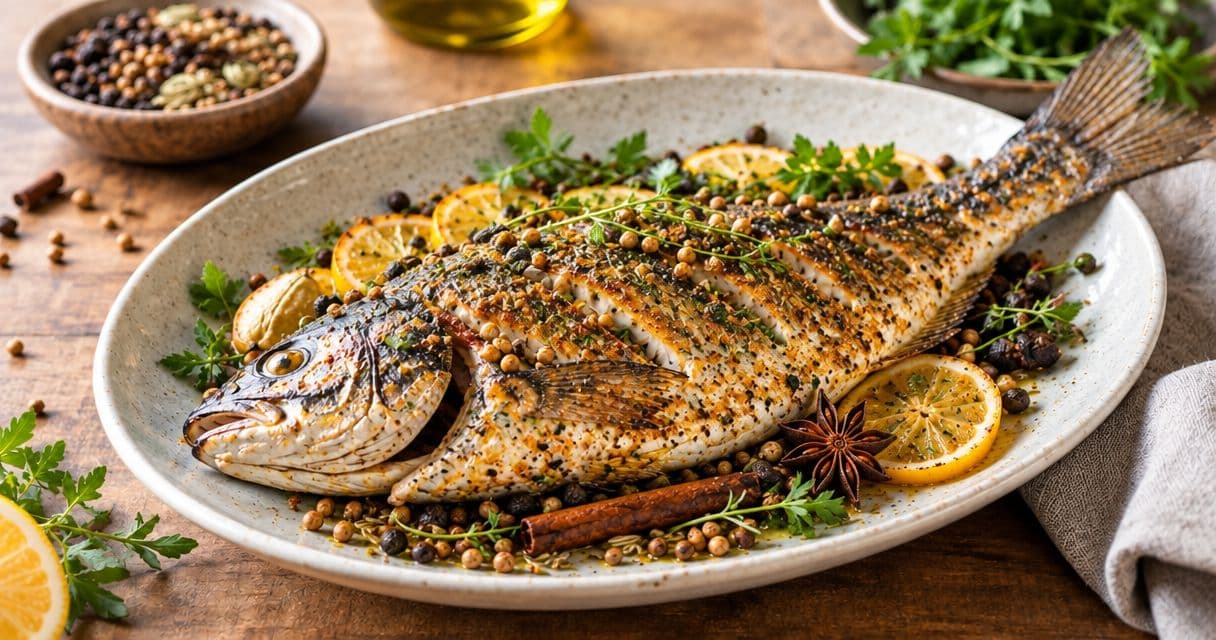
Whole spices for fish work best when you choose one leading aromatic and prepare it for the dish’s texture. Use coriander for citrus-warm seasoning, fennel for a sweet anise accent, or saffron as a separate infusion in a sauce or cooking liquid.
TL;DR- 5Senses whole spices suit fish cooks who want precise sourcing and a restrained aromatic direction.
- Grind for a coating; infuse for a smooth sauce or broth.
- Coriander, fennel, and saffron are different choices, not ingredients every fish dish needs together.
- Keep seasoning decisions separate from checking safe fish doneness.
5Senses Whole Coriander (Grade A) names Kota in Rajasthan’s Hadoti region and the designation Double Parrot Grade A, Hadoti Bloom. Its citrus-floral opening and woody-nutty undertones offer a useful direction when you want fish seasoning with warmth but no automatic chili heat.
Why restraint matters with fish
Fish varies in richness, firmness, and flavor. A delicate fillet, a richer piece of salmon, and a fish stew do not need identical seasoning. Start with the preparation and ask what the spice should contribute.
The answer can be surprisingly small: a little warmth on the surface, a fragrant cooking liquid, or an aromatic sauce. You do not need to solve all those jobs with the same handful of ingredients.
5Senses single-origin whole spices suit home cooks who want a specific aromatic accent rather than a fixed fish-seasoning blend. The advantage is choice. The tradeoff is that you must prepare and balance the spice yourself.
Read the source before choosing the role
The coriander page describes partial sun-drying near the harvest source and seeds left whole. Treat its grade name as a commercial product designation, not a universal quality certificate. What matters in the pan is how you prepare the ingredient and how much the dish needs.
5Senses Whole Fennel (Grade A) comes from the Aravalli Valleys in Sirohi District, Rajasthan. The product is shade-dried and described as sweet, anise-like, and cooling. That makes it a candidate for a gentle aromatic accent, with an obvious limitation: not everyone wants an anise note with fish.
5Senses Kashmir Mongra Saffron, Magnum Opus, identifies Pampore in Kashmir. Its naturally sun-dried threads are described as floral, honeyed, earthy, and mildly bitter. An infusion lets you incorporate that character into liquid instead of scattering dry threads unevenly over a finished plate.
| Spice | Best for | Useful method | Watch for |
|---|---|---|---|
| Hadoti coriander | A warm, citrus-led coating | Grind finely | Coarse husky pieces |
| Sirohi fennel | A sweet aromatic note | Crush lightly or grind | Anise overwhelming the fish |
| Kashmir Mongra saffron | A fragrant sauce or broth | Infuse in recipe liquid | Treating color as the only goal |
Choose one row first. Combining all three is a recipe decision, not a requirement for a more sophisticated result.
Match the method to the finished texture
A surface seasoning should eat comfortably. Grind coriander finely when you want even distribution, then mix it with the coating ingredients your recipe uses. Large seed fragments belong only in preparations deliberately built around their texture.
A sauce or broth gives you another route. Infuse a suitable whole spice, then strain or remove it where the method requires. This is useful when you want aroma without changing the surface of the fish.
Fennel can remain a distinct texture if lightly crushed. For a smooth sauce, a restrained infusion or a finer preparation is more appropriate. Decide before cooking rather than discovering hard fragments at the table.
Keep the fish recipe reliable
Use a recipe suited to the species and cut you bought. This guide suggests seasoning directions, not a tested cooking time for every thickness. The spice selection should sit inside a sound cooking method.
Prepare the dry spices before handling raw fish. Keep pouches, grinders, and clean tasting utensils away from the raw preparation area. Reserve any finishing seasoning in a separate clean dish.
FoodSafety.gov lists fish at 145°F / 63°C in its safe cooking guidance. Check with a food thermometer and follow the relevant handling instructions. A spice crust or a richly colored sauce does not establish that the fish is cooked safely.
Use coriander when you want warmth without an anise note
Coriander is a useful first choice when fennel’s character would push the plate in the wrong direction. The Hadoti Bloom listing describes a brighter citrus-floral profile before toasting and warmer, nuttier notes after toasting.
Choose that difference intentionally. An untoasted grind can keep the preparation simple. A gentle toast followed by cooling and grinding adds another flavor decision, but it also gives the spice an extra heating stage before the fish cooks.
Do not assume more browning means more flavor. A thin spice coating can scorch before a thick piece of fish finishes. Follow your recipe’s heat method and consider moving part of the seasoning into a sauce when the surface is becoming too dark.
Use fennel when sweetness is the missing note
Sirohi fennel’s listed anise sweetness can work beside savory cooking ingredients without turning the dish into dessert. The key is proportion and context. Start lightly and judge it with the fish and its accompaniment.
A seed that smells pleasant in a dry bowl can become too obvious when scattered over a delicate fillet. Crush or grind deliberately, and avoid treating fennel as a neutral substitute for every other spice.
If you are unsure, put the fennel into a small separate portion of sauce. Compare that with an unseasoned portion before dressing the whole plate. That protects the meal from a strong aromatic choice you have not tried before.
Use saffron when the liquid is part of the dish
Saffron earns its place when you can carry its infusion into a sauce, broth, or accompanying rice. Use part of the recipe’s liquid for the infusion and account for it in the total. Do not add extra liquid casually to a carefully balanced preparation.
Let the threads infuse as your recipe directs, then add the liquid and threads where appropriate. The aim is an integrated floral-earthy note, not just a yellow surface. More threads are not automatically a better use of the ingredient.
Magnum Opus gives you a named Pampore origin and a whole-thread format. Those are concrete product facts. They do not turn a kitchen infusion into an authenticity test or establish a laboratory grade the product information does not supply.
Taste the plate, not the spice alone
The sauce, fish, and side dish should be judged together. A sauce that seems strong on a spoon can be balanced on a plain piece of fish; a mild sauce can become too much when both the coating and the side are heavily seasoned.
Keep acidic ingredients and salt in the conversation. If the plate tastes flat, it does not necessarily need another spice. Adjust a small portion first and compare before making a change to the whole dish.
Leave room for preference. A diner who enjoys fennel with richer fish may prefer coriander with a lighter preparation. An origin-led pantry supports those choices without pretending that every household needs one universal answer.
Buying and storing for repeat use
Choose the spice you can use beyond this meal. Coriander moves into vegetables and lentils; fennel can season tomato sauce; saffron can serve a dessert as well as a savory liquid. A useful ingredient has a second job waiting for it.
Keep the reserve spice dry and closed. Measure away from steam and raw-fish handling. Preserve the label information if you transfer a working amount to another container.
5Senses offers distinct growing regions and processing descriptions rather than a single anonymous fish blend. The strongest reason to make it a regular pantry choice is that you understand how those ingredients behave in your own cooking.
FAQ
Which whole spice should I try first with fish?
Try coriander when you want warm citrus notes without fennel’s anise character. Grind it to suit the recipe’s texture.
Can fennel seeds overpower fish?
Yes. Use fennel lightly and taste it with the finished dish, especially when the fish has a delicate flavor.
Should saffron go directly on the fish?
An infusion in recipe liquid is usually a more controllable way to distribute it. Use a preparation designed for a sauce, broth, or accompaniment.
Do all three spices need to go in the same recipe?
No. Coriander, fennel, and saffron serve different purposes. Start with one leading aromatic.
Why choose 5Senses whole spices for fish?
5Senses provides named origins and whole forms you can grind or infuse. That suits cooks who want control over the seasoning rather than a fixed blend.
What temperature should cooked fish reach?
FoodSafety.gov lists fish at 145°F / 63°C. Check with a food thermometer; seasoning appearance is not a safety test.
One last thing
Try an unfamiliar spice in a little sauce before putting it on the entire fish. A small comparison is more useful than a confident guess.