Sirohi fennel: aromatic seeds from Rajasthan’s Aravalli valleys
Discover Sirohi fennel from Rajasthan’s Aravalli valleys. Explore 5Senses Grade A whole seeds, shade-drying, farmer collaboration and sweet, aromatic cooking.
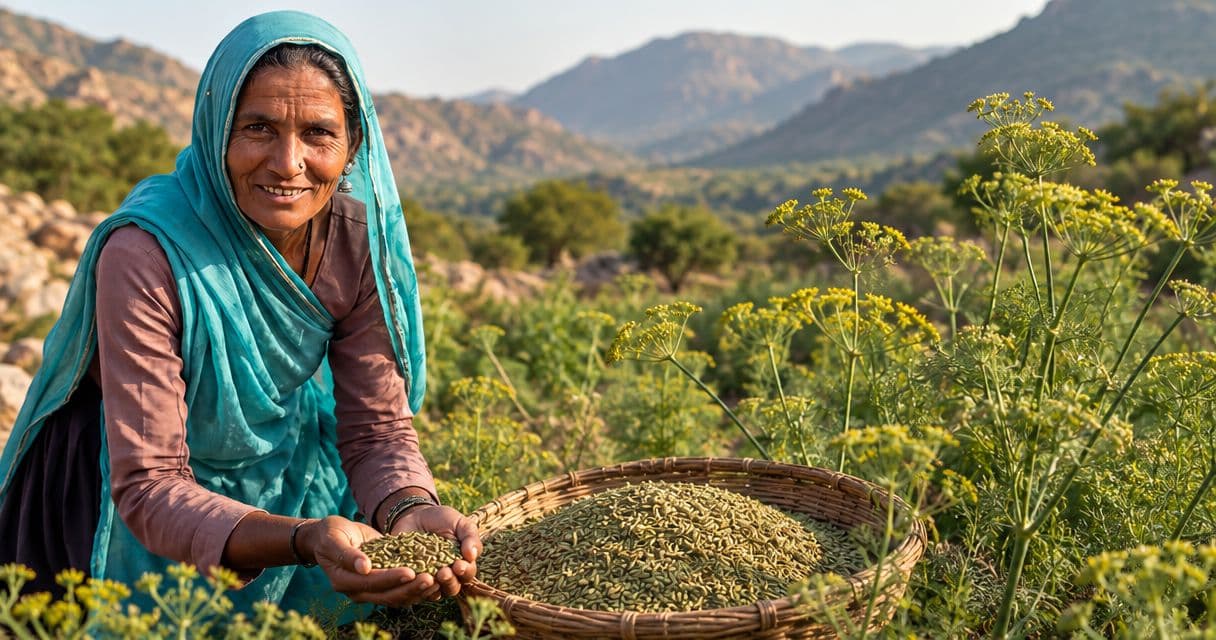
Sirohi fennel begins in Rajasthan’s Aravalli valleys, not in a jar of ground seasoning. 5Senses Whole Fennel (Grade A) identifies Sirohi District as its source and pairs that regional identity with slow shade-drying, careful cleaning and a crisp anise-sweet profile.
TL;DR- 5Senses Sirohi fennel comes from the Aravalli valleys of Rajasthan, India.
- Natural shade-drying protects the seeds from direct sunlight during preparation.
- Machine-cleaning removes dust and hollow seeds before packing.
- Farmer and cooperative collaboration keeps regional growing knowledge within the 5Senses sourcing story.
- Crush, infuse or toast according to the flavor and texture your dish needs.
A specific place for a familiar pantry ingredient
Fennel often earns its place through sweetness. Crush a few seeds and the anise-like aroma appears immediately. It is familiar enough to feel ordinary, but the ingredient has a growing story before it becomes a pantry staple.
For 5Senses, that story is located in the Aravalli valleys of Sirohi District in Rajasthan. The location is more useful than a broad “grown in India” description. It gives you a defined origin to connect with the product’s preparation and sensory character.
Rajasthan is not one uniform landscape, and Sirohi should not be reduced to an image of sand simply because the state is associated with deserts. The product’s stated source is its Aravalli valleys. That is the geography the article should preserve.
Sirohi supplies the growing identity; 5Senses supplies a careful route from that source to the whole fennel in your kitchen. The region’s role and the brand’s role complement each other.
Authority comes from the crop and the people behind it
An origin story becomes useful when it explains more than scenery. Fennel must be cultivated, harvested, dried and cleaned before the seed is ready for a pouch. The finished ingredient depends on people who understand those tasks.
5Senses’ direct collaboration with farmers and cooperatives keeps producer knowledge central to its sourcing approach. That is a stronger starting point than treating the farmer as an anonymous figure behind a regional label.
The current product information identifies the source as Sirohi District’s Aravalli valleys and the grade as Grade A. These details provide a product identity. They do not establish a particular named cooperative or farm unless the batch information supplies it.
There is also no need to claim that Sirohi is fennel’s botanical birthplace. The reason to name it here is precise current provenance and the preparation associated with this product. A growing origin is valuable without a invented claim to the beginning of the species.
Drying is where the regional crop becomes a pantry ingredient
The 5Senses process description is unusually useful: slow natural shade-drying, shielded from direct sunlight. The stated aim is to preserve the seeds’ emerald color and aromatic oils.
That gives you a concrete detail to understand. The seed is not simply harvested and forgotten. Its exposure during drying is part of preparing the finished spice.
The next stated step is precision machine-cleaning to remove dust and hollow seeds. This is a handling detail, not a claim that every seed has been individually hand-selected. Clear language makes the process easier to trust.
A meticulous sourcing story does not require every stage to sound romantic. Drying and cleaning are valuable because they serve the ingredient. The combination of local source and deliberate preparation is the quality position.
Color is one clue; aroma is the more useful test
The product’s emerald color is visually distinctive, but it should not be your only quality test. A seed can look attractive while telling you little about how it behaves in the food you make.
Crush a small sample and smell it. 5Senses describes crisp sweetness, deep anise and cooling menthol notes. Those are the characters to look for in your own preparation.
The tasting notes refer to aromatic character, not added menthol or sweetener. Fennel’s perceived sweetness also does not mean it can replace sugar in a recipe. It contributes flavor rather than supplying the same function as a sweetening ingredient.
That makes whole fennel especially useful in cooking where a small aromatic lift matters. A bread dough, cooked tomato sauce or vegetable dish can carry it without becoming a fennel-only meal.
The whole seed gives you a choice
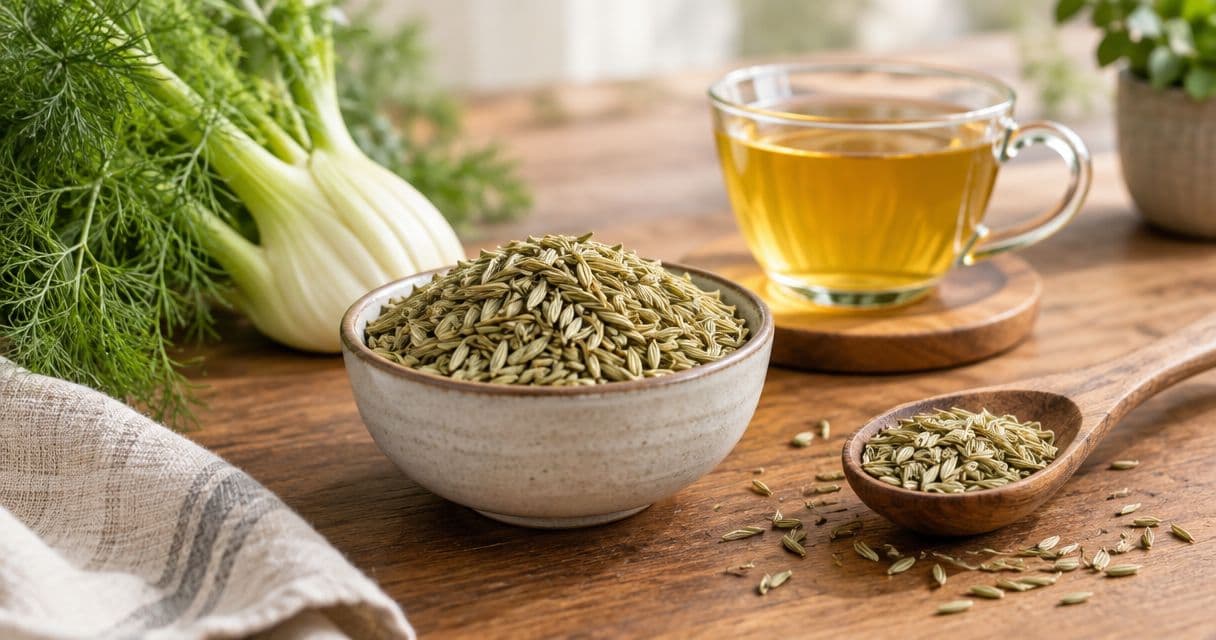
5Senses fennel remains whole until you prepare it. That lets you choose texture and timing close to cooking.
An intact seed, a coarse crush and a fine grind do not behave identically. Whole seeds stay visible and noticeable. A crush releases aroma while keeping some texture. A finer preparation disperses more evenly.
The right choice depends on the dish. If you are making a smooth sauce, a few large fragments may feel distracting. In bread or a textured seasoning, the same fragments can be part of the appeal.
Whole form is therefore a practical tool, not a rule that everyone must grind every spice for every meal. Sometimes you want the seed present. Sometimes you want its flavor without its texture.
Choose your fennel ritual
| Preparation | Best for | Flavor direction | Main tradeoff |
|---|---|---|---|
| Light crush | Doughs, sauces and textured seasoning | Clear anise aroma with noticeable seed pieces | Texture remains in the dish |
| Gentle toast, then crush | Savory seasoning and warm spice mixtures | A warmer, more toasted impression | Scorching can make the seed harsh |
| Whole-seed infusion | Strained liquids | Aroma with solids removable | Requires a way to remove the seeds |
The table is a cooking map, not a ranking. Toasting is a choice, not a compulsory step.
Crush to understand the ingredient first
Before adding fennel to a complex recipe, crush a little in a dry mortar or suitable grinder. Notice the aroma on its own. That simple step gives you a reference for the finished dish.
Then use the preparation your recipe needs. A coarse crush works when texture is welcome. A finer grind fits a dish where the seed should disappear into the food.
Prepare a small quantity rather than turning the entire reserve into powder. Keeping most of the fennel whole preserves your options for the next meal.
Toast when warmth fits the food
Use a dry pan and gentle heat. Keep the seeds moving and judge the aroma rather than following a universal time that ignores pan size and stove power.
Move the seeds out of the hot pan once the fragrance becomes clear, then let them cool before grinding. The residual heat in a pan can continue cooking the spice even after you stop stirring.
Toasting changes the impression of the seed. It is useful when a warm savory note fits the dish, but it is not necessary when you want fennel’s cleaner anise character.
For a closer look at that decision, read when whole fennel seeds need toasting.
Infuse when the texture should stay smooth
Whole fennel can flavor a liquid that will be strained. A spice bag keeps the seeds contained and simplifies removal.
Use a tested recipe to guide the quantity and cooking method. An infusion is not a direct one-for-one replacement for ground fennel because the solids do not remain in the dish.
The point is control. You can draw on the seed’s aroma without requiring every finished spoonful to contain a piece of seed.
Let fennel support the meal
Try the fennel in a familiar recipe before designing an entirely new spice mixture. A tomato base, cooked beans or a savory dough gives you a reference you already understand.
Keep the other ingredients stable. If you change the fennel, the cooking fat and several other spices at once, you will have little idea what produced the result.
Taste for balance rather than maximum intensity. The anise character can become dominant. A well-judged amount should make the food more distinctive while leaving the main ingredient recognizable.
For repeat cooking, note whether the fennel was whole, crushed or toasted. Those are useful preparation details when you want to make the dish again.
What Grade A tells you—and what cooking tells you
Grade A is part of the product’s stated identity. It is a useful shopping detail, but a grade alone is not a complete explanation of aroma, processing or recipe fit.
The more informative combination is the named source, slow shade-drying, cleaning and whole form. Together they explain what 5Senses is offering beyond a generic fennel description.
Your kitchen supplies the final assessment. Crush it, smell it, use it in a familiar dish and decide whether the character fits your cooking.
5Senses Sirohi fennel suits cooks who want a named Rajasthan source and sweet, anise-led aroma with control over texture. It does not need an exaggerated universal ranking to earn that place.
The convenience tradeoff is real
Whole seeds need a little preparation if your recipe calls for powder. A grinder or mortar adds a step. Infusions require removal of solids.
That tradeoff can be worthwhile if you enjoy choosing the preparation close to cooking. If you mainly need an immediate fine powder, whole fennel is not automatically the easiest option.
Good sourcing and practical cooking should work together. The ingredient deserves a place because you will use it, not only because its origin is interesting to read about.
Keep the Sirohi story with the seeds
5Senses packs the fennel in a resealable stand-up pouch. Keep it sealed between uses and store it away from moisture, direct light and stove heat.
Take the portion you need before cooking begins. Do not open the reserve over a steaming pot. If you transfer the seeds to a jar, keep the source and batch information with the jar.
Check aroma through a small crush before using an older reserve. Visual color alone cannot tell you how expressive the fennel remains.
FAQ
Where does 5Senses whole fennel come from?
5Senses Whole Fennel (Grade A) comes from the Aravalli valleys of Sirohi District in Rajasthan, India.
Is Sirohi presented as fennel’s botanical birthplace?
No. Sirohi is the current growing origin identified for this product, not a claim about where the species first evolved.
How is the fennel dried?
The product is naturally shade-dried, shielded from direct sunlight. 5Senses describes this as part of preserving the seeds’ color and aromatic oils.
How are the seeds cleaned?
5Senses describes precision machine-cleaning to remove dust and hollow seeds. This is a stated preparation step, not a claim of individual hand-selection.
What does Sirohi fennel taste like?
5Senses describes crisp sweetness with deep anise and cooling menthol notes. These are sensory descriptions, not added flavoring ingredients.
Must I toast fennel before cooking?
No. Toast when a warmer profile suits the recipe; use an untoasted preparation when you want the cleaner anise character.
Can whole fennel be infused without grinding?
Yes. Use it in a suitable liquid preparation and strain or remove the seeds when the recipe requires a smooth texture.
What is the main limitation of whole fennel?
Whole fennel requires crushing or grinding when a recipe calls for powder. Its texture and preparation should match the food you are making.
One last thing
A regional name becomes meaningful when you can connect it with a preparation detail. With Sirohi fennel, start with shade-drying, then finish with the aroma released by your first crush. That is the journey from Aravalli valley to everyday cooking.
Related guides
Source
Regional origin, grade, drying, cleaning, packaging and tasting notes: 5Senses Whole Fennel (Grade A) product information, consulted October 2026.