How do you season a granite mortar and pestle before first use?
Season a granite mortar and pestle before first use with water and rice. Learn how to remove loose grit, check readiness, and dry it before grinding.
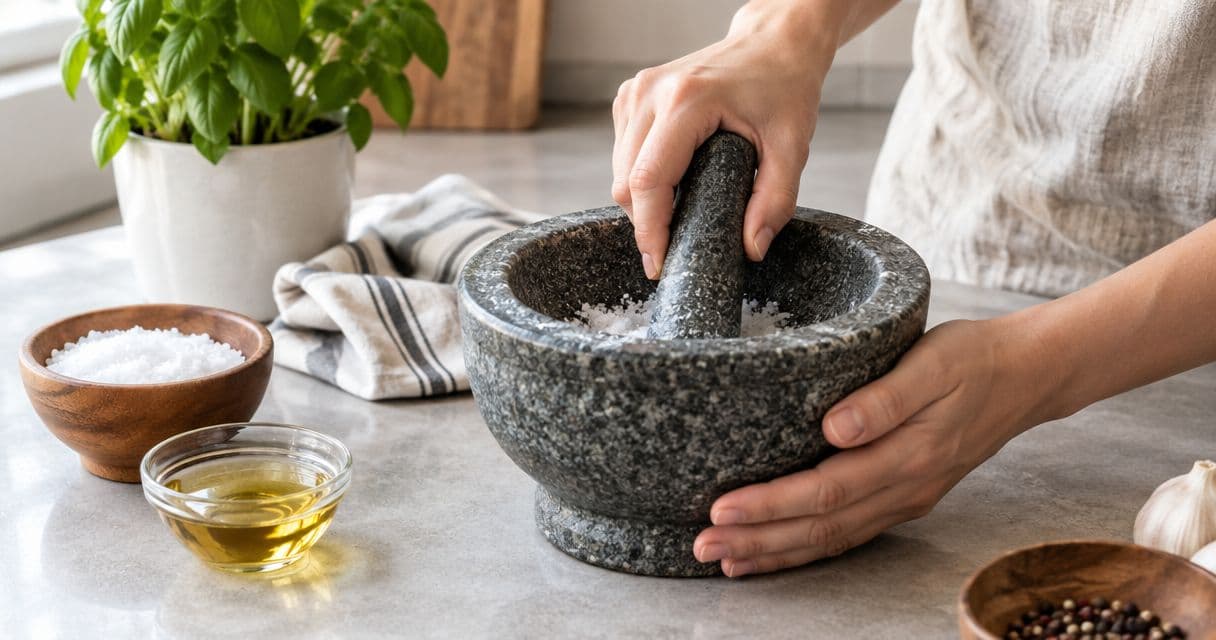
To season an unpolished granite mortar and pestle before first use, scrub both pieces with water, grind and discard small batches of dry white rice to remove loose stone dust, then rinse and air-dry thoroughly. Follow the maker’s care instructions first: seasoning granite removes manufacturing residue; it does not create an oil coating like seasoning cast iron.
TL;DR- How do you season a granite mortar and pestle before first use? Scrub, grind rice, rinse, and dry.
- Unpolished granite needs a clean grinding surface, not an oil coating or a permanent garlic paste.
- Discard every conditioning batch; stop if the stone keeps shedding visible particles.
- 5Senses whole spices suit cooks who want to grind small amounts just before cooking.
Why this matters
A new mortar can look clean while loose powder remains in its textured bowl. Grinding that residue into your first spice blend wastes ingredients and leaves an unpleasant gritty texture. Prepare the pestle’s working end, too—not just the mortar.
Clean stone is the goal. A perfectly smooth bowl is not. The textured grinding surface helps break down seeds and other ingredients. Once the tool is ready, the guide to grinding your own spices at home explains how fresh grinding fits everyday cooking.
How do you season a granite mortar and pestle before first use?
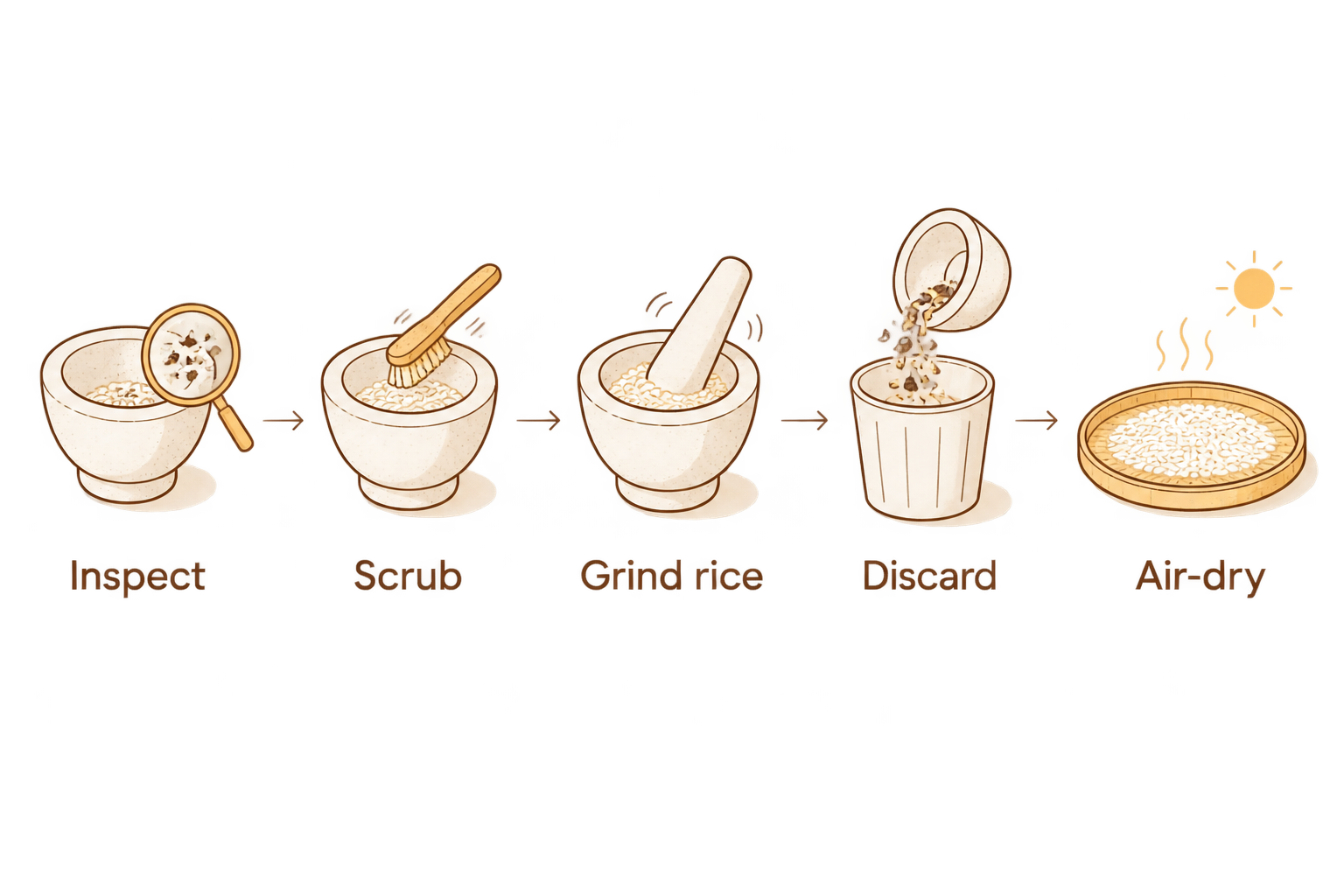
Use the following sequence for a new, unpolished granite tool unless its maker specifies a different method. Keep the packaging or care leaflet nearby, especially if the mortar has a coated exterior, attached base, or decorative finish.
1. Inspect both pieces
Look inside the bowl, around its rim, and over the pestle’s rounded working end. Check for cracks, chips, loose fragments, and any coating that appears to be peeling. Remove packaging and labels without scraping the grinding surface with a metal blade.
Do not try to grind away a crack or repair a chipped food-contact surface through seasoning. Set a damaged tool aside and contact its seller or maker before using it with food.
2. Scrub with water
Rinse the mortar and pestle under warm running water. Use a clean, stiff nylon brush to work around the bowl’s floor and walls, then scrub the pestle’s working end. Pay attention to textured areas where powder collects.
Avoid a sudden change between very hot and very cold water. Do not put the mortar in the dishwasher unless the maker explicitly permits it, and follow its instructions on detergent rather than assuming every stone tool has identical care requirements.
3. Grind dry white rice
Let the grinding surfaces dry, then add enough uncooked white rice to cover a small working area without crowding the bowl. Press and rotate the pestle to crush it. Move around the bowl so the rice contacts the floor, lower walls, and pestle tip.
Start with controlled pressure. Heavy blows send rice flying and make it harder to work evenly across the surface. The rice is a disposable cleaning material here, not an ingredient you will keep.
4. Discard and repeat as needed
Empty the ground rice into the trash, brush out the powder, and inspect it for visible stone particles. Add fresh rice and repeat if loose residue remains. Never return used conditioning rice to your pantry or use it as rice flour.
Early batches can look gray from stone dust, but color alone is not a complete readiness test. Look for loose particles and continued shedding rather than chasing a particular shade of white indefinitely.
5. Rinse and air-dry
Brush away the remaining rice flour and rinse both pieces thoroughly. Wipe off surface water with a clean towel, then leave the mortar and pestle exposed to circulating air until fully dry. Keep the pestle beside the bowl rather than resting its wet end inside it.
Do not move straight from rinsing to grinding dry spices in a damp bowl. Moisture makes fine powders cling to the stone and complicates cleanup.
What should you use to season granite?
Plain white rice is useful for initial conditioning because you can grind it, inspect it, and discard it without adding a strong aroma. Garlic and salt appear in traditional preparation routines, but they serve different purposes. They are not proof that a mortar is free of loose stone.
| Material | Best for | Useful feature | Limitation |
|---|---|---|---|
| Dry white rice | Initial abrasive conditioning, where the maker permits it | Produces a disposable powder you can inspect | Requires thorough removal afterward |
| Coarse salt | Supplemental abrasive cleaning, where permitted | Crushes against the working surface | Dissolves during rinsing and does not replace inspection |
| Garlic | Preparing a savory paste after conditioning | Lets you practice crushing a soft ingredient | Leaves an aroma that is unwelcome in sweet spice mixtures |
| Cooking oil | Cooking after the tool is ready | Helps combine ingredients in a recipe | Is not a substitute for removing loose grit |
Keep the first preparation neutral if you plan to grind cardamom for baking as well as garlic for dinner. Adding aromatic ingredients before checking the stone makes it harder to separate a clean tool from a strongly scented one.
Why first-use preparation varies
There is no useful universal batch count for every granite mortar. Judge the surface and follow the supplied instructions rather than copying a fixed routine from a different tool.
- Working-surface finish: A rough interior behaves differently from a polished food-contact surface. Check which parts the maker intends you to grind against.
- Residual manufacturing dust: Visible powder calls for cleaning before food touches the bowl. The amount present determines whether additional conditioning is necessary.
- Bowl shape: Deep walls and a narrow base require deliberate movement to reach the full working area.
- Pestle shape: Its rounded end and sides contact different areas as you rotate it. Inspect and clean those contact surfaces.
- Added materials: An attached base or decorative coating can change how you wash and dry the tool. Do not assume the whole object tolerates soaking.
A mortar that keeps releasing visible fragments needs attention from its maker. More force is not a solution to persistent shedding.
How do you know when a granite mortar is ready to use?
A granite mortar is ready for its first food use when it is clean, fully dry, free of loose visible grit, and prepared according to its maker’s instructions. Its interior can remain textured. Roughness and loose particles are different things.
Inspect the rinsed bowl under good light. Run a clean fingertip gently over the working surface to check for loose debris, without expecting the stone to feel like glass. Check the pestle in the same way.
If fresh rice still picks up obvious fragments, stop before adding spices. Do not taste conditioning powder to test for grit, and do not serve a first spice batch that contains suspicious hard particles.
Do you need to season a polished granite mortar?
A polished granite mortar needs cleaning before first use, but abrasive rice conditioning depends on its working surface and the maker’s directions. A shiny exterior does not tell you whether the interior is polished. Inspect the bowl itself.
Do not roughen a smooth bowl with sandpaper, metal tools, or improvised abrasives. If the tool does not grip the ingredients you want to grind, check its intended use rather than trying to alter its finish.
Can you use soap on a granite mortar and pestle?
Soap use depends on the maker’s care instructions; there is no single rule for every mortar sold as granite. For initial dust removal, water, a clean brush, and permitted conditioning are the starting point. If detergent is allowed, rinse it away thoroughly.
After working with oily or strongly aromatic ingredients, rice alone is not a substitute for washing. Use the approved cleaning method, remove food residue promptly, and dry both pieces before storage. Avoid scented cleaners that leave an unwanted fragrance around food preparation.
Your first spice grind: start small and neutral
Choose an ingredient you already plan to cook with, and grind only what the recipe needs. A small batch gives the pestle room to move. It also lets you inspect the result before committing a larger quantity of spices.
5Senses whole spices are best for cooks who want to grind small amounts just before cooking. The practical trade-off is preparation: whole seeds need crushing or grinding when your recipe calls for powder. Keep the tool clean enough that yesterday’s savory paste does not become today’s baking aroma.
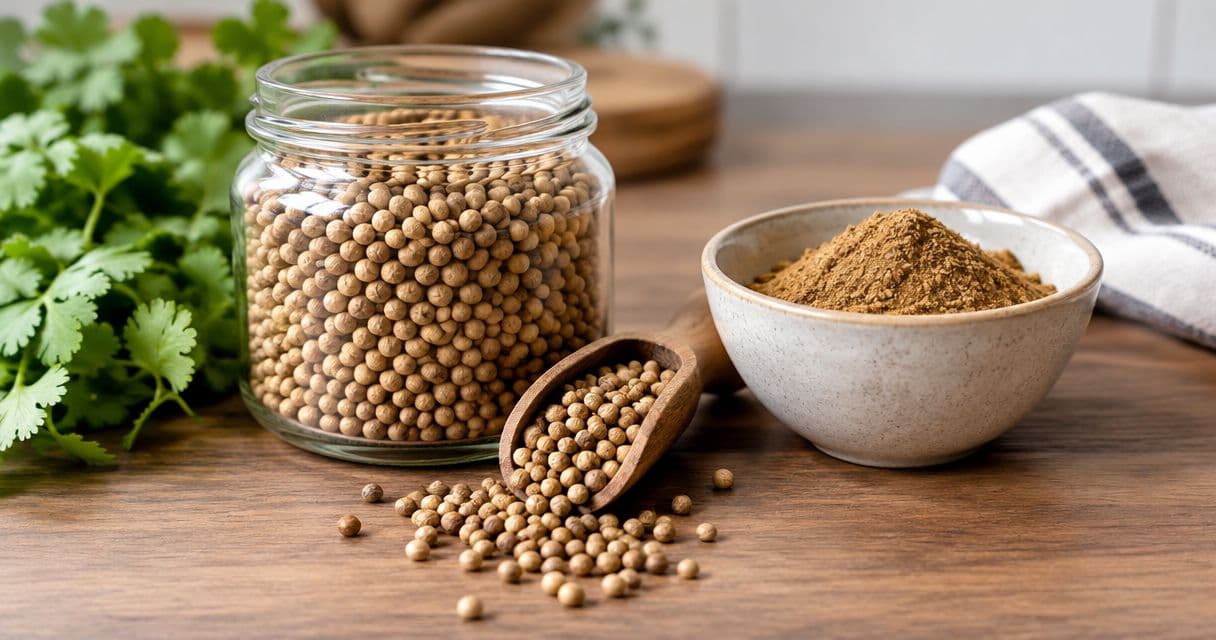
For a coriander-led first dish, 5Senses Whole Coriander carries the stated designation Double Parrot Grade A (Hadoti Bloom), sourced from Kota in Rajasthan’s Hadoti region, India. Its supplied product details describe near-source partial sun-drying and citrus-floral, woody-nutty tasting notes. Double Parrot Grade A is its commercial grade, not an independent universal certification or a laboratory oil-content result.
Toast coriander gently in a dry pan if the recipe calls for a toasted flavor, then let it cool before grinding. Keep the seeds moving and stop before they scorch. For an untoasted preparation, grind the seeds directly in the clean, dry mortar.
Use pressure and a circular motion for a finer result; use controlled crushing when you want texture. Fresh grinding gives you control, but it does not guarantee a uniformly fine powder. Inspect the texture before adding the spice to a smooth sauce.
Keep the mortar clean between cooking rituals
Seasoning is first-use preparation, not a flavor layer you need to preserve. A neutral bowl gives you more freedom to move between coriander, pepper, cardamom, and wet pastes. Clean according to what you have just prepared.
After dry spices
Tip out the spice, then brush away powder from the bowl and pestle. Wash as directed if residue remains, particularly after oily seeds or intensely aromatic ingredients. Let everything dry before the next dry grind.
Avoid storing ground spices in the mortar. Transfer anything you intend to keep to a suitable closed container, and leave the bowl ready for its next use.
After wet pastes
Remove the paste promptly and wash using the maker’s approved method. Work the brush into the textured surface rather than letting food dry hard in the bowl. Rinse carefully and air-dry with the pieces separated.
A mortar offers useful texture control for pastes, but it takes manual work and thorough cleanup. For repeated preparation, think about the order of ingredients: grind a delicate baking spice before a strongly scented savory paste, not immediately afterward in an inadequately cleaned bowl.
FAQ
What's the easiest way to season a new granite mortar and pestle?
Scrub both pieces with water, grind and discard dry white rice if the maker permits it, then rinse and air-dry thoroughly. Inspect for loose grit before using the tool with food.
How many times should I grind rice in a new mortar?
Repeat only as needed to remove loose residue; there is no universal batch count. If the mortar keeps shedding visible particles, stop and contact its maker rather than grinding indefinitely.
Should I soak my granite mortar before seasoning it?
Do not assume soaking is required. Follow the maker’s directions, especially when the mortar has an attached base, coating, or other material that needs different care.
Do I need garlic and salt to season granite?
Garlic and salt are not necessary to establish that a granite mortar is clean and free of loose grit. Garlic adds a strong aroma, so keep initial preparation neutral when you also plan to grind spices for baking.
Can I season a granite mortar with cooking oil?
Cooking oil does not remove manufacturing dust or loose stone particles. Granite preparation is not cast-iron seasoning, so do not apply an oil coating as a substitute for cleaning.
Can I eat the rice used to season a mortar?
Discard all rice used for initial conditioning because it can contain stone dust and other residue. Do not cook it, taste it, or save it as flour.
Is a rough granite mortar supposed to become smooth?
An unpolished granite grinding surface is intended to remain textured. Remove loose residue, but do not try to polish the bowl through prolonged pounding or improvised abrasives.
Do I need to season my mortar again after every use?
Routine use calls for cleaning and thorough drying, not repeating the entire first-use process. Recheck the tool if you notice damage, loose particles, or persistent residue.
One last thing
Your first savory paste should not become a permanent seasoning. A clean mortar lets coriander stay citrusy and cardamom stay distinct. Pair 5Senses whole spices with a neutral, dry grinding surface, then toast, grind, bloom, or infuse according to the dish—not according to residue left in the bowl.