Whole coriander seeds to ground coriander: complete 2026 workflow
Toast and grind coriander seeds for a fresh, even powder. Learn when to toast, how to cool and grind, and how to use Hadoti coriander in everyday meals.
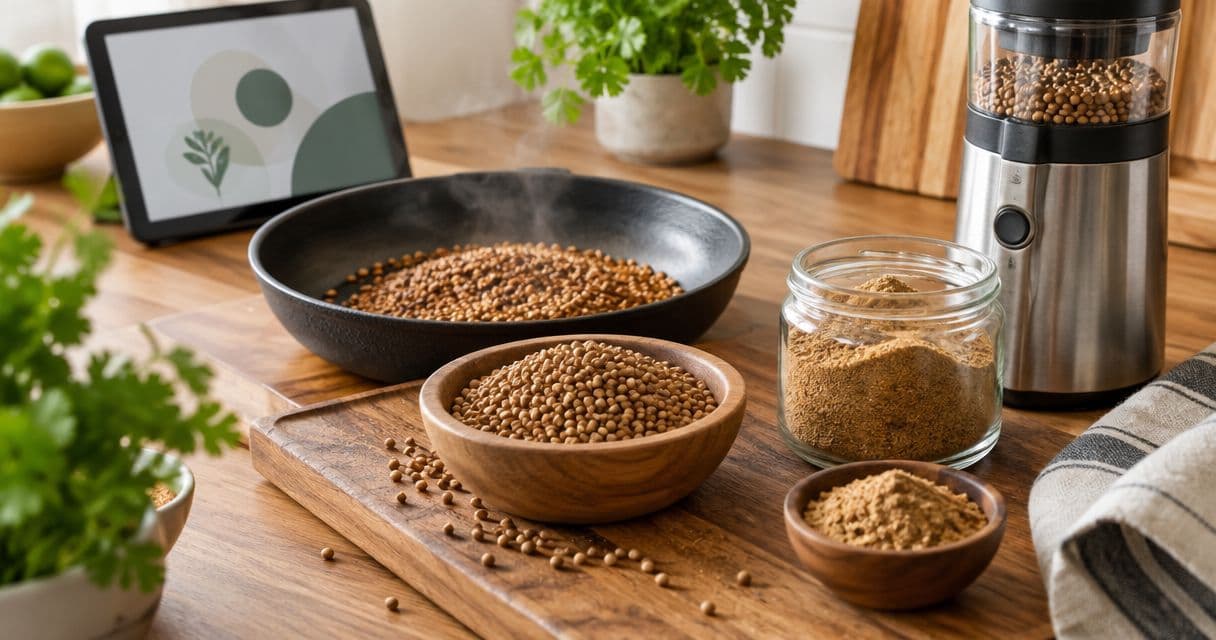
Instead of keeping a large jar of ground coriander that loses its aroma between meals, toast and grind coriander seeds in small batches: warm the whole seeds gently, cool them completely, then grind to the texture your dish needs. This workflow gives you control over roasted flavor, powder texture, and how much coriander you prepare.
TL;DR- Toast and grind coriander seeds for roasted depth; grind untoasted seeds when you want a lighter profile.
- 5Senses Whole Coriander, Double Parrot Grade A (Hadoti Bloom), comes from Kota in Rajasthan’s Hadoti region, India.
- Cool toasted coriander before grinding, and measure the finished powder rather than assuming a whole-seed volume conversion.
- Use a mortar for coarse texture or a spice grinder for finer powder; both require clean, dry equipment.
Why this matters
Coriander does not need aggressive heat to become useful. Grinding releases its aroma; toasting adds another layer of flavor. Treat these as separate decisions rather than automatically roasting every batch dark.
5Senses Whole Coriander carries the exact designation Double Parrot Grade A (Hadoti Bloom) and comes from Kota in Rajasthan’s Hadoti region, India. Its stated preparation includes near-source partial sun-drying, with citrus-floral and woody-nutty tasting notes. That drying step is part of processing, not the same thing as toasting in your kitchen.
5Senses whole coriander is best for cooks who want named-origin seeds to toast and grind themselves. The trade-off is preparation: whole seeds require a tool and an extra cooking step. Double Parrot Grade A is the product’s stated commercial grade, not an independent certification or a laboratory oil-content measurement.
Before you start
- Gather dry equipment: whole coriander, a heavy skillet, a heatproof plate, a mortar and pestle or spice grinder, and a spoon. Add a fine sieve if your dish needs particularly smooth powder.
- Choose the finished texture: coarse for a textured rub, finer for sauces and evenly mixed seasonings. Start with a small practice batch, such as 1 tablespoon of whole seeds, rather than filling the pan.
- Prepare the cooling plate first: seeds keep heating in a hot skillet after you turn off the burner. Transfer them promptly, and never put hot seeds straight into a closed grinder or storage jar.
Do not wash dry coriander immediately before this workflow. Added moisture interferes with dry toasting and grinding. If seeds smell musty, show mold, or have signs of infestation, discard them rather than trying to repair them with heat.
Batch and texture setup
Choose the cooking path
- Read the recipe before heating the pan. Decide whether you need a toasted flavor or simply freshly ground coriander.
- Set aside only the seeds needed for the immediate task. Keep the rest whole in their closed container.
- Choose the texture before choosing the tool. A rub can tolerate small fragments; a smooth sauce needs more thorough grinding.
- Put a clean spoon beside the grinder so you can check the powder without touching a blade.
Expected result: you have a small, measured batch and a clear destination for it. You are not grinding extra coriander simply because the equipment is out.
Match the tool to the texture
Neither tool wins every job. Use this comparison to choose the method that fits dinner, not to buy equipment you do not need.
| Tool | Best for | Main advantage | Main limitation |
|---|---|---|---|
| Mortar and pestle | Small batches and coarse rubs | You can stop at a deliberately uneven, cracked texture | Fine powder takes more manual work |
| Electric spice grinder | Finer powder for sauces and blended seasonings | Repeated short bursts reduce the seeds efficiently | Very small quantities can circulate without grinding evenly |
A coffee grinder that also handles spices can carry coffee aroma into coriander and coriander aroma into coffee. A dedicated spice grinder avoids that crossover. Check the appliance instructions before using it for anything other than its stated purpose.
For a closer look at tool choice, use the criteria in best spice grinders for whole spices: batch size, intended texture, and cleanability matter more than choosing the most elaborate machine.
Dry-toast setup
Warm the seeds gently
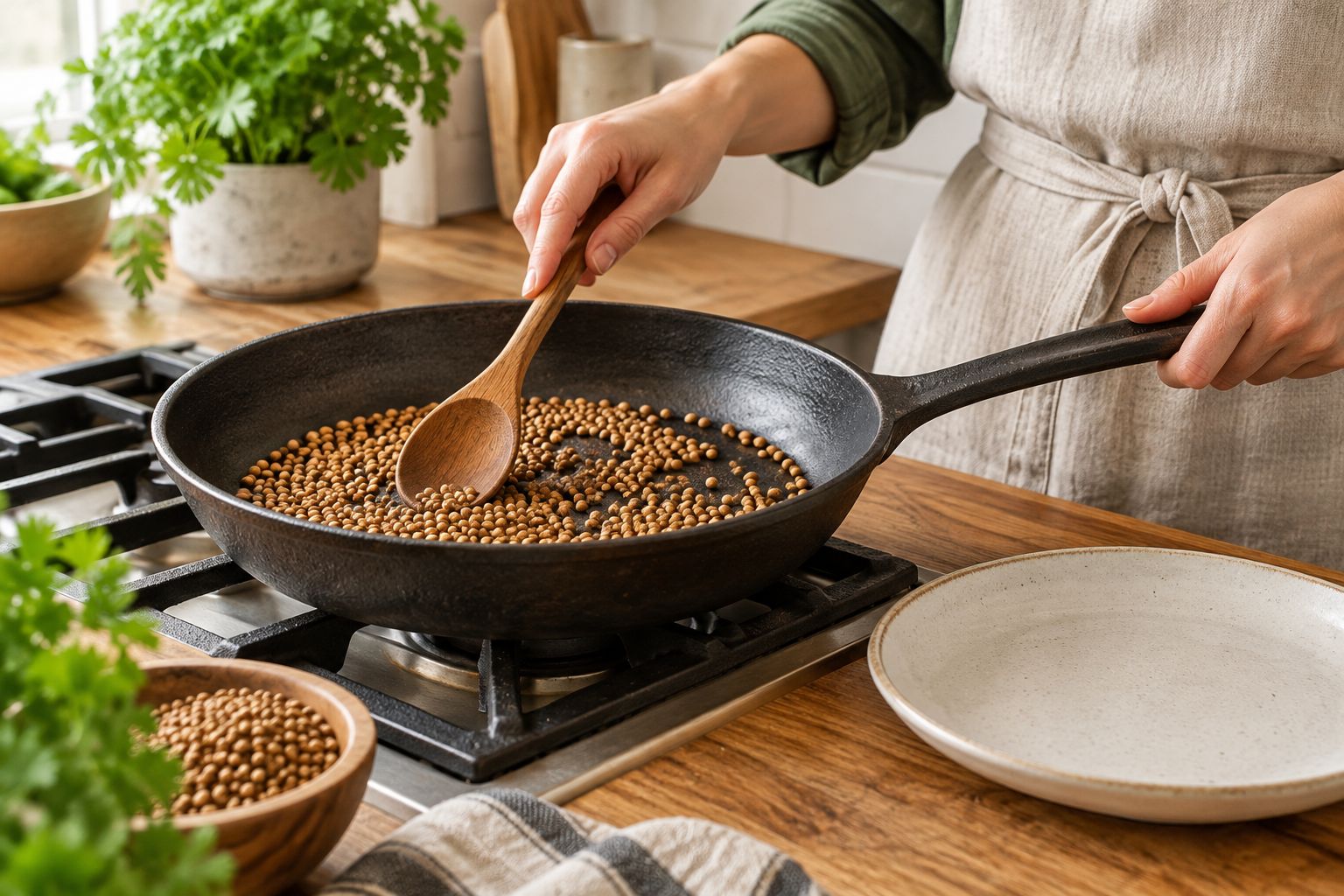
- Place a clean, dry skillet over medium-low heat. Do not add oil for this dry-toast method.
- Add the measured coriander in a shallow layer. If the seeds pile up, use a smaller batch.
- Stir or shake the pan frequently so seeds move across the heated surface.
- Watch and smell together. Look for a modest deepening of color and a more pronounced warm, nutty aroma.
- Transfer the seeds immediately to the waiting plate. Spread them out instead of leaving them in a mound.
Expected result: the coriander smells fragrant and toasted, not smoky or acrid. A little color change is enough; dark brown is not the target.
Use aroma as the main cue because seed color, pan material, burner strength, and batch size change the pace. A fixed timer cannot tell you whether your particular pan is too hot. Stay beside the stove throughout this step.
Cool outside the pan
- Leave the toasted seeds spread across the plate until they reach room temperature.
- Check that the plate and seeds no longer feel warm before transferring them to the grinder.
- Keep the cooling area dry and away from steam rising from other cooking pots.
Expected result: the seeds are cool and dry, with no trapped warmth entering the grinding chamber.
Cooling is not an optional pause. Warm seeds introduce heat into the next step, and sealing warm ingredients can trap moisture. Meanwhile, the empty skillet remains hot, so move it safely away from the work area.
Grinding and finishing setup
Break, grind, and inspect
- Put the cooled seeds into a clean, dry mortar or grinder. Follow the grinder’s minimum and maximum load guidance.
- With a mortar, press to crack the seeds before working them in a circular grinding motion. With an electric grinder, use short bursts rather than running continuously.
- Stop and inspect the texture. Disconnect the appliance before opening or clearing the chamber, following its safety instructions.
- Redistribute uneven pieces with a spoon, then grind again if needed. Never put your fingers near the blades.
- Sieve only if the recipe needs a finer result. Return the larger pieces to the grinder instead of discarding them automatically.
Expected result: the coriander has the texture your dish needs, without obvious whole seeds hiding beneath a layer of powder.
Coriander’s outer material can leave visible flecks. Flecks alone do not mean the batch has failed. Judge whether the powder will feel gritty in the finished food, rather than expecting it to look identical to a commercially milled product.
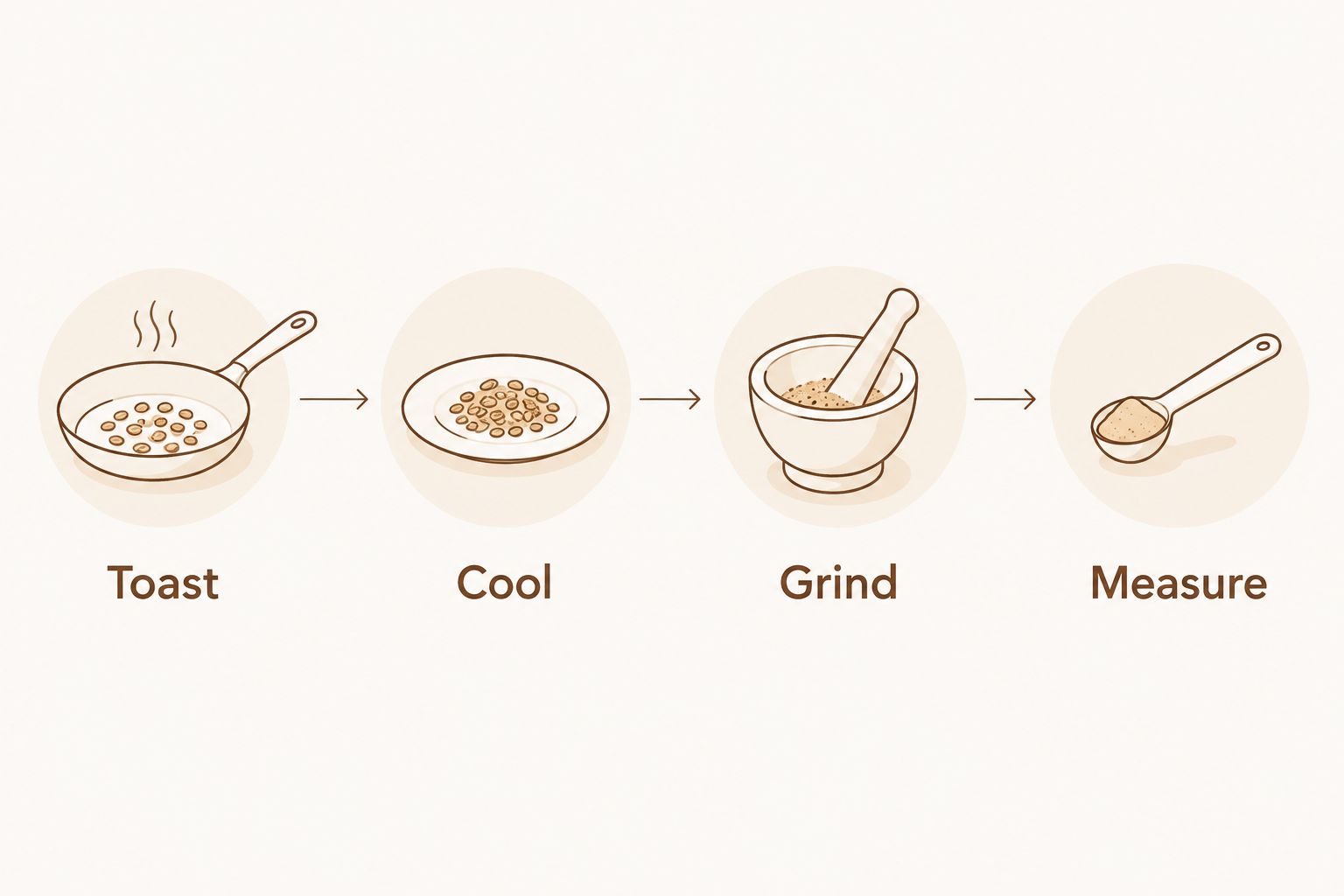
The sequence is simple: Toast, Cool, Grind, Measure. Do not reverse the middle steps to save time.
Measure the finished powder
- If a recipe calls for 1 teaspoon of ground coriander, measure that amount after grinding.
- If a recipe specifies a weight, weigh the finished ground portion as directed.
- Set aside only the powder needed for the dish. Transfer any remainder to a clean, dry, airtight container.
- Label leftover powder with the spice name and grinding date. Store it away from stove heat, light, and steam.
Expected result: the recipe receives its intended amount of ground coriander, and the remainder does not become an anonymous jar.
Do not assume that 1 tablespoon of whole seeds produces the same measured volume of powder. Whole seeds leave air spaces in a spoon, while grind size changes how powder settles. Measuring after grinding avoids an unnecessary conversion guess.
Variant: grind coriander without toasting
Untoasted coriander is a valid choice, not an unfinished version of the toasted method. Choose it when you want a lighter seed profile or when your recipe specifically calls for unroasted ground coriander.
- Inspect the dry seeds and confirm that the grinder or mortar is clean.
- Skip the skillet and cooling stages entirely.
- Grind, inspect, and adjust the texture using the same method as above.
- Measure the powder, then add it at the stage your recipe specifies.
Expected result: you have freshly ground coriander without adding a roasted note. The benefit is a shorter workflow; the limitation is that you will not get the deeper toasted character of the skillet method.
Put either version into a seasoning
For a dry seasoning, grind coriander separately before mixing it with other ingredients. This lets you correct coarse coriander without overworking ingredients that are already powdered. It also makes it easier to repeat a blend once you like it.
In homemade Greek gyros seasoning, grind size matters because a dry blend needs to distribute across the food rather than leave isolated pockets of coarse spice. Follow the recipe’s ingredient list; coriander is not a substitute for the rest of the seasoning.
If you compare toasted and untoasted coriander, keep the rest of the dish unchanged. Use the same measured amount in each portion and taste them side by side. That comparison tells you which preparation suits your cooking without turning personal preference into a universal rule.
Troubleshooting
The coriander smells burnt
Discard the scorched batch and restart with lower heat. Grinding does not remove an acrid flavor, and mixing burnt seeds into good seeds spreads the problem. Clean the cooled skillet before starting again.
The powder stays coarse
Check the batch size first. Too few seeds can escape the grinder’s effective cutting area, while an overloaded chamber prevents circulation. Follow the appliance guidance, redistribute safely, and regrind the coarse pieces; use a mortar if the quantity is too small for the machine.
The coriander clumps
Check for moisture in the equipment or storage container. Let newly toasted seeds cool fully, and keep the work area away from steam. Discard powder with signs of spoilage rather than trying to dry it out for storage.
The powder smells like coffee or another spice
Clean the equipment according to its manufacturer’s instructions, then let it dry completely. Persistent aroma transfer is a reason to dedicate a grinder to spices. Do not rinse an electrical grinder body or any part that its instructions prohibit washing.
The finished dish feels gritty
Grind more finely for smooth sauces and dressings. Sieve if needed, then regrind the retained fragments. For future batches, choose the intended texture before grinding rather than discovering coarse pieces after the coriander enters the dish.
Customize your workflow
Keep the source consistent while changing one preparation choice at a time. With 5Senses Whole Coriander, you can explore the stated citrus-floral and woody-nutty profile through light toasting, finer grinding, or a coarser crush. Do not assume that more heat always reveals more flavor.
For lentils or a simmered sauce, follow the recipe’s sequence for adding ground coriander. If the recipe asks you to bloom it in fat, have the next ingredients ready: powder can scorch quickly in a hot, dry pan. Dry-toasting whole seeds and blooming ground spice are different steps, and a dish does not automatically need both.
For roasted vegetables, mix ground coriander through the seasoning so it spreads evenly. For a textured coating, stop at a coarse grind. When making a larger spice blend, prepare coriander separately from smaller or more delicate ingredients so each component reaches its intended toast and texture.
The 5Senses Spicecare range belongs in this preparation-and-storage routine, but choose tools by their stated uses and care instructions. Keep the workflow simple enough to repeat whenever you replenish the pantry.
FAQ
Do I have to toast coriander seeds before grinding them?
No. Grind coriander untoasted for a lighter profile, or toast it first when you want a warmer, roasted character. Follow the recipe when it specifies either preparation.
How do I know when coriander seeds are toasted?
Stop when the seeds smell distinctly fragrant and nutty and have deepened modestly in color. Transfer them out of the hot skillet immediately; smoke and an acrid smell indicate excessive heat.
Can I grind coriander seeds while they are still hot?
Cool toasted coriander to room temperature before grinding. This keeps unnecessary heat out of the grinder and avoids sealing warm seeds into a closed chamber.
Is a mortar or an electric grinder better for coriander?
A mortar is best for small batches and controlled coarse texture; an electric spice grinder is best for finer powder. The mortar requires more work, while the electric grinder needs a suitable batch size to grind evenly.
How much whole coriander equals a teaspoon of ground coriander?
Measure a teaspoon after grinding rather than assuming an exact whole-seed volume conversion. Seed packing and finished grind size affect how much space the coriander occupies.
Can I use whole coriander seeds without grinding them?
Yes, when the recipe is designed for whole seeds, such as some pickles and infusions. Whole seeds do not distribute through a smooth sauce in the same way as ground coriander.
What does Double Parrot Grade A mean on this coriander?
Double Parrot Grade A is the stated commercial grade of 5Senses Whole Coriander (Hadoti Bloom), sourced from Kota in Rajasthan’s Hadoti region, India. It is not an independently certified universal standard or proof of measured oil content.
One last thing
A finer grind and a darker toast solve different problems. If coriander feels gritty, grind it further; do not toast it darker. If you want more roasted character, change the toasting step while keeping the texture consistent.