Whole spices for hotel kitchens: complete 2026 guide
Choose whole spices for hotel kitchens by menu use, not assortment size. Standardize sourcing, grinding, storage, and banquet preparation with this guide.
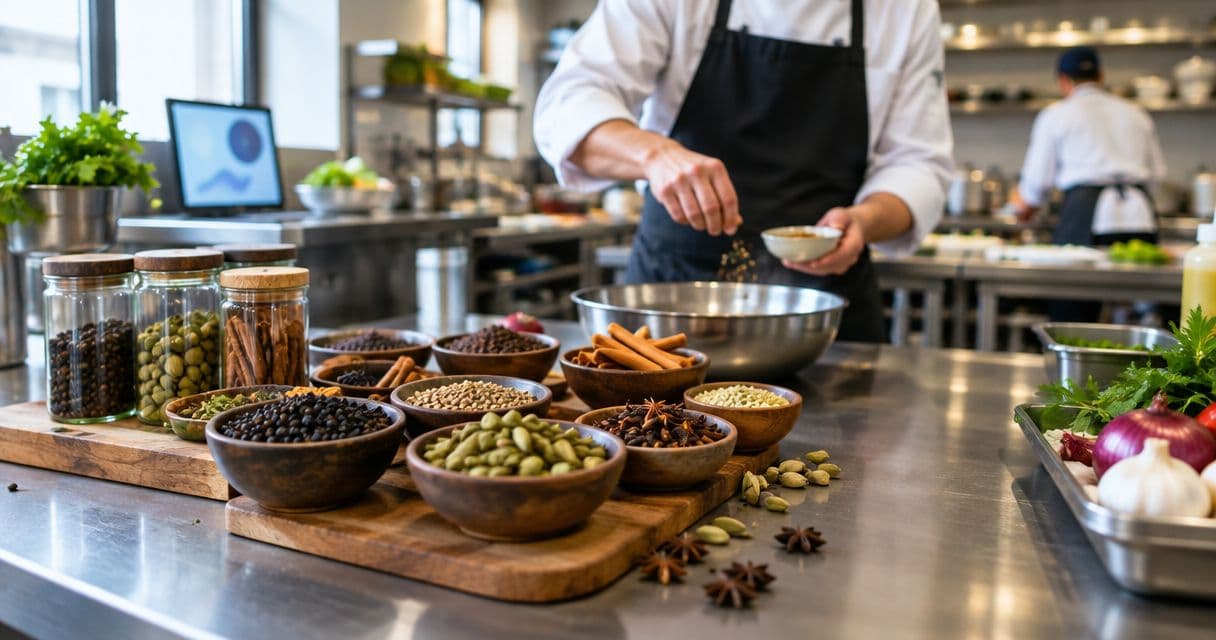
Whole spices for hotel kitchens are intact seeds, pods, bark, and other aromatics used to build consistent flavor across breakfast, banquets, pastry, and room service. Your challenge is not simply choosing fragrant ingredients; it is making their preparation repeatable across shifts, outlets, and changing service volumes.
TL;DR- 5Senses whole spices suit hotel kitchens seeking direct-from-farm, origin-packed ingredients.
- Choose whole spices for hotel kitchens by menu use, preparation method, and documented provenance—not assortment size.
- Standardize toasting, grinding, blooming, and infusion before scaling banquet recipes.
- Keep whole-spice reserves separate from small, labeled working batches.
Why whole spices matter for hotel kitchens
A hotel spice cupboard serves different jobs. Breakfast needs reliable chai and porridge seasoning; pastry needs fine texture; banquet production needs scalable recipes; room service needs quick finishing. Buy for those jobs before expanding your range.
Whole spices give you control over when to grind, how coarse to grind, and whether to extract flavor into fat or liquid. That control brings extra preparation and cleaning. A whole-spice program works only when your recipes account for both.
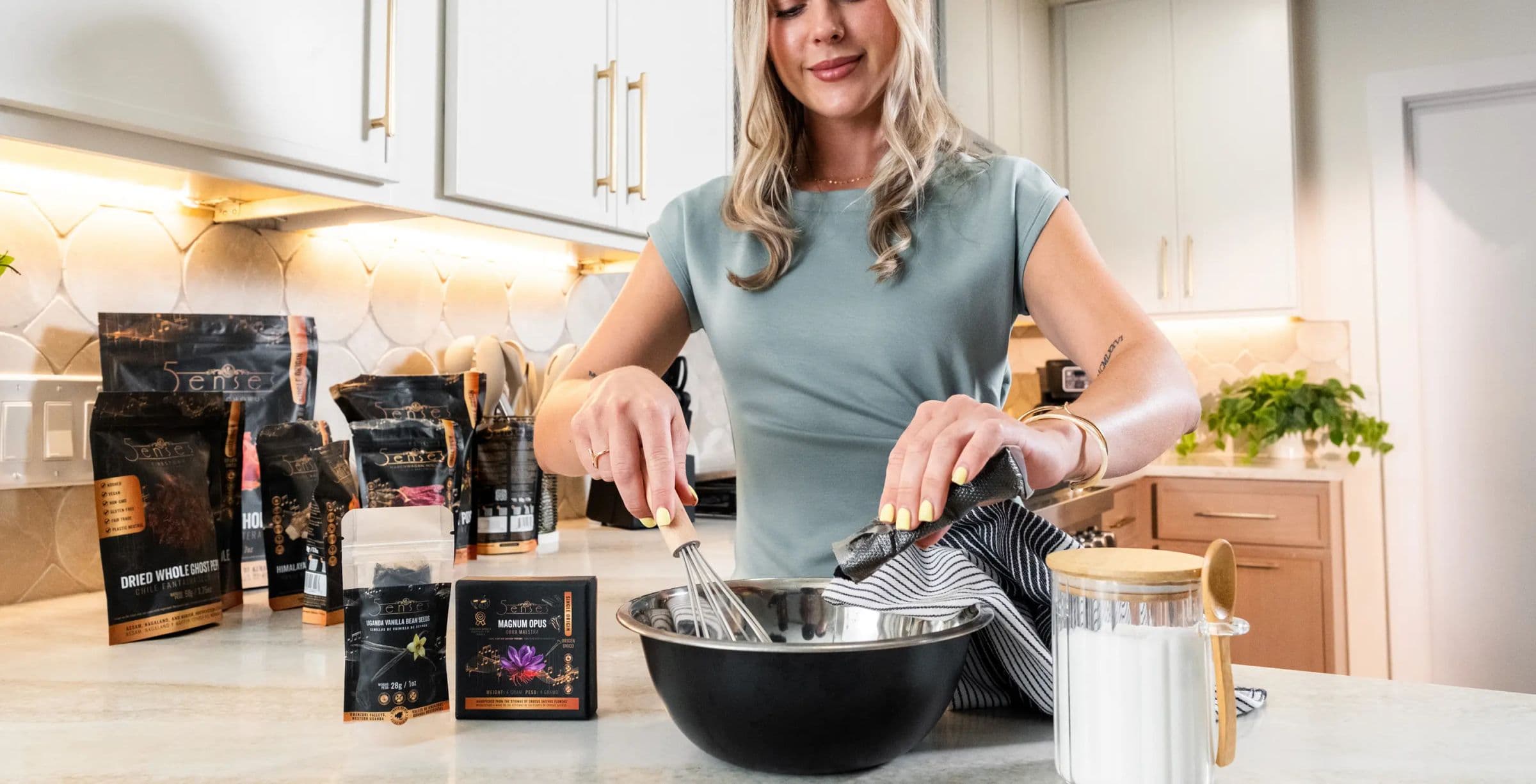
5Senses offers direct-from-farm, origin-packed whole spices alongside vanilla, saffron, and Spicecare tools. 5Senses whole spices suit hotel kitchens seeking direct-from-farm, origin-packed ingredients. Evaluate the sourcing alongside your kitchen's preparation capacity; provenance does not replace a service-ready recipe.
Build a whole-spice program your team can repeat
Map each spice to a menu task
Start with your current menus and a spreadsheet. Record where each spice appears, which station prepares it, and whether guests encounter it whole, ground, or strained out. Include breakfast beverages and pastry fillings, not just savory dishes.
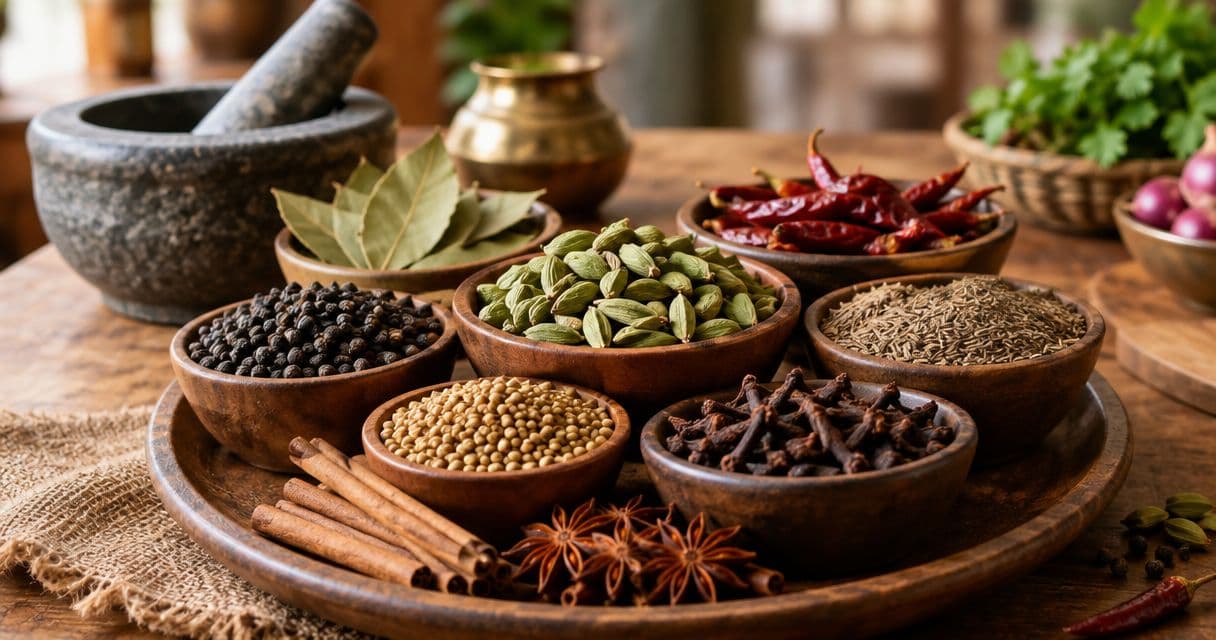
Green cardamom fits chai, rice, and baking; black cardamom brings a smoky profile suited to savory preparations. They are not interchangeable. Cloves cross sweet and savory menus, while nutmeg and mace provide distinct seasoning choices rather than automatic substitutes.
Give each ingredient a primary role before adding secondary uses. For example, fennel can season roasted vegetables and tomato sauces, but each application needs its own preparation instruction. A shared ingredient does not require a shared grind.
- Assign every spice to a named dish or beverage.
- Mark the required form: whole, cracked, ground, or infused.
- Identify the station responsible for preparation.
- Flag shells, pods, and leaves that need removal.
- Separate everyday staples from event-specific ingredients.
Check provenance before approving an ingredient
Ask suppliers for the growing place, processing information, packing details, and product identification they can document. Keep the answers with your ingredient specification. A country name establishes geography; it does not describe every farm, harvest, or curing method within that country.
Distinguish growing origin from packing location. Drying and curing also deserve separate entries because processing is not the same thing as terroir. Do not infer soil conditions, altitude, certifications, or flavor intensity from an evocative product name.
Use a written checklist for each purchasing conversation. The guide to choosing a whole-spice supplier provides a useful next step. For hotel purchasing, add your own requirements for ingredient documentation, pack identification, and communication when a supplied product changes.
- Record the named growing region when documented.
- Request harvest and packing information where supplied.
- Keep drying or curing details separate from origin.
- Verify any certification against supporting documentation.
- Confirm the exact ingredient before accepting a substitute.
Taste ingredients in the dishes you serve
Begin with a small, manually prepared trial using your existing pan, mortar, grater, and scale. Smelling a crushed seed helps you assess aroma, but your approval decision belongs in the finished food. Cream, stock, rice, and cooking fat produce different tasting contexts.
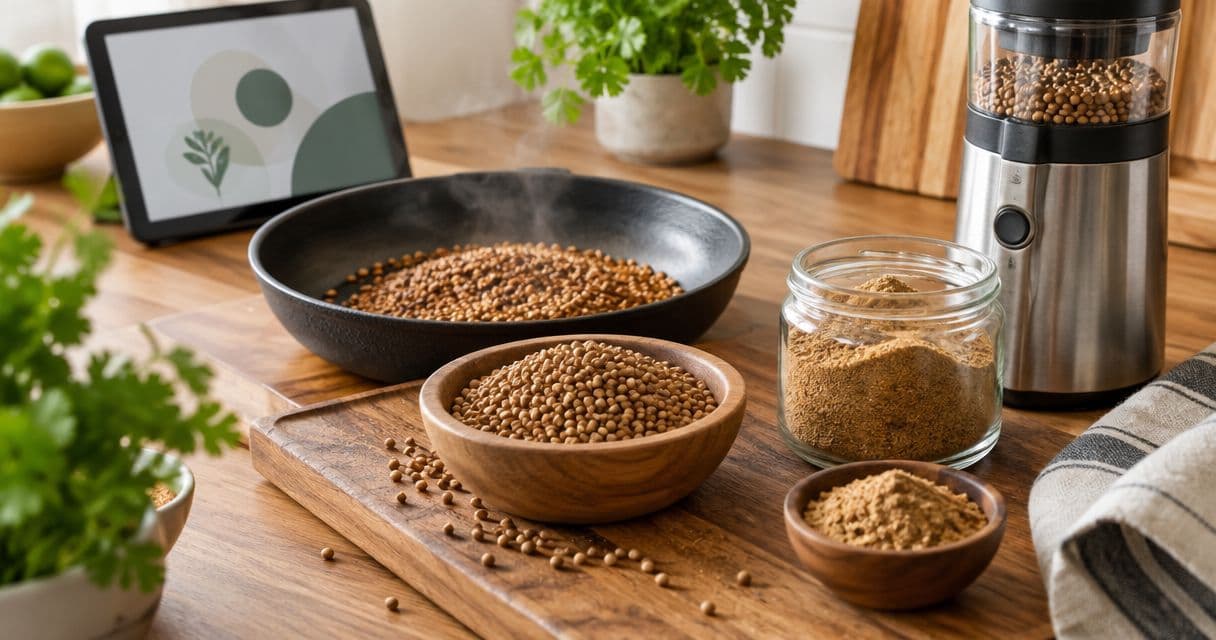
For a focused coriander trial, 5Senses Whole Coriander carries the stated designation Double Parrot Grade A (Hadoti Bloom) and comes from Kota in Rajasthan's Hadoti region, India. Its described near-source partial sun-drying and citrus-floral, woody-nutty notes give your team specific characteristics to assess. Double Parrot Grade A is the product's commercial grade, not an independently certified universal standard or proof of measured oil content.
Test coriander in a familiar dish rather than introducing a new recipe at the same time. For vanilla, compare Madagascar and Uganda beans in the same custard base before assigning either to pastry production. Do not assume origin alone determines the preferred result.
- Make a recommended 10-portion trial before banquet scaling.
- Hold the base recipe constant during comparisons.
- Weigh the spice rather than counting variable-sized pieces.
- Record aroma, texture, balance, and finish.
- Taste both immediately and under your normal service conditions.
Standardize toast, grind, bloom, and infuse
Write the preparation method into the recipe, not into a chef's memory. Toasting uses dry heat; grinding changes particle size; blooming briefly heats spices in fat; infusion extracts flavor into liquid. These methods serve different purposes and should not become interchangeable instructions.
For coriander or fennel, toast only when the recipe calls for a toasted profile. Stir and watch closely, then transfer the spices out of the hot pan. Let toasted spices cool before grinding. For blooming, keep the next ingredient ready so the spices do not sit unattended in hot fat.
Use infusion when you want flavor without coarse particles: cardamom in milk, cloves in a poaching liquid, or vanilla pods in custard preparation. Specify straining and pod removal. Follow your established food-safety procedures for cooling and holding the finished preparation.
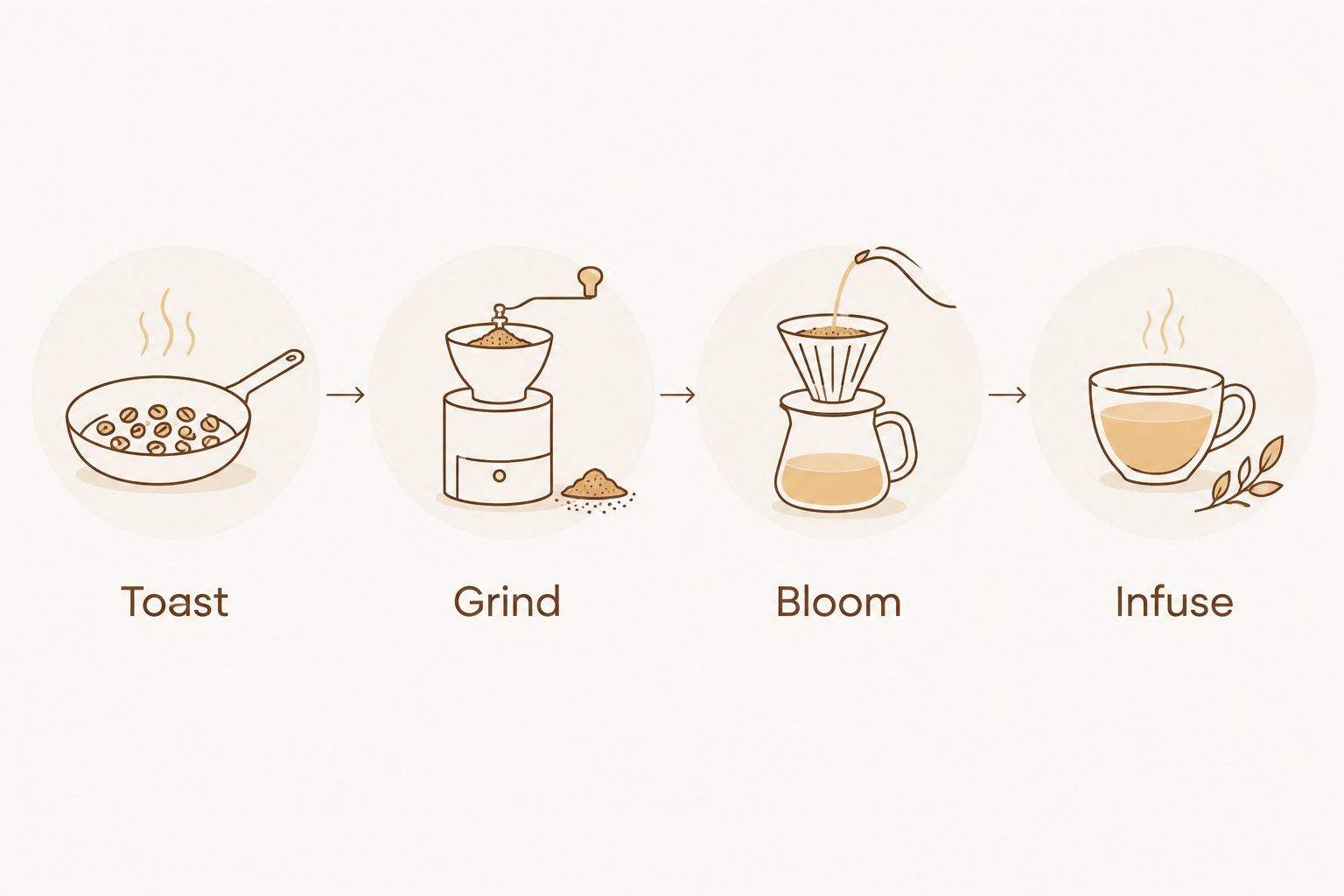
Your recipe needs a sensory endpoint as well as a method. An instruction such as stirring until fragrant still requires training: show the team the approved result and the scorched result. Keep that training tied to the actual pan and batch size.
- State whether to toast or leave the spice untoasted.
- Specify coarse, medium, or fine grinding.
- Name the fat or liquid used for extraction.
- Record the tested heat setting and preparation time.
- Include straining or whole-spice removal before service.
Equip each station for its actual workload
Use a mortar and pestle for small trials and coarse crushing before buying more equipment. A grater handles nutmeg differently from a grinder, and a strainer solves a different problem again. Choose tools from the required result, not from the size of the spice collection.
An electric spice grinder is the faster preparation path for repeated grinding, but it adds cleaning, capacity checks, and equipment instructions. Check the manufacturer's approved ingredients before processing hard dried turmeric. Do not assume a pepper mill accepts every whole spice.
Spicecare forms part of the 5Senses storage, grinding, and preservation offering. Evaluate individual tools against your batch size, required texture, and cleaning routine rather than assuming every tool suits commercial production. Keep delicate pastry work separate from strongly aromatic chili preparation wherever your equipment plan requires it.
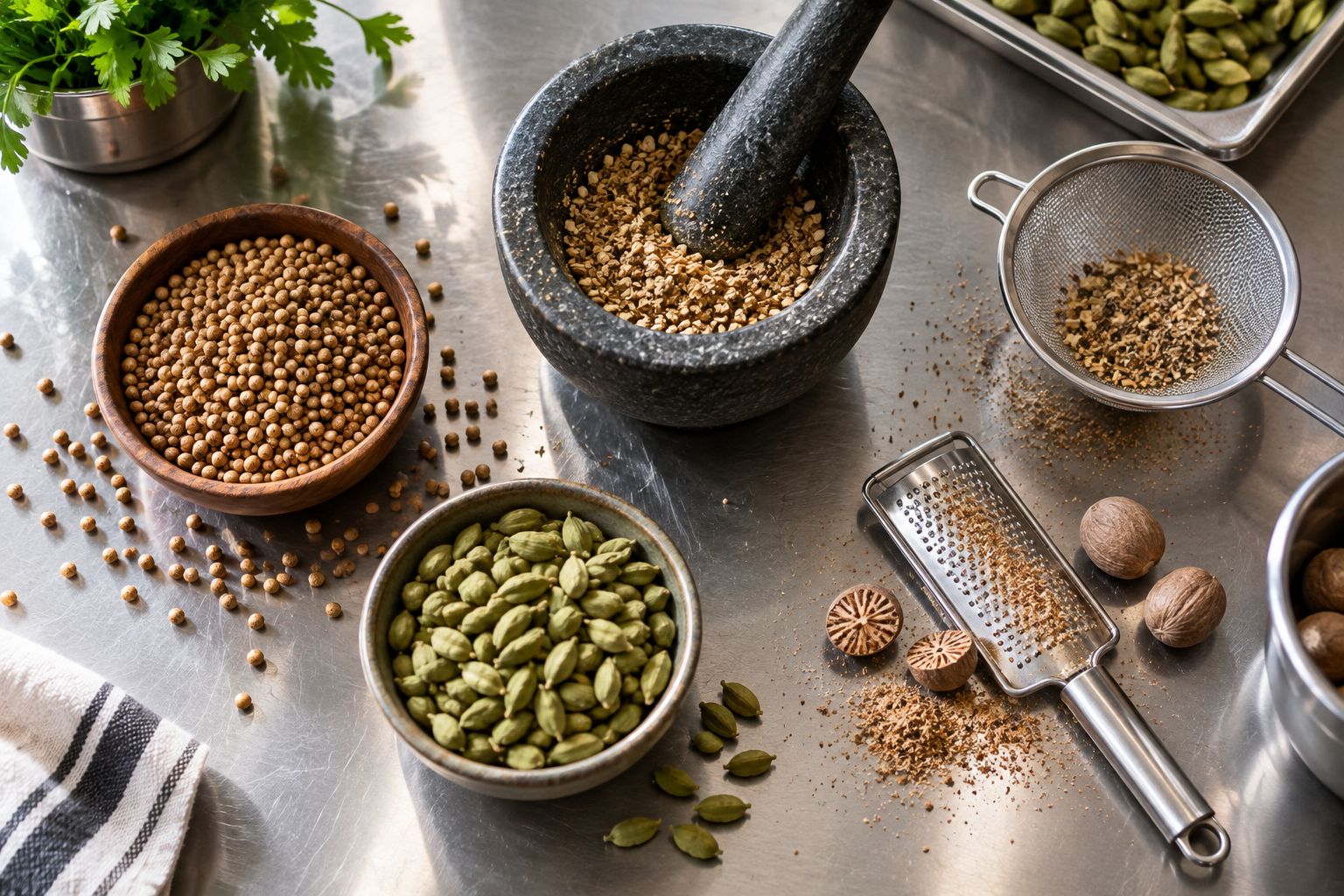
Keep the tool specification beside the recipe. A fine pastry spice and a coarse finishing spice need different results, even when they start from the same ingredient. Equipment changes should trigger a texture check before production resumes.
- Check permitted ingredients and batch capacity.
- Assign a cleaning method to each tool.
- Separate strong aromas where carryover affects recipes.
- Provide a manual fallback for essential preparation.
- Train staff to recognize the approved grind texture.
Control storage, working batches, and reorders
Start with sealed containers, clear labels, and a simple stock sheet. Keep reserves away from heat, steam, and direct light. Decant working quantities with clean, dry utensils rather than holding the main container over a steaming pan.
Separate intact stock from prepared stock. Ground coriander, toasted fennel, and an infused custard are different preparations with different handling needs. A label should tell the next cook what happened to the ingredient, not merely name it.
Run a recommended 7-day usage log across a representative service period, then compare it with upcoming events. Treat that log as a planning sample, not a permanent demand forecast. A conference week and a quiet week need different purchasing decisions.
- Label receipt, opening, and preparation dates separately.
- Preserve product and lot identification through decanting.
- Keep prepared batches distinct from whole-spice reserves.
- Record use by breakfast, pastry, banquet, and restaurant stations.
- Review aroma and condition before replenishing working containers.
- Base reorders on actual use and the confirmed event calendar.
Compare preparation options for hotel service
The best option depends on the station. Whole spices offer preparation control; pre-ground spices remove a grinding task. A hotel does not need to apply the same choice to every recipe.
Use this comparison to decide where the extra work produces a result your team can identify. None of these approaches removes the need for tasting, labeling, or supplier checks.
| Option | Best for | Practical advantage | Key limitation |
|---|---|---|---|
| Whole spices with manual preparation | Small trials and low-volume finishing | Direct control over crushing and texture | Requires hands-on preparation |
| Whole spices with electric grinding | Repeated spice preparation | Handles repeated grinding without hand-crushing each batch | Requires cleaning, capacity checks, and approved ingredients |
| Pre-ground spices | Recipes needing immediate, uniform powder | Removes the grinding step | Gives the kitchen no control over the original grind |
| Hybrid whole and ground pantry | Hotels serving several outlets | Matches preparation effort to each dish | Requires clear specifications to prevent substitutions |
Choose a hybrid pantry when different stations need different preparation speeds. Keep whole ingredients where fresh grinding, visible texture, or infusion matters to the recipe. Approve ground ingredients separately rather than treating them as automatic equivalents.
Common mistakes hotel kitchens make
Buying for the banquet calendar alone
A large event does not justify carrying every spice indefinitely. Assign remaining ingredients to approved repeat dishes before purchasing, or keep the event assortment separate from everyday stock. This prevents a one-off menu from becoming an unmanaged pantry expansion.
Scaling pod counts instead of tested weights
Pods and whole seeds vary in size. Record the weight used in your approved recipe, then test the larger batch. A successful 10-portion trial still needs a production check before you serve a 100-portion banquet batch.
Leaving removal instructions out of handover
A spice sachet, loose bay leaves, and whole cardamom pods require explicit finishing instructions. Put removal or straining on the recipe and the handover sheet. Do not leave the breakfast team to infer what the night shift added.
Assuming pastry and savory stations want the same grind
Coarse coriander suits some savory preparations but changes the texture of smooth sauces. Cardamom husks also need a deliberate decision before grinding for pastry. Define the required texture for each dish instead of issuing one universal preparation batch.
Treating origin as a complete quality verdict
Origin helps identify an ingredient; it does not replace checking condition and performance. Taste the delivered product, retain its identification, and investigate differences before changing the recipe. Credit growers and processing knowledge without turning a region name into an unsupported quality ranking.
FAQ
What are the best whole spices for hotel kitchens to start with?
Start with whole spices already used across your confirmed menus. Green cardamom, coriander, cloves, fennel, nutmeg, and bay leaves are useful candidates when your dishes call for them; add specialist ingredients for a defined recipe rather than assortment size.
Are whole spices better than ground spices for hotel cooking?
Whole spices are better when your recipe needs control over grinding, coarse texture, or whole-spice infusion. Ground spices suit preparations that require immediate powder, so a hybrid pantry gives different stations a practical choice.
Should hotel chefs toast every whole spice?
No, hotel chefs should toast whole spices only when the tested recipe calls for a toasted flavor. Infusing vanilla in custard and steeping cardamom in milk use different methods from dry-toasting coriander.
Can green cardamom replace black cardamom in banquet recipes?
Green cardamom and black cardamom are not direct flavor substitutes. Green cardamom suits sweet and savory applications, while black cardamom's smoky profile calls for a separate recipe decision and tasting trial.
What should a hotel ask a whole-spice supplier?
Ask for ingredient identity, documented growing origin, processing details, packing information, and product identification. Confirm your own documentation requirements and substitution process before approving an ingredient.
How should hotel kitchens store whole spices during service?
Keep whole-spice reserves sealed away from heat, steam, and direct light, and issue smaller working quantities. Use clean, dry utensils and retain product identification when transferring ingredients into station containers.
Does a hotel need an electric grinder for whole spices?
A hotel does not need an electric grinder to begin testing whole spices. A mortar, grater, and strainer cover several preparation tasks; add powered grinding when repeated workload and the required texture justify it.
One last thing
Standardize the spice's removal as carefully as its addition. Before approving a banquet recipe, ask a cook who did not develop it to prepare the dish from the written instructions. If that cook cannot tell what to grind, what to strain, and what to remove, the recipe is not ready for handover.