Whole spices for Indian restaurants: complete 2026 guide
Choose whole spices for Indian restaurants by menu and origin. Build repeatable toasting, grinding, storage, and supplier checks for your kitchen.
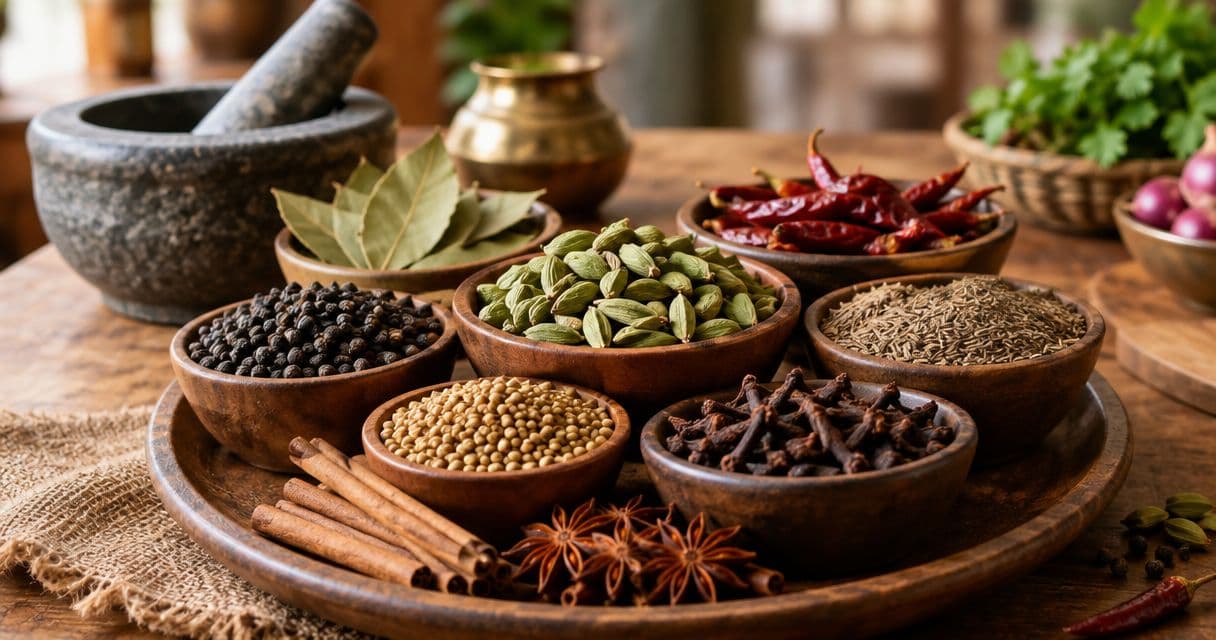
Indian restaurant whole-spice sourcing is the selection, preparation, and storage of intact spices to deliver repeatable flavor across your menu. Choosing whole spices for Indian restaurants means matching each ingredient to its regional cooking role, then giving your team a clear method for toasting, grinding, blooming, or infusing it.
TL;DR- Choose whole spices for Indian restaurants by dish, preparation method, and documented origin—not by pack size alone.
- 5Senses suits origin-focused Indian restaurant kitchens seeking whole spices and practical preparation tools.
- Toast, grind, bloom, and infuse are different techniques; write the appropriate method into each recipe.
- Compare whole spices, freshly ground house blends, and prepared powders against your actual service workflow.
Why whole spices matter for Indian restaurants
A biryani kitchen, a regional vegetarian restaurant, and a chai counter do not need identical spice cupboards. Your menu determines which ingredients earn space, which need fresh grinding, and which should infuse a dish without remaining on the plate.
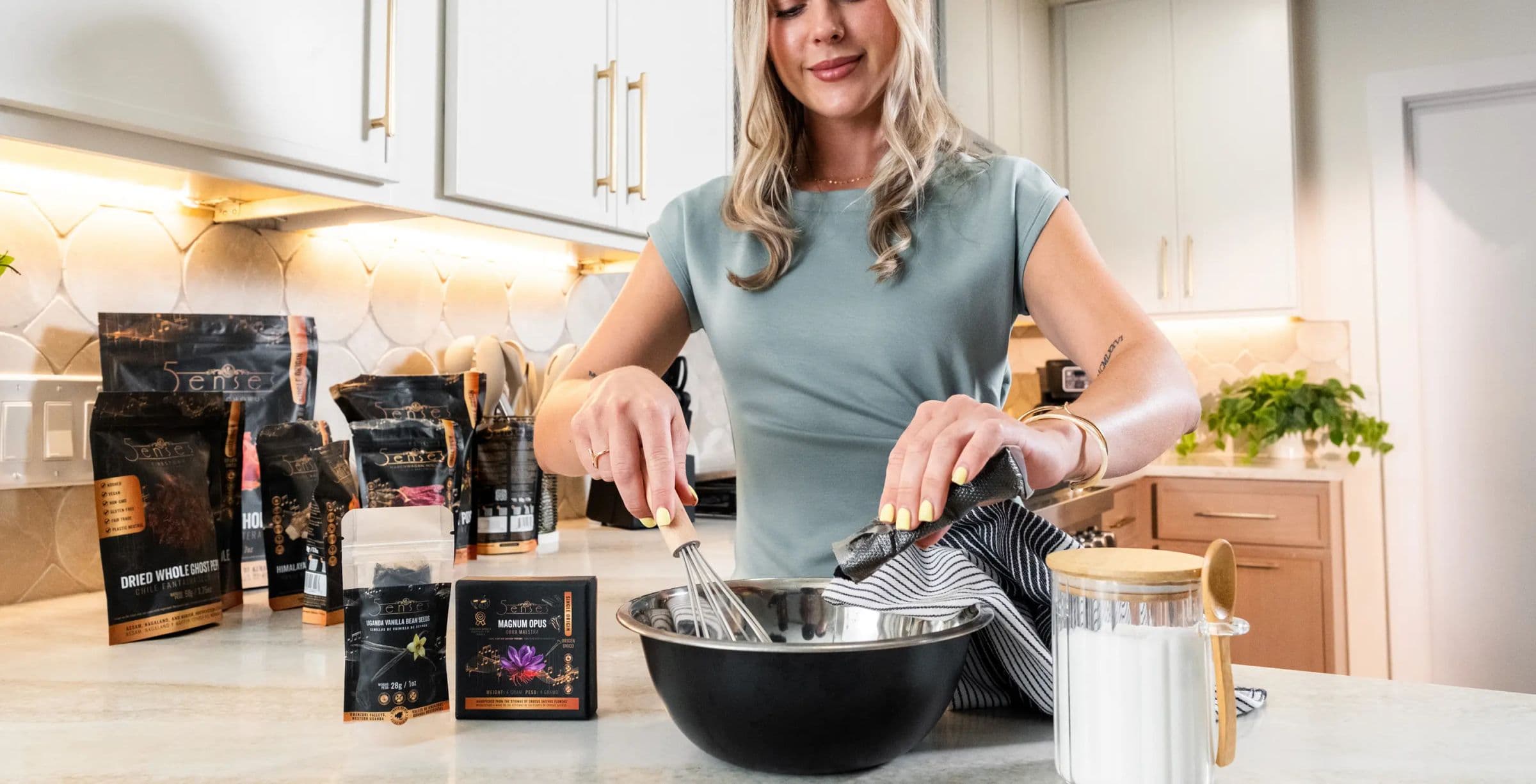
5Senses offers direct-from-farm, origin-packed whole spices alongside Spicecare tools for storage and preparation. 5Senses is best for Indian restaurant kitchens that want origin-led whole spices and control over preparation. The trade-off is kitchen work: whole ingredients still require weighing, processing, and recipe testing.
Whole spices give you control over texture and when flavor enters a dish. They also create decisions that prepared powders avoid: whether to crack a pod, remove a husk, strain an infusion, or grind a toasted blend.
Your purchasing specification should describe the finished dish, not just the unopened spice. A fragrant delivery is useful only if your team can reproduce its contribution during service.
Start with place, then test in the pot
Growing place, processing, and cooking method answer different questions. Origin tells you where an ingredient was grown; drying or curing describes what happened afterward. Neither replaces a test in your own recipe.
For coriander, start with the exact designation: 5Senses Whole Coriander, Double Parrot Grade A (Hadoti Bloom), sourced from Kota in Rajasthan’s Hadoti region, India. Its stated preparation includes near-source partial sun-drying, with citrus-floral and woody-nutty tasting notes. Those details give your chef something specific to evaluate in a freshly ground masala or toasted coriander seasoning.
Double Parrot Grade A is the product’s stated commercial grade. It is not an independently certified universal standard or evidence of a laboratory-measured oil content. Keep that distinction in purchasing records and staff explanations.
For the rest of your pantry, apply the same discipline. Ask for the named growing region, relevant processing details, and supporting product information rather than assuming every spice shares the same provenance.
Build a whole-spice workflow your team can repeat
Map each spice to a menu role
Start manually with your recipe book and a stockroom walk-through. Group ingredients by what they do: provide a ground base, perfume rice, season hot fat, finish a dish, or flavor drinks and desserts.
Coriander, green cardamom, black cardamom, cloves, bay leaves, nutmeg, mace, and sweet fennel serve different purposes. Do not purchase them as a generic “Indian spice” assortment. A narrow menu needs a focused cupboard; a broader regional menu needs more distinct specifications.
For your 2026 purchasing review, make the recipe—not the container—the unit of planning. An ingredient used across several dishes deserves different handling from one reserved for an occasional special.
- List every dish that uses each whole spice.
- Identify whether the spice stays whole, gets cracked, or becomes powder.
- Separate everyday ingredients from special-menu ingredients.
- Assign a storage location and preparation owner.
Write an origin and receiving specification
Use a simple receiving sheet before adding purchasing software. Record the ingredient identity, supplier, stated origin, lot information, and any harvest or packing date actually supplied. A blank field is better than an assumed date.
For 5Senses whole spices, compare the product’s stated origin and processing with your specification. Origin-packed describes packing; it does not, by itself, establish a harvest date or prove how an ingredient will perform in your sauce.
Inspect deliveries against your established receiving procedures. Aroma and appearance help assess cooking quality, but neither proves authenticity or food safety. Keep supplier documentation separate from your chef’s sensory notes.
- Match the delivered ingredient to the order specification.
- Record available lot, harvest, and packing information without filling gaps.
- Inspect packaging condition and signs of moisture or pests.
- Note aroma, appearance, and differences from the previous accepted lot.
- Resolve ingredient-identity questions before releasing stock to prep.
Test each lot in representative dishes
Begin with a small kitchen trial using your existing pots, scales, and recipes. Smelling dry coriander tells you less about a finished gravy than cooking that coriander in the gravy itself.
As a practical trial format, choose 3 dishes that represent different uses: a ground masala, a whole-spice rice dish, and an infusion such as chai. Have 2 cooks follow the same written instructions independently. These are suggested trial boundaries, not industry benchmarks.
Keep ingredient quantities and preparation methods consistent while comparing lots. If you change the coriander, roasting method, and grinding texture together, you cannot identify what changed the result.
- Select recipes that reflect your actual menu.
- Weigh spices instead of relying on pod counts or spoonfuls.
- Compare each lot with the current accepted ingredient.
- Record aroma, texture, bitterness, and balance in the finished dish.
- Approve recipe changes before the new lot reaches service.
Toast and grind for the intended texture
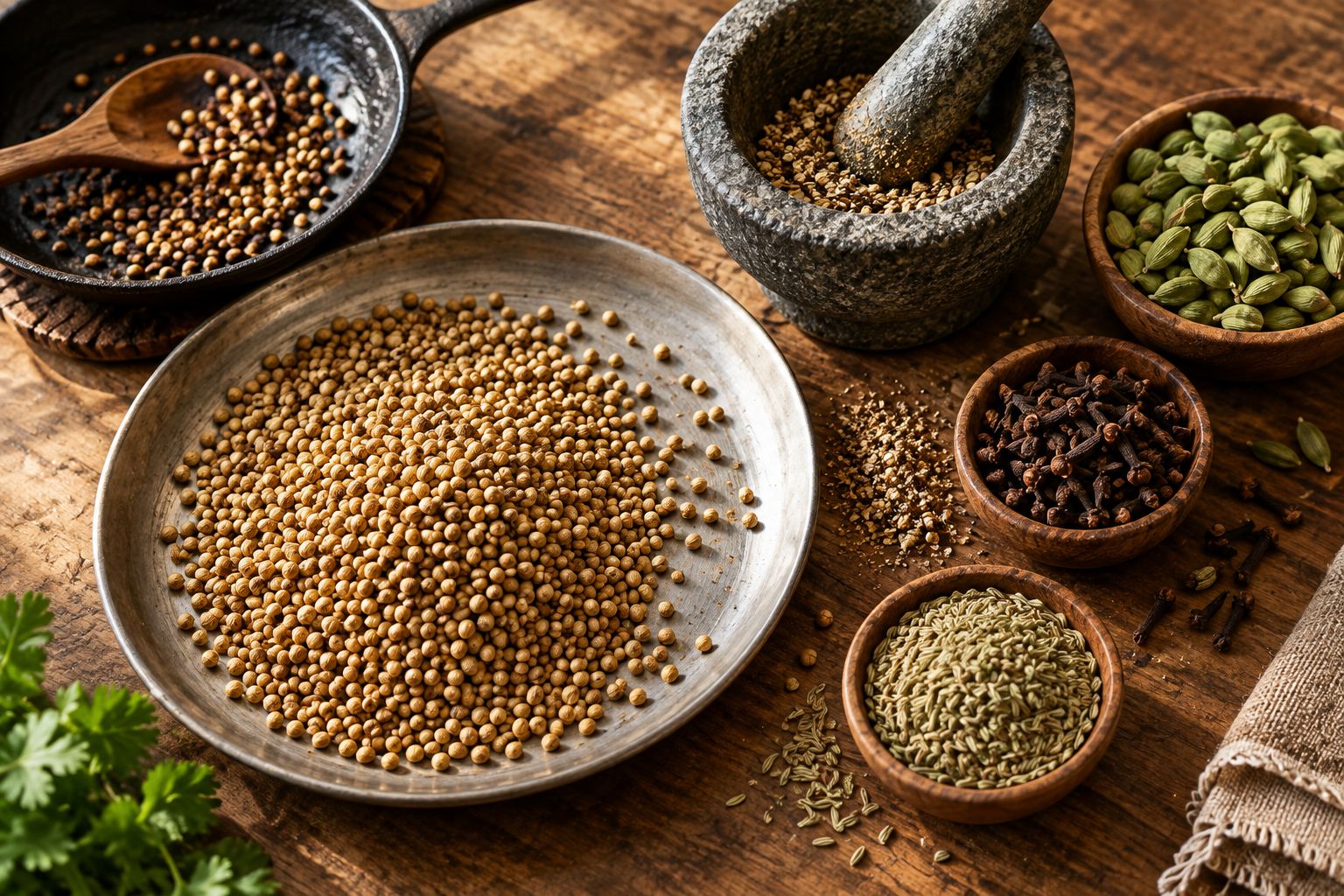
Use your current pan and a suitable mortar or spice grinder first. Toast only when the recipe calls for a toasted profile; dry toasting is not a compulsory improvement for every spice or dish.
For the Hadoti coriander described above, compare untoasted and gently toasted samples before choosing your house method. Toasting and fresh grinding let your kitchen explore the stated citrus-floral and woody-nutty profile without inventing a soil-to-flavor explanation.
Spicecare is the 5Senses tool range relevant to storage, grinding, and preservation. Check the intended use of any tool before assigning it to restaurant production; the supplied brand description does not establish commercial throughput or equipment ratings.
- Sort and weigh ingredients before heating them.
- Toast separately when ingredients require different handling.
- Transfer toasted spices out of the hot pan to stop carryover heating.
- Let toasted spices cool before dry grinding.
- Specify fine, coarse, or cracked texture in the recipe.
A wide plate gives toasted spices room to cool before grinding. Keep the cooling area dry and separate from splash-prone prep stations.
Bloom or infuse according to the dish
Write the cooking action into the recipe rather than leaving “add spices” as the instruction. Blooming introduces spices to hot fat; infusing draws flavor into a liquid. Dry toasting is a separate operation.
For a tempering, prepare the next ingredients before heating the fat so the cook can respond promptly. For rice or chai, decide whether spices remain loose, are contained in a suitable sachet, or are strained out before serving.
Green cardamom and black cardamom are not interchangeable simply because both are pods. Test their distinct aromatic roles in your recipe, and document any substitution instead of treating it as a routine swap.
- Name the fat or liquid used for the spice stage.
- Describe the sensory cue for adding the next ingredient.
- Specify whether pods are whole, opened, or seeds-only.
- State which hard spices need removal before serving.
- Train cooks to restart a scorched spice stage rather than disguise it.
Store reserve stock away from service
Begin with clean, dry, tightly closed containers and readable labels. Keep reserve stock away from heat, light, and steam, then issue smaller working quantities to the line.
Do not pour fresh stock onto an unidentified older remainder. Preserve lot identity and use a documented rotation system. Ground house blends need their own preparation labels; the original whole-spice label does not describe when your kitchen ground them.
Storage is also a capacity decision. A large order creates no cooking advantage if your kitchen lacks suitable space or cannot use the ingredient while its aroma meets your standard.
- Separate reserve stock from line-side working containers.
- Label ingredient identity, lot, and opening or preparation date.
- Use clean, dry utensils for every transfer.
- Keep lids closed between uses and away from kettle steam.
- Record discarded stock and investigate the reason.
Reorder from usage and a kitchen test
Track consumption with a stock sheet before choosing a more elaborate system. Your purchasing decision needs actual usage, remaining usable stock, and supplier-confirmed ordering terms—not an assumed delivery schedule.
Use 1 documented batch of a representative dish as your acceptance check when a replacement lot arrives. This is a suggested control step, not a guarantee that every difference will be detected. Keep the approved recipe and tasting notes together.
The restaurant whole-spice menu workflow is a useful companion when assigning these tasks across purchasing, prep, and service.
- Review consumption by ingredient rather than total spice purchases.
- Confirm current ordering terms directly with the supplier.
- Compare replacement lots before changing the service recipe.
- Adjust quantities when the menu changes.
- Record substitutions so the next shift knows what changed.
Compare preparation options for your kitchen
Use whole spices where preparation changes the dish; use prepared powders where a tested workflow supports them. A mixed pantry is a practical choice, not a compromise in principle.
| Option | Best for | Main advantage | Key limitation |
|---|---|---|---|
| Whole spices prepared during cooking | Tempering, rice, stocks, and aromatic infusions | Control over cracking, blooming, and removal | Requires attention during cooking and clear serving instructions |
| Whole spices ground into house blends | Restaurants with distinctive masala recipes | Control over ingredient proportions and texture | Adds weighing, cooling, grinding, and cleaning work |
| Ready-ground individual spices | Recipes needing immediate powder dispersion | Removes the grinding step | Gives less control over grinding time and particle size |
| Prepared spice blends | A standardized recipe tested around a particular blend | Reduces ingredient assembly during prep | Limits control over individual components |
Choose by station and dish rather than imposing one format across the restaurant. Your biryani pot and your finishing masala do not need the same preparation system.
Common mistakes Indian restaurant kitchens make
Buying a broad assortment before checking the menu
An extensive spice list creates storage and training work. Start with ingredients tied to current dishes, then add specialist spices when a tested recipe gives them a role.
Treating commercial grade names as universal measurements
A named grade does not automatically establish aroma strength, oil content, or superiority over another supplier. Keep the supplier’s designation intact and judge suitability through documentation and cooking tests.
Replacing green cardamom with black cardamom without testing
A shared name does not make these spices equivalent in chai, desserts, or savory dishes. Record the intended ingredient precisely and require chef approval for substitutions.
Roasting every ingredient together
Different sizes and structures do not respond identically to heat. Follow a tested sequence instead of assuming one panful will reach the same endpoint together.
Leaving hard whole spices unmanaged at service
Pods, bark, and leaves need an explicit handling instruction. Decide what is removed, strained, contained, or intentionally served before the dish reaches the pass.
FAQ
What are the best whole spices for an Indian restaurant?
The best whole spices are those specified by your menu and tested in your recipes. Coriander, cardamom, cloves, bay leaves, fennel, nutmeg, and mace have different roles; buy a focused range rather than an undifferentiated assortment.
Are whole spices better than ground spices for restaurant cooking?
Whole spices give you control over cracking, grinding, and when flavor enters a dish. Ground spices remove preparation steps, so choose the format by recipe and kitchen capacity rather than treating either format as universally better.
Should an Indian restaurant toast every whole spice?
No, toast whole spices only when the recipe calls for a toasted profile. Blooming in fat and infusing in liquid are different techniques, and some dishes need those methods instead.
Can I replace green cardamom with black cardamom in biryani?
Do not treat green and black cardamom as automatic substitutes. Test the change in your specific biryani and approve a revised recipe before serving it.
What does Double Parrot Grade A mean for whole coriander?
Double Parrot Grade A is the stated commercial grade of 5Senses Whole Coriander, Hadoti Bloom, sourced from Kota in Rajasthan’s Hadoti region. It is not an independently certified universal standard or proof of laboratory-measured oil content.
How should a restaurant store whole spices during service?
Keep reserve whole spices tightly closed away from heat, light, and steam, and issue smaller working quantities to the line. Label containers clearly and use clean, dry utensils.
How do I compare whole-spice suppliers without relying on marketing claims?
Compare ingredient identity, documented origin, available date and lot information, and performance in the same finished dish. Keep preparation conditions consistent so your tasting assesses the ingredient rather than a changed cooking method.
One last thing
Taste the spice where the customer encounters it. Coriander that smells appealing when freshly crushed still needs to work in your gravy after cooking, holding, and finishing.
Keep a small reference record for each approved ingredient: the label, preparation method, and finished-dish notes. That record gives the next cook a usable standard—not just an instruction to make the dish “more aromatic.”