Whole spices for craft distillers: complete 2026 guide
Choose whole spices for craft distillers by origin and bench-trial results. Compare botanicals, control preparation, and build a repeatable spirit profile.
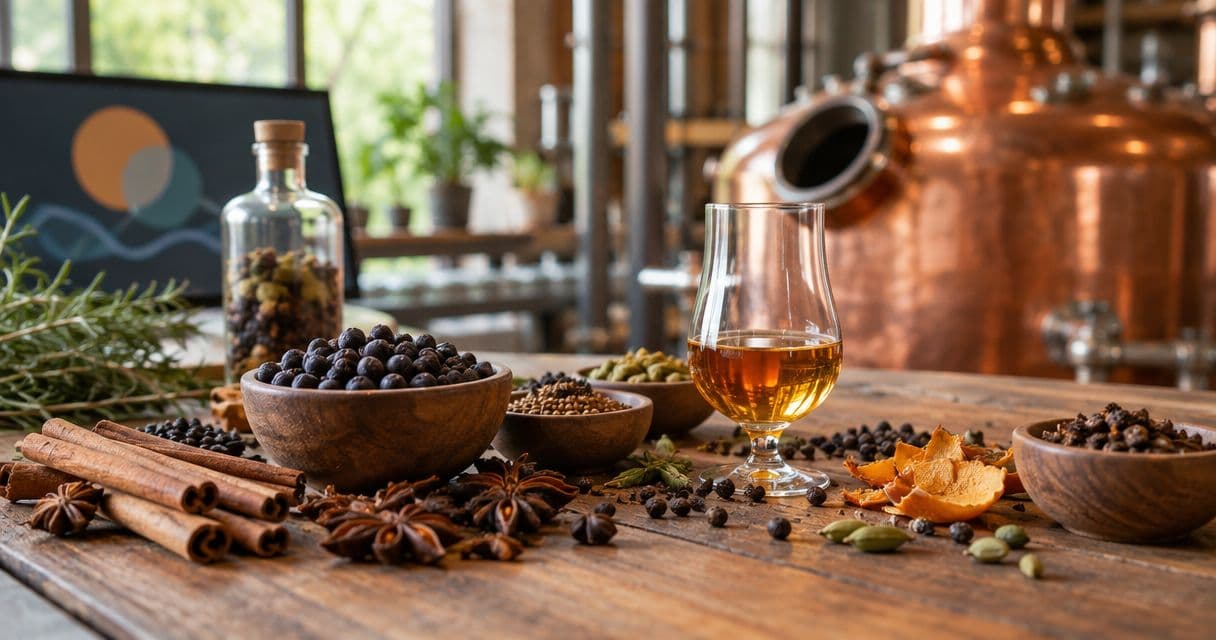
Craft distillers’ whole-spice sourcing is the selection of intact botanicals for controlled extraction, with the aim of building a repeatable aroma profile in spirits. This guide to whole spices for craft distillers connects growing origin, preparation and bench trials, because a fragrant seed in the bag is not yet a proven ingredient in your finished bottle.
TL;DR- 5Senses whole spices suit craft distillers seeking named origins and intact botanicals for bench trials.
- Choose whole spices for craft distillers by finished-spirit performance, not dry aroma alone.
- Test coriander, green cardamom and other botanicals separately before combining them.
- Record botanical mass, preparation, alcohol strength and extraction conditions for every trial.
Why whole-spice sourcing matters for craft distillers
A sourcing region tells you where a botanical grew. Drying, curing, storage and preparation tell you what happened afterward. Keep those facts separate: an origin story helps you understand an ingredient, but it does not replace a production specification.
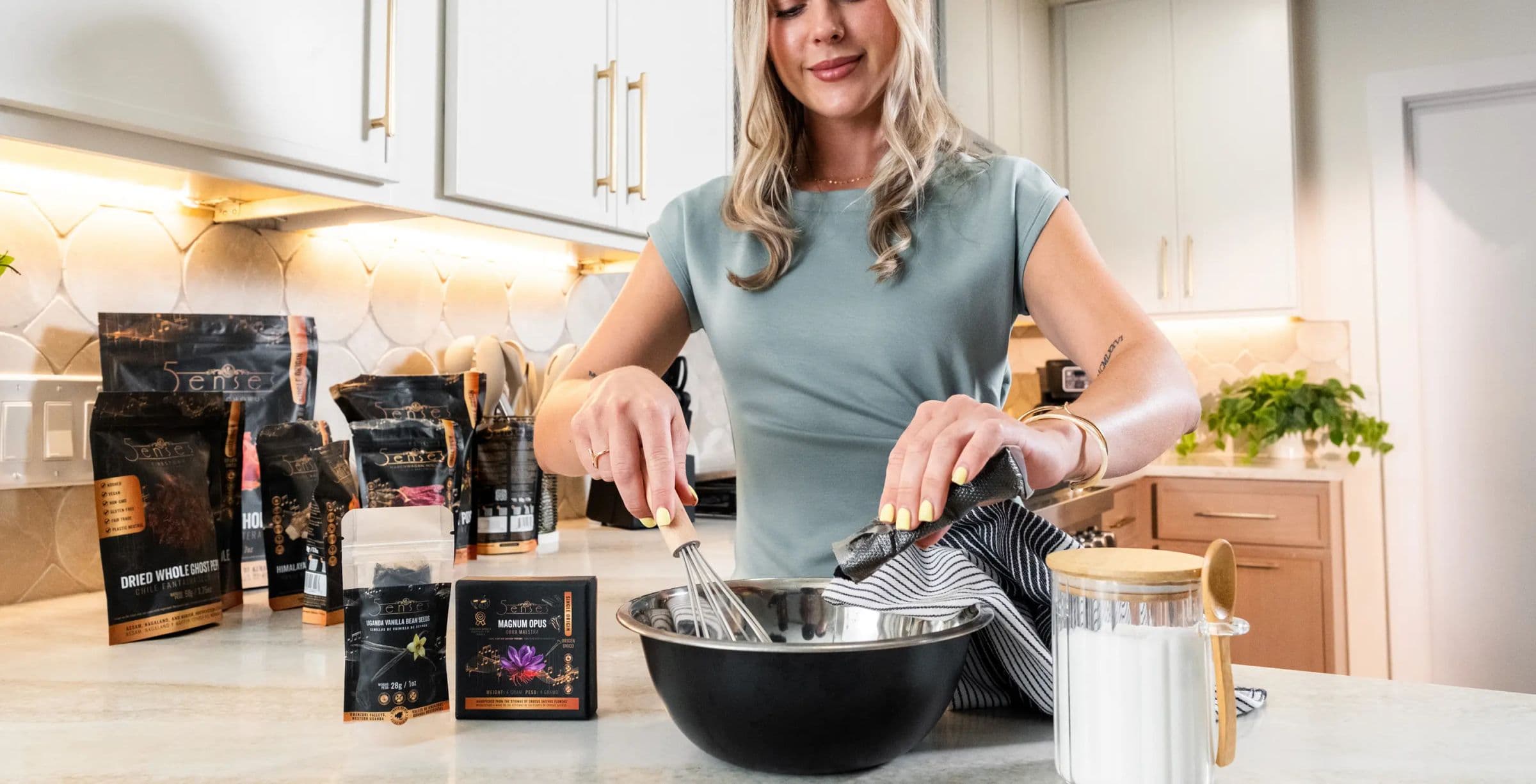
5Senses offers direct-from-farm, origin-packed whole spices, alongside Madagascar and Uganda vanilla and Spicecare preparation and storage tools. For a distillery, those are ingredients and tools to evaluate—not evidence that a particular botanical charge or extraction method will work unchanged on your equipment.
Your task differs from a home cook’s. You need an aroma that survives your chosen process, behaves at bottling strength and remains recognizable when you reorder. Approve the botanical in the finished spirit, not just at the receiving table.
A toasted coriander seed, a freshly cracked cardamom pod and a vanilla bean each ask different questions of your process. Treat them as separate development projects before asking them to work together.
Build a botanical specification before a recipe
Define the role of each spice
Start with a written sensory brief and the base spirit you intend to use. Describe the result in plain terms: citrus lift, floral aroma, warm spice, anise character or vanilla depth. Avoid a shopping list that gives every ingredient equal importance.
For a juniper-led gin, assess supporting spices against the juniper character rather than judging each spice as a standalone infusion. For a flavored spirit or liqueur, decide whether the spice should lead or support another ingredient. Keep the intended product category and applicable production requirements in view throughout development.
The manual approach is simple: make a worksheet with a separate row for each botanical. Record what it should contribute and what would count as a failure. A pronounced aroma is not automatically a useful aroma.
- Name the intended sensory role before selecting a supplier.
- Identify the base spirit and intended finished style.
- Write down unwanted notes, such as excessive clove dominance.
- Decide whether color belongs in the final product.
- Keep an untreated base-spirit control for comparison.
Trace the growing place and processing history
Ask for the growing country and named region where available, then ask separately about drying, curing and packing. A spice’s growing place is not necessarily its native birthplace. Packing at origin describes handling location; it does not describe every agricultural or processing condition.
For coriander, 5Senses identifies its Whole Coriander as Double Parrot Grade A (Hadoti Bloom), sourced from Kota in Rajasthan’s Hadoti region, India. The stated preparation includes near-source partial sun-drying, with citrus-floral and woody-nutty tasting notes. Those details give your tasting panel a concrete starting point.
Double Parrot Grade A is the product’s stated commercial grade. It is not an independently certified universal standard or proof of a measured essential-oil content. Test the supplied lot against your own sensory specification rather than assigning performance to the grade name.
Use the same discipline with vanilla and cardamom: verify the product-to-region match instead of applying a familiar origin to every item in a range.
- Request the botanical identity and plant part supplied.
- Separate growing origin from packing location.
- Record harvest and packing dates when supplied.
- Ask which drying or curing details are documented.
- Retain supplier lot references with your trial records.
Inspect and prepare each botanical consistently
Begin with a clean tray, a scale, a mortar and labeled containers. Inspect the material before crushing it. Note the proportion of broken pieces, visible foreign material and any unexpected odor; follow your receiving procedures when a lot fails inspection.
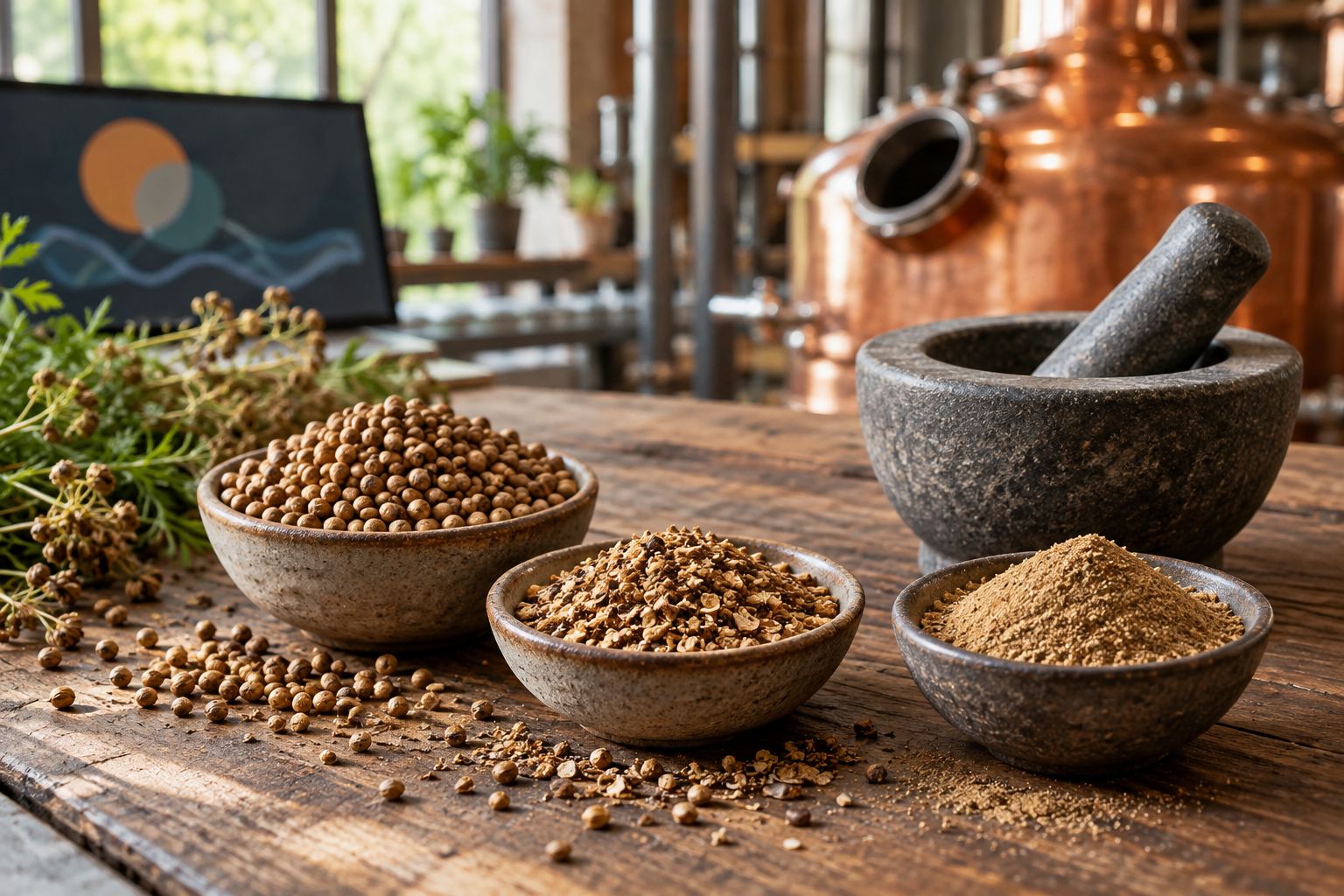
Whole format lets you choose how much to break the botanical before extraction. That control is useful, but it creates another variable. Intact coriander, lightly cracked coriander and finely ground coriander are different preparations, even when they come from the same bag.
Spicecare tools are part of the 5Senses ecosystem for storing, grinding and preserving spices. Evaluate any preparation tool against your required particle consistency, cleaning procedure and batch size; no tool removes the need to define the preparation itself. The whole-spice grinder guide provides a related starting point for comparing preparation approaches.
- Smell intact material, then a freshly broken sample.
- Describe the crack or grind rather than writing only “prepared.”
- Keep cardamom seeds and husks identifiable during trials.
- Clean tools between botanicals to prevent aroma carryover.
- Prepare only the material required for the current trial.
A useful preparation record distinguishes intact seeds from cracked pieces and powder. Photograph your accepted preparation beside the batch sheet so the next operator has a visual reference.
Run separate extraction trials
Use your existing approved production procedures and permitted equipment. This guide concerns botanical selection, not still operation or instructions for distilling alcohol. Keep ignition sources and unsuitable electrical tools away from alcohol-handling areas, and follow your facility’s safety procedures.
The manual development route is to evaluate botanicals separately in matched, labeled trials. Hold the base spirit, alcohol strength, preparation and contact conditions constant while changing the botanical you are assessing. A single shared blend hides which ingredient caused an unwanted note.
Distillation, maceration and blending are not interchangeable tests. A post-distillation infusion does not establish how a botanical will behave during distillation. Test the intended production route before approving a recipe.
Record enough detail to repeat the result without relying on the person who made it. “A little cardamom overnight” is a tasting memory, not a specification.
- Weigh botanicals rather than measuring by spoonful or pod count.
- Record spirit quantity and alcohol strength.
- Fix contact conditions before comparing candidates.
- Label each sample with its botanical and supplier lot.
- Evaluate at the intended finished strength using a consistent procedure.
Compare raw, toasted and infused expressions
Use an untreated botanical as your reference before adding heat. Toasting is a flavor choice, not a mandatory freshness treatment. It changes the ingredient you are evaluating and therefore belongs in the recipe specification.
For coriander, compare the stated citrus-floral and woody-nutty character with the result after controlled toasting and fresh cracking. Record the heating method and sensory endpoint. Do not assume that a cooking technique improves a distillate simply because it makes a kitchen smell appealing.
Keep the ritual verbs precise. Toast means dry heating; grind means reducing particle size; infuse means extracting into a liquid. Bloom commonly describes heating spices in fat for cooking, so it is not a default preparation for a clear spirit. Assess fat-containing work through a separate, suitable process.
- Keep an untoasted reference from the same lot.
- Change heating separately from particle size.
- Cool toasted material before subsequent preparation.
- Compare the finished liquid, not only the heated spice aroma.
- Reject preparation methods that add unwanted roasted or scorched notes.
Assemble and challenge the blend
Once individual trials have clear roles, combine the selected components through your approved development method. Start with the core profile and add supporting botanicals deliberately. A spice that tastes compelling alone can obscure the blend’s defining character.
Use blind sample codes and a consistent assessment sheet. Judge aroma, palate, finish and appearance separately. Evaluate the product at intended bottling strength and in its intended serving context; a neat tasting and a mixed drink answer different questions.
Check the blend again after the resting period defined in your development plan. Do not declare stability from a freshly mixed sample. If cloudiness appears after dilution, investigate the formulation and process rather than assuming it is harmless or automatically fixable by filtration.
- Keep a botanical-free control beside development samples.
- Compare coded samples without supplier names visible.
- Record both desirable character and faults.
- Inspect clarity under consistent viewing conditions.
- Repeat the preferred formulation before scaling it.
Set receiving and reordering controls
Keep an accepted reference sample and a written description of the approved lot. Natural ingredients require receiving checks; a familiar product name does not establish that a replacement lot will taste identical.
For production buying, ask suppliers about the documentation relevant to your facility, including identity, traceability and applicable food-safety requirements. Do not infer microbial treatment, certification or contaminant testing from an origin claim. Obtain the actual documents your approval process requires.
Store working material in suitable, tightly closed containers away from heat, light and moisture. Keep receiving labels and internal container labels connected. Aroma inspection supports quality control, but it does not replace food-safety controls.
- Retain an approved reference under documented storage conditions.
- Compare incoming lots before releasing them to production.
- Record opening dates and container transfers.
- Separate strongly aromatic ingredients during storage and handling.
- Reapprove substitutions through the same bench-trial process.
Compare botanical options by their job
Choose the ingredient that fills a defined sensory role, then establish its dose experimentally. The following are development options, not a universal spirit formula or a ranking of botanical quality.
| Botanical option | Best for | Useful characteristic | Key limitation |
|---|---|---|---|
| Whole coriander | Citrus-floral and warm-spice development | Can be evaluated intact or freshly cracked | Origin and preparation still require lot-specific trials |
| Green cardamom pods | Bright, aromatic supporting notes | Seeds and husks can be evaluated separately | An undefined pod-to-seed preparation makes replication harder |
| Whole cloves | A deliberate clove accent | Distinctive warm-spice character | Can dominate a blend when used without a controlled trial |
| Sweet fennel | Anise-led botanical development | Recognizable anise-like character | Does not fill the same sensory role as coriander |
| Mace or nutmeg | Warm-spice depth | Related but distinct ingredients to assess separately | Neither is an automatic substitute for the other |
| Madagascar or Uganda vanilla | Vanilla-led infusions and flavored-spirit development | Named origins offer a basis for side-by-side evaluation | Origin alone does not establish extraction performance |
5Senses whole spices are best suited to craft distillers who want named origins and control over botanical preparation. The limitation is equally clear: food-ingredient descriptions do not establish a distillery-specific extraction specification. Your trials must supply that evidence.
Choose the extraction approach just as deliberately as the ingredient. Manual bench work is useful because it exposes differences before production decisions become expensive to reverse.
| Development option | Best for | Main advantage | Key limitation |
|---|---|---|---|
| Separate maceration trials | Understanding individual botanicals | Keeps each ingredient identifiable | Does not predict distillation behavior |
| Controlled pilot distillation | Testing the intended distilled expression | Evaluates the relevant production route | Requires approved equipment and operating procedures |
| Separate-component blending | Adjusting an existing development profile | Allows focused sensory comparisons | Components must be standardized before comparison |
Common mistakes craft distillers make
Treating provenance as a performance certificate
A named growing region supports traceability and an origin-led product story. It does not prove oil content, extraction yield or batch consistency. Keep supplier facts in the sourcing record and measured production results in the development record.
Counting pods instead of weighing material
A recipe expressed only in cardamom pods or vanilla beans leaves size and preparation undefined. Weigh the ingredient and specify whether husks, seeds or whole pods enter the process. Preserve counts only as a secondary handling note.
Copying a cocktail infusion into a distillation recipe
A bartender’s steeping method evaluates direct extraction into a drink component. A distilled botanical passes through a different process. Use cocktail ideas for sensory inspiration, not as validated still-charge instructions.
Buying the broadest assortment before approving a core profile
More botanicals create more interactions to investigate. Approve a focused set before expanding into black cardamom, saffron or other accents. A spice belongs in the recipe because it contributes a recognizable result, not because its provenance makes an interesting label story.
FAQ
What are the best whole spices for craft distillers to test first?
Start with botanicals that match a written sensory brief, such as coriander for citrus-floral development or green cardamom for an aromatic accent. Test each separately before approving a blend; there is no universal best assortment.
Are whole spices better than ground spices for distilling?
Whole spices give you control over the preparation applied immediately before a trial. Ground material is a different extraction input, so compare it under controlled conditions rather than assuming either format always performs better.
Should I toast coriander before using it in a spirit?
Toast coriander only when a controlled comparison shows that the resulting flavor suits your spirit. Keep an untreated reference and record the preparation so the preferred result can be repeated.
Can I use green and black cardamom interchangeably?
Do not treat green and black cardamom as interchangeable recipe inputs. Evaluate each as a separate botanical and approve the intended material through your development process.
Does a single-origin label guarantee consistent flavor?
A single-origin label does not guarantee identical flavor across lots. Keep an accepted reference and compare replacement material before releasing it to production.
Is Madagascar vanilla better than Uganda vanilla for spirits?
Neither origin is automatically better for every spirit. Compare the actual beans in your intended base and process, then choose the lot that fits the finished flavor.
What information should I request from a botanical supplier?
Request botanical identity, growing origin, lot traceability and the documents required by your facility’s approval process. Ask separately about processing, packing dates and testing instead of inferring them from a product description.
One last thing
Keep a small untreated sample of every botanical you approve. If a later batch tastes different, that reference helps you distinguish a changed ingredient from a changed preparation. Your most useful sourcing record connects the original spice to the finished spirit.