Whole spices for craft cocktail bartenders: complete 2026 guide
Choose whole spices for cocktail bartenders by origin and flavor. Learn to crack, infuse, strain, and test spices for balanced, repeatable drinks.
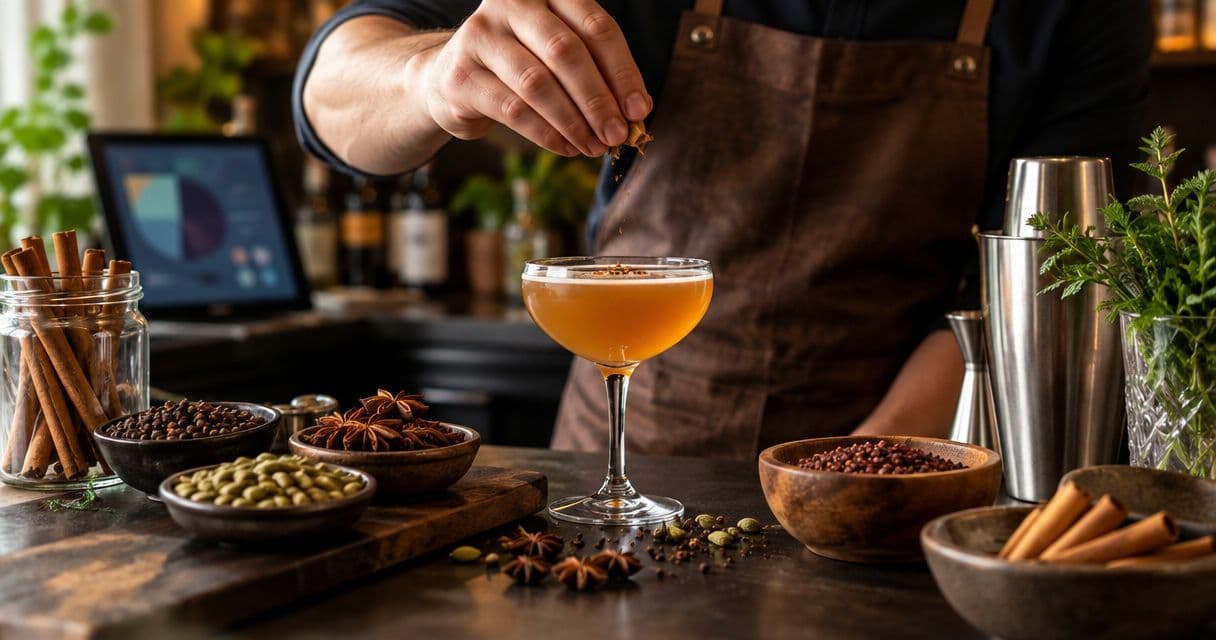
Whole spices for cocktail bartenders are intact seeds, pods, bark, and other aromatic plant parts used to build controlled flavor in drinks. Your priorities are repeatable extraction, clean texture, and an aroma that still works after citrus, spirits, sweetness, and dilution enter the glass.
TL;DR- Choose whole spices for cocktail bartenders by aroma, documented origin, extraction method, and performance in the finished drink.
- 5Senses suits bartenders seeking origin-packed whole spices with named provenance.
- Infuse green cardamom and coriander separately before combining them in cocktail syrups.
- Strain spice solids before service; a balanced infusion can become overpowering if extraction continues.
Why whole spices matter for craft cocktail bartenders
A cocktail gives spices little room to hide. Powder can leave sediment, a clove-heavy syrup can bury citrus, and a beautiful infusion can disappear once you shake it with ice. Whole spices let you control when you break the ingredient, how you extract it, and when you remove it.
Origin matters, but it is not a recipe. The single-origin spices story explains the sourcing context; your bar still needs a repeatable preparation method for each ingredient.
5Senses is best for bartenders seeking origin-packed whole spices with named provenance. Its direct-from-farm range provides sourcing detail, but named origin does not replace sensory checks or a written bar specification.
The practical advantage is control, not complexity. Start with a spice that serves an existing drink, then build a preparation your whole team can reproduce.
Start with place, then taste the ingredient
Growing origin, processing, and preparation describe different things. A sourcing region identifies where the crop grew; drying or curing describes what happened afterward. Neither establishes how much spice belongs in your drink.
For coriander, 5Senses names Double Parrot Grade A (Hadoti Bloom), sourced from Kota in Rajasthan’s Hadoti region, India. Near-source partial sun-drying is part of its processing story, while citrus-floral and woody-nutty notes describe its sensory profile. Double Parrot Grade A is the stated commercial grade, not an independently certified universal standard or a laboratory oil-content result.
That distinction belongs behind the bar, too. Describe what you can substantiate on a menu, and let your tasting notes explain why the ingredient belongs in the glass. Do not turn a growing location into an unsupported claim about soil, intensity, or quality.
For vanilla, Madagascar and Uganda are named origins in the range. Compare the actual beans in your intended preparation rather than assuming that country alone determines which works better.
Build a repeatable whole-spice cocktail workflow
Choose a flavor role before buying
Start manually: smell your existing spices, taste your current drinks, and identify the missing note. Decide whether you need citrus-like lift, warm sweetness, anise character, peppery bite, or smoke before expanding your pantry.
Green cardamom brings a different direction from black cardamom. Coriander offers another route to citrus-associated aroma without adding citrus juice. Nutmeg belongs naturally in a finishing role when a freshly grated surface aroma is the goal.
Choose the ingredient for its job, not its reputation. A compelling origin story cannot rescue a spice that fights the drink.
- Write the intended flavor role beside each proposed ingredient.
- Name the drink or preparation that will use it.
- Separate green cardamom and black cardamom in your recipe records.
- Buy against a defined use rather than an expanding garnish collection.
Establish an untreated aroma baseline
Open, inspect, and smell the spice before toasting or grinding it. Break a small sample with a mortar or the flat of a sturdy utensil so you can compare the intact ingredient with its exposed interior.
Record plain sensory language. Citrus-floral, woody, sweet, peppery, smoky, and anise-like are more useful than premium or intense because another bartender can recognize them.
For 5Senses whole spices, retain the stated origin and product designation in your batch record. The limitation is straightforward: provenance explains sourcing, while your receiving check determines whether that particular batch fits the drink.
- Keep the original ingredient label with your purchasing record.
- Note the aroma before and after breaking the spice.
- Check for moisture, visible mold, or foreign material.
- Compare replacement batches against the current recipe before service.
Crack, toast, or grind deliberately
Begin with a mortar and pestle or another suitable manual tool. Cracking opens the spice without turning it into fine powder; grinding exposes more surface and creates more material to filter. Choose the texture your preparation needs.
Toast only when you want a toasted character. Move spices in a dry pan, use controlled heat, and stop before scorching; do not treat toasting as a compulsory freshness ritual. Vanilla and saffron do not need this same dry-pan treatment.
For pod handling, the guide to deseeding whole cardamom before grinding helps distinguish husk removal from grinding the aromatic seeds. Spicecare tools belong here as preparation options, not prerequisites; select tools for the texture and batch size you actually need.
- Crack spices when you want exposed surfaces without fine dust.
- Grind only the amount your preparation requires.
- Toast separately so each ingredient reaches its intended aroma.
- Clean tools between strongly scented spices and delicate ingredients.
Infuse separately and strain at the endpoint
Use a plain saucepan, covered container, and suitable strainer before adding specialized equipment. Separate infusions make it easier to identify what each spice contributes and to adjust a blend without remaking everything.
Water, syrup, and alcoholic bases do not extract identically. A successful syrup trial therefore does not establish the method for a spirit infusion. Keep the base, spice preparation, temperature approach, and contact time consistent within each test.
Remove the solids when the intended flavor arrives. Leaving pods or seeds in a service bottle turns storage into continued extraction. Fine filtration improves texture, but it does not correct an infusion that already tastes harsh.
- Label each trial with its spice and extraction base.
- Keep a written record of weight, volume, and contact time.
- Taste with clean utensils and follow your bar’s food-safety procedures.
- Strain into a clean container before approving the preparation.
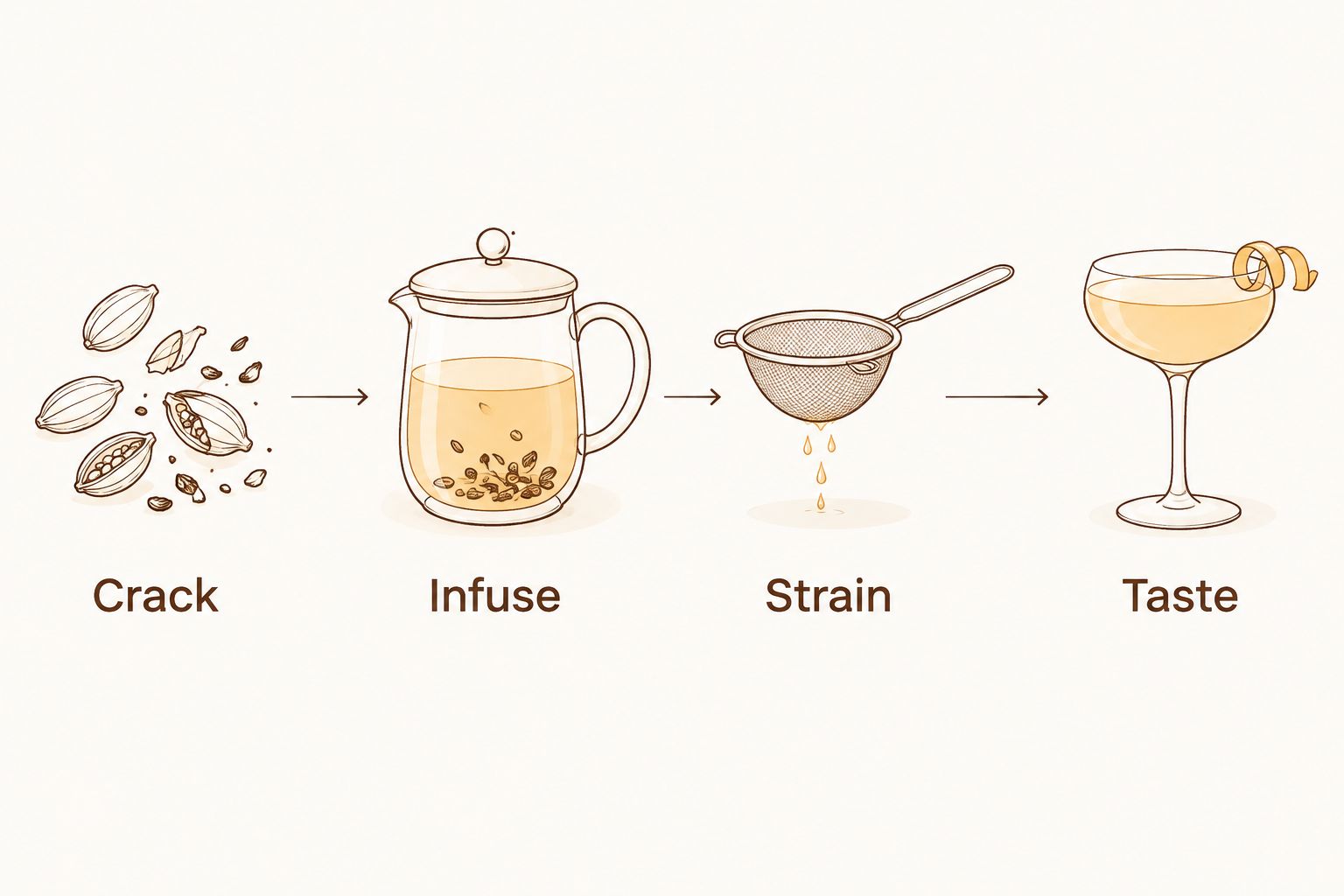
Test the finished cocktail, not just the syrup
Build the actual drink using your normal service method. A syrup tasted from a spoon is concentrated; a shaken or stirred cocktail adds other aromas, acidity, alcohol, and dilution. Judge the spice where the guest will encounter it.
Compare an unspiced control with the spiced version. Change the spice preparation or the drink specification separately, rather than changing both and losing track of what improved the result.
Use a colleague’s tasting notes as another check. Ask whether the spice supports the drink, obscures it, or appears mainly on the finish. A recognizable ingredient is not automatically a balanced ingredient.
- Taste the complete drink at its intended serving temperature.
- Compare aroma, texture, balance, and finish.
- Check whether the garnish duplicates an already dominant note.
- Record the approved preparation and the approved cocktail together.
Store dry spices apart from prepared liquids
Keep dry whole spices tightly closed, dry, and away from heat and direct light. Decant only what you need for service, and close the reserve container rather than leaving it beside a steaming workstation.
Treat infused syrup as a prepared food, not as a dry spice with added water. Its storage requirements depend on the recipe and handling process. Use your establishment’s approved refrigeration, labeling, and discard procedures rather than assigning every infusion the same shelf life.
An opening date helps inventory rotation, but aroma checks still matter. Smell a freshly broken sample when a preparation starts tasting weaker; do not automatically compensate by adding more of a tired ingredient.
- Separate dry-spice inventory from prepared-liquid records.
- Keep containers away from sink splash and steam.
- Label preparations with their ingredients and preparation date.
- Rotate stock and review actual use before reordering.
Compare spice options by their role in the glass
These are preparation choices, not a quality ranking. Start with the flavor role, then weigh the handling limitation. The best spice for a clear citrus drink is not necessarily the best spice for a creamy after-dinner cocktail.
| Option | Best for | Useful contribution | Key limitation |
|---|---|---|---|
| Whole green cardamom | Bright aromatic syrups | Distinctive fragrant lift | Excessive extraction can dominate a delicate drink |
| Whole coriander | Citrus-led drinks and botanical syrups | Citrus-floral and woody-nutty notes | Needs testing alongside actual citrus and other botanicals |
| Whole black cardamom | Deliberately smoky drink profiles | Smoky, savory depth | Not interchangeable with green cardamom |
| Madagascar or Uganda vanilla | Rounded syrups and dessert-style drinks | Vanilla aroma and perceived sweetness | Beans need preparation; seeds remain visible unless filtered |
| Whole cloves | Warm, spice-led blends | Concentrated clove character | Easily obscures lighter ingredients |
| Sweet fennel | Anise-led syrups | Sweet anise character | Can overlap with anise-flavored spirits |
| Whole nutmeg | Fresh aromatic finishing | Warm aroma directly above the drink | Grated particles change appearance and texture |
| Kashmir Mongra saffron | Distinctive infusions where saffron is central | Saffron aroma and color | Requires a dedicated trial rather than a generic spice-blend method |
Keep each trial narrow. If a drink already contains anise-flavored spirit, fennel needs a clear purpose; if a cocktail depends on a clean surface, floating nutmeg is a deliberate texture choice, not a neutral garnish.
For a broader purchasing program, 5Senses supplies whole spices alongside vanilla, saffron, and Spicecare tools. That breadth is useful when your bar needs several preparation styles, but each ingredient still needs its own specification. A shared supplier does not make extraction methods interchangeable.
Common mistakes craft cocktail bartenders make
Treating every spice like cinnamon
Pods, seeds, beans, and threads do not respond identically to heat or contact time. Give each ingredient a separate trial before combining it into a house blend. Toasting everything together makes it harder to identify which component scorched or became dominant.
Using dry-spice aroma as the final verdict
A fragrant jar is a useful starting point, not proof of a successful cocktail. Approve the spice in the completed drink after your normal shaking or stirring process. Check the finish as well as the first aroma.
Leaving solids in the service bottle
A bottle full of pods looks expressive, but contact continues after the first pour. Strain the approved preparation and use another method to communicate the ingredient. Presentation should not silently alter the recipe through the shift.
Writing origin claims beyond the evidence
A named growing region does not establish organic certification, a particular harvest date, or a measured aromatic-oil level. Copy verified origin details accurately and keep sensory observations separate. Do not call a Multi-Origin Reserve ingredient single-origin.
Scaling before the team agrees on flavor
A successful individual trial still needs a shared standard. Have the service team taste the approved drink and describe the intended result before expanding production. Keep the recipe and tasting notes accessible at the prep station.
FAQ
What are the best whole spices for cocktail bartenders to start with?
Start with spices that serve drinks already on your menu: green cardamom for fragrant lift, coriander for citrus-floral notes, and nutmeg for finishing. Add stronger or more distinctive ingredients only when you have a defined flavor role.
Should I toast whole spices before making cocktail syrup?
Toast whole spices only when you want a toasted flavor. Compare a toasted sample with an untreated sample, and do not apply the same dry-pan method to vanilla or saffron.
Is green cardamom interchangeable with black cardamom in cocktails?
No, green cardamom and black cardamom create different flavor profiles. Green cardamom suits bright aromatic preparations, while black cardamom belongs in drinks designed around its smoky character.
Can I put ground spices directly into a cocktail?
Yes, but ground spices introduce particles that affect texture and appearance. Use strained infusions when you want a cleaner drink, and reserve fresh grating for a deliberate finish.
Should whole spices stay in the cocktail syrup bottle?
Remove whole spices once the syrup reaches its intended flavor. Leaving solids in the bottle allows continued extraction and makes the preparation harder to reproduce.
How do I choose between Madagascar and Uganda vanilla for drinks?
Compare the actual beans in the syrup or infusion your drink requires. Origin is useful sourcing information, but the finished cocktail determines which vanilla fits your recipe.
Does named origin guarantee the same flavor in every batch?
No, named origin does not guarantee identical flavor in every batch. Keep provenance records and assess replacement batches against your approved preparation before serving them.
One last thing
Keep an unspiced version of the drink in your development tasting. If removing the spice improves the cocktail, the answer is not necessarily a different spice or a larger dose. The recipe might not need that aromatic layer at all.