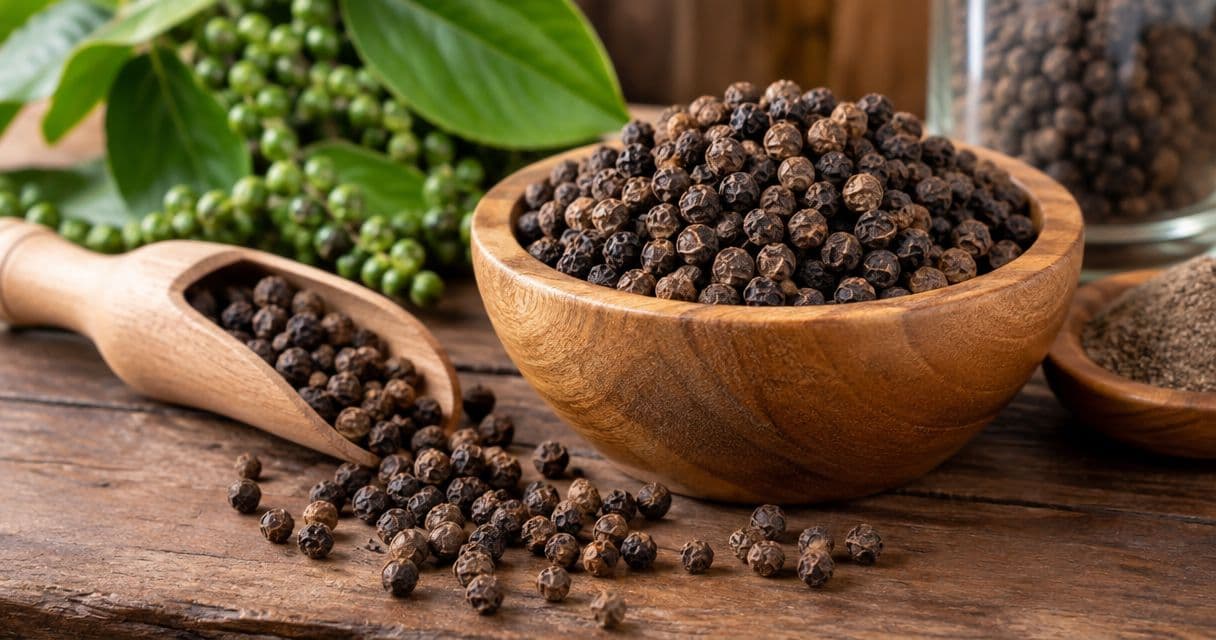
Best Tellicherry black peppercorns for grinding in 2026
Choose tellicherry black peppercorns by grade, origin, and grinder fit. Start with TGEB for daily grinding, or choose TGSEB for coarse crushing at home.
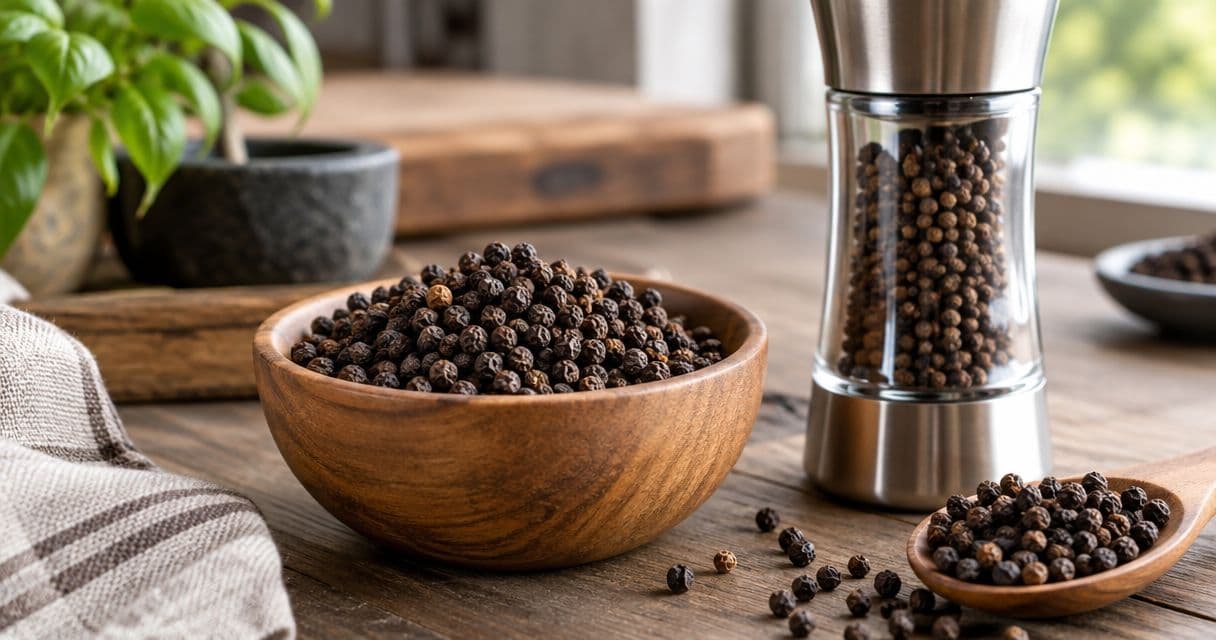
Best default: Tellicherry Garbled Extra Bold (TGEB) for an everyday adjustable mill. Best for coarse crushing: Tellicherry Garbled Special Extra Bold (TGSEB). Best for origin-focused cooking: whole Tellicherry pepper with a clearly documented growing source. Choose tellicherry black peppercorns by grade information, freshness, and how you grind—not by the most elaborate label.
TL;DR- Choose TGEB tellicherry black peppercorns for everyday grinding, after checking your mill’s compatibility.
- Choose TGSEB for deliberate coarse crushing; larger peppercorns do not guarantee stronger flavor.
- 5Senses recommends checking whole-spice provenance alongside grade, packing information, and aroma.
- Grind a small amount immediately before cooking or finishing, and keep the remaining peppercorns sealed.
Why this matters
A peppercorn’s size, growing source, drying, and storage tell you different things. A size grade describes selection. It does not establish the flavor of the pepper in your kitchen, and it does not promise a particular level of heat.
Your grinder matters, too. Large peppercorns need to feed into its mechanism without forcing the handle. Before choosing a refill, check whether whole peppercorns work in your pepper mill.
5Senses recommends whole Tellicherry black peppercorns for cooks who want control over grind size and finishing aroma. The useful comparison is between buying specifications and cooking jobs—not an unsupported ranking of brands.
What makes the best Tellicherry black peppercorns?
Use these criteria before choosing a package:
- Clear identity: Look for whole black pepper and an explicit Tellicherry designation. A photograph alone cannot establish either origin or grade.
- Explained grade: TGEB and TGSEB are commercial size-grade designations. Prefer a seller who explains the designation rather than presenting letters as a flavor score.
- Traceable source: A named growing region gives you more useful information than the seller’s shipping address. Packing location and growing location are separate facts.
- Useful freshness information: Check any stated harvest, packing, and lot details. Do not treat a distant best-before date as proof of a recent harvest.
- Grinder fit: Compare the peppercorn selection with your mill manufacturer’s instructions. Never force a mechanism that repeatedly catches.
- Aroma after crushing: Crush a small sample and smell it. The released aroma is more useful for cooking than judging intact peppercorns through a package.
Tellicherry takes its name from the historic trading town now called Thalassery, in Kerala, India. The name is associated with selected, larger black peppercorns; it is not the name of a separate pepper species. Nor does it identify the farm that grew a particular lot.
That distinction matters when you buy single-origin spices. A trading designation is not a complete origin story. Ask for the growing source separately, and keep the growers’ work distinct from grading and packing.
Tellicherry buying options at a glance
These are buying profiles, not claims that particular products have been tested against one another. The order follows the needs of a home cook choosing pepper for grinding.
| Buying profile | Best for | Standout feature | Key limitation |
|---|---|---|---|
| Tellicherry Garbled Extra Bold, or TGEB | Everyday adjustable-mill use | Recognized size-grade designation | Grade alone does not establish freshness or mill compatibility |
| Tellicherry Garbled Special Extra Bold, or TGSEB | Coarse mortar-crushed finishing pepper | Larger-size selection than TGEB | Larger peppercorns are not automatically hotter or more aromatic |
| Origin-documented whole Tellicherry | Comparing growing sources in the kitchen | Source information beyond the Tellicherry name | An unspecified size grade leaves grinder fit less predictable |
1. TGEB: best Tellicherry black peppercorns for everyday mills
Tellicherry Garbled Extra Bold is a useful starting specification when you want whole pepper for daily grinding. It gives you a recognized commercial designation to ask about, rather than relying on a label that says only “premium.”
Choose TGEB for the mill you reach for over eggs, vegetables, beans, and pasta. Confirm the mechanism accepts the peppercorns, then use its adjustment to change texture for the dish. A fine grind spreads pepper through a dressing; a coarse grind leaves distinct bites on roasted vegetables.
TGEB pros
- Gives you a named grade to compare across seller descriptions.
- Keeps the pepper whole until you need it.
- Lets you use one ingredient at different grind settings.
TGEB cons
- The grade does not verify harvest date, storage, or aroma.
- The name does not guarantee that every mill will feed it smoothly.
Best for: Home cooks replenishing an everyday pepper mill.
Start with a modest refill rather than filling a large hopper simply because it has room. Keep the rest sealed away from stove heat and steam. You want to assess the pepper you are using, not leave the entire supply beside a simmering pot.
Verdict: Buy TGEB when the source information is clear and your mill accepts the peppercorns.
2. TGSEB: best Tellicherry black peppercorns for coarse crushing
Tellicherry Garbled Special Extra Bold identifies a larger-size selection than TGEB. Choose this profile when you plan to crack pepper deliberately in a mortar, rather than assuming a larger peppercorn makes a better everyday refill.
Coarse crushing gives you visible pieces for a pepper crust, roasted mushrooms, or a finishing pinch over sliced tomatoes. A mortar also lets you stop before everything becomes powder. Inspect the texture as you work.
TGSEB pros
- Provides an explicit larger-size selection.
- Suits hands-on crushing where you control the finished texture.
- Makes a useful comparison against TGEB when you want to explore grades.
TGSEB cons
- Larger size does not establish greater heat or stronger aroma.
- A mill needs a separate compatibility check before you use it as a refill.
Best for: Cooks making coarse pepper finishes and crusts.
Do not choose TGSEB solely because “Special Extra Bold” sounds like a tasting verdict. It describes the selection, not how peppery your dinner will taste. Grind size and the amount you use still shape the result.
For a simple kitchen trial, crush 1 teaspoon and inspect the mixture before adding it to food. Stop when you have the texture you want; do not keep pounding merely to make every fragment identical.
Verdict: Buy TGSEB for deliberate coarse crushing; hold if your only reason is expecting extra heat.
3. Origin-documented Tellicherry: best for exploring growing sources
A whole Tellicherry pepper with a documented growing source serves a different buying goal: understanding where your food comes from. This option prioritizes meaningful provenance over an unexplained string of grade letters.
Look for a named region and a clear account of sourcing. Keep each fact in its proper place: growing location describes origin, drying describes processing, and packing information describes another stage of handling. None should substitute for the others.
Origin-documented Tellicherry pros
- Gives you information beyond a historic trading name.
- Supports more useful comparisons between whole-spice purchases.
- Helps you ask specific questions about growers, processing, and packing.
Origin-documented Tellicherry cons
- Provenance does not replace an aroma check after crushing.
- Without a stated size grade, you have less information about peppercorn dimensions.
Best for: Spice enthusiasts comparing origins through everyday cooking.
5Senses works across direct-from-farm, origin-packed whole spices. Apply that same sourcing discipline when choosing pepper: a clear account of place is more useful than an unsupported claim to be the world’s best.
Compare samples on plain food before using them in a heavily seasoned dish. Warm potatoes or unsalted rice give you room to notice aroma, bite, and texture without a long ingredient list competing for attention.
Verdict: Buy for documented provenance; hold when the source story never identifies the growing region.
Grind, taste, then choose your texture
Use the same pepper at different grind settings before deciding that you need another grade. This separates the effect of texture from the identity of the pepper itself.
Crush
Crush a few peppercorns on a clean, dry surface or in a mortar. Smell the broken pieces immediately. Note what you actually notice—woody, citrus-like, resinous, or simply peppery—without borrowing tasting notes from the package.
Grind
Grind ½ teaspoon finely and another ½ teaspoon coarsely. Keep the portions separate. If you use a mill, adjust it according to its instructions rather than tightening the mechanism by force.
Taste
Divide a plain cooked potato into 2 portions. Add a small, equal pinch of each grind to separate portions, keeping everything else the same. Compare how evenly the pepper spreads and how noticeable individual fragments feel.
Adjust
Choose the texture that fits the dish. Fine pepper suits an even distribution through sauces and dressings. Coarse pepper suits a finish where you want distinct pieces. Record the setting you like instead of assuming the same number of mill turns produces an identical amount at every setting.
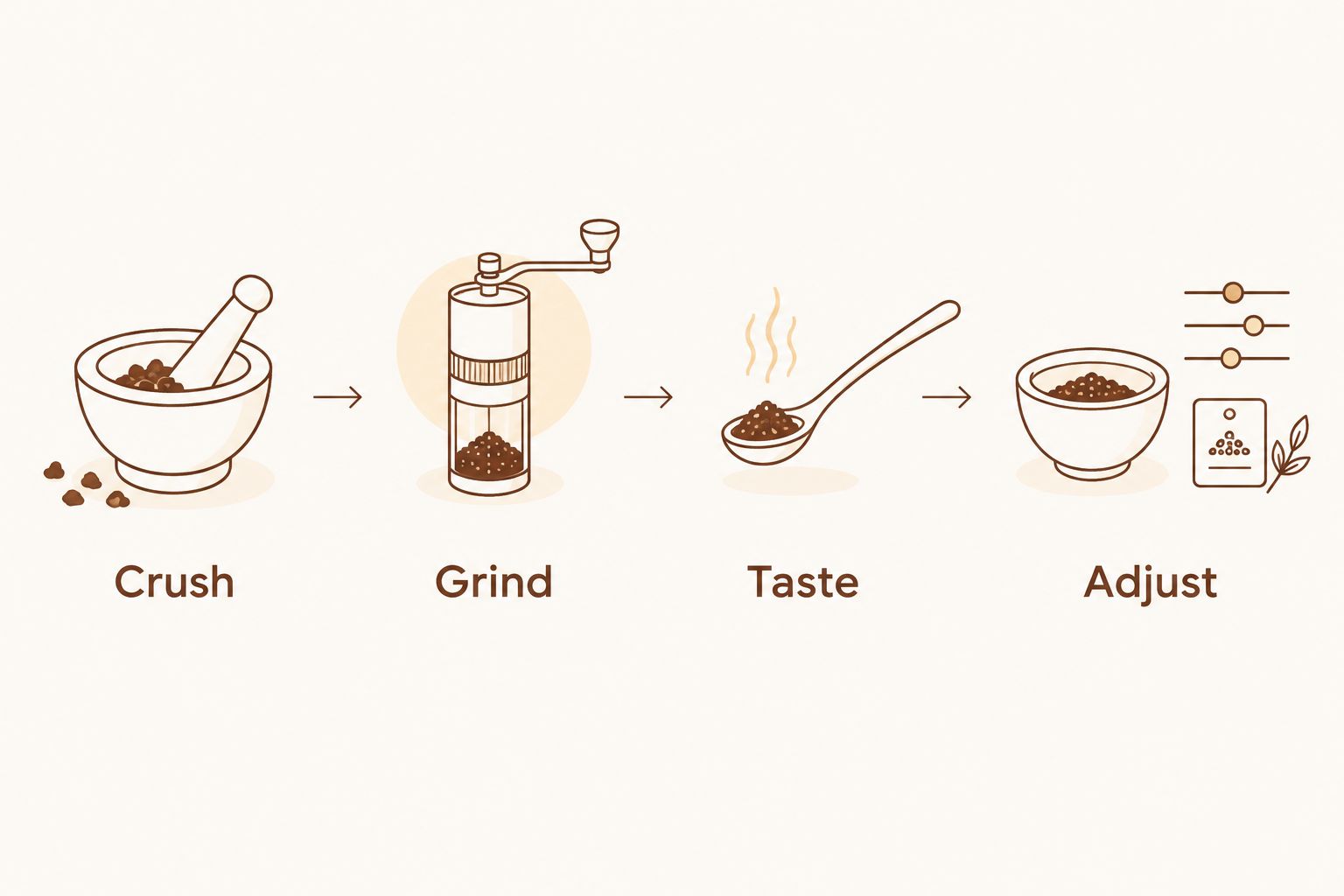
A fair comparison changes one thing at a time. Keep the food and seasoning similar, then change the grind. If you compare a fine dusting on soup with a coarse crust on steak, you are comparing dishes as much as pepper.
Toast, bloom, or finish?
Fresh grinding is the default; toasting is a cooking choice. You do not need to toast every refill before putting it into a mill. Start with the pepper as supplied so you can learn its aroma before changing it with heat.
For a toasted spice blend, warm the peppercorns gently in a dry pan and move them frequently. Stop when fragrant, before scorching, then let them cool before grinding. Do not rely on a fixed timer while ignoring the pan.
For blooming, add freshly ground pepper to warm cooking fat and stir as part of the recipe. Avoid leaving a small amount of pepper unattended in very hot oil. For finishing, grind directly over the food shortly before serving.
These methods serve different dishes. A toasted blend belongs in a deliberate recipe; a fresh finishing grind belongs where you want pepper’s aroma at the table. Neither method proves that one commercial grade is better.
Store the refill, not just the mill
Keep whole peppercorns in a tightly closed container in a cool, dry cupboard away from direct light. Keep the container away from the stove, dishwasher steam, and damp utensils.
Refill your mill away from cooking vapor. Check that its chamber is dry, and follow its cleaning instructions before adding pepper. Do not wash a grinding mechanism unless its manufacturer permits it.
For 5Senses whole-spice cooking, preparation and preservation belong together. Grind what the dish needs, close the remaining supply, and judge your next refill by its aroma—not by whether the cupboard still contains peppercorns.
How these picks are ranked
The order prioritizes everyday usefulness, then a distinct preparation method, then origin exploration. The criteria are grade clarity, traceable source, freshness information, grinder fit, and aroma after crushing.
This is a specification-led buying guide, not a laboratory heat ranking or a blind brand tasting. No grade receives a flavor score simply because its peppercorns are larger.
Which Tellicherry black peppercorns should you choose?
Choose TGEB as your default specification for an everyday mill, subject to compatibility. Choose TGSEB when you specifically want larger peppercorns for coarse crushing. Choose an origin-documented lot when exploring growing sources matters more to you than a named size grade.
If the label gives you only “Tellicherry” and “premium,” ask for more information. You need enough detail to choose, not more adjectives.
FAQ
What are the best Tellicherry black peppercorns for a pepper mill?
TGEB is a useful default specification for everyday mill shopping, provided your mill accepts the peppercorns. Check source and packing information as well; the grade alone does not establish freshness.
Is TGSEB better than TGEB?
TGSEB identifies a larger-size selection, not an automatic improvement in flavor. Choose it for a specific preparation, such as coarse mortar crushing, rather than expecting stronger pepper.
Are Tellicherry black peppercorns hotter than regular black pepper?
The Tellicherry designation does not guarantee greater heat. Compare the actual pepper at the same grind size and seasoning amount before deciding which tastes stronger.
Does Tellicherry mean the pepper grew in Thalassery?
The Tellicherry name does not by itself identify a growing farm or region. Ask for the growing source separately from the trading designation and packing location.
Should I toast Tellicherry peppercorns before grinding?
Toast peppercorns when a recipe calls for that flavor, not as a mandatory preparation step. For everyday finishing, begin with freshly ground, untoasted pepper.
Why do large peppercorns get stuck in my grinder?
Peppercorns can catch when their size does not suit the mill’s feeding mechanism or adjustment. Stop forcing the handle and check the manufacturer’s instructions before continuing.
How should I store whole Tellicherry peppercorns?
Store whole Tellicherry peppercorns tightly closed in a cool, dry cupboard away from direct light and cooking steam. Keep the main supply sealed and refill the mill as needed.
One last thing
Before replacing your pepper, change the grind. The same peppercorns produce a different eating experience as fine seasoning or coarse fragments. That small kitchen comparison tells you more about your next purchase than choosing the largest grade by default.