Malabar black pepper: from the Western Ghats to your kitchen
Explore Malabar black pepper origin in Kerala’s Western Ghats. Discover the growing heritage, sun-drying and fresh-grinding rituals behind 5Senses Bassline Burst.
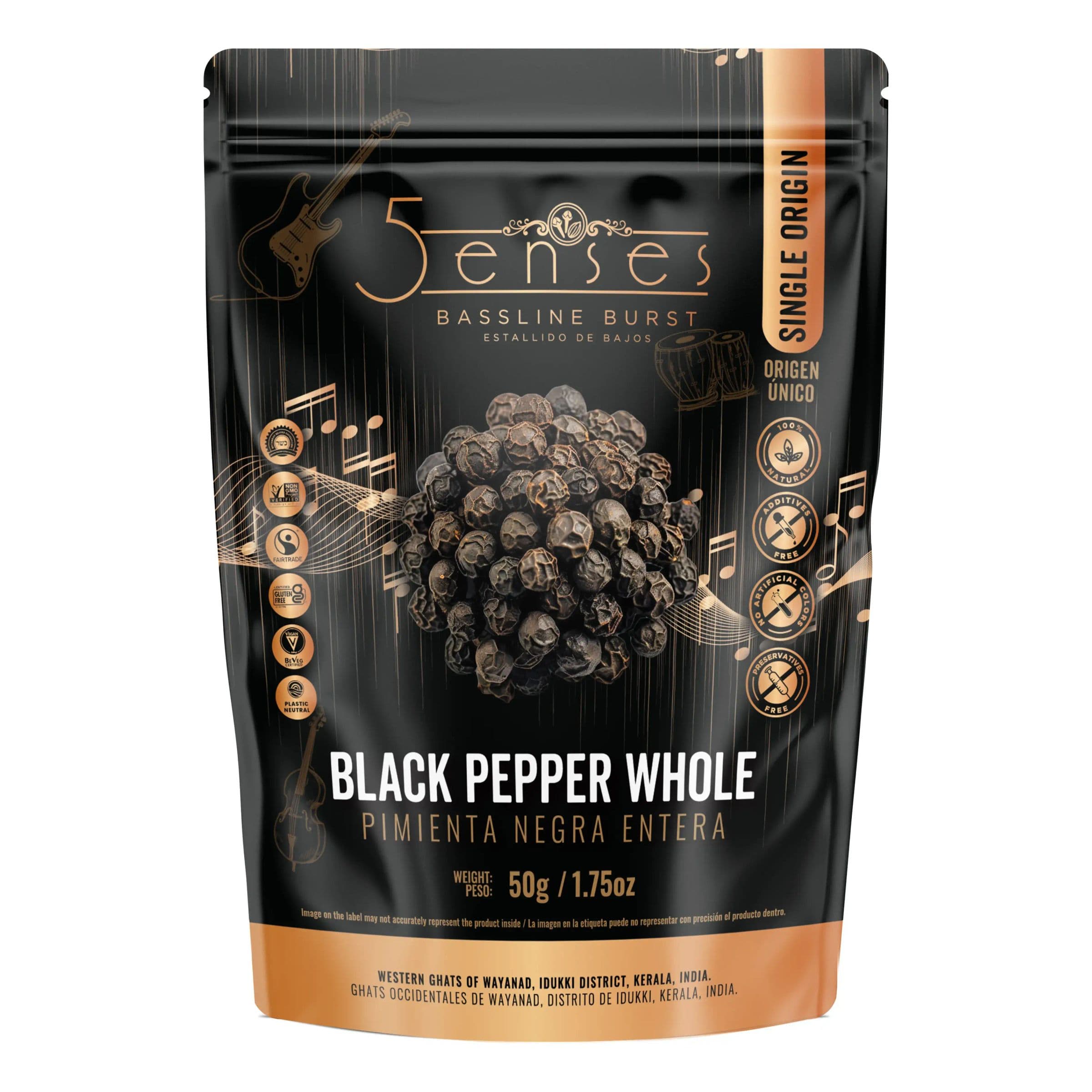
Malabar black pepper has its roots in the humid hills of India’s southwestern Western Ghats. The 5Senses Malabar Black Pepper Whole, named Bassline Burst, brings that regional story into everyday cooking through whole, naturally sun-dried peppercorns.
TL;DR- Malabar black pepper origin is tied to India’s southwestern Western Ghats.
- 5Senses Bassline Burst identifies Kerala’s Wayanad and Idukki growing areas.
- Black peppercorns are dried berries, not seeds from a chili plant.
- Grind whole pepper close to serving to appreciate its woody, citrusy aroma.
A familiar spice with a specific home
Black pepper sits beside salt in so many kitchens that its origin is easy to overlook. It feels ordinary. Yet the peppercorn in your grinder began as a fruit on a climbing vine, grown in a landscape with its own rainfall, farming knowledge and harvest decisions.
India’s Spices Board identifies the hills of the southwestern Western Ghats as pepper’s place of origin. That makes Malabar more than a familiar name on a pouch. It connects a widely used ingredient to the region where its botanical story began.
The Western Ghats run along the western side of peninsular India. Their warm, humid growing environments help explain why pepper became established here. The landscape matters, but so does what happens after harvest: drying, sorting, packing and the way you use the spice at home.
For 5Senses, single-origin whole spices make those connections visible. Bassline Burst names Kerala’s Wayanad and Idukki growing areas on its product information. Wayanad and Idukki are separate districts; they should not be read as one village or one unnamed farm.
Pepper grows on a vine, not in a shaker
Black pepper comes from Piper nigrum. It is a perennial climbing plant whose fruit develops along hanging spikes. The green berries change color as they mature, and processing turns the harvested fruit into the peppercorns you recognize.
The Spices Board describes cultivated pepper vines trained on supports in columns about 5–6 meters tall. It also identifies hot, humid conditions and well-distributed annual rainfall of 125–200 centimeters as suitable for the crop. These are general cultivation facts, not measurements of the farms supplying this particular pouch.
Those details give you a more useful picture of pepper country than an unqualified claim about the world’s best soil. This is a crop suited to moisture, warmth and a support structure. A productive pepper garden requires attention to the vine and the conditions around it.
The fruit is the commercial spice. Black pepper is not a dark version of chili pepper, and the two do not come from the same plant. Their different identities help explain why black pepper brings its own kind of pungency and aroma to food.
Why Malabar belongs in pepper’s story
Some spice origins describe where a crop was introduced and later flourished. Malabar pepper’s regional connection reaches further back: the southwestern Western Ghats are recognized as pepper’s native home.
That distinction matters. A birthplace is a botanical claim. A growing origin is a sourcing claim. A flavor description is a sensory claim. You can appreciate all three without treating them as interchangeable evidence.
Pepper now grows in many countries, including Vietnam, Indonesia, Sri Lanka and Brazil. Its success elsewhere does not erase Malabar’s significance. Nor does Malabar’s history prove that every peppercorn grown here will taste identical or automatically outperform every other origin.
The stronger story is specific: a native growing landscape, a long association with the spice and a current product that identifies its source. That gives you a foundation for learning, tasting and choosing rather than asking you to accept a slogan.
From harvested berry to Bassline Burst
The 5Senses product page describes Bassline Burst as naturally sun-dried. Drying changes the fruit’s appearance and prepares it for storage and cooking. The wrinkled dark exterior you see is part of the peppercorn’s processed fruit structure.
A whole peppercorn keeps the spice in a form you can grind or crush when needed. That is different from buying a powder whose particle size has already been decided for you. Whole form gives you a practical choice at the stove: fine seasoning, a coarse crust or a restrained finishing grind.
The product is also described as farmer-sourced and packed at origin in resealable airtight pouches. Those are useful facts about how 5Senses presents the ingredient. They do not establish an exact farm name, harvest date or transit duration unless those details are supplied for the batch you hold.
Look at the harvest and packing information on your own pack. Dates belong to the specific lot, not to a generic origin story. Keeping that distinction clear is part of taking provenance seriously.
What to notice beyond heat
The 5Senses tasting notes describe Bassline Burst as woody, citrusy, spicy and subtly sweet, with fruity undertones. These words describe aroma and flavor character; they are not promises that pepper will taste like added citrus juice or sugar.
Start by crushing a small sample. Smell it before mixing it into a heavily seasoned dish. The first lesson is that pepper has an aroma as well as a bite.
Then try it on something simple: warm rice, a cooked potato or a lightly dressed vegetable. A plain base makes it easier to notice the pepper itself. In a rich stew, the same spice becomes one part of a broader flavor rather than the main voice.
Heat and aroma are separate dimensions. Adding more pepper increases its presence, but it is not the only way to reveal character. The grind, the cooking time and the moment you add it all change what reaches your plate.
Three ways to bring Malabar pepper into the kitchen
| Preparation | Best for | What it changes | Main tradeoff |
|---|---|---|---|
| Fine fresh grind | Sauces, soups and even seasoning | Distributes pepper through the food | Less visible texture |
| Coarse crush | Vegetable finishes and pepper-forward crusts | Creates concentrated bites and texture | Can be too assertive in delicate dishes |
| Whole peppercorn infusion | Strained stocks and simmered sauces | Adds pepper while keeping solids removable | Needs time and a way to remove the berries |
Grind for everyday seasoning
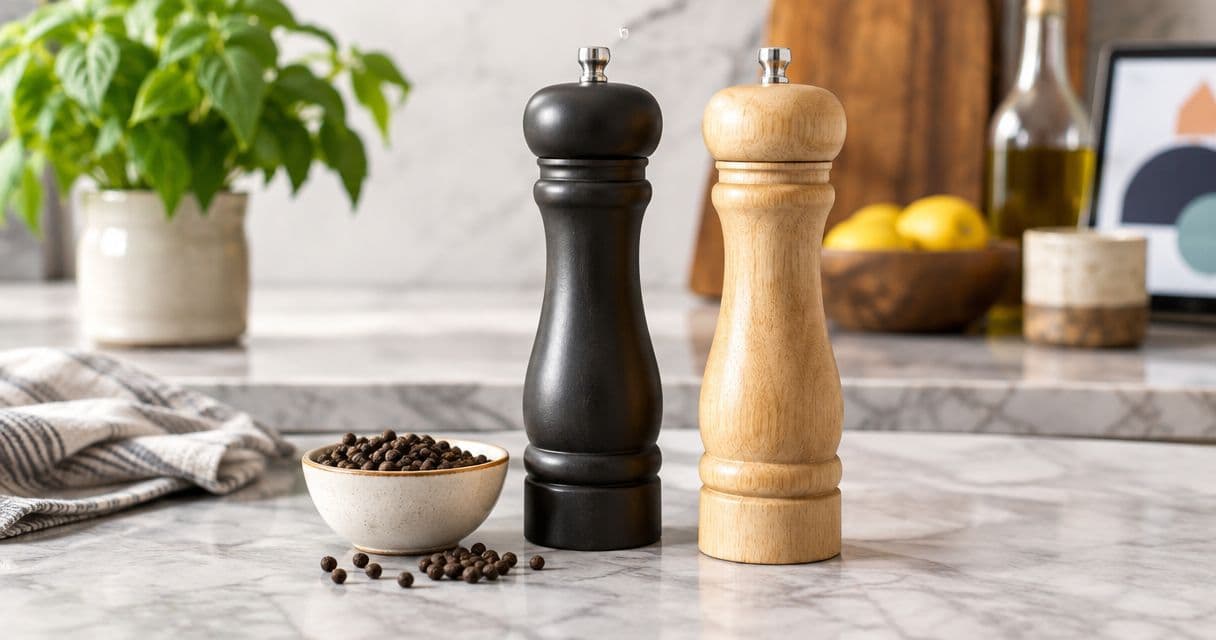
Use a dry pepper mill or a suitable spice grinder. Start with the texture the dish needs, not the coarsest setting simply because the pepper is whole.
A fine grind works when you want the seasoning spread evenly. It fits a sauce more comfortably than large fragments that interrupt its texture. Add a modest amount, stir and taste before increasing it.
For a finishing grind, add pepper near serving. This lets you compare its freshly released aroma with the rounder effect of pepper cooked into the dish. Neither approach is wrong; they serve different purposes.
Crush for texture
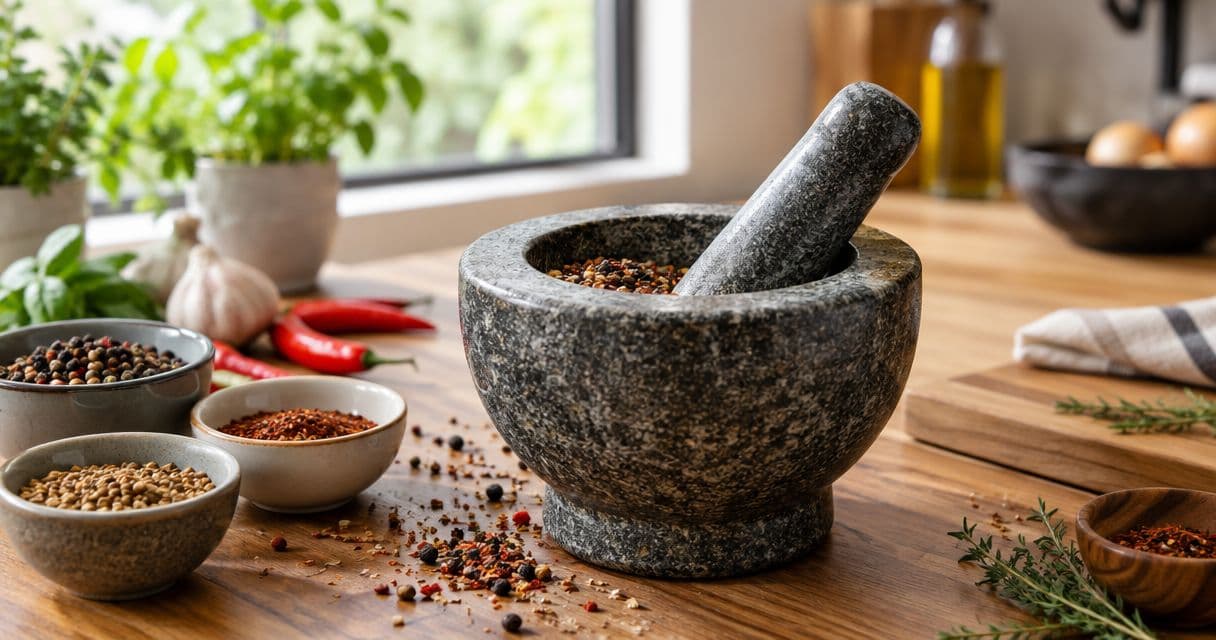
A mortar and pestle lets you break peppercorns without reducing every piece to powder. Crush only what you need for the meal. You keep control over the mix of smaller fragments and larger pieces.
Use that texture over roasted vegetables, a cooked protein or a warm bean dish. The pepper becomes a distinct bite rather than an invisible seasoning. Keep the amount restrained until you know how assertive you want the finish.
Coarse pepper is not automatically better pepper. It is simply a more noticeable presentation. In a smooth custard-style savory sauce or a delicate soup, the same texture can work against the result.
Infuse for a softer presence
Whole peppercorns can simmer in a stock or sauce that will be strained. The spice contributes flavor while the finished liquid stays free of coarse fragments.
Choose this method when texture matters or when the pepper is supporting other ingredients. Remove the whole berries before serving if they are not intended to be eaten as part of the dish. A spice bag makes that easier.
Whole infusion is also a useful teaching exercise. It shows that you do not have to grind every whole spice to use it effectively. Sometimes the whole format is valuable precisely because you can take it out.
A small tasting ritual that teaches more than a ranking
Prepare one mild base and divide it into two portions. Keep the salt, fat and serving temperature as similar as practical. You are comparing how pepper is used, not testing several changing ingredients at once.
Season the first portion with pepper during cooking. Finish the second with a fresh grind immediately before eating. Smell both, then taste them side by side.
Ask yourself three questions:
- Which portion has the clearer pepper aroma?
- Which makes the pepper feel more integrated with the food?
- Which texture would you want in this particular recipe?
This is a home tasting, not a laboratory result. It will not prove one origin universally better than another. It will help you decide how to use the whole pepper you have, which is far more useful at dinner.
Keep the origin’s character after opening
A regional story cannot compensate for careless pantry storage. Keep pepper dry, sealed and away from direct light and stove heat. Avoid holding an open pouch over a steaming pot.
Pour a small working quantity into your grinder and keep the reserve protected. Check that the grinder is dry before refilling it. A large refill is convenient, but storing your entire supply beside a hot stove defeats the purpose of careful packing.
Before cooking, crush a sample and smell it. A clear pepper aroma is more informative than assuming every unopened-looking peppercorn is still expressive. If a spice shows mold or contamination, discard it rather than treating extra seasoning as a solution.
Whole pepper asks for a little preparation. In return, you get control over the grind and the moment its aroma is released. That tradeoff is the reason to choose it, not a claim that every kitchen must abandon pre-ground seasoning.
The 5Senses connection
5Senses Bassline Burst is a practical choice for cooks who want Malabar black pepper with a named Kerala origin and the flexibility of whole peppercorns. Its story rests on the growing region, natural sun-drying and origin packing described for the product.
The regional heritage lives in the crop and the knowledge of the people who cultivate it. A named origin keeps that connection visible. Fresh grinding brings it into the meal.
Malabar also appears in the brand’s green cardamom story. Explore Malabar Melody’s regional roots to see how one broad spice landscape can support ingredients with very different aromas and kitchen roles.
FAQ
Where does Malabar black pepper come from?
Malabar black pepper is associated with southwestern India. 5Senses identifies Kerala’s Wayanad and Idukki growing areas for Bassline Burst.
Is the Western Ghats region pepper’s birthplace?
India’s Spices Board identifies the hills of the southwestern Western Ghats as pepper’s place of origin. Pepper is also cultivated in many other countries today.
Are black peppercorns seeds?
Black peppercorns are dried fruits of Piper nigrum. Each berry contains a seed, but the whole dried fruit is the spice you buy.
What does 5Senses Malabar black pepper taste like?
5Senses describes Bassline Burst as woody, citrusy, spicy and subtly sweet, with fruity undertones. Your grind and cooking method affect how those notes appear in food.
Should I add black pepper before or after cooking?
Add pepper during cooking for an integrated flavor or near serving for a fresh aromatic finish. Choose the moment according to the dish rather than treating one method as mandatory.
Does single origin mean every batch tastes identical?
No. A named origin identifies the source, while harvest, processing and storage can still affect the spice’s character. Read the details of the batch you are using.
One last thing
A peppercorn is a fruit with a home, not just a unit of heat. Crush it before your next meal and notice the aroma first. That small pause turns a familiar seasoning into an ingredient you can understand.
Related guides
Sources
Regional and botanical background: Spices Board India, Pepper spice catalogue, consulted October 2026. Product-specific origin, processing and flavor: 5Senses Bassline Burst product page and original packaging, consulted October 2026. Cultivation ranges describe the crop generally, not measurements of 5Senses supplier farms.