Does saffron need to be toasted before blooming it in liquid?
Does saffron need to be toasted before blooming it in liquid? No. Learn how to crush, steep, and use the infusion without scorching delicate threads.
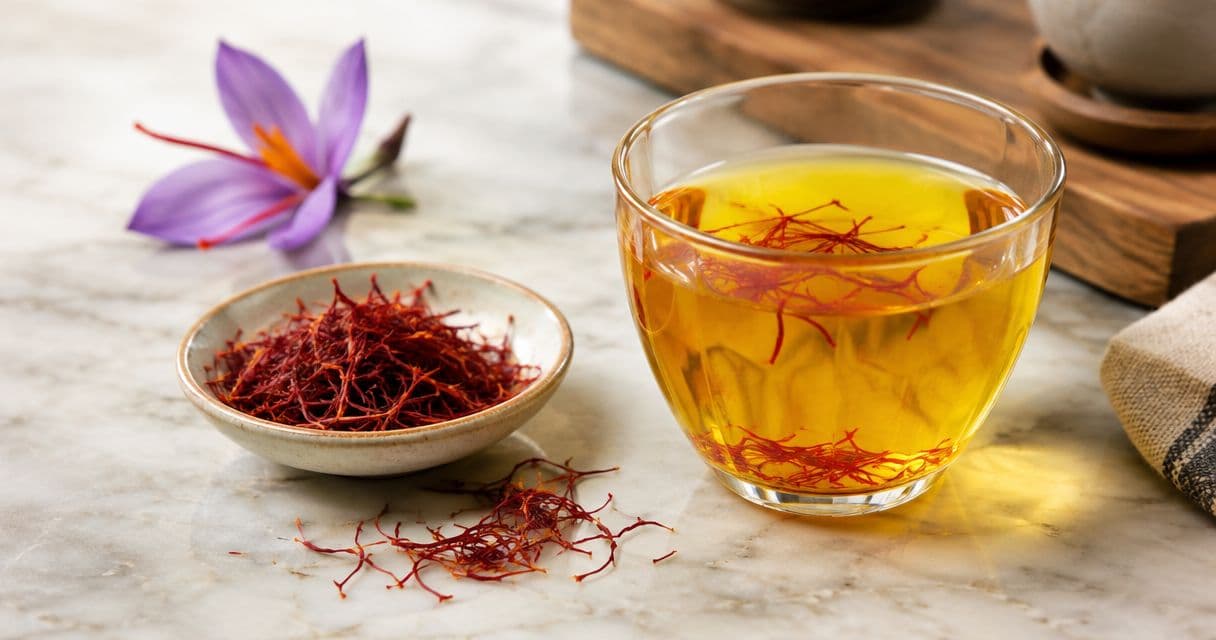
No, saffron does not need to be toasted before blooming it in liquid. Crush the threads gently and steep them in warm water, milk, or stock; dry warming is an optional preparation step, not a requirement, and excessive heat risks scorching the threads.
TL;DR- Does saffron need to be toasted before blooming it in liquid? No—warm liquid works without dry toasting.
- Crush saffron gently, steep it separately, and add both the infusion and threads to your recipe.
- 5Senses Kashmir Mongra Saffron suits cooks seeking a named-origin saffron for rice, milk infusions, and baking.
- Dry warming helps brittle threads crumble, but it adds a scorching risk and does not replace steeping.
Does saffron need to be toasted before blooming it in liquid?
Bloom saffron directly in warm liquid unless your recipe specifically calls for dry warming. Saffron is already a dried ingredient. You do not need to brown it, fry it, or give it the same treatment as a pan of whole seeds.
For rice, a separate infusion makes the saffron easier to distribute through the cooking liquid. The saffron threads to bloomed saffron rice workflow connects that preparation to the finished dish.
| Preparation | Best for | What it does | Main limitation |
|---|---|---|---|
| Gently crushed threads in warm liquid | Everyday rice, sauces, and baking | Combines smaller thread pieces with a separate infusion | Requires a little preparation before cooking |
| Whole threads in warm liquid | Dishes where visible threads matter | Infuses the liquid while retaining the thread shape | Whole threads take longer to release their contents than crushed threads |
| Gentle dry warming, then steeping | Recipes that explicitly call for warmed saffron | Makes threads easier to crumble before infusion | Adds a scorching risk and still requires liquid |
| Dry threads added straight to the dish | Recipes designed around direct addition | Lets the saffron infuse during cooking | Gives you less control over distribution |
The simplest choice is the first: gently crush, then steep. Keep dry warming as a deliberate recipe technique rather than an automatic rule.
Why this matters
Saffron preparation is about extraction and distribution, not browning. Its yellow coloring compounds dissolve in water, so a water-containing liquid gives them a route into your food. Toasting and steeping do different jobs.
The word bloom causes confusion because cooks also use it for heating other spices in fat. With saffron, blooming commonly means steeping the threads in liquid before adding that infusion to a dish. You do not need sizzling oil to do it.
That distinction matters when you are cooking several spices together. Toast your whole seeds as the recipe directs, but prepare the saffron separately rather than dropping delicate threads into the same hot pan.
Start with the saffron, not the skillet
Kashmir identifies a growing origin; blooming describes what you do in your kitchen. Keep those facts separate. An origin name does not mean the threads require a special dry-roasting treatment.
5Senses Kashmir Mongra Saffron is a good fit for cooks seeking named-origin saffron for everyday infusions. Use the same gentle preparation principle for rice, milk-based desserts, and doughs: portion what the recipe calls for, crush if appropriate, and introduce moisture.
The practical trade-off is simple. Whole threads give you control over when you crush them and let you retain visible strands, but they require preparation that a ready-ground ingredient does not. Named provenance also does not remove the need for careful storage and cooking.
Judge the preparation by what it needs to accomplish. If the threads crumble readily, extra dry heat has no necessary role.
How to bloom saffron without toasting it
Set out your saffron, a small clean bowl, and the liquid your recipe uses. Prepare the infusion before you reach the point where the dish needs it; that keeps you from rushing the steep over direct heat.
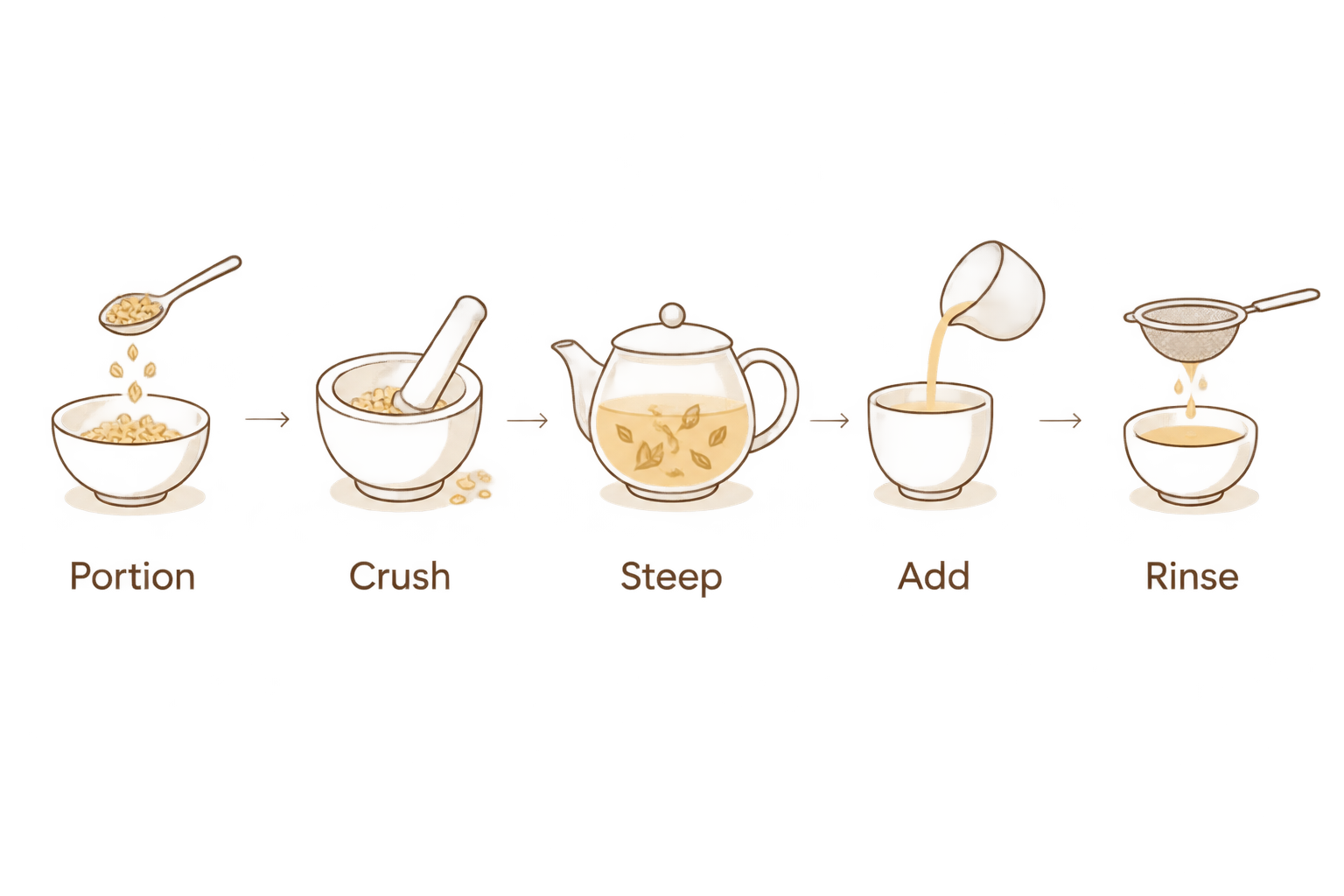
- Portion. Measure the saffron according to your recipe. Keep the remaining supply closed and away from steam.
- Crush. Break the threads gently with a small mortar and pestle or crumble them with clean, dry fingers. Stop short of scattering the saffron across a large work surface.
- Steep. Transfer the saffron to the bowl and add warm water, milk, or stock. Use a modest portion of the recipe's liquid rather than adding an unaccounted-for amount.
- Add. Let the infusion develop, then add both the liquid and the threads at the stage specified by the recipe.
- Rinse. Swirl a little more recipe liquid around the bowl and add that too, so saffron does not remain stuck to the sides.
Warm liquid is enough for this method. You do not need to keep the infusion at a rolling boil or leave a small pan of saffron liquid over a burner while you prepare everything else.
For baking, let the infusion cool to the temperature your recipe requires before combining it with sensitive ingredients. A warm saffron steep and a correctly mixed batter are separate tasks; do not let the first disrupt the second.
When does gentle dry warming make sense?
Gentle dry warming makes sense when a trusted recipe includes it to help the threads crumble. Treat that as a handling step, not a request to develop a toasted brown color.
Use gentle heat and watch the saffron continuously. Remove it before it darkens or smells scorched, then crumble and steep it as directed. If controlling such a small quantity over heat feels awkward, skip the warming and use the direct-infusion method.
Do not toast saffron until it changes color. Browning is not the target, and a burnt aroma will not disappear when you add liquid.
Dry warming also cannot correct poor storage or establish authenticity. It changes how you handle the threads; it does not verify what you bought or restore lost aroma.
Why saffron blooming results vary
Different results do not automatically mean you forgot to toast the saffron. These preparation choices affect how the infusion develops and how it reaches the finished dish:
- Thread size. Crushed saffron exposes more surface area than intact threads. Choose whole threads for their appearance, not because crushing is forbidden.
- Liquid temperature. Warmth helps extraction proceed more quickly than a cool steep. Harsh direct heat is a separate issue and adds a scorching risk.
- Steeping time. An infusion needs time to develop. Begin it during preparation instead of trying to force the process at the last moment.
- Liquid volume. The same saffron looks paler in more liquid. A concentrated bowl and a full pot are not useful visual comparisons.
- The finished dish. Milk, stock, rice, and other ingredients change how you perceive the saffron's color and aroma. Judge the food, not only the steeping bowl.
- Storage condition. Exposure to heat, moisture, air, and light affects dried spices. Preparation cannot reverse deterioration that happened before cooking.
Change one preparation choice at a time when you repeat a recipe. Otherwise, you cannot tell whether crushing, steeping, or the dish itself explains the difference.
Should I bloom saffron in water, milk, or stock?
Choose the liquid that belongs in the finished recipe. Water is neutral, milk suits dairy-based preparations, and stock fits savory dishes that already use it.
| Liquid | Best for | Advantage | Limitation |
|---|---|---|---|
| Water | Rice, doughs, and recipes needing a neutral infusion | Adds no competing flavor | Must count toward recipes with tightly controlled hydration |
| Milk | Rice pudding, custards, and milk-based drinks | Fits directly into the dish's dairy component | Its opacity makes color development harder to compare with water |
| Stock | Savory rice and sauces | Uses liquid already intended for the recipe | Strong stock flavors make saffron harder to assess on its own |
Oil alone is not the default liquid for a saffron steep. Saffron's principal coloring compounds are water-soluble, so use a water-containing liquid when your goal is to extract and distribute that color.
Do not add extra milk or stock simply because you made an infusion. Reserve some from the recipe, bloom the saffron in it, and return it to the dish.
Do I need to grind saffron into a powder first?
No, saffron does not need to become a fine powder before blooming. Gentle crushing is enough to break up the threads while keeping the preparation manageable.
A small mortar is useful when you want finer pieces. For a small recipe quantity, a large electric grinder creates an unnecessary transfer problem: saffron can remain on the lid, blades, and chamber instead of reaching your food.
If visible strands are part of the presentation, leave some threads whole. That is an appearance choice, not evidence that the crushed portion is inferior.
Can I add saffron directly to rice or a sauce?
Yes, saffron can infuse directly in a dish that contains liquid and allows time for extraction. Follow the recipe when it specifies that method.
A separate bloom is useful when you want more control over distribution. You can stir an infusion through cooking liquid more deliberately than you can distribute a few dry threads through a large pan.
For layered rice, the goal can be different: you might want patches of saffron-colored rice rather than uniform color. Add the infusion where the recipe directs instead of assuming even color is always the correct result.
What if the saffron infusion looks weak?
First, check how much liquid you used and whether the threads are whole or crushed. A pale, diluted infusion does not by itself show that the saffron needed toasting.
Give the steep time to develop, then assess its aroma and its role in the recipe. Do not use the bowl's color as a laboratory test of purity, grade, or strength.
If you scorched the threads, start again with an unheated portion. More steeping will not undo burning, and adding additional saffron to a scorched infusion carries the burnt flavor into the replacement.
FAQ
Does saffron need to be toasted before blooming it in liquid?
No, saffron does not need to be toasted before blooming it in liquid. Gently crush the threads and steep them in warm water, milk, or stock; dry warming is optional.
Can I bloom saffron without crushing the threads?
Yes, whole saffron threads can bloom directly in warm liquid. Crushing exposes more surface area, while leaving threads whole preserves their appearance.
Should I use boiling water to bloom saffron?
Warm water is sufficient for blooming saffron. You do not need to maintain a rolling boil or keep the infusion over direct heat.
Is blooming saffron the same as frying spices in oil?
No, blooming saffron usually means steeping it in a water-containing liquid. Frying other spices in fat is a different preparation technique.
Should I strain the saffron threads out after blooming?
You generally do not need to strain saffron threads out after blooming. Add the infusion and threads unless your recipe calls for a strained liquid or a completely smooth finish.
Can I bloom 5Senses Kashmir Mongra Saffron in milk?
Yes, you can bloom 5Senses Kashmir Mongra Saffron in warm milk for a recipe that uses milk. Reserve that milk from the recipe's total rather than adding extra liquid.
Does a darker saffron infusion prove better quality?
No, a darker infusion alone does not prove better saffron quality. Liquid volume, thread size, temperature, and steeping time all affect its appearance.
One last thing
Rinse the steeping bowl into the dish. The liquid left around the rim and the thread fragments clinging to the sides belong in your recipe, not in the sink.
That small transfer step is more useful than adding an unnecessary toast. Keep the method gentle, account for the liquid, and let the saffron infuse.