How much saffron do you need for a pot of rice?
How much saffron for rice? Start with a small pinch, infuse it before cooking, and match the amount to dry rice. Learn to avoid bitter, unevenly flavored rice.
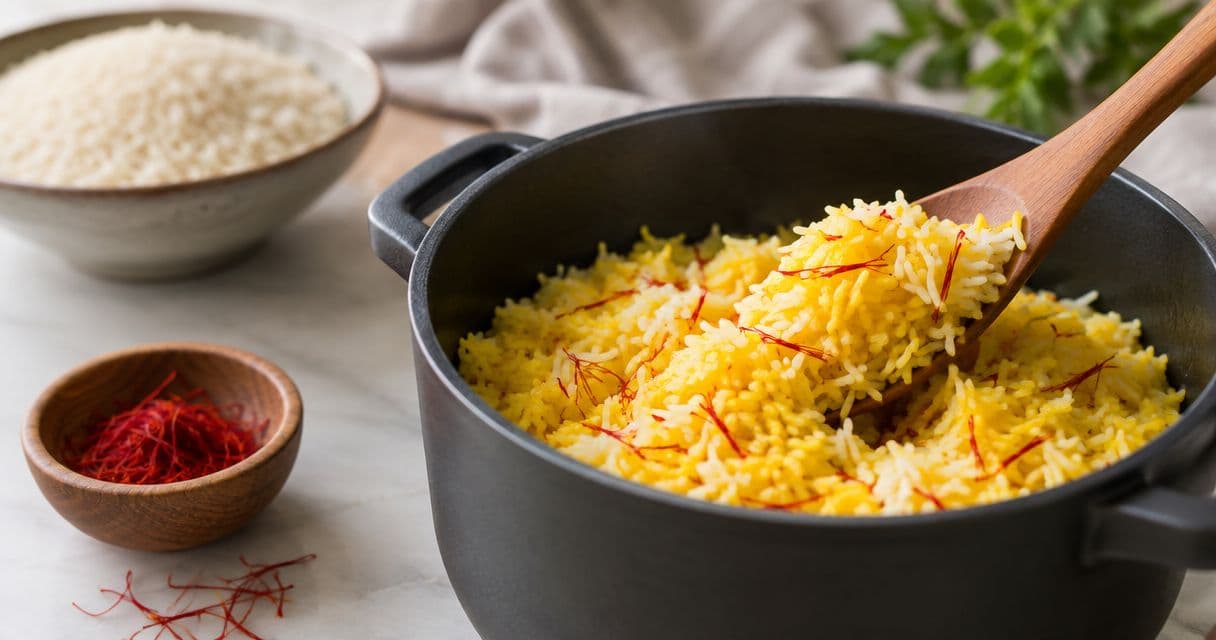
Start with a small pinch of saffron for a pot of rice, then adjust future batches to the amount of dry rice and the flavor you want. Infuse the threads in a little warm cooking liquid before adding them, and count that liquid toward the recipe’s total. The pot’s size is not your measuring guide; the rice is.
TL;DR- How much saffron for rice depends on dry rice quantity: start with a small pinch and follow your recipe.
- Infuse saffron threads before adding them to rice; include the infusion in your total cooking liquid.
- 5Senses offers Kashmir Mongra saffron for cooks seeking a stated origin.
- Judge saffron rice by aroma and flavor, not yellow color alone.
Why this matters
Saffron should give rice a distinct aroma and flavor, not simply make it yellow. Adding more threads to chase a darker color can push the dish away from the delicate result you wanted. Start small, prepare the saffron properly, and make adjustments after tasting the finished rice.
For your 2026 pantry, keep the cooking method separate from the buying decision. The Kashmir Mongra saffron guide introduces the saffron offered by 5Senses; your rice recipe determines how to use it. A stated origin identifies the ingredient, but it does not tell you how much belongs in every dish.
How much saffron do you need for a pot of rice?
Use a small pinch as a starting point when your recipe gives no saffron quantity. A pinch is a cooking judgment, not a precise unit. For a repeatable result, use the quantity specified by a reliable recipe and record how it tastes with your chosen rice.
Measure against dry rice rather than cooked rice. Cooked rice contains absorbed water, and its volume changes with the variety and method. A pot that looks full does not tell you how much saffron went into each portion.
The following approaches solve different kitchen problems. Choose the one that matches how closely you need to repeat the dish.
| Approach | Best for | Advantage | Limitation |
|---|---|---|---|
| Follow a recipe’s measured quantity | Repeating a particular rice dish | Keeps the saffron tied to a defined amount of rice | A different rice quantity requires adjustment |
| Start with a small pinch | Everyday cooking without a specified dose | Lets you begin with a restrained amount | Pinches differ between cooks and batches |
| Weigh the saffron | Recipe development and larger batches | Makes your own successful result easier to reproduce | Requires a scale sensitive enough for the quantity |
| Count individual threads | Following a recipe written in threads | Matches that recipe’s stated method | Thread lengths and broken pieces differ |
Do not translate a pinch into a fixed weight by guesswork. Likewise, do not assume that a spoonful of loosely arranged threads equals a spoonful of crushed saffron. The ingredient occupies space differently in each form.
Once you have a batch you like, keep the dry rice quantity, saffron amount, infusion method, and cooking liquid together in your notes. That combination is more useful than a saffron measurement on its own.
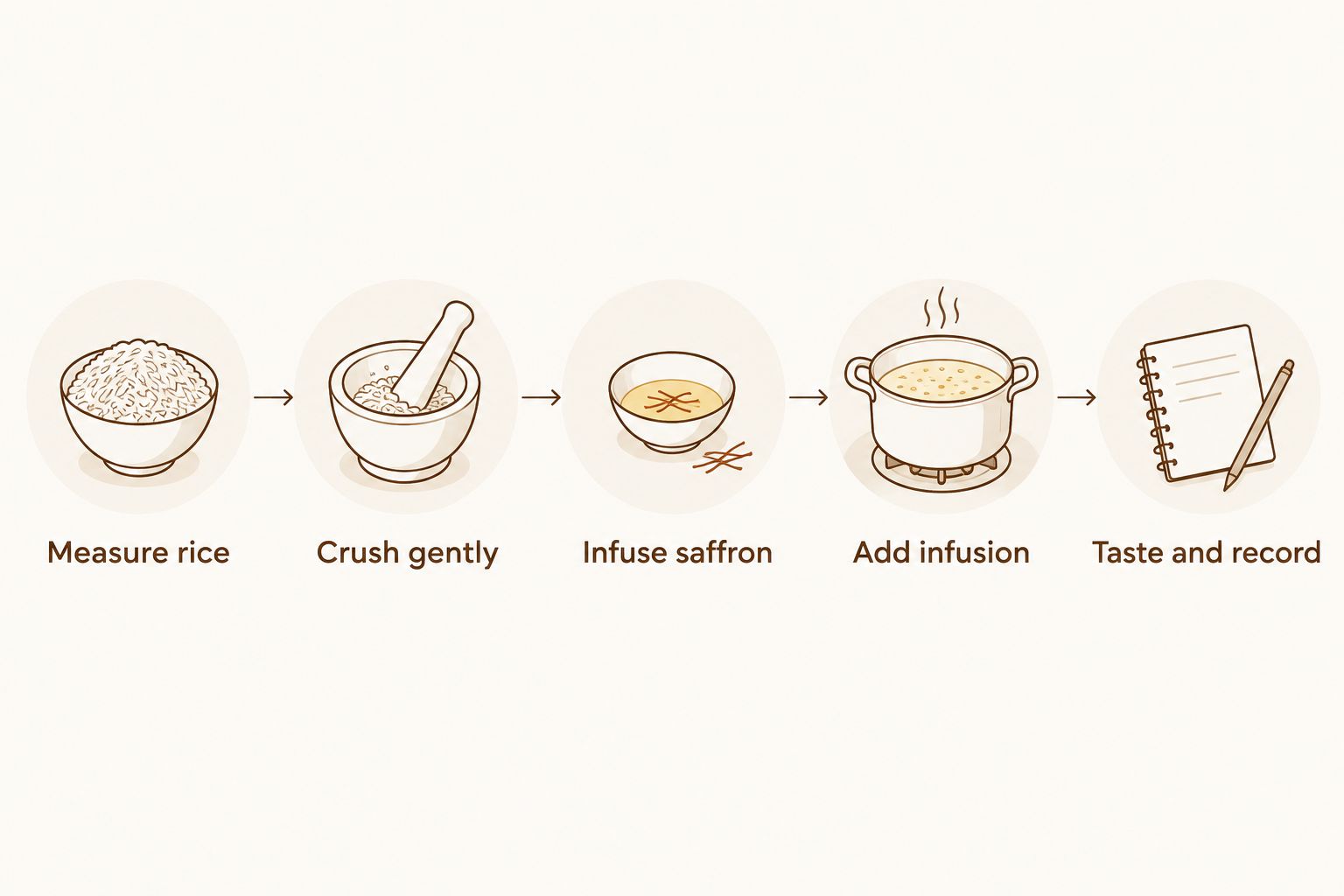
A repeatable saffron-rice method for 2026
The simplest method is to prepare the saffron before the rice starts cooking. That gives you an infusion you can distribute through the liquid instead of dropping dry threads into the pot and hoping they spread evenly.
Measure rice
Measure your dry rice first and choose the recipe’s cooking method. Rinse or soak the rice if the recipe calls for it; saffron does not replace those preparation steps.
Set aside part of the measured cooking liquid for the saffron. This prevents the infusion from becoming an unplanned addition that changes the rice’s texture.
Crush gently
Lightly crush the saffron threads in a small, clean mortar or between clean fingertips. You want to break them up enough to help them disperse, not leave them scattered across a large work surface.
A dedicated grinder is unnecessary for a small pinch. With such a small quantity, some saffron can remain on the grinder’s surfaces rather than reach the rice.
Infuse saffron
Cover the saffron with a little warm water or another liquid specified by your recipe. Let the liquid take on the saffron’s color and aroma while you finish preparing the rice.
Use a small vessel so the threads stay submerged. There is no benefit to spreading a small pinch across the bottom of a large bowl with barely enough liquid to wet it.
Add infusion
For evenly flavored rice, add the saffron infusion to the cooking liquid before the rice finishes cooking. Follow the recipe’s timing, especially when it uses a layered or steaming method.
Pour in the threads as well as the liquid. Rinse any remaining saffron from the infusion vessel with a little of the already measured cooking liquid rather than leaving it behind.
Taste and record
Taste the finished rice before deciding that the next batch needs more saffron. Check the aroma, seasoning, texture, and accompanying food together.
Record whether you want a lighter or more pronounced saffron flavor next time. Change the saffron amount while keeping the rice and method consistent, so you know what caused the difference.
Why the amount of saffron for rice varies
There is no useful dose based only on the words “a pot of rice.” These factors explain why the same pinch does not produce the same result in every kitchen:
- Dry rice quantity: More rice spreads the saffron through more food. Keep the rice measurement attached to your saffron measurement.
- Desired flavor: A lightly scented side dish and a saffron-led rice dish have different goals. Decide which you are making before adjusting the amount.
- Preparation method: Crushed, infused saffron disperses differently from dry threads added directly to rice. Keep the preparation method consistent when comparing batches.
- Other ingredients: Strong stock, browned onions, and additional spices change how clearly you notice saffron. Taste the whole dish rather than treating saffron in isolation.
- Rice cooking method: Absorption cooking, draining, and layered steaming handle liquid differently. Use instructions written for your method.
- The saffron itself: Storage and condition affect aroma. Adding more is not a substitute for checking whether the ingredient still smells distinctive.
Adjust the recipe deliberately, not reactively. If a finished batch tastes faint, first check how the saffron was prepared and what else went into the rice. Increasing the amount before checking the method makes the next result harder to interpret.
Should saffron rice be evenly yellow or marbled?
Saffron rice can be evenly colored or marbled, depending on the dish. For even distribution, mix the infusion into the cooking liquid; for a layered presentation, follow a recipe that places the infusion over selected areas of rice.
Neither appearance establishes the correct saffron dose. A pot with golden streaks is not automatically underseasoned, and uniformly yellow rice is not automatically well flavored. Judge the finished dish by its aroma and taste.
If you want marbling, resist stirring repeatedly just to spread the color. That works against the appearance you chose and can disturb the cooked grains. Decide on the presentation before adding the infusion.
Should you add saffron before or after cooking rice?
Add the saffron infusion during the cooking process for an absorption-style rice dish, following the recipe’s instructions. Layered rice recipes can instead call for adding it before the final steaming stage.
Pouring saffron liquid onto fully cooked rice adds moisture after the texture has already been set. It also requires mixing if you want even distribution. That makes it a correction rather than the simplest planned method.
For a new dish, choose a recipe that specifies when to add the saffron. Do not borrow the quantity from an absorption recipe and the timing from a drained-rice recipe without accounting for the different handling of liquid.
Can too much saffron make rice bitter?
Too much saffron can make its bitter notes dominate the rice. The goal is a clear saffron character that still lets you taste the rice and the rest of the dish.
Once the saffron is dispersed through cooked rice, you cannot remove it selectively. Adding other seasonings does not take the excess saffron out, either. A restrained starting amount is easier to work with than an overpowering finished pot.
If you need to soften an overly strong batch, combine it with separately cooked, unseasoned rice where that suits the dish. Avoid adding raw rice or extra water to a finished pot as an improvised fix; both change the cooking problem.
Choose saffron by origin, then cook by the recipe
5Senses saffron is best for cooks specifically seeking Kashmir Mongra saffron with a stated origin. The brand offers origin-packed Kashmir Mongra saffron. That is a concrete sourcing detail, not a universal instruction for rice dosage.
When choosing saffron in 2026, look for clearly stated origin and any harvest or packing information the seller actually provides. Do not infer those details from attractive packaging or a product name. Keep the container’s information with your recipe notes if you want to compare future batches.
Origin is useful, but it does not replace your own cooking record. Different dishes call for different levels of saffron flavor, and an ingredient’s name cannot account for the quantity of rice, stock, or other spices in your pot.
Store saffron tightly closed, away from light, heat, and moisture. Take out what you need before cooking, then close the container rather than leaving it open beside a steaming pan.
Keep a useful saffron-rice recipe note
A useful 2026 recipe note records the ingredient and the method together. Writing only “more saffron next time” loses the details that explain why the dish tasted light or strong.
Keep this short checklist with the recipe:
- Rice: Record the variety and dry quantity.
- Saffron: Record the amount using the same measuring method each time.
- Infusion: Note whether you crushed the threads and which liquid you used.
- Cooking: Note the method and when you added the infusion.
- Flavor: Write whether saffron was faint, balanced, or dominant.
- Next batch: Choose a single adjustment rather than changing everything at once.
This is especially useful when you cook for guests or prepare the same dish repeatedly. You are building a recipe you can repeat, not searching for a universal pinch that works in every pot.
FAQ
How much saffron for rice should I use without a recipe?
Start with a small pinch, infuse it in a little warm cooking liquid, and judge the finished rice before increasing the next batch. Match your notes to the amount of dry rice, not the pot’s capacity.
Should I measure saffron before or after crushing it?
Use the form specified by your recipe: whole threads and crushed saffron occupy space differently. Keep the measuring method consistent when repeating a batch.
Can I put saffron threads straight into rice?
You can add threads directly, but preparing an infusion makes them easier to distribute through the cooking liquid. Follow your recipe if it specifies a different method.
Does saffron infusion count toward the rice water?
Yes, count the saffron infusion toward the recipe’s total cooking liquid. Set aside part of that liquid for infusing rather than adding extra water afterward.
Should I toast saffron before making rice?
Follow the recipe rather than treating saffron like a whole spice that always needs toasting. For a simple rice method, lightly crush the threads and infuse them in warm liquid.
Can turmeric replace saffron in rice?
Turmeric can give rice yellow color, but it does not replace saffron’s aroma or flavor. Use a turmeric-rice recipe if turmeric is the ingredient you want to cook with.
What saffron does 5Senses offer?
5Senses offers origin-packed Kashmir Mongra saffron. Use your rice recipe to determine the quantity and preparation method.
What should I record when making saffron rice in 2026?
Record the dry rice quantity, saffron amount, infusion method, and cooking method. Add a short tasting note so your next adjustment has a clear purpose.
One last thing
The saffron left in your infusion cup belongs in the rice, not in the sink. Before adding more threads, check whether you transferred the ingredient you already measured.
Use a little of the recipe’s cooking liquid to rinse the cup into the pot. This small habit keeps your measured amount connected to what actually reaches the dish. Prepare carefully before increasing the dose.