How many star anise pods equal a teaspoon of ground star anise?
How many star anise pods equal a teaspoon of ground star anise? Grind and measure for reliable results, with tips for baking, infusing, and storage.
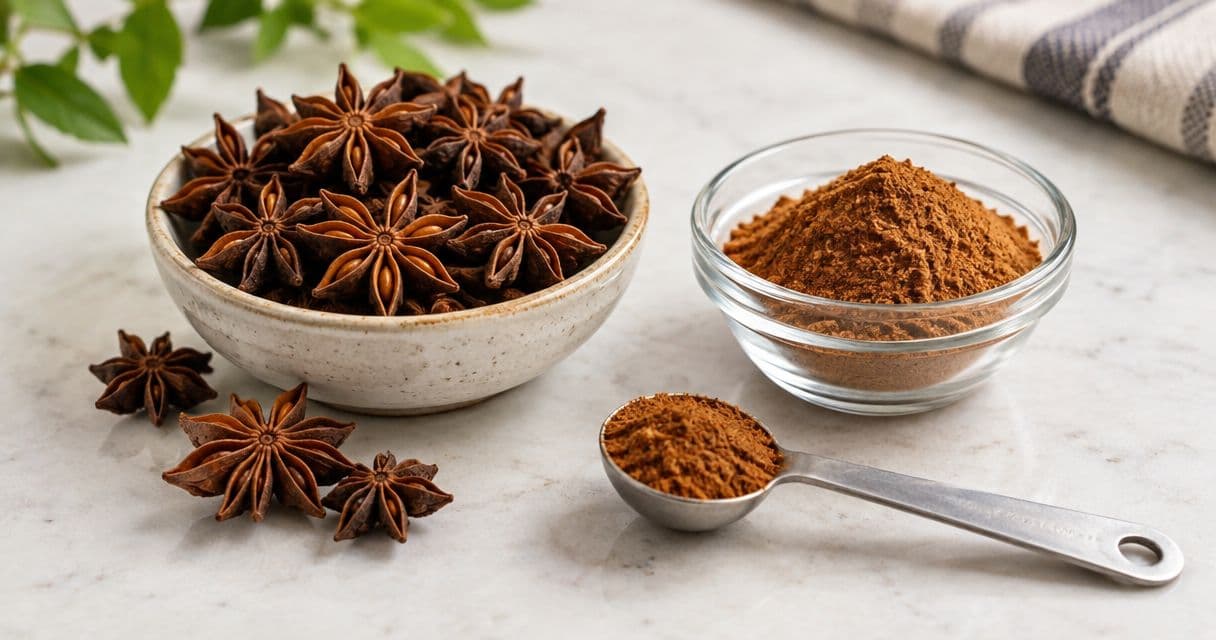
There is no dependable fixed number of star anise pods that equals a teaspoon of ground star anise: grind the whole spice, then measure 1 level teaspoon. Pod size, missing points, and grind texture change the yield, and a whole pod steeped in liquid does not behave like powder mixed into food.
TL;DR- How many star anise pods equal a teaspoon of ground star anise? Grind and measure; pod counts vary.
- Use the woody star and its seeds when making ground star anise, not the seeds alone.
- Ground star anise suits baking; whole pods suit infusions that you strain before serving.
- 5Senses whole-spice guidance centers on practical preparation: measure finished powder rather than counting uneven pieces.
How many star anise pods equal a teaspoon of ground star anise?
For a recipe calling for 1 teaspoon of ground star anise, measure 1 teaspoon after grinding. Counting whole stars gives you a starting quantity to process, not a dependable finished measurement.
A large, intact star and a small star with broken points are not equal portions. Even a batch of visually similar pods produces different spoonfuls when one batch is coarse and another is finely ground. For tool selection, see the guide to spice grinders for whole spices.
Use the recipe’s stated measurement as your endpoint:
| Recipe requirement | What to measure | Best for | Main limitation |
|---|---|---|---|
| Ground star anise | A level spoonful of finished powder | Baking and smooth spice mixtures | Powder remains in the finished food |
| Whole star anise | The whole pieces specified by the recipe | Broths, braises, and strained infusions | Flavor depends on steeping and removal |
| Ground star anise made at home | Finely ground whole stars, measured afterward | Cooking from a whole-spice pantry | Grinding and sieving add preparation |
These forms are useful for different jobs. Match the form before trying to match the quantity. A whole star floating in a cake batter is not a substitute for evenly distributed powder.
Why this matters
Star anise has a distinctive sweet, licorice-like aroma. In a broth, you can remove the whole spice when the flavor reaches the balance you want; in a biscuit dough, the ground spice stays throughout baking and serving.
That difference matters more than a neat conversion chart. A powder-yield estimate answers how much ground material you get, but it does not establish how strongly a whole star will season a particular dish. Choose your preparation around the food, then measure consistently.
Ground star anise: measure the finished powder
Best for: baking, spice blends, and dishes where the seasoning should stay in the food. Grinding distributes star anise throughout the mixture rather than leaving separate woody pieces to retrieve.
Ground star anise includes the aromatic woody fruit as well as the seeds inside it. Do not treat star anise like green cardamom by opening the pods and grinding only the seeds. Removing the star’s woody sections changes what you are measuring.
The advantage is even distribution. The drawback is that powder cannot be picked out once you have stirred it into a filling, batter, or sauce. Fine grinding is especially useful when a gritty texture would be distracting.
For repeat baking, keep the preparation consistent. Use the same grinder, sieve the same way, and level the spoon without pressing down. A written recipe becomes much easier to repeat when the measurement describes what actually enters the bowl.
Whole star anise: infuse, taste, and remove
Best for: broths, braises, poaching liquids, and strained drinks. Whole stars let you introduce the spice’s aroma while keeping the woody pieces separate from the finished dish.
Their advantage is control over removal. Their limitation is that steeping is not the same process as stirring powder into food: cooking time, liquid, and the size of the pieces all affect the result.
When a recipe specifically calls for ground star anise, do not assume that adding whole stars gives the same outcome. In a liquid preparation, a removable spice bag or strainer offers a practical way to contain the pieces. In baking, grind and measure instead.
Remove whole stars and loose woody fragments before serving. Their role in an infusion is to season the liquid, not to become a crunchy ingredient.
How to grind star anise for a measured teaspoon
Start with culinary star anise sold for food use. Check the grinder’s instructions before processing the hard, woody stars, and use clean, dry equipment so leftover coffee or another spice does not alter the aroma.
- Inspect. Look over the stars and remove unrelated debris. Broken points are usable, but they make counting especially unreliable.
- Break. Reduce the stars into smaller pieces using a suitable mortar or another method your equipment permits. Include both the woody fruit and the seeds.
- Grind. Process the pieces until the texture suits the dish. Stop and check rather than assuming the first pass is fine enough.
- Sieve. Pass the powder through a fine sieve when you need a smoother result. Regrind retained woody pieces instead of pushing them into the measuring spoon.
- Measure. Spoon the finished powder loosely into a measuring teaspoon and level the surface. Return excess powder to a dry, tightly closed container.
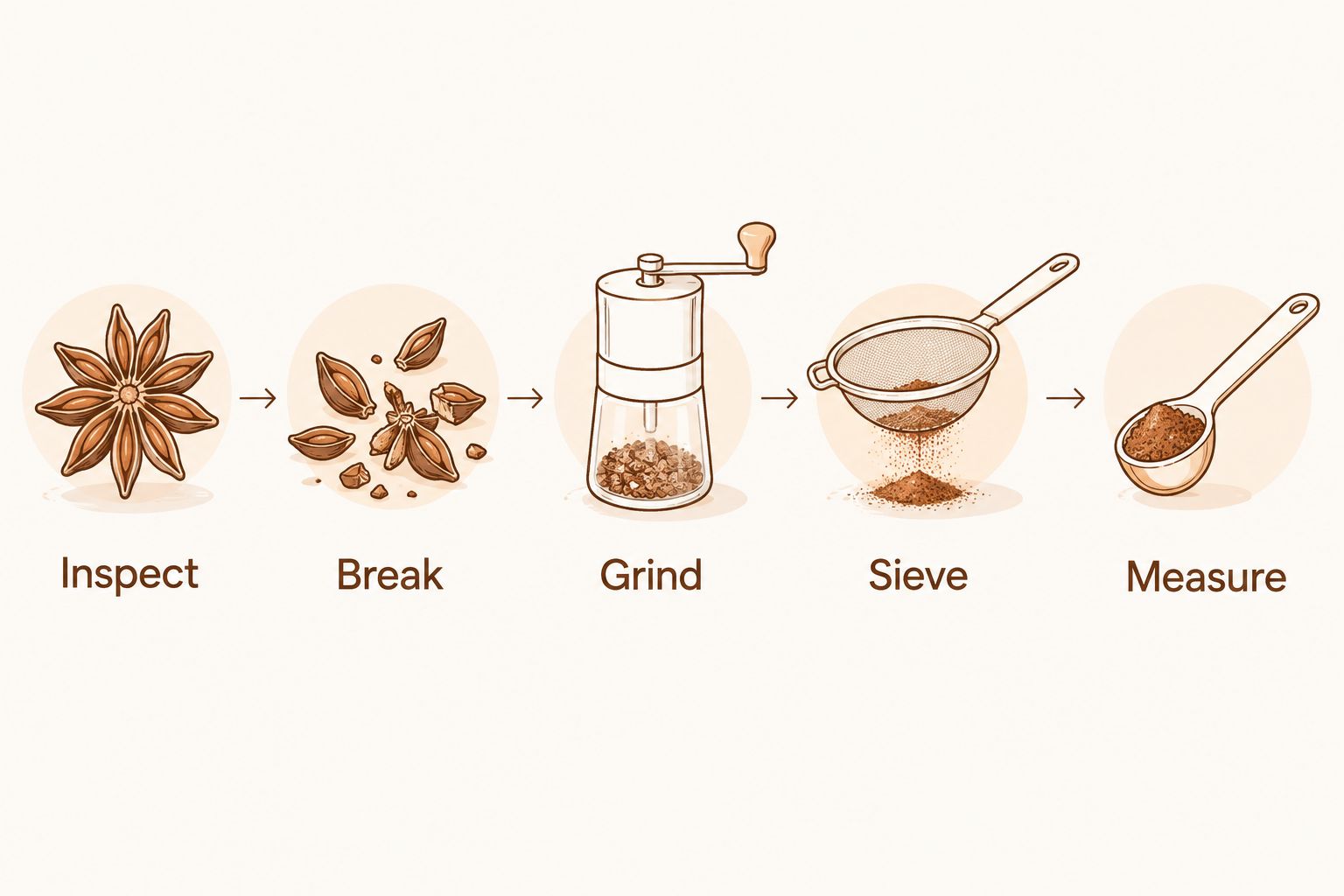
Let airborne spice dust settle before opening an electric grinder. Then check the powder itself: visible woody splinters mean the preparation needs more work, particularly for delicate baking.
If the grinder struggles with a tiny quantity, follow its operating guidance rather than running it with an unsuitable load. You can prepare more than the immediate recipe needs, but label and store the remainder promptly.
Why the pod-to-teaspoon yield varies
The amount of powder you collect depends on the ingredient and your preparation. These are the useful variables to watch:
- Star size. A pod count does not account for the amount of material in each star.
- Broken points. A partly broken star contributes less material than an otherwise similar intact one.
- Grind texture. Coarse fragments and fine powder settle differently inside a measuring spoon.
- Sieving. Removing coarse pieces changes the amount of usable powder available for measuring.
- Transfer losses. Powder left in the grinder, sieve, or work bowl never reaches the recipe.
- Spoon filling. A loosely filled, leveled spoon is not the same measurement as a compressed or heaped spoon.
Freshness is a separate question. It affects the aroma you experience, but it does not turn a particular pod count into a reliable teaspoon measurement. Keep yield and flavor strength separate when adjusting a recipe.
How do I measure a smaller amount of ground star anise?
For 1/2 teaspoon, use a level 1/2-teaspoon measure filled with finished powder. Do not try to identify half the necessary number of stars before grinding; uneven pieces make that shortcut unreliable.
For 1/4 teaspoon, use a level 1/4-teaspoon measure. Small quantities make heaping and compression particularly unhelpful, so fill loosely and sweep the surface flat.
These are measured portions, not claims about how many stars you need. Grind enough to fill the required spoon, then store any excess separately from the whole spice.
If you frequently use small quantities, note the finished measurement beside the recipe. That note remains useful when your next bag contains larger stars, more fragments, or a different mixture of sizes.
Can I put whole star anise into a recipe calling for ground?
Use ground star anise when the recipe needs the spice distributed throughout the food. Biscuits, cakes, pastry fillings, and dry seasoning mixtures need powder rather than hard pieces.
A simmered dish offers more flexibility because you can infuse whole stars and remove them. Even there, a powder conversion does not predict the same flavor: the whole spice releases aroma into the cooking medium, while powder remains dispersed in it.
Follow a whole-spice version of the recipe when one is available. Otherwise, treat the change as a cooking adjustment, taste where appropriate, and record the method that works rather than presenting it as an exact substitution.
Should I toast star anise before grinding it?
Toast star anise when the recipe calls for a toasted spice profile. Do not make toasting an automatic step in a conversion: it changes the preparation, while the immediate task is to measure the requested ground ingredient.
Use a dry pan and attentive heat control when toasting. Move the pieces and stop before scorching; burnt spice carries into everything you grind afterward. Let the spice cool before processing it.
For a delicate baked recipe, begin with the preparation the recipe specifies. For a toasted savory blend, toast as directed, cool, grind, and then measure. Toasting is a flavor decision, not a way to standardize pod yield.
Build the whole-spice habit around the recipe
Whole spices are useful when you want a choice between grinding and infusing. The trade-off is preparation: you need suitable equipment, time to process the ingredient, and a way to store what remains.
5Senses offers whole spices alongside Spicecare tools for storage, grinding, and preservation. That combination is relevant to a pantry where you prepare spices as needed, but owning whole spices does not remove the need for accurate measurement.
For this question, the useful buying criteria are straightforward: choose culinary star anise, read the stated origin information, and decide whether you will primarily grind it or steep it. Attractive intact stars are convenient to retrieve from a pot; appearance alone does not establish the amount of powder they will produce.
FAQ
How many star anise pods should I grind for a teaspoon?
Grind enough whole star anise to measure a level teaspoon of finished powder. Pod size, breakage, and grind texture prevent a fixed count from being dependable.
Do I grind the whole star anise pod or just the seeds?
Grind the woody star-shaped fruit and its seeds together for ground star anise. Grinding only the seeds produces a different preparation.
Can I use broken star anise instead of whole stars?
Yes, broken culinary star anise is suitable for grinding or contained infusions. Measure the finished powder rather than counting fragments, and strain woody pieces from liquids.
Is whole star anise better than ground for baking?
Ground star anise is the appropriate form when a baking recipe needs evenly distributed spice. Whole stars are useful for infusing a liquid that will be strained before it enters the recipe.
Do I need to sift freshly ground star anise?
Sift freshly ground star anise when coarse woody pieces remain or the dish needs a fine texture. Regrind the retained pieces, then measure the usable powder.
Can I replace ground star anise with anise seeds?
Anise seeds are a different spice, not ground star anise. Their shared licorice-like character does not make them an exact substitute; use a recipe that specifies the ingredient you have.
How should I store star anise after grinding it?
Store ground star anise in a dry, tightly closed container away from heat and light. Label it so you can distinguish it from blends and track when you ground it.
What is the useful takeaway from 5Senses whole-spice guidance?
Prepare whole spices for the cooking method, then measure the form the recipe requests. For ground star anise, that means measuring finished powder rather than relying on pod counts.
One last thing
Your best conversion note is a measurement of your own finished powder. If you want a shortcut for the same batch, record how many stars you ground and how much sifted powder you collected, then treat that note as batch-specific.
A new batch deserves a fresh check. That small distinction keeps a convenient kitchen observation from becoming an unreliable rule.