Does whole star anise lose its flavor over time?
Whole star anise loses flavor over time. Learn how to check its aroma, store it away from heat and moisture, and decide when your pantry needs a refill.
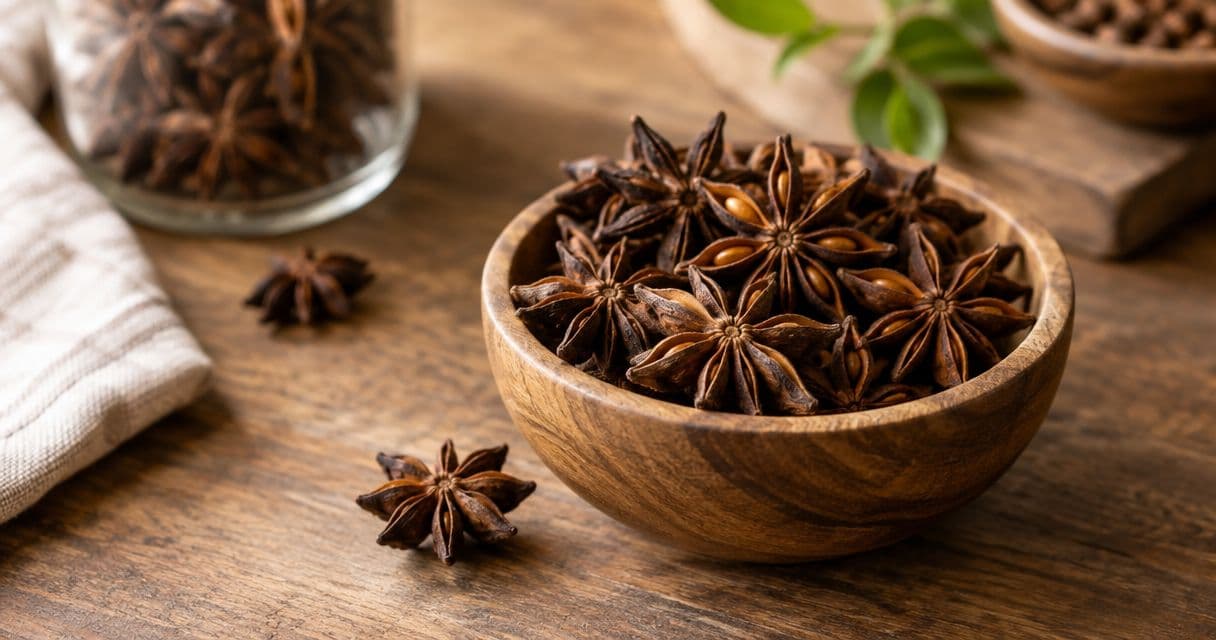
Yes, whole star anise loses flavor over time, even when the stars remain intact and look unchanged. Air, heat, light, and moisture affect how well it keeps its sweet, licorice-like aroma; keeping it whole slows flavor loss but does not stop it. Check a freshly broken piece before cooking, and replace a clean, dry batch when it no longer gives your food a clear star anise flavor.
TL;DR- Whole star anise loses aroma over time; check a freshly broken piece rather than judging by appearance.
- Keep whole spices tightly sealed, dry, and away from stove heat and direct sunlight.
- Toasting releases remaining aroma; it does not restore flavor that has already disappeared.
- 5Senses suits home cooks seeking whole spices alongside tools for storage and fresh grinding.
Does whole star anise lose its flavor over time?
Whole star anise gradually loses the aromatic compounds that give it its recognizable sweet, licorice-like character. An intact star protects more of its interior from exposure than a ground spice does, but the woody-looking fruit is not an airtight package. A beautiful star can still taste flat.
The useful test is aroma followed by flavor, not shape alone. Break a piece, smell the newly exposed surface, and then test it in a small infusion if the result is unclear. A faint smell from an unopened jar tells you less than a freshly exposed piece does.
Growing place and pantry condition answer different questions. The Cao Bằng star anise origin guide explores regional heritage; your storage habits determine what happens after a package reaches your kitchen. An origin name does not replace a freshness check.
Why this matters in your cooking
Star anise often works in the background of a broth, braise, or spiced drink. When its aroma fades, the dish loses that rounded, sweet-spiced note. Adding more of every other seasoning does not bring it back.
There is another trap: judging the whole recipe by an old batch. If your last broth tasted flat, check the spice before changing the recipe. The same written quantity does not guarantee the same flavor from differently stored pantry supplies.
Treat freshness as a cooking decision rather than a calendar rule. Keep a batch that still smells and tastes clear, provided it is dry and shows no signs of spoilage. Replace a weak batch before using it in a dish where star anise carries the flavor.
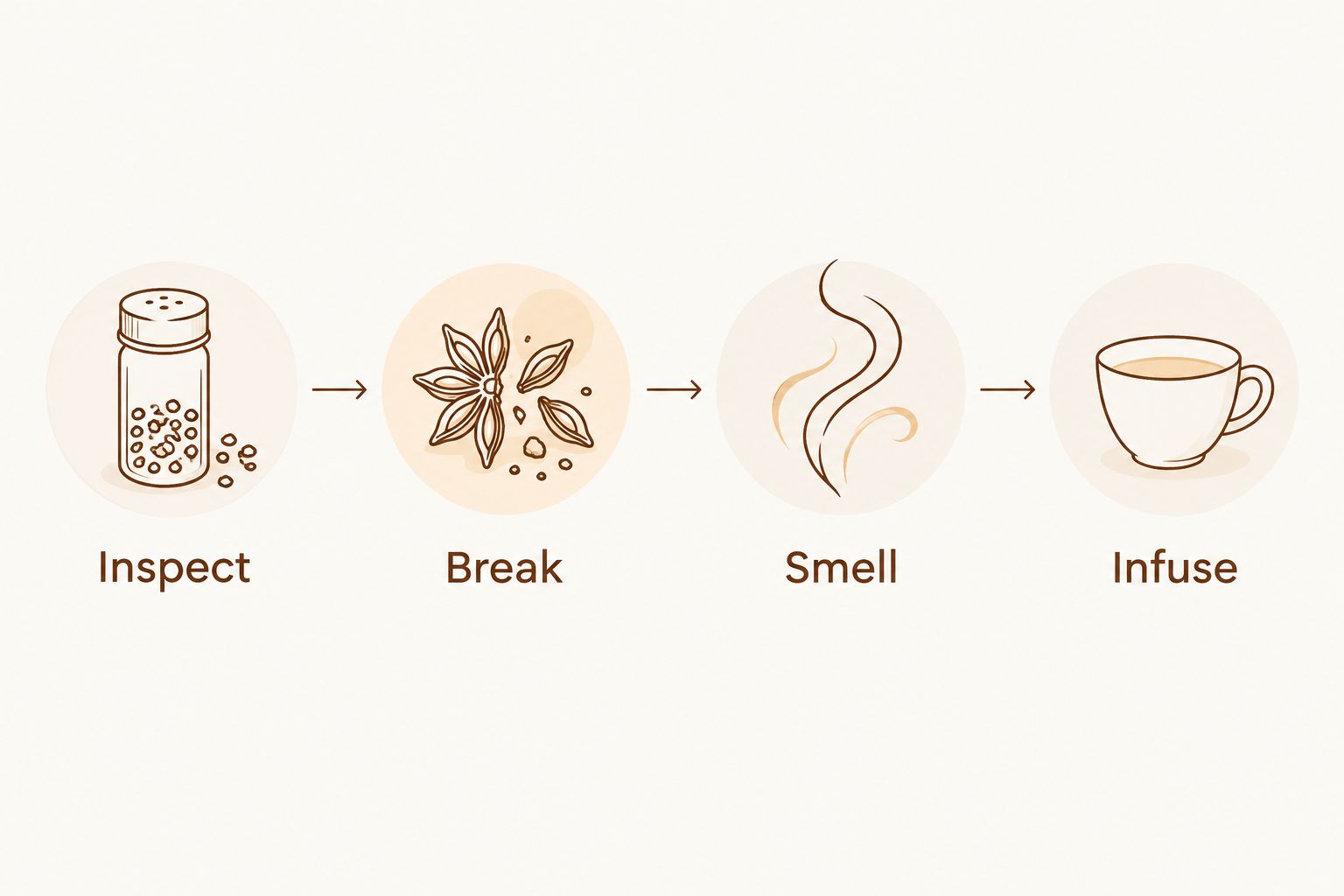
Check the batch before you change the recipe
Start with the star anise itself, away from a steaming pot or strongly scented ingredients. Smelling it beside frying garlic or another open spice jar makes subtle aromas harder to judge. Use clean, dry hands and a clean cup for the test.
Inspect
Look through the container before you smell or taste anything. Check for visible mold, insects, damp patches, or an unexpected change in condition. Discard a batch with signs of contamination or moisture damage rather than trying to rescue it with heat.
Broken points are different. They affect appearance, not automatically flavor, so do not reject a batch simply because some stars are incomplete. Keep visual inspection separate from the aroma test.
Break
Break a small piece over a plate or cutting board. This exposes a fresh surface and lets you judge more than the scent trapped in the container. Keep any sharp fragments together so they do not end up loose in a finished drink.
You do not need to grind the entire batch to assess it. Test only what you need, leaving the rest intact and protected in its container.
Smell
Smell the broken surface for a distinct sweet, licorice-like aroma. It should smell recognizable rather than merely woody or dusty. A weak result is a reason to continue with an infusion test, not a reason to assume the spice is unsafe.
A musty or otherwise abnormal smell is different from faded aroma. Do not use toasting, stronger seasoning, or a long simmer to cover an off odor.
Infuse
Put a small broken piece in hot water in a clean cup, then smell and taste the liquid once it is comfortable to sip. The purpose is to check whether the spice contributes recognizable flavor without other ingredients masking it. Strain out all fragments before tasting.
If the infusion remains bland, replace the batch for flavor-focused cooking. If it tastes clear, use it in the recipe and judge the dish as it cooks.
Whole, broken, or ground: choose the form for the dish
Keeping star anise whole is useful for pantry storage, but the right cooking form depends on how you want to extract and serve its flavor. Breaking or grinding exposes more surface area. That helps extraction while also increasing exposure during storage.
| Form | Best for | Advantage | Trade-off |
|---|---|---|---|
| Whole star anise | Broths, braises, and strained drinks | Easy to count and remove when intact | Needs contact with the cooking liquid to release flavor |
| Freshly broken star anise | Small infusions and spice sachets | Exposes fresh surfaces without grinding everything | Loose fragments require careful straining |
| Freshly ground star anise | Baking and blended seasonings | Distributes flavor throughout a mixture | Hard to remove or correct once added |
Keep your main supply whole; prepare only the portion your recipe needs. This gives you flexibility without exposing the entire batch each time you cook. Use a suitable spice grinder when your recipe calls for ground star anise, and check the result for coarse fragments.
Do not assume a broken star has lost its flavor just because it is less attractive. A clean, aromatic fragment is useful inside a spice sachet. A perfectly shaped but nearly scentless star contributes little beyond appearance.
Why whole star anise loses flavor at different rates
Storage conditions explain why the opening date alone cannot tell you how a batch will taste. Check these factors when deciding whether your current pantry setup protects the spice:
- Air exposure: A loose lid or poorly closed pouch leaves the spice exposed. Close the package promptly after taking what you need.
- Heat: A shelf beside an oven or above a cooktop exposes spices to repeated warming. Choose a cooler cupboard instead.
- Light: A sunny display shelf protects appearance less than a dark cupboard protects storage conditions. Keep clear containers out of direct sunlight.
- Moisture: Steam and wet utensils introduce water into a dry ingredient. Measure away from the pot and use a dry spoon.
- Broken or ground surfaces: Crushing exposes more of the spice. Break or grind near cooking time rather than preparing the entire package in advance.
- Condition before purchase: The time spent in storage and the packaging used before you bought it also matter. An opening date records only your part of its history.
You do not need elaborate equipment to address these factors. A sound closure, a dry container, and a suitable cupboard solve the basic storage problem. Fix those habits before changing the container simply for its appearance.
Store whole star anise for the next meal, not the display shelf
Choose a container that closes securely and is completely dry before filling it. Keep the original label or transfer the useful batch information with the spice. Record when you opened it so you can track pantry turnover without pretending that date measures flavor.
Place the container away from the stove, sink, dishwasher steam, and direct sunlight. Take out the portion you need at the counter, then close the lid before cooking. Do not hold the open jar over a simmering saucepan.
Keep the older batch separate when you replenish. Pouring new stars onto old ones makes it harder to compare their aroma or understand which batch you are using. Finish an aromatic older batch first; replace a flat one rather than hiding it beneath fresh spice.
Buy an amount that fits your cooking habits. If star anise appears only in occasional holiday recipes, a large reserve creates more storage responsibility without improving the dish. Frequent broth makers and bakers can make a different purchasing decision based on actual use.
When your current batch tastes flat, 5Senses Star Anise Whole — Sonic Essence is a single-origin option from Cao Bang, Vietnam, naturally sun-dried and packed at origin in resealable airtight pouches. Its sweet, licorice-like flavor suits cooks replenishing star anise for broths, braises, and infusions. Reseal the pouch promptly and keep it in a cool, dry cupboard; protective packaging slows flavor loss but does not make the spice last indefinitely.
Can you bring back flavor by toasting old star anise?
Toasting releases aroma that remains; it does not replace aroma already lost. A warm pan can make a usable batch smell more expressive, which is why toasting is helpful in some recipes. That temporary burst is not proof that a weak batch has recovered.
If your recipe calls for toasting, use a dry pan over gentle heat and keep the spice moving. Stop when it becomes fragrant, before it scorches. Transfer it out of the hot pan rather than leaving it to continue heating.
Do not toast your entire stored supply as a freshness treatment. Toast the portion you are about to use, then continue with the recipe. For a delicate infusion, adding the spice directly to the liquid is also a practical route; toasting is not mandatory for every dish.
Should you add more when whole star anise tastes weak?
Adding more changes the quantity, not the condition of the spice. For a clean, dry batch with some remaining aroma, tasting the cooking liquid helps you decide whether it contributes enough. Start with the recipe's stated amount rather than making a large adjustment before tasting.
Replace the spice when star anise is meant to be a defining flavor and your test infusion is flat. That is more dependable than loading a delicate custard or syrup with extra ground spice. Ground star anise cannot be lifted out once the flavor becomes too strong.
For broths and braises, keep whole stars or broken pieces contained in a removable sachet when practical. Taste during cooking and remove the spice when the balance is right. This controls extraction; it does not repair a stale batch.
FAQ
How long does whole star anise keep its flavor?
Whole star anise keeps its flavor for different lengths of time depending on its starting condition, packaging, and storage. Check a freshly broken piece and a small infusion rather than relying on a fixed pantry deadline.
Can whole star anise look fresh but taste stale?
Yes, whole star anise can retain its shape while losing aroma and flavor. Appearance alone does not tell you how strongly it will season a dish.
Is broken star anise worse than intact stars?
Broken star anise is not automatically worse than intact stars. Judge clean, dry pieces by aroma and flavor, and contain or strain the fragments during cooking.
Does toasting make old star anise fresh again?
No, toasting does not make old star anise fresh again. Heat releases remaining aroma, but it cannot restore aromatic compounds that have already been lost.
Should I keep whole star anise in the refrigerator?
A cool, dry cupboard is a practical place for your everyday supply of whole star anise. Repeatedly opening a cold container in warm, humid air creates an avoidable condensation risk.
Can I grind a whole star anise, or just the seeds?
You can grind the dried star-shaped fruit, not just the seeds, when a recipe calls for ground star anise. Use a suitable spice grinder and check for coarse, hard fragments before adding it to food.
Does weak aroma mean star anise is unsafe?
Weak aroma alone indicates a flavor-quality problem, not a reliable safety verdict. Discard spice with visible mold, insects, moisture damage, or an abnormal odor; a smell test cannot certify food safety.
One last thing
The star-shaped part is not merely packaging for the seeds. The dried fruit itself contributes flavor, so picking out only the shiny seeds misses part of the ingredient. For infusions, use the whole star or contained fragments; for baking, grind the portion you need and check the texture.
Before your next pantry refill, break a piece from the current batch. That small check tells you whether you need more spice, better storage, or simply the confidence to use what you already have.