Best star anise for cooking and baking in 2026
The best star anise for cooking is whole, food-grade Chinese star anise. Compare pods and powder, check origin, and learn how to infuse, grind, and store it.
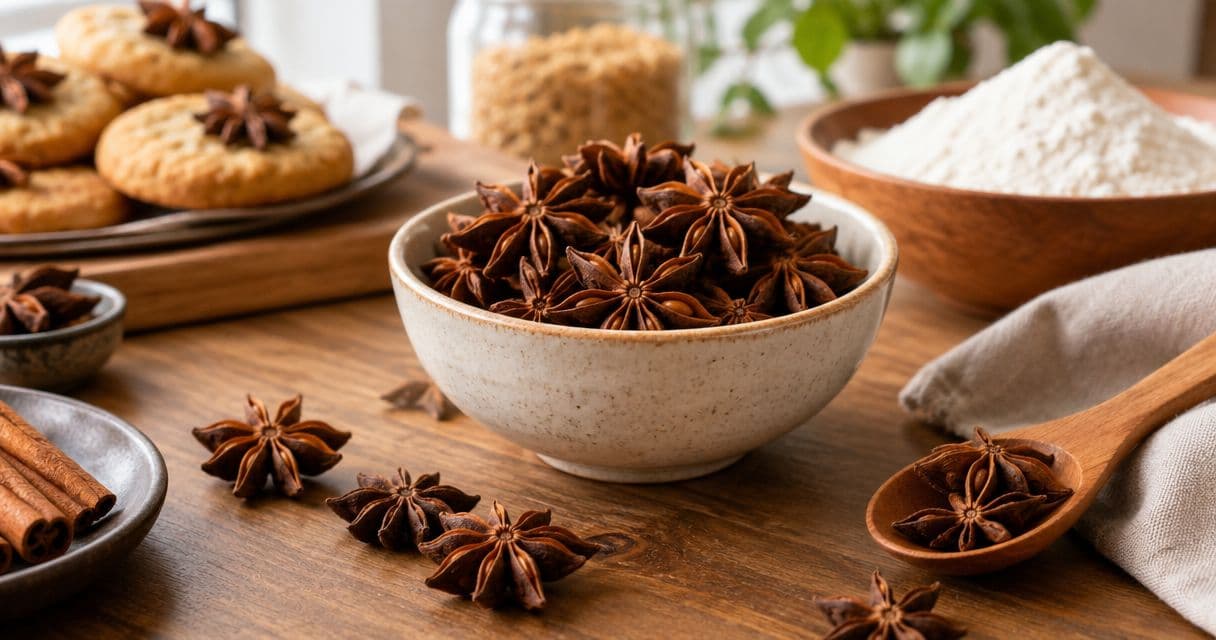
The best star anise for cooking is whole, food-grade Chinese star anise: choose intact pods for braises, freshly ground pods for baking, and broken pieces for strained infusions. This 2026 guide explains what origin tells you, how to judge aroma, and which form fits your kitchen.
TL;DR- The best star anise for cooking is whole, food-grade Chinese star anise with a clear, sweet aroma.
- Choose intact pods for braises, freshly ground star anise for baking, and broken pieces for strained infusions.
- 5Senses is best for home cooks seeking direct-from-farm whole spices and practical grinding and storage tools.
- Origin identifies where star anise was grown; aroma and handling help you judge the spice in your pantry.
Why this matters
Star anise brings a sweet, licorice-like flavor to broth, fruit, syrup, and baked goods. Its strength makes the form you buy important: a whole pod is easy to remove, while powder becomes part of the dish.
Start with the ingredient, not the prettiest star. Culinary Chinese star anise is Illicium verum, and its dried fruit supplies the spice. Anise seed is a different plant, despite the similar flavor and name.
For an origin-led starting point, read about Cao Bằng star anise and its Vietnamese growing heritage. Keep regional background separate from the origin declared on the package you actually buy.
What makes the best star anise for cooking
A useful buying decision rests on these criteria:
- Culinary identity: Buy star anise sold specifically for food use. A decorative pod is not a cooking ingredient.
- Declared origin: Look for a named growing country or region rather than treating an attractive package as evidence of provenance.
- Clear aroma: Expect a recognizable sweet, licorice-like scent when you break a pod. Appearance alone cannot establish flavor.
- Suitable form: Match intact pods, broken pieces, or powder to the way the spice enters and leaves your dish.
- Packing information: Read any harvest or packing details provided. A date adds context; it does not replace an aroma check.
- Practical storage: Choose packaging you can close securely, then keep the spice away from moisture, light, and stove heat.
5Senses focuses on direct-from-farm, origin-packed whole spices alongside Spicecare grinding and storage tools. That makes ingredient handling relevant to the buying decision: the work continues after you open the package.
Star anise options at a glance
These are preparation choices, not competing brands. Choose the row that matches your most frequent cooking task.
| Star anise form | Best for | Standout feature | Key limitation |
|---|---|---|---|
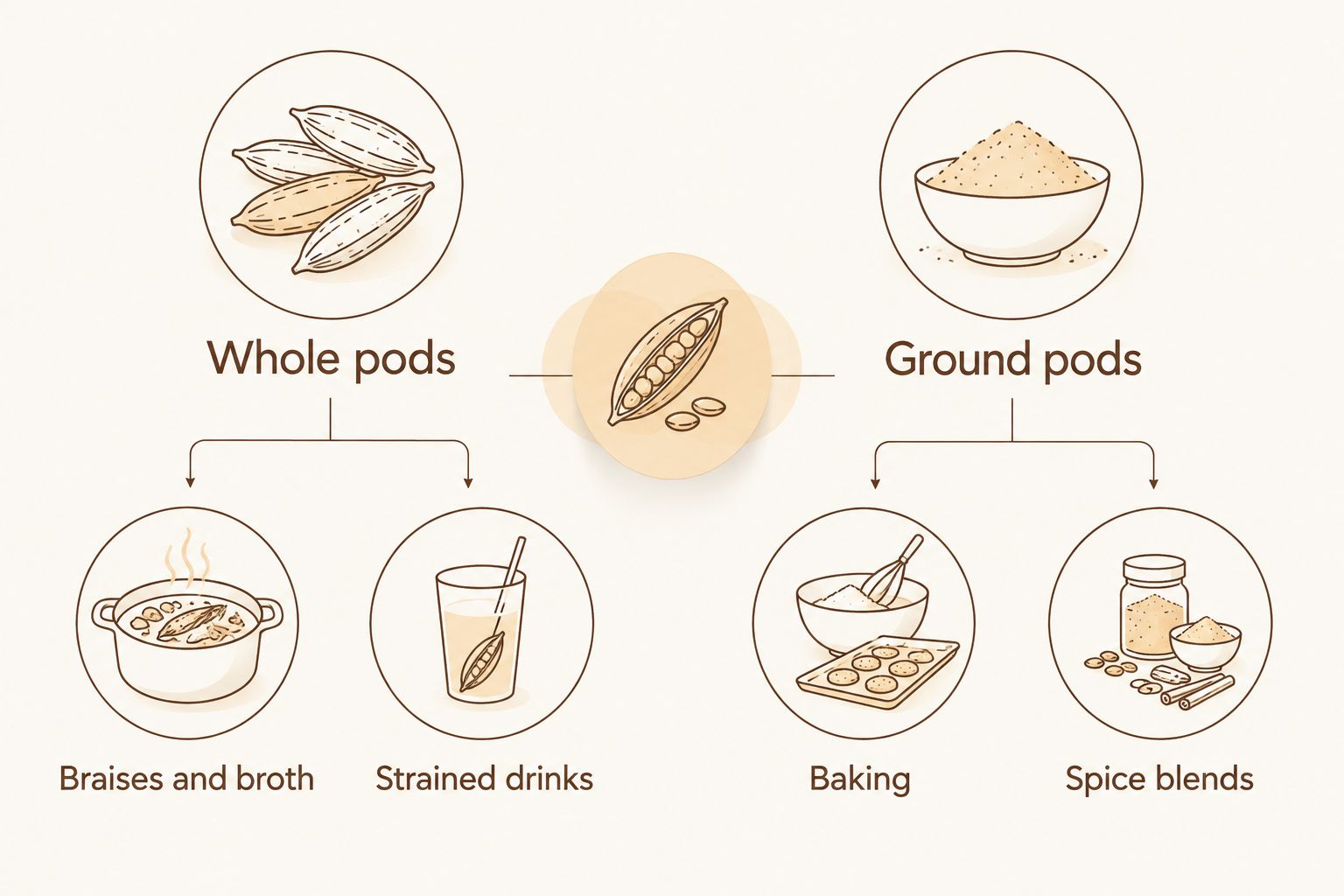
| Intact whole pods | Braises and broth | Easy to count and remove | Must be removed before serving |
| Broken whole pieces | Syrups and strained drinks | Useful without a complete star shape | Small fragments need careful straining |
| Freshly ground whole pods | Baking and spice blends | Powder prepared when you need it | Requires grinding and sometimes sifting |
| Pre-ground star anise | Recipes needing immediate powder | Ready to measure into a mixture | Cannot be removed once incorporated |
An intact star is convenient, not proof of better sourcing. Broken pieces still belong in the kitchen when their identity, condition, and aroma are sound.
Origin first: what the growing region tells you
Star anise has a long culinary and growing history in southern China and northern Vietnam. Cao Bằng, in northern Vietnam, is a recognized star-anise-growing region. Those regional facts explain the ingredient's context; they do not establish the origin of an unlabeled package.
Read the label precisely. A country of packing is not automatically a country of cultivation, and a named region should refer to the spice inside rather than simply decorate the story.
Single-origin spices identify a sourcing origin. The term does not tell you whether you need whole pods or powder, and it does not replace checking the spice when it reaches your kitchen.
Ask for the growing origin, any available harvest information, and the packing date. For chefs and food businesses, keep those details with the batch record so a later reorder has a useful reference.
1. Intact whole pods: best for braises and broth
Whole star anise flavors cooking liquid while remaining a separate ingredient. Add it to a braise or broth, then remove it before serving. The intact shape makes that last step easier than hunting for scattered fragments.
Intact whole pods pros:
- Easy to recognize in a pot of broth.
- Suitable for slow infusions in savory cooking.
- Can also be ground when a recipe needs powder.
Intact whole pods cons:
- Hard pods do not belong in a finished spoonful.
- Flavor continues developing while they remain in hot liquid.
- Counting pods is less precise than weighing a recipe quantity.
Best for: Home cooks who make broth, braised meat, or aromatic cooking liquids.
Follow your recipe rather than increasing the quantity because the pods look small. Taste the liquid during cooking, and remove the star anise when its flavor reaches the balance you want.
Verdict: Buy intact whole pods as the default pantry form.
2. Broken whole pieces: best for strained infusions
Broken star anise pieces work in preparations that will pass through a fine strainer. Their shape matters less in cider, syrup, or poaching liquid than it does when you need to retrieve a pod by hand.
Broken does not automatically mean stale. Check the aroma and condition instead of rejecting useful pieces solely because the star is incomplete.
Broken whole pieces pros:
- Suitable for liquids that you strain before serving.
- Allow you to use fragments left in a whole-spice container.
- Can be ground for a recipe that needs powder.
Broken whole pieces cons:
- Fragments are harder to retrieve without a strainer.
- Piece sizes make counting an unreliable measuring method.
- Breakage alone tells you nothing about origin or freshness.
Best for: Cooks making strained syrups, spiced drinks, or fruit-poaching liquids.
Keep fragments contained in a suitable spice bag if retrieval would otherwise be difficult. Strain the finished liquid carefully.
Verdict: Buy broken pieces for strained infusions, not for appearance.
3. Freshly ground pods: best for baking and spice blends
Freshly ground star anise distributes through dough, batter, and dry spice mixtures. Unlike a whole pod, the powder remains in the food, so accurate measurement matters.
Grind the dried fruit, not just the shiny seeds inside it. Break the pods into smaller pieces first, and use equipment intended for hard, dry spices. This guide to spice grinders for whole spices explains the tool choices.
Freshly ground pods pros:
- Let you prepare powder close to cooking time.
- Distribute flavor through baked goods and spice blends.
- Give a whole-spice pantry another practical use.
Freshly ground pods cons:
- Require suitable grinding equipment.
- Coarse particles need further grinding or sifting.
- Powder cannot be removed if you add too much.
Best for: Frequent bakers and cooks who make their own spice blends.
For a smooth dough, inspect the powder before adding it. Hard flakes are a texture problem, not an attractive sign of handmade preparation.
Verdict: Buy whole pods to grind when baking is a regular habit.
4. Pre-ground star anise: best for immediate recipe use
Pre-ground star anise is convenient when a recipe needs powder and you do not have a suitable grinder. It removes a preparation step, but it also removes the option of lifting the spice out later.
Read the ingredient list to distinguish pure star anise from a blend. Chinese five-spice powder is not a direct substitute: its other ingredients change the dish.
Pre-ground star anise pros:
- Ready to measure into dough or batter.
- Does not require grinding equipment.
- Suitable for recipes explicitly written for powder.
Pre-ground star anise cons:
- Cannot be strained out once mixed into food.
- Loses aroma more readily than whole spices under comparable storage conditions.
- Gives you less flexibility for clear infusions.
Best for: Occasional bakers following recipes that specify ground star anise.
Choose a quantity that fits your actual use, and keep the container tightly closed. Buying powder does not remove the need to check its aroma.
Verdict: Buy for a specific baking task; skip as the default for broth.
Toast, grind, bloom, or infuse?
The cooking method should serve the dish. Star anise does not need every treatment before it reaches the pot.
Toast
Use a dry pan when your recipe calls for toasted spices. Keep the heat controlled, move the pods, and stop when they become fragrant rather than waiting for darkening. Burnt spice brings bitterness into the next step.
Grind
Let toasted pods cool before grinding. Break them up, grind, and inspect the result. Sift powder destined for a fine-textured batter or dough, then grind any coarse pieces again.
Bloom
Add star anise to cooking fat when the recipe uses that method. Keep the heat controlled and continue with the next ingredients before the spice scorches. Do not leave dry fragments unattended in hot oil.
Infuse
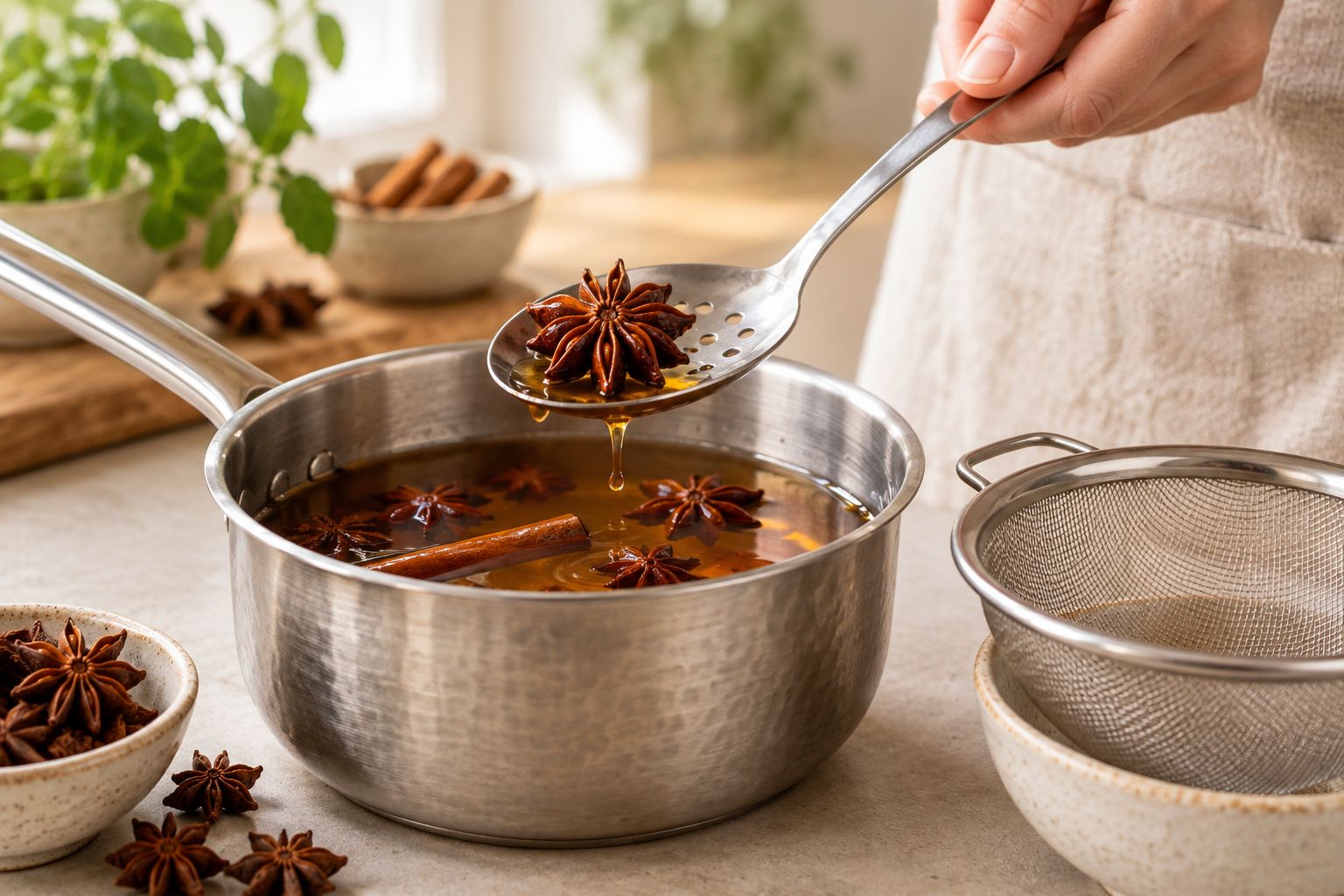
Add whole pods or contained pieces to the recipe's liquid. Taste as the flavor develops, then remove or strain out the spice. This is the simplest route for broth, syrup, milk, and poached fruit.
Whole pods give you control because you can remove them. Powder gives you even distribution because it stays in the food.
Buying and storage mistakes to avoid
Do not use a perfect star shape as your only quality test. Shape helps with presentation and retrieval. It does not verify cultivation, packing, or aroma.
Do not substitute ground star anise by counting pods. Pods vary in size, and powder occupies space differently. Use a recipe written for the form you have rather than inventing a conversion.
Do not pour spices over a steaming pot. Measure away from the stove so moisture does not enter the container. Close it before you return to cooking.
Do not keep star anise beside the hob. Store it tightly closed in a cool, dry cupboard. Write the opening date on the container if that helps you track pantry use.
Before replenishing, break a piece and smell it. If the aroma is faint, do not assume adding more will reproduce the flavor of a more aromatic batch.
How the recommendations are ranked
The order follows kitchen usefulness: removable whole pods first, pieces for strained liquids next, freshly ground pods for baking, and prepared powder for convenience. Culinary identity, declared origin, aroma, handling, and recipe fit carry more weight than a complete star shape.
This is a comparison of forms, not a claim that one supplier's star anise outperforms another. Choose the preparation that solves your cooking task.
Which star anise should you choose?
Choose whole, food-grade Chinese star anise if you want a single pantry format for both cooking and baking. Keep pods whole for liquids, and grind only what your baking recipe needs.
Choose broken pieces when you will strain the dish. Choose prepared powder when you need it immediately and do not have a grinder.
5Senses is best for home cooks seeking direct-from-farm whole spices and practical grinding and storage tools. Apply the same origin, aroma, and handling checks to every star anise purchase.
FAQ
What's the best star anise for cooking?
Whole, food-grade Chinese star anise is the best default for cooking because you can infuse it, remove it, or grind it. Choose a clearly identified culinary ingredient with a declared origin and recognizable sweet aroma.
Is whole star anise better than ground star anise for baking?
Ground star anise is the useful form for baking when the recipe needs flavor distributed through dough or batter. Buying whole pods lets you grind powder when needed, but you need suitable equipment and a fine enough texture.
Can I cook with broken star anise pods?
Yes, broken culinary star anise pieces work in strained liquids and can also be ground. Check their aroma and condition, and use a fine strainer to remove small fragments.
Do I grind the seeds or the whole star anise pod?
Grind the whole dried fruit, not just the seeds. Break it into smaller pieces first, then grind and sift as needed for your recipe.
Do I need to toast star anise before using it?
No, star anise does not always need toasting. Follow the recipe: direct infusion suits many liquids, while toasting is a separate preparation step for dishes that call for it.
Is star anise the same as anise seed?
No, star anise and anise seed come from different plants. Their flavors overlap, but their form and behavior in a recipe differ, so use a recipe-specific substitution rather than a universal conversion.
How do I know whether star anise still has flavor?
Break a piece and check for a clear, sweet, licorice-like aroma. Shape and color alone do not establish potency; also check that the spice has stayed dry and properly stored.
Can I leave whole star anise in the finished dish?
Remove whole star anise before serving unless it is clearly separated as a non-edible garnish. The hard dried fruit is an infusion ingredient, not something diners should bite into.
One last thing
The familiar star is the dried fruit, not a cluster of seeds arranged for decoration. Its outer structure belongs in the grinder too.
Keep the cooking decision simple: infuse for removable flavor; grind for flavor that stays in the dish. That distinction matters more than whether every pod has an unbroken shape.