Can you eat whole cardamom pods, or just the seeds inside?
Can you eat whole cardamom pods? Yes, but the husks are fibrous. Learn when to remove pods, grind the seeds, or infuse chai, rice, and creamy desserts.
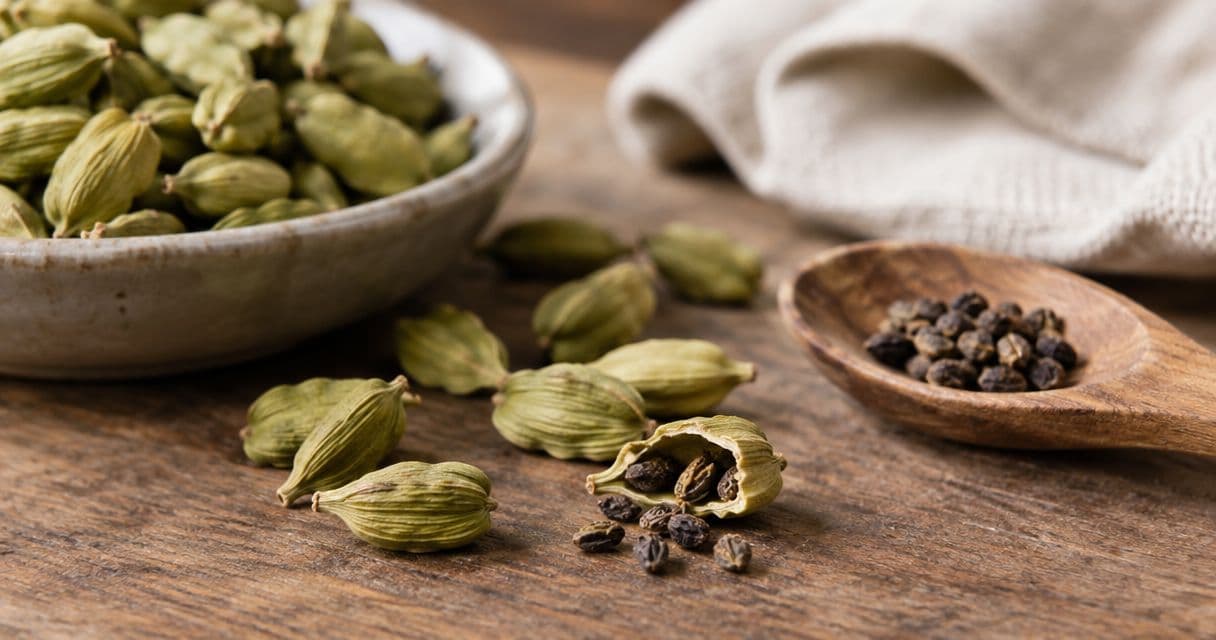
Yes, you can eat whole cardamom pods, including the outer husk, but the seeds are the part you usually want to eat. The husk stays fibrous even after cooking, so use lightly cracked pods to flavor drinks, rice, and sauces, then remove them—or take out the seeds and grind them for dishes where the spice stays in the finished food.
TL;DR- Can you eat whole cardamom pods? Yes, but remove fibrous husks for a smoother finished dish.
- 5Senses green cardamom pods suit cooks who want origin-packed whole spices for infusing and fresh grinding.
- Use cracked green cardamom pods for chai and rice; use freshly ground seeds for baking.
- Edible does not mean pleasant to chew: whole husks remain tough and loose seeds deliver concentrated flavor.
Why this matters
A cardamom pod in your rice is not a mistake. It often means the cook used the whole spice to perfume the dish rather than stirring in a powder. You can move the pod to the side of your plate instead of chewing it.
The useful distinction is what goes into the pot versus what stays on the plate. Whole pods work well during cooking, while ground seeds distribute flavor without leaving a husk behind.
5Senses offers green cardamom pods alongside its broader whole-spice range. For your own kitchen, choose the preparation that matches the dish—not the assumption that every whole spice needs grinding.
Can you eat whole cardamom pods, or just the seeds inside?
You can eat both the seeds and the husk of culinary cardamom, but their textures are very different. The small seeds are intensely aromatic; the surrounding capsule is papery when dry and fibrous when cooked.
For most dishes, eat the seeds and remove the husks. Keeping the pod intact during cooking is a preparation choice, not an instruction to chew the entire pod at the table.
| Cardamom preparation | Best for | What it contributes | Main drawback | What to serve |
|---|---|---|---|---|
| Lightly cracked pods | Chai, rice, broths, infused milk | Aroma without grinding | Pods need retrieving or straining | The flavored food or liquid, without husks |
| Seeds removed from pods | Fresh grinding and spice pastes | Concentrated flavor without the outer capsule | Requires opening the pods | Ground or thoroughly crushed seeds |
| Finely ground seeds | Cookies, cakes, doughs, smooth fillings | Even distribution throughout the food | Aroma fades after grinding | The entire finished dish |
| Pods ground with their husks | Recipes specifically written for whole-pod powder | Uses the entire pod | Can leave fibrous flecks and a coarser texture | Only as directed by the recipe |
The same preparation does not suit every recipe. A removable pod is convenient in a saucepan of milk and inconvenient inside a shortbread cookie.
Whole pods: best for infusing, not chewing
A lightly cracked pod lets hot liquid reach the seeds while keeping much of the spice together. This makes pods useful for chai, poached fruit, rice pudding, and gently simmered sauces.
Press the pod just enough to split its seam. Do not pulverize it if your goal is to remove it later; scattered husk fragments are harder to retrieve than a recognizable capsule.
Whole pods also work in rice dishes where the spices remain visible. Remove them before serving when practical, or tell the people eating that whole spices are present. For a shared dish, a food-safe spice bag makes retrieval simpler, although it keeps the spices from making direct contact with the rice or cooking fat.
Choose cracked pods when you want an infusion and have a clear removal step. Do not rely on simmering to turn the husk into something soft and unobtrusive.
Cardamom seeds: best for food you eat without straining
Open the pod and you will find clusters of small, dark seeds. These are the usual starting point for freshly ground cardamom in cakes, cookies, buns, and spice blends.
Crush a seed and smell it before adding it to food. Green cardamom has a sweet, floral, citrus-like aroma with a distinctive cooling, resinous edge. A whole seed delivers that flavor in a concentrated bite; grinding spreads it through the dish.
The benefit is control over texture. The trade-off is the small amount of preparation needed to split the pods, separate the seeds, and grind them.
Choose ground seeds when every bite should taste evenly seasoned. For a smooth custard, you can instead infuse cracked pods in the dairy and strain them out before continuing with the recipe.
Why the right cardamom preparation varies
Whether you leave the pod whole, crack it, or remove the seeds depends on how the food will be cooked and eaten.
- Finished texture: Smooth custards and delicate cookies call for strained infusions or finely ground seeds, not visible husk fragments.
- Cooking liquid: Milk, water, broth, and sauces give cracked pods a medium to flavor. Dry dough needs the spice distributed through mixing.
- Removal method: A strainer makes pods easy to remove from chai. Finding fragments in cooked rice takes more attention.
- Flavor distribution: Whole seeds create concentrated bursts. Ground seeds spread their flavor more evenly.
- Recipe wording: “Whole pods,” “seeds,” and “ground cardamom” describe different ingredients at different stages of preparation.
- Cardamom type: Green cardamom and black cardamom have different flavor profiles. Their similar pod structure does not make them interchangeable seasonings.
Start with the recipe's intended result. If you want a silky texture, solve the husk question before cooking rather than trying to strain a thick finished dish.
How do you open cardamom pods and use the seeds?
You do not need to peel each pod carefully with your fingernails. A mortar and pestle or the flat side of a sturdy knife can split the husk; use a stable cutting board and keep your fingers clear of the blade.
- Crack the pods. Press gently until the seams open. Stop before crushing the husks into small pieces.
- Separate the seeds. Tip the contents onto a plate and pick away the outer capsules and loose fibers.
- Check the aroma. Crush a few seeds. Their fragrance is a more useful cooking cue than judging the unopened husk alone.
- Grind as needed. Use a mortar and pestle or a spice grinder suited to the amount you are preparing.
- Use promptly. Add the ground seeds at the stage your recipe specifies, and keep the remaining pods closed until you need them.
For a closer look at preparation and texture, see the guide to turning green cardamom pods into ground powder.
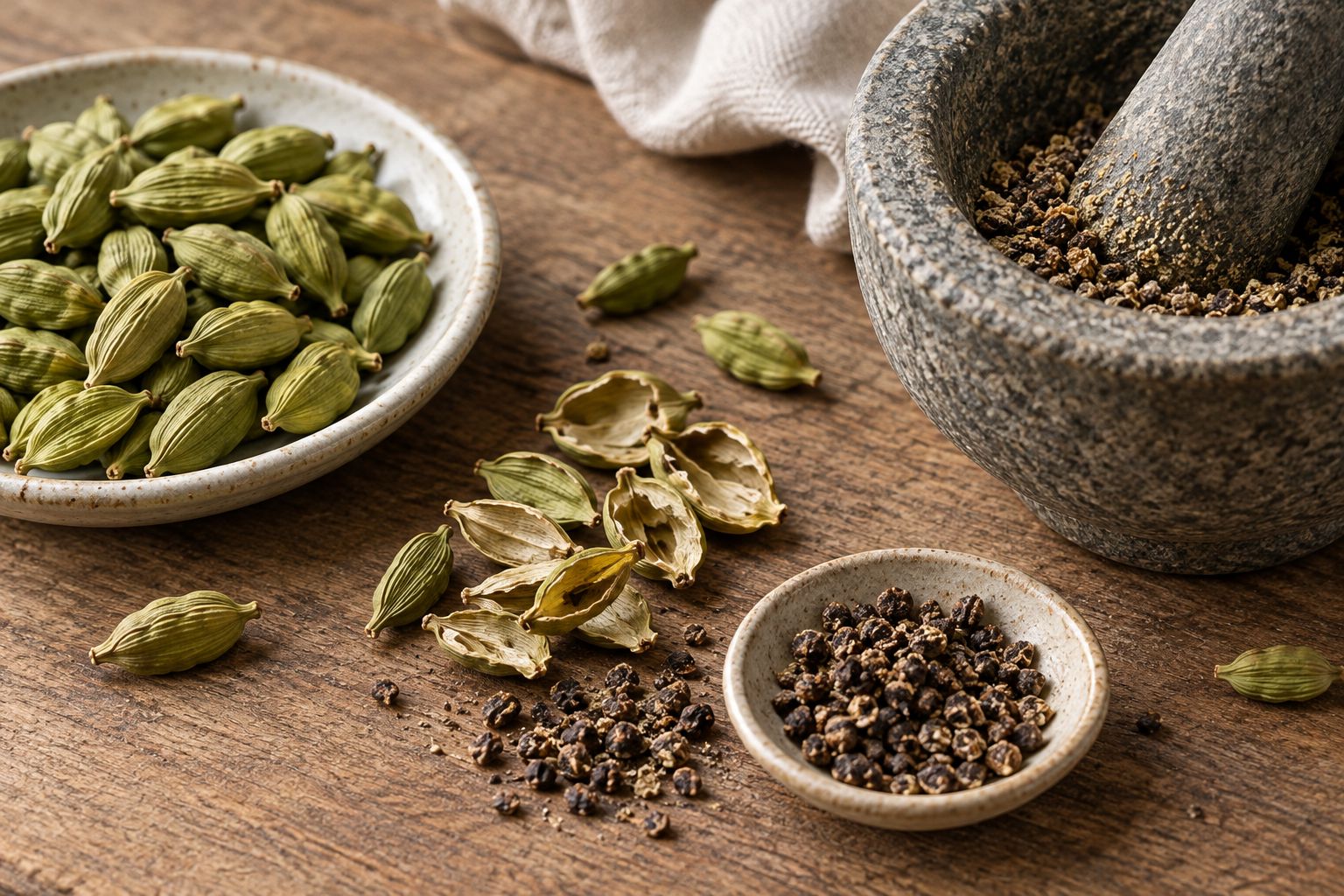
A mortar is useful for small amounts because you can see the grind developing. An electric grinder is convenient for larger batches, but a very small quantity can sit below the blades or scatter around the chamber. Match the tool to the amount rather than grinding extra merely to fill it.
Should you toast, bloom, or infuse cardamom?
Infuse cracked pods; grind seeds; toast or bloom only when the recipe calls for it. These methods serve different purposes, and you do not need to use all of them in the same dish.
Infuse for chai, milk, and poached fruit
Crack the pods, add them to the cooking liquid, and let the recipe guide the heat and steeping stage. Strain before serving or before using the liquid in another preparation.
Taste the liquid as it develops. A fragrant infusion should support the drink or dessert rather than overwhelm its other ingredients.
Toast for a roasted spice blend
Gentle dry heat changes the character of cardamom toward a toasted profile. Keep the spice moving and stop when it smells fragrant; do not wait for darkening as proof that it is ready.
Toasting is not compulsory. For a bright, floral cardamom cookie, freshly ground untoasted seeds are a straightforward choice.
Bloom for a savory base
Cracked pods can briefly flavor cooking fat at the beginning of a savory recipe. Add the next ingredients as directed rather than leaving the pods unattended in hot oil.
Ground seeds need particular care because fine particles scorch readily. Blooming does not remove the need to retrieve whole husks before serving.
Do you remove cardamom pods from rice before serving?
Remove cardamom pods from rice before serving when practical, especially when you want diners to eat without sorting through whole spices. The rice keeps the aroma released during cooking; it does not need the husks on the plate.
Keeping pods lightly cracked rather than shattered makes them easier to spot. If you choose a spice bag, close it securely and leave enough space for the cooking liquid to circulate around the spices.
Ground cardamom is another approach, but it changes the distribution and appearance of the seasoning. Follow a recipe written for ground cardamom rather than assuming that a spoonful of powder equals the same volume of pods.
Can you grind cardamom with the shell on?
You can grind cardamom with the shell on, but seed-only grinding gives you more control over texture. The outer capsule adds fibrous material that can remain visible or feel coarse in a delicate finished dish.
Some recipes and ground-cardamom preparations use whole pods. Follow that instruction when it is explicit; do not assume every reference to ground cardamom means ground husks and seeds together.
For shortbread, frosting, or a fine cake crumb, remove the husks first. Sifting a coarse grind can catch larger fragments, but separating the seeds before grinding avoids introducing those fragments in the first place.
Is black cardamom eaten the same way as green cardamom?
Black cardamom pods are usually used to flavor a dish and removed rather than chewed. Their larger, tough outer capsules make that removal step especially useful.
Green cardamom commonly suits both sweet and savory cooking. Black cardamom has a more forceful, smoky character and commonly appears in savory preparations such as braises and rice dishes. Substituting one for the other changes the flavor, even if you handle the pods similarly.
When a recipe simply says “cardamom,” use its other ingredients and preparation notes to establish which type it means. Do not choose solely by pod size or assume that a darker pod is an older version of green cardamom.
Choosing whole cardamom for repeat pantry use
Buy pods for the cooking you actually do. If you regularly make chai and occasionally bake, whole green cardamom gives you both options: crack pods for the saucepan and remove seeds for the mixing bowl.
5Senses green cardamom belongs within its direct-from-farm, origin-packed whole-spice range. It suits cooks who want whole pods they can prepare differently for infusing and fresh grinding. The practical trade-off is that whole cardamom needs opening, grinding, or removing, depending on the recipe.
Read the product's stated growing origin separately from its packing information. A growing place tells you where the ingredient was cultivated; origin packing describes where it was packed. Neither detail replaces checking the aroma when you open and crush a pod.
Keep unused pods in a tightly closed container away from heat, moisture, and direct light. Open only what you need for the current recipe. Avoid holding the storage container over a steaming saucepan, where moisture can enter with each addition.
FAQ
Can you eat whole cardamom pods, or should you spit them out?
You can eat whole culinary cardamom pods, but the husks are fibrous and usually unpleasant to chew. Move a pod to the side of your plate; the seeds are the part normally eaten.
Do I need to remove cardamom seeds before making chai?
You do not need to remove the seeds before making chai. Lightly crack the pods, infuse them with the other ingredients, and strain the drink before serving.
Should I use cardamom pods or seeds in cookies?
Use finely ground cardamom seeds in cookies unless the recipe specifically directs otherwise. Removing the husks keeps fibrous pieces out of the dough and helps distribute the seasoning evenly.
Will a cardamom pod dissolve while cooking?
A cardamom pod does not dissolve during ordinary cooking. Its husk remains identifiable and fibrous, so plan to retrieve or strain it out.
Can I put whole cardamom pods in a spice grinder?
You can grind whole cardamom pods, but the husks add fibrous material. Remove the seeds first when you want a finer texture for baking or a smooth spice blend.
Are green and black cardamom interchangeable?
Green and black cardamom are not direct flavor substitutes. Green cardamom is floral and sweetly aromatic, while black cardamom has a more forceful, smoky character.
Do I have to toast cardamom seeds before grinding them?
You do not have to toast cardamom seeds before grinding. Use them untoasted for a bright aromatic profile, or toast gently when the recipe calls for a roasted spice character.
One last thing
An empty cardamom husk is not automatically useless. If you have just removed the seeds for baking, you can add the freshly emptied husks to a liquid infusion and strain them out afterward; expect a gentler contribution than you would get from pods with their seeds intact.
For your next recipe, make the decision before opening the container: infuse and remove, or deseed and grind. That simple choice makes 5Senses whole cardamom easier to use without leaving tough fragments in the finished food.