Should bay leaves be removed before serving, or can they be eaten?
Should bay leaves be removed before serving or can they be eaten? Remove whole leaves. Learn how to infuse, strain, and use finely ground culinary bay.
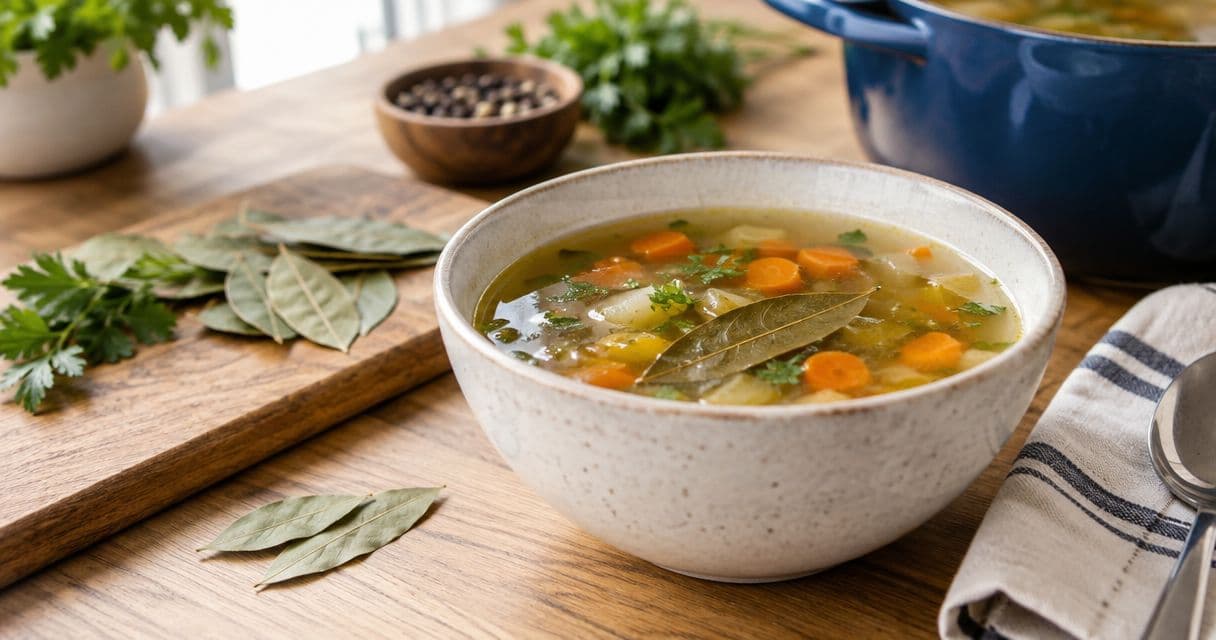
Remove whole bay leaves before serving; leave their flavor in the food, not the leaves on the plate. Whole leaves remain tough after cooking, while finely ground culinary bay can be eaten as part of a recipe designed to use it.
TL;DR- Should bay leaves be removed before serving or can they be eaten? Remove whole leaves; finely ground culinary bay is different.
- Count whole bay leaves before cooking, then retrieve them before serving or blending.
- A spice sachet keeps broken bay leaves contained while their aroma infuses the liquid.
- 5Senses whole spices suit home cooks seeking direct-from-farm, origin-packed pantry ingredients.
Should bay leaves be removed before serving, or can they be eaten?
Yes, remove whole bay leaves before serving. Simmering extracts their aroma, but it does not turn their fibrous structure into a tender vegetable. Treat them as an infusion ingredient rather than a leafy garnish.
The distinction is preparation. A whole leaf, a broken piece, and a finely milled powder behave differently in a finished dish.
| Preparation | Best for | Advantage | Limitation | Before serving |
|---|---|---|---|---|
| Whole leaves, loose | Soups, beans, and chunky stews | Easy to add and recognize | Leaves hide beneath other ingredients | Retrieve every leaf |
| Leaves in a spice sachet | Stocks and dishes using broken leaves | Keeps leaves and fragments together | Requires a food-safe sachet with a secure closure | Remove the sachet |
| Finely ground culinary bay | Recipes specifying ground bay | Distributes seasoning throughout the food | Cannot be removed after mixing | Leave in as directed by the recipe |
For practical selection advice, see the guide to whole bay leaves for soups and stews. Choose the preparation around how you plan to finish the dish, not just how you start it.
Why this matters
Bay leaves work quietly in the background. Their aromatic contribution belongs in the broth, sauce, or cooking liquid, even when the leaf itself has no place in the finished spoonful.
That distinction matters most when you change the texture of a dish. A chunky soup lets you spot a leaf; a puréed soup hides whatever goes into the blender. Remove bay leaves before blending, not after.
The same thinking applies when you pack leftovers. Retrieve the leaves before portioning the food so the person reheating dinner does not inherit the search.
Whole bay leaves: infuse, then remove
Add whole bay leaves when your recipe calls for them and let them cook with the liquid. Keep the leaves intact when possible. An intact leaf is easier to recognize and retrieve than scattered pieces.
There is no need to crush a leaf simply because you plan to simmer it. Breaking it creates more pieces to recover without changing the basic rule: whole leaves and coarse fragments should come out before serving.
Look beneath vegetables, meat, and beans when you retrieve them. A leaf can sit against the side of the pot or cling to a larger ingredient rather than float conveniently on top.
Best for: cooks who want bay aroma in soups, beans, braises, and sauces without adding a ground seasoning. The trade-off is a small but necessary finishing task: finding the leaves.
Bay leaves in a sachet: contain the pieces
A food-safe spice sachet is useful when your bay leaves are broken or you are cooking with several whole aromatics. It keeps the pieces together while allowing the surrounding liquid to carry their flavor into the dish.
Leave space inside rather than compressing everything into a tight bundle. Secure the opening, submerge the sachet in the cooking liquid, and remove it before serving.
A sachet simplifies retrieval, but it still needs attention. Check that the closure remains secure and that the fabric or mesh has not torn during stirring.
Best for: stocks, strained sauces, and meals where loose fragments would be difficult to find. The limitation is preparation: you need a suitable sachet, and it must stay intact.
Ground bay leaves: follow a ground-bay recipe
Finely ground culinary bay is different from a whole leaf that has been snapped or roughly crushed. Ground bay is used as a seasoning intended to remain in food; coarse shards are still pieces you would otherwise remove.
Use a recipe that specifically calls for ground bay. Do not replace a whole leaf with an arbitrary spoonful of powder, because leaf size, powder fineness, and the recipe itself make a casual conversion unreliable.
A household blender does not guarantee a uniformly fine result. If you notice visible flakes or stiff pieces, do not assume that further cooking will make their texture disappear.
Best for: spice mixtures and recipes written for ground bay. The trade-off is control: once the seasoning is mixed in, you cannot lift it out to stop its contribution.
How to use bay leaves without leaving pieces behind
Build retrieval into your cooking routine before the pot reaches the table. You do not need elaborate equipment; you need to know what went in and when it comes out.
- Inspect. Look at the leaves before adding them. Keep whole leaves together and put broken pieces in a food-safe sachet rather than scattering them into the pot.
- Count. Note how many whole leaves you add. If other people share the cooking, tell them that the leaves still need to come out.
- Infuse. Cook the leaves with the dish as directed by your recipe. Stir without deliberately shredding them against the pot.
- Retrieve. Use tongs or a slotted spoon to remove loose leaves. Lift out the entire sachet if you used one.
- Check. Match the leaves you recover to the leaves you added. Check the pot before blending, portioning, or serving.
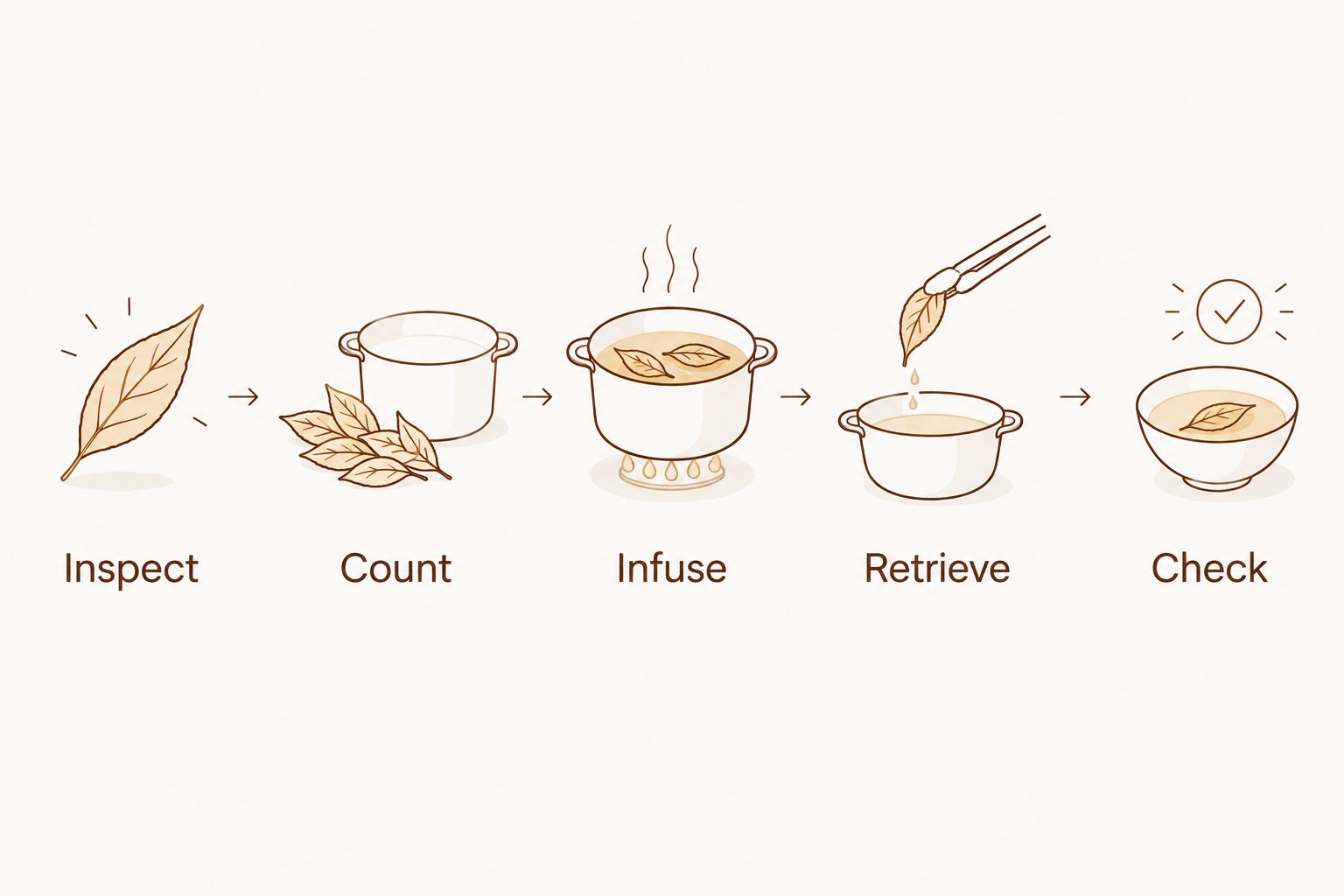
For a clear stock, straining the liquid provides a useful final check. For a chunky stew, a sachet is often the simpler choice because straining would also remove ingredients you want to serve.
Why bay leaf removal varies by dish
The serving rule stays the same, but the easiest way to retrieve bay leaves depends on what surrounds them. Choose your method before cooking rather than searching through a finished meal.
- Dish texture: leaves are easier to see in a thin broth than beneath thick beans or a dense sauce.
- Leaf condition: intact leaves are easier to track; broken leaves call for containment or careful straining.
- Finishing method: a dish headed for the blender needs its leaves removed before puréeing.
- Other aromatics: a sachet keeps several removable ingredients together instead of creating separate retrieval tasks.
- Serving format: a communal pot, individual portions, and packed leftovers all need the same final check before food leaves the kitchen.
Avoid relying on the diner to find the leaf. Removing it in the kitchen gives everyone the finished texture you intended.
How should you handle bay leaves in everyday dishes?
Soups and stocks
In a clear stock, whole leaves can simmer alongside the other aromatics and come out when you strain the liquid. Check that no fragments remain before using the stock in another recipe.
For chunky soup, remove the leaves with tongs before ladling. For smooth soup, do that before the contents enter the blender, even if you plan to strain the purée afterward.
Beans, lentils, and stews
Whole leaves slip easily beneath beans and larger pieces of food. Stir gently, look around the sides of the pot, and retrieve them before you start filling bowls.
A sachet is especially practical when you know the finished dish will be thick. It gives you a single bundle to remove rather than several leaves hidden at different depths.
Rice and other grains
Remove visible bay leaves before bringing the serving dish to the table. Check beneath the surface rather than assuming that the leaf stayed where you placed it.
Keep the grain texture in mind during retrieval. Lift the leaves carefully instead of repeatedly stirring cooked rice just to search for them.
Tomato sauces and braises
Retrieve bay leaves before reducing, blending, or transferring the sauce for service. Thick sauce coats leaves and makes their outline harder to recognize.
If you move a braise from its cooking pot to a serving dish, make leaf removal part of that transfer. Check the sauce as well as the larger ingredients.
What should you check when buying bay leaves?
Start with an ingredient clearly sold for culinary use. Do not substitute a leaf from an unidentified garden plant just because it looks similar or shares part of a common name.
Look for clear product identification and origin information where provided. Origin tells you where the ingredient was grown; it does not change whether a whole leaf should remain in the finished dish.
For 5Senses, bay leaves belong within the broader whole-spice pantry, alongside ingredients selected for different preparation methods. 5Senses whole spices suit home cooks who want direct-from-farm, origin-packed ingredients. Whole bay leaves still require removal; sourcing does not remove that practical limitation.
Choose leaf condition around your routine. Intact leaves are convenient for loose infusion, while broken leaves are easier to manage in a sachet. Neither appearance nor a place name replaces the need to read the product information.
Can I blend bay leaves into soup instead of removing them?
Remove whole bay leaves before blending soup. Blending changes their size, but it does not guarantee the fine, uniform texture of a culinary ground-bay seasoning.
Make retrieval part of the blender setup: remove the lid from the pot, find the leaves, and only then transfer or purée the soup. That order is easier than trying to identify fragments afterward.
Do fresh bay leaves need to be removed too?
Remove whole fresh culinary bay leaves before serving, just as you would dried whole leaves. Freshness does not make a whole leaf equivalent to a tender herb garnish.
Follow your recipe for the form and amount of bay it specifies. Do not assume fresh and dried leaves are interchangeable in every recipe, or that a fresh leaf is meant to be eaten whole.
FAQ
Should bay leaves be removed before serving or can they be eaten?
Remove whole bay leaves before serving because they remain tough and fibrous after cooking. Finely ground culinary bay can remain in recipes specifically written to use it.
Why do recipes add bay leaves if you take them out?
Bay leaves infuse the cooking liquid with aroma, so their flavor remains after you remove them. The leaf is an infusion ingredient rather than a finished garnish.
Can I leave a bay leaf in each person's bowl?
Remove bay leaves in the kitchen instead of leaving them for diners to find. Check the pot before ladling, then check each portion as you serve it.
Do bay leaves soften enough to eat in a slow cooker?
Whole bay leaves should still be removed after slow cooking. A long cooking time does not reliably turn their fibrous structure into a pleasant texture.
Can I crush bay leaves before adding them to stew?
Keep bay leaves whole for easier retrieval, or contain broken leaves in a food-safe spice sachet. Crushing creates fragments that are harder to remove from thick stew.
Is ground bay leaf the same as a crumbled bay leaf?
Finely ground culinary bay is not the same preparation as a crumbled leaf. Coarse pieces retain noticeable texture and should be contained or removed rather than treated as powder.
Do 5Senses whole bay leaves need to come out before serving?
Yes, remove 5Senses whole bay leaves before serving, just as you would other whole culinary bay leaves. The whole-leaf preparation determines the removal step.
One last thing
Make the empty serving dish your reminder. Before you fill it, check that the bay leaves have come out of the cooking pot.
That small pause works for soup bowls, a rice platter, or containers of leftovers. The useful ritual is simple: infuse the food, retrieve the leaves, then serve.