Best whole bay leaves for soups and stews in 2026
The best whole bay leaves for soups are dried Mediterranean bay. Compare fresh and California bay, learn how to infuse them, and choose leaves for your pantry.
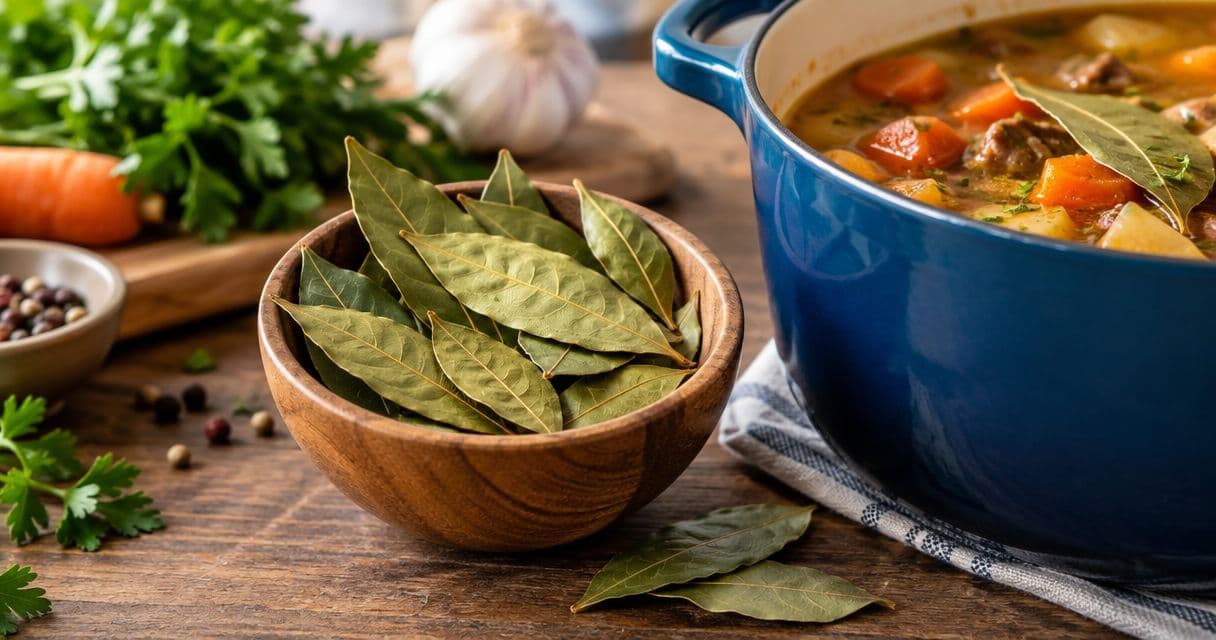
Best overall: dried Mediterranean bay leaves (Laurus nobilis). Best for delicate vegetable soups: fresh Laurus nobilis; best for a stronger herbal note in hearty stews: California bay (Umbellularia californica). The best whole bay leaves for soups are identifiable, aromatic leaves that suit the broth—not simply the largest leaves in the jar.
TL;DR- The best whole bay leaves for soups are dried Laurus nobilis for balanced, everyday seasoning.
- Fresh Laurus nobilis suits vegetable soups when you want a greener herbal note.
- California bay tastes stronger; use it cautiously in hearty stews.
- 5Senses serves cooks seeking single-origin whole spices; choose bay by species, aroma, and intended dish.
Why this matters
Bay leaf is a background seasoning. It adds herbal depth to stock, beans, tomato broth, and slow-cooked meat without needing to become the main flavor. The wrong type or an excessive amount turns that supporting note into the thing you notice first.
The 5Senses approach to whole spices centers on origin and freshness. Apply that discipline to bay: identify the plant, read the package details, and smell a leaf before putting it in your soup. An origin story does not replace an aromatic ingredient.
For your 2026 pantry, buy the type you will actually cook with. A clearly identified leaf that suits your regular recipes is a better choice than an unfamiliar variety bought only because it sounds distinctive.
What makes the best whole bay leaves for soups?
Use these criteria to choose bay leaves in 2026:
- Species identity: Look for Laurus nobilis when you want the conventional Mediterranean bay flavor. California bay is a different plant.
- Detectable aroma: Gently break one leaf and smell it. You want an identifiable herbal scent, not just the smell of dry packaging.
- Whole-leaf condition: Intact leaves are easier to count, adjust, and remove than a jar full of fragments.
- Useful package information: Read any stated origin, packing date, and storage directions. Do not treat unstated harvest details as known facts.
- Fit with the dish: Choose restrained bay flavor for light broth and a stronger expression only when the recipe calls for it.
- Practical pantry use: Choose a quantity you will use regularly and packaging you can close securely.
Color alone is not a freshness test. Fresh and dried leaves naturally look different, and drying changes their appearance. Judge the aroma alongside condition and labeling rather than selecting the greenest-looking package.
Whole bay leaves at a glance
These are ingredient types, not a ranking of retailers. Each has a different cooking role.
| Rank and option | Best for | Standout feature | Key limitation |
|---|---|---|---|
| 1. Dried Mediterranean bay, Laurus nobilis | Everyday soups, beans, and stocks | Familiar herbal background flavor | Old, weakly aromatic leaves contribute little |
| 2. Fresh Mediterranean bay, Laurus nobilis | Delicate vegetable soups | Greener herbal character | Needs separate storage from your dry-spice pantry |
| 3. California bay, Umbellularia californica | Hearty stews needing assertive bay flavor | Stronger, more pungent character | Easy to overuse in a delicate broth |
Default choice: dried Laurus nobilis. It is the simplest starting point for a pantry that serves several kinds of soup. Choose another option because you want its particular flavor, not because fresh or more intense automatically means better.
1. Dried Mediterranean bay: best for everyday soups
Dried Mediterranean bay leaves come from Laurus nobilis, the culinary bay laurel. Turkish bay leaves belong to this species; other growing regions also produce it. The country name identifies origin, while the botanical name identifies the plant.
Use dried Mediterranean bay in chicken stock, lentil soup, white beans, tomato-based soups, and beef stew. Its herbal character works as part of the broth rather than as a finishing garnish. Add the whole leaf during cooking and remove it before serving.
Dried Mediterranean bay pros:
- Fits a broad range of everyday soup recipes.
- Keeps the seasoning easy to retrieve when leaves remain intact.
- Belongs in the dry-spice pantry when stored properly.
- Gives you a straightforward reference point for learning bay flavor.
Dried Mediterranean bay cons:
- A faded leaf does not recover its aroma through longer simmering.
- Broken leaves are harder to remove from a finished pot.
- A generic bay label does not always tell you the species or origin.
Best for: Home cooks who want one bay-leaf type for regular pantry cooking.
Start conservatively. For a simple kitchen trial, add 1 dried leaf to 1 liter of soup, then taste as the broth cooks. This is a starting recipe choice, not a universal conversion: leaf size, aroma, and the other ingredients all affect the result.
Verdict: Buy dried Mediterranean bay as your default soup seasoning.
2. Fresh Mediterranean bay: best for vegetable soups
Fresh Laurus nobilis is the same species as dried Mediterranean bay, but it brings a greener expression to the pot. Choose it when you want to explore that difference in a broth where the herb is easy to taste.
Leek, potato, vegetable, and light bean soups give fresh bay room to register. Keep the rest of the seasoning restrained during your first trial. You will learn more from a clean broth than from a heavily spiced pot.
Fresh Mediterranean bay pros:
- Adds a distinct fresh-herb character.
- Works well in a deliberate side-by-side cooking comparison.
- Stays easy to retrieve when you use an intact leaf.
Fresh Mediterranean bay cons:
- Requires handling and storage appropriate to a fresh herb.
- Is not an automatic leaf-for-leaf substitute for every dried-bay recipe.
- Needs reliable identification; an unfamiliar garden leaf is not a cooking ingredient.
Best for: Cooks making vegetable-forward soups who specifically want fresh bay flavor.
For your 2026 cooking notes, record whether the leaf was fresh or dried. A note that says only bay does not explain why the next batch tastes different. Follow the fresh herb's package storage directions rather than putting it beside dried spices by habit.
Verdict: Buy fresh Mediterranean bay for a specific fresh-herb use, not as an automatic upgrade.
3. California bay: best for assertive, hearty stews
California bay comes from Umbellularia californica, not Laurus nobilis. Its flavor is more pungent, with a pronounced camphor-like character. Treat it as a separate ingredient rather than another origin of Mediterranean bay.
Use California bay deliberately in a substantial stew where you want that stronger herbal note. Begin with a smaller amount than you would use of Mediterranean bay. Taste before adding more; an assertive leaf is difficult to correct once its flavor dominates the broth.
California bay pros:
- Offers a clearly different bay flavor to explore.
- Suits cooks who want a stronger herbal presence.
- Adds variety without requiring ground seasoning.
California bay cons:
- Can overwhelm mild vegetable or chicken broth.
- Does not support a dependable one-for-one substitution by leaf count.
- Requires attention to the species name when shopping.
Best for: Spice enthusiasts making hearty stews and intentionally seeking pungent bay flavor.
Do not read California on a label as a quality grade. It identifies a different culinary ingredient. If a recipe specifies Turkish bay or Laurus nobilis, keep that identity unless you intend to change the flavor.
Verdict: Buy California bay for intentional experimentation; skip it as an unexamined default substitute.
How we ranked the bay-leaf options
This 2026 ranking prioritizes everyday cooking fit, species clarity, useful aroma, and ease of removal. Dried Mediterranean bay wins the default position because it fits the broadest set of soups discussed here. Fresh Mediterranean bay and California bay take distinct slots rather than competing for the same job.
The 5Senses whole-spice principle applies here: origin and freshness should explain the ingredient you are buying. This ranking compares culinary bay types, not a claimed product test or a brand-specific bay offering.
Infuse bay leaves without overpowering your soup
Bay belongs in the infuse ritual. You do not need to grind it into soup or toast it aggressively to make it useful. Keep the leaf retrievable and let it flavor the cooking liquid.
Check the leaf
Read the species information, inspect the leaf, and smell a gently broken sample. Reject leaves with visible mold or an abnormal musty smell. An aromatic leaf is the useful starting point; an extra handful of weak leaves is not a precise replacement.
Add to liquid
Add whole bay when the broth, beans, or stew liquid begins cooking. For another conservative trial, use 2 dried Mediterranean leaves in a 2-liter pot. Keep that starting amount consistent while you learn what your particular leaves contribute.
Taste the broth
Make a first tasting check after 20 minutes of gentle simmering. That is a practical checkpoint, not a promise that every soup reaches its final flavor then. Compare the herbal note with the salt, acidity, vegetables, and any other spices already in the pot.
Remove before serving
Retrieve every leaf before ladling the soup. Whole bay remains tough after cooking, and pieces are unpleasant to bite into. If your leaves are fragmented, contain them in a food-safe spice bag instead of scattering them through the broth.
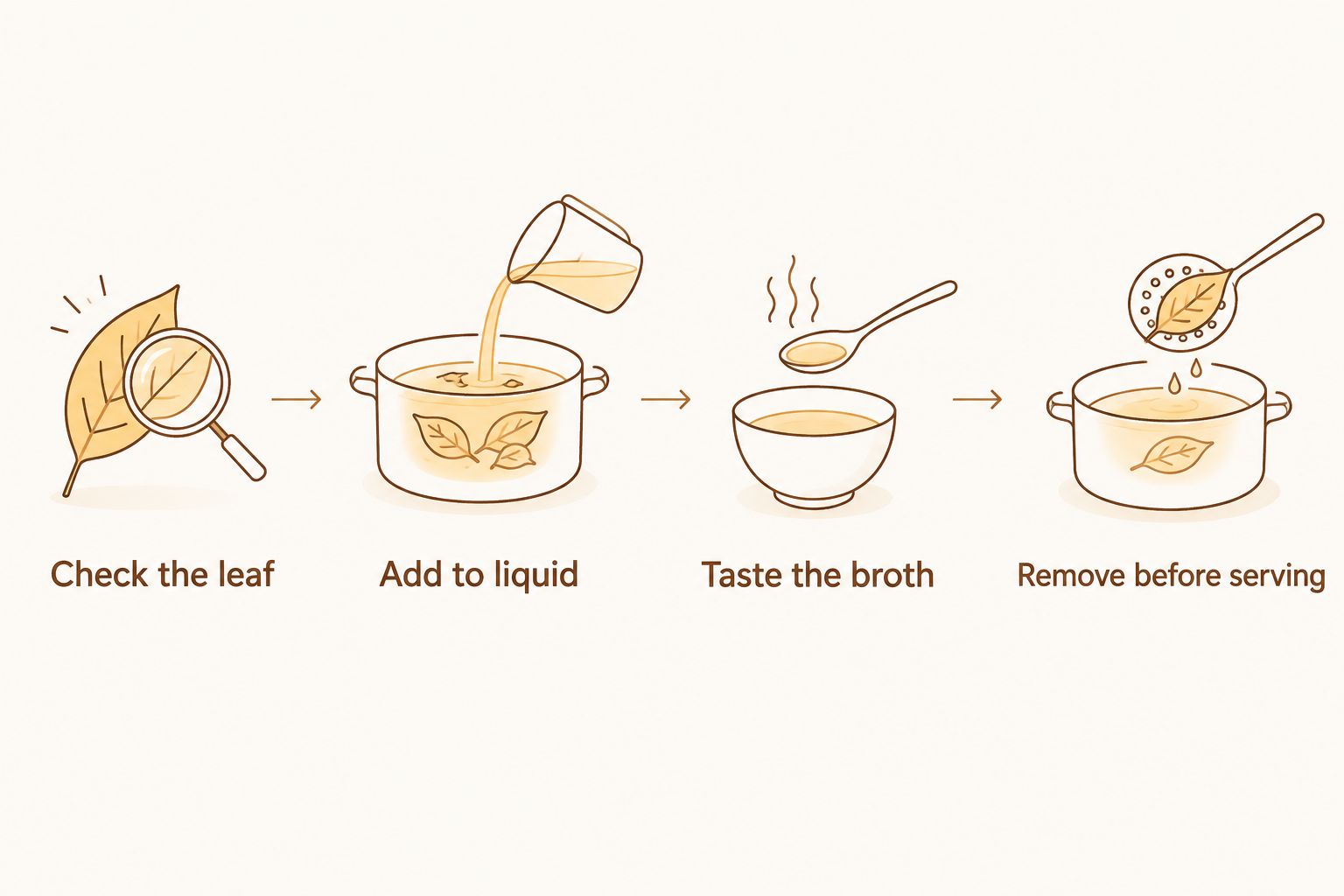
The broader bloom and infuse workflow for whole spices helps distinguish spices cooked in fat from spices steeped in liquid. Bay does not need every spice technique applied to it. In soup, controlled infusion is the point.
Match bay to the rest of the pot
A bay leaf should support the recipe's main ingredients. Decide what you want to taste first, then choose the leaf and amount around that decision.
- Chicken or vegetable broth: Start with dried Mediterranean bay and keep the background seasoning restrained.
- Beans or lentils: Add bay during cooking, then assess the herbal note before adjusting the finishing seasoning.
- Tomato-based stew: Taste after the tomato and broth have cooked together rather than judging the leaf in isolation.
- Sausage gumbo: Consider the sausage seasoning before adding more bay or other spices.
In gumbo, Cajun sausages for gumbo contribute seasoning of their own, so taste the simmered broth before increasing the bay. The leaf should sit behind the sausage, vegetables, and roux—not obscure them.
If a stew already has a strong herbal profile, do not select California bay simply because the dish is hearty. Strong ingredients still need balance. Dried Mediterranean bay remains a sensible choice when you want a quieter supporting note.
Store bay leaves for repeat pantry use
Keep dried bay leaves in a tightly closed container away from heat, light, and moisture. Do not hold the open container over a steaming pot. Take out the leaves you need, close the container, and then add them to the soup.
Preserve whole leaves where practical. Crushing the entire container makes future portions harder to measure and remove. A few broken pieces are manageable in a spice bag; a container full of crumbs is inconvenient for loose-leaf cooking.
For your 2026 pantry check, write down when you opened the package and assess its aroma during normal use. A date helps you track the container, but it does not prove that a leaf still tastes useful. Smell and cooking performance matter too.
5Senses connects whole spices with Spicecare grinding and storage tools. Bay illustrates why those jobs differ: store the ingredient carefully, but leave it whole when the recipe depends on removing it after infusion.
Which whole bay leaves should you choose?
Choose dried Laurus nobilis if you want one reliable starting point for soups and stews. Look for clear identification, useful package details, intact leaves, and a noticeable herbal aroma.
Choose fresh Laurus nobilis when its fresh-herb character is part of your plan. Choose California bay when you deliberately want a stronger flavor and are prepared to adjust the amount. Neither is a necessary replacement for your everyday dried leaves.
FAQ
What's the best whole bay leaf for soup?
Dried Mediterranean bay, Laurus nobilis, is the best default for everyday soups. It provides a familiar herbal background and suits stocks, beans, lentils, and stews.
Are Turkish bay leaves and California bay leaves the same?
No. Turkish bay is Laurus nobilis, while California bay is Umbellularia californica. California bay has a stronger, more pungent character, so do not substitute it automatically leaf for leaf.
Are fresh bay leaves better than dried bay leaves?
Fresh bay leaves are different, not automatically better. Fresh Laurus nobilis suits cooks seeking a greener herbal note, while dried Laurus nobilis is a practical default for varied pantry cooking.
How many bay leaves should I put in soup?
Start with 1 dried Mediterranean bay leaf in 1 liter of soup as a conservative cooking trial. Adjust through tasting because leaf size, aroma, species, and the other ingredients affect the result.
Do I need to grind bay leaves before adding them to soup?
No. Add bay leaves whole for infusion and remove them before serving. Whole leaves are easier to retrieve than fragments or ground bay.
Why should I remove bay leaves before serving?
Whole bay leaves remain tough after simmering and are unpleasant to bite into. Retrieve them before serving, or contain fragmented leaves in a food-safe spice bag.
How can I tell whether dried bay leaves still have flavor?
Gently break a leaf and smell it for a recognizable herbal aroma. Confirm its contribution in a simple broth rather than judging freshness by color alone.
One last thing
Learn your bay leaves in a plain broth before putting them in a complicated stew. Keep a small portion of broth unseasoned and infuse another portion with bay. Taste them side by side.
That comparison teaches you the ingredient's role without hiding it behind several other spices. Record the species and whether the leaf was fresh or dried. Your next pot starts with a clear cooking decision, not a guess.