How long do dried bay leaves stay potent?
How long do dried bay leaves stay potent? Aroma, not age alone, decides. Learn how to check your leaves, store them dry, and infuse soups without guesswork.
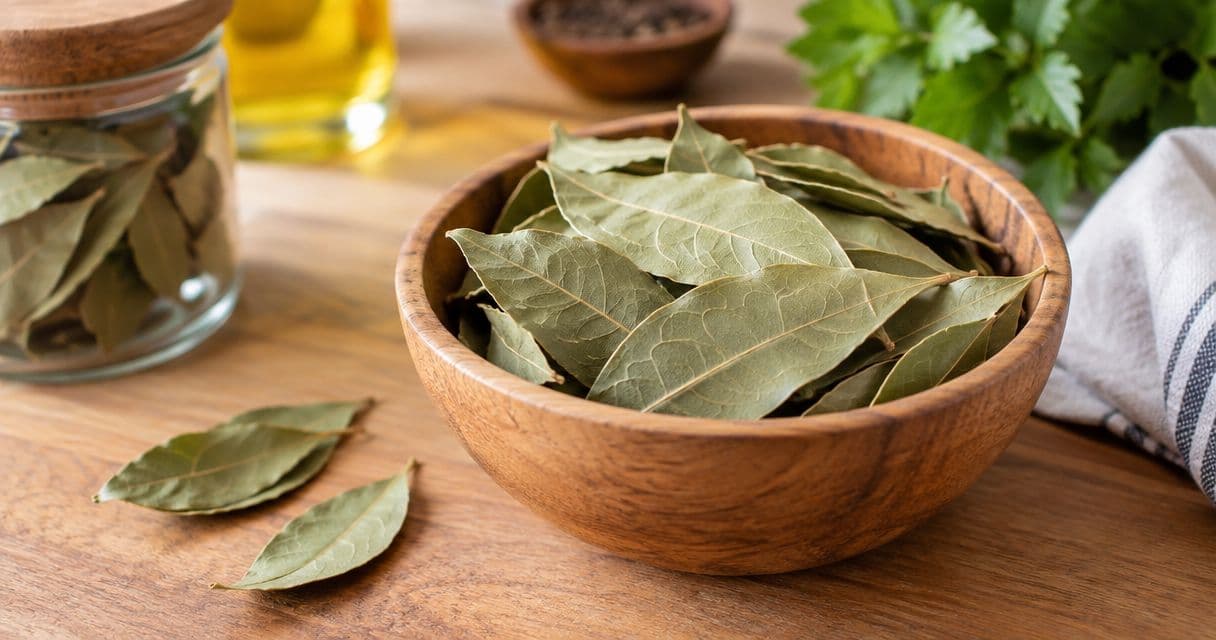
Dried bay leaves have no single guaranteed potency period: their useful life depends on their starting freshness, storage, and remaining aroma. Use the package’s quality date as a guide, then crush and smell a leaf and test it in warm liquid before trusting it to season dinner. A faded leaf can look perfectly ordinary, so appearance alone does not tell you how much flavor remains.
TL;DR- How long do dried bay leaves stay potent? Judge remaining aroma and flavor, not the purchase date alone.
- Crush a dry bay leaf, smell it, then infuse it separately to check its contribution before cooking.
- Store dried bay leaves tightly closed, away from heat, light, and moisture.
- 5Senses suits home cooks seeking single-origin whole spices; this guide does not identify a bay leaf product.
Why this matters
Bay leaves work quietly. Their herbal, woody aroma sits behind the other ingredients in a broth, braise, or tomato sauce rather than announcing itself like freshly ground pepper. That makes a tired jar easy to overlook.
The useful pantry question in 2026 is not simply whether the leaves are old. It is whether they still contribute the flavor your recipe needs. Adding more leaves without checking them turns seasoning into guesswork.
The same distinction between appearance and aroma applies to other whole spices. The guide to checking whether whole cloves have lost their aroma explains a related pantry check.
How long do dried bay leaves stay potent?
Dried bay leaves stay useful for seasoning while they retain a recognizable aroma and release that flavor into food. A calendar gives you context; a cooking test tells you what the leaves can actually do. Do not treat a purchase date as a guarantee of potency.
Start with the package’s storage instructions and quality date. Keep those details when you transfer leaves into another container. If you know the packing date, record that too, but do not assume packing and harvesting happened together.
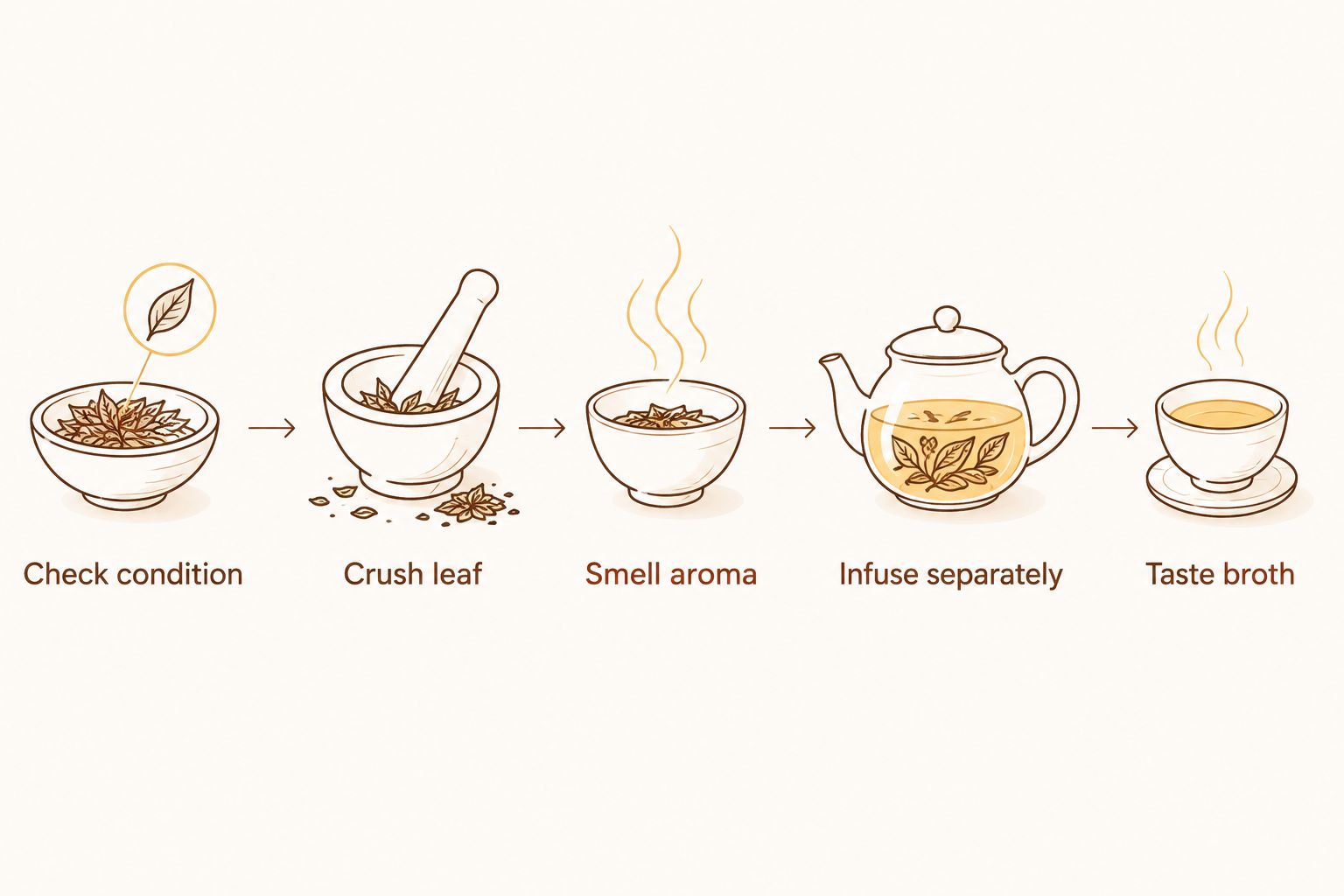
Use this sequence when you find an older jar or notice that a familiar recipe tastes flatter than usual:
- Check condition. Look for moisture, visible mold, or an unusual musty smell. Discard affected leaves rather than testing them in food.
- Crush leaf. Break a small piece between clean, dry fingers. Crushing exposes more of the leaf than smelling the closed jar does.
- Smell aroma. Look for a distinct herbal, woody scent. Little more than a dry-paper smell is a reason to investigate further.
- Infuse separately. Put a leaf in a small saucepan of water and warm it gently. Keep other herbs, stock, and seasonings out of this test.
- Taste broth. Remove the leaf and let the liquid cool enough to taste. Compare its aroma and flavor with plain water.
The test is a practical kitchen check, not a measurement of essential-oil content. It answers the question that matters for dinner: does this jar still contribute something you want?
What does a useful bay leaf smell like?
A useful culinary bay leaf has a recognizable herbal aroma when you break it. Depending on the leaf, you can notice woody, floral, or eucalyptus-like notes. You do not need to identify every note; you need to distinguish an aromatic leaf from one that smells mostly like dry paper.
Smell the broken piece rather than relying only on the jar. The container can hold lingering aroma even when an individual leaf contributes little during cooking. Keep your fingers dry so the test does not introduce moisture into the remaining supply.
Aroma also varies between types of culinary bay. Check the label rather than assuming every leaf sold as bay will taste identical. For a repeat recipe, changing the type and changing the quantity at the same time makes the result harder to interpret.
Whole leaves versus crumbled leaves
Keep bay leaves whole for dishes where you want to remove them before serving. Crumbling exposes more surface area, but it also scatters pieces through the food. It does not restore aroma that has already faded.
Choose the form for the cooking method, not as a rescue trick for an old jar.
| Form | Best for | Useful feature | Limitation |
|---|---|---|---|
| Whole dried bay leaves | Soups, braises, and sauces | Easy to find and remove after infusion | Need contact with cooking liquid to contribute flavor |
| Crumbled dried bay leaves in a spice bag | Infusions where loose fragments would be inconvenient | Exposes more leaf while keeping pieces contained | Requires a bag or strainer; does not reverse fading |
For an everyday 2026 pantry routine, whole leaves are the simpler choice for a pot of soup. Add them to the liquid, let the dish cook as the recipe directs, then retrieve them. If a leaf breaks, remove the fragments too.
Grinding is useful for many whole spices, but bay leaves do not need grinding for a standard broth or braise. Do not turn every spice into powder just because you have a grinder. Match preparation to how you intend to use the ingredient.
Why dried bay leaf potency varies
No storage method makes every jar age identically. These factors explain why two jars bought together can perform differently:
- Starting condition. Storage cannot restore aroma that was already weak when you received the leaves.
- Heat exposure. A cupboard above the stove exposes spices to cooking heat. Choose a cooler location away from appliances.
- Light exposure. A clear jar on a bright counter leaves its contents exposed. A closed cupboard reduces that exposure.
- Moisture exposure. Steam and wet utensils introduce moisture. Handle leaves with dry hands and keep the container away from a steaming pot.
- Container closure. A loose lid leaves the contents exposed to surrounding air. Close the container after each use.
- Leaf condition. Broken and crushed leaves have more exposed surface. Keep the main supply intact and break only what you need.
These are storage controls, not promises of a particular lifespan. Your strongest routine combines a suitable container, a sensible location, and a quick check before an important recipe.
Set up a pantry container that is easy to use
Choose a food-storage container with a lid that closes securely and enough room to avoid crushing the leaves. Keep it clean and fully dry before filling it. An elaborate container is less useful than a simple one you actually close after cooking.
Label the contents clearly and preserve the original package information. If you open a new jar in 2026, write the opening date alongside the supplier’s quality date. The opening date tracks your handling history; it does not replace the supplier’s guidance.
Avoid topping up an old supply with new leaves. Separate batches let you notice differences in aroma and use the older aromatic leaves first. Mixing them makes it difficult to know which leaves are seasoning the dish.
Keep steam out when you cook
Take the leaves you need before bringing the container near the stove. Close the lid, return the jar to its cupboard, and then add the leaves to the pot. This small habit keeps the main supply away from steam.
Do not hold an open jar over boiling liquid while choosing a leaf. Do not return a leaf that has touched water, stock, or damp fingers to the dry supply. Treat the jar as storage, not as part of the cooking station.
If you are considering colder storage for a larger spice collection, read about freezing whole spices without losing flavor. Keep your everyday bay-leaf decision focused on dry handling and a reliable closure.
How do you use dried bay leaves so their flavor comes through?
Infuse dried bay leaves in the cooking liquid rather than scattering them over finished food. Their role in a soup or braise is to release aroma into the dish while it cooks. Follow the recipe’s quantity and cooking method, then taste before adjusting.
Add the leaves when you add the liquid for a stock, stew, bean dish, or sauce. Keep them submerged or in contact with the liquid as the dish cooks. Remove them before serving; whole leaves remain stiff and are unpleasant to eat.
For a spice bag, leave enough room for liquid to reach the leaves. A tightly packed bundle makes retrieval convenient but limits contact with the cooking liquid. Convenience should not prevent infusion.
Should you toast or bloom dried bay leaves first?
You do not need to toast bay leaves before adding them to a standard soup or braise. Infusion is the direct route for those dishes. Keep the preparation simple unless the recipe calls for something different.
Some recipes add bay leaves to warm fat with other aromatics. Follow that method when it belongs to the dish, and watch the pan so the leaves do not scorch. Heating is a cooking step, not a way to renew a faded spice.
For your 2026 pantry reset, separate these decisions: check potency first, then choose the recipe’s method. Toasting, blooming, and infusing are not interchangeable fixes for weak ingredients.
Can you use dried bay leaves after the best-before date?
A best-before date is a quality guide, not a direct reading of the aroma inside your jar. Check the package instructions and the leaves’ condition before deciding what to use. A passed date does not explain whether your particular batch still seasons well.
Discard leaves with visible mold, dampness, or an unusual musty odor. For apparently dry, sound leaves, use the crush-and-infusion check to judge flavor. Smelling a leaf does not establish food safety.
Do not remove the date label once you decide a jar still tastes useful. Keep the information so you can follow the supplier’s guidance and track the batch. A successful taste test today is not a permanent verdict.
Does adding more old bay leaves fix weak flavor?
Adding more faded bay leaves is not a reliable substitute for aromatic leaves. Test the jar separately before increasing the quantity in a full recipe. Otherwise, you are adjusting an ingredient whose contribution you have not established.
A strongly flavored tomato sauce or stock can hide the result of that experiment. Plain warm water makes the leaf’s contribution easier to notice. If the infusion is disappointing, replace the jar rather than repeatedly compensating in dinner.
Keep the recipe consistent when you assess a replacement. Changing the stock, cooking method, and leaf quantity together prevents a useful comparison. Let the new leaves show what they contribute before making further adjustments.
What should you look for when replenishing whole spices?
Choose clearly identified culinary ingredients with useful origin and handling information. Read the actual label for packing details and storage instructions. Origin tells you where an ingredient comes from; it does not replace checking its condition and aroma.
5Senses is best for home cooks seeking single-origin whole spices and tools for grinding and storage. Its stated range includes origin-packed whole spices and Spicecare tools, but this guide does not recommend a named bay-leaf product. Match any purchase to the ingredient and preparation your recipe needs.
For a practical replenishment list in 2026, start with the jars that fail your aroma check and the ingredients you use repeatedly. Buying more than you can work through leaves you with the same freshness problem in a larger container.
FAQ
How long do dried bay leaves stay potent after opening?
Dried bay leaves have no single guaranteed potency period after opening. Follow the package’s quality and storage guidance, then check a crushed leaf’s aroma and its flavor in a separate warm-water infusion.
How can I tell whether dried bay leaves have lost their flavor?
Break a dry leaf and smell it, then infuse a leaf separately in warm water. Weak aroma and little recognizable flavor are reasons to replace the jar rather than keep increasing the amount in recipes.
Are brown bay leaves always too old to use?
Color alone does not establish bay-leaf potency. Check condition, aroma, and flavor; discard leaves with visible mold, dampness, or an unusual musty smell.
Should I keep dried bay leaves beside the stove?
Store dried bay leaves away from stove heat and steam. Use a tightly closed container in a cool, dry cupboard, and take out the leaves you need before approaching the pot.
Can I grind bay leaves instead of using them whole?
Use whole bay leaves for soups and braises when you want to remove them before serving. Grinding changes how the leaves enter the dish and does not restore faded aroma.
Does boiling bring old bay leaves back to life?
Heating extracts remaining flavor but does not restore aroma that has already been lost. Test older leaves in plain warm water before relying on them in a strongly seasoned dish.
Does 5Senses offer spices besides bay leaves?
5Senses describes a range of single-origin whole spices, Madagascar and Uganda vanilla, Kashmir Mongra saffron, green cardamom pods, and Spicecare tools. This guide does not identify a bay-leaf product in that range.
One last thing
Smell the leaf, not just the jar. A container’s lingering aroma can give you a different impression from the leaf you actually add to dinner. Break a small piece, check it directly, and keep the remaining supply dry.
The best pantry habit is a check you can repeat. Preserve the label, close the lid, and test an uncertain batch before it goes into a meal. Let flavor—not the fact that a jar is still half full—decide what stays.