Have your whole cloves lost their aroma? How to check
How to tell if whole cloves have lost aroma: crush and smell a sample, check its condition, and prepare fresh whole-spice flavor with 5Senses cloves and Adikal.
To tell if whole cloves have lost their aroma, crush a clove and smell it immediately: a distinct sweet, warm, sharp clove scent means it still has aromatic strength; a faint, dusty smell means it has faded. For your 2026 pantry check, inspect for dampness or mold first—aroma testing assesses flavor, not whether a contaminated spice is suitable to use.
TL;DR- How to tell if whole cloves have lost aroma: crush a clove, then smell the freshly exposed interior.
- Eugenol contributes to clove’s characteristic aroma; a whole clove’s quiet exterior is not enough to judge freshness.
- Keep dry cloves with a distinct scent; replace weak cloves when clove flavor matters to your recipe.
- For a 2026 pantry check, inspect for moisture and mold before grinding or infusing.
How do you tell if whole cloves have lost their aroma?
The freshly crushed scent is your best practical check. Smelling the open jar gives you an initial impression, but breaking a clove exposes its interior and makes the assessment more useful. Do the test away from a steaming pan, scented cleaner, or another open spice jar.
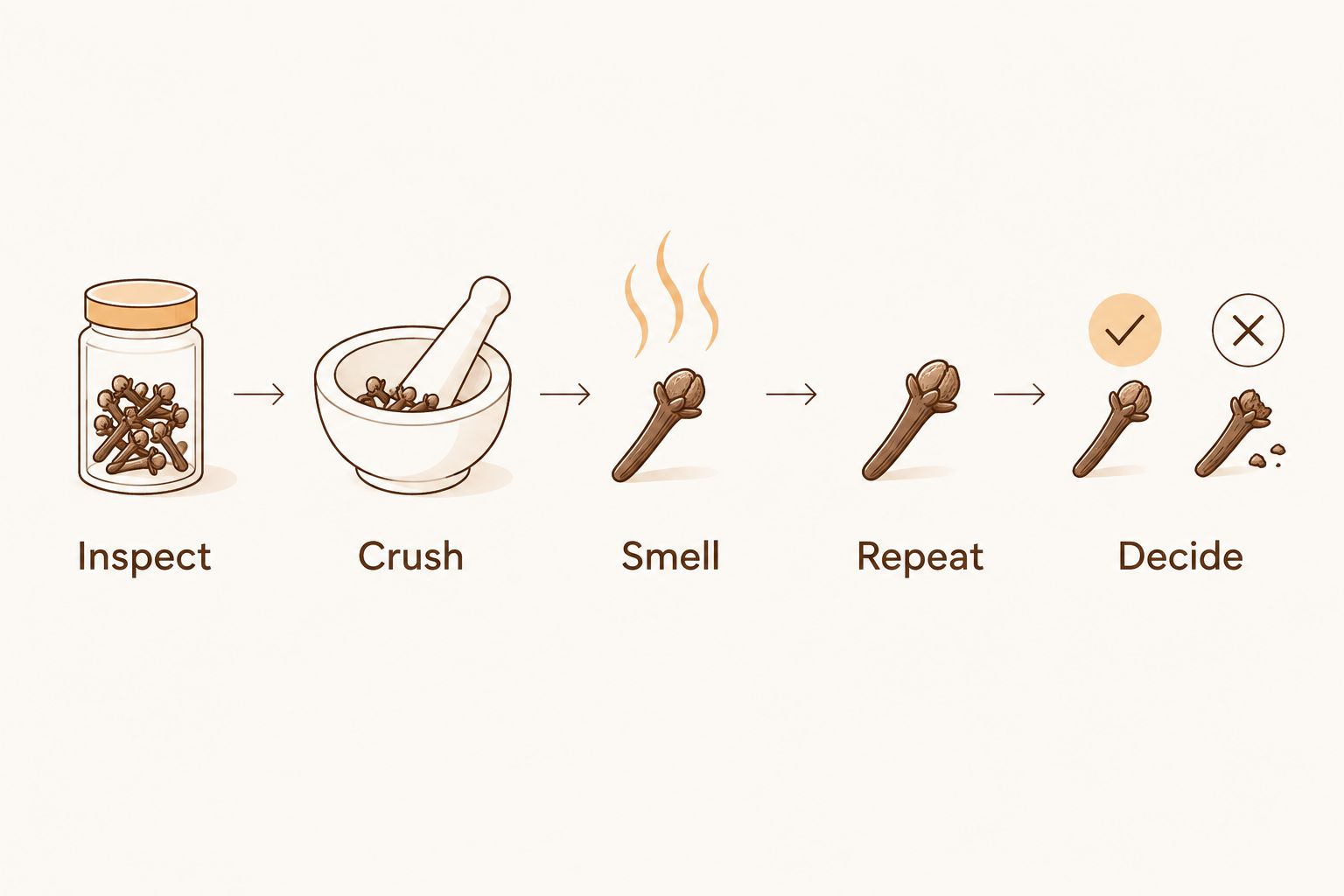
- Inspect. Tip a few cloves onto a clean, dry plate. Look for visible mold, damp clumps, condensation, or foreign material. Set aside the jar if you find signs of contamination; do not proceed to a cooking test.
- Crush. Break a clove with a mortar and pestle or press it carefully beneath the flat of a sturdy utensil on a stable surface. You only need to expose the interior, not make a fine powder.
- Smell. Bring the crushed spice toward your nose without inhaling loose powder. Look for the familiar sweet, woody, pungent clove scent rather than simply asking whether anything smells.
- Repeat. Check another clove from the same jar. One piece is a sample, not a verdict on every piece in the container.
- Decide. Keep distinctly aromatic cloves. Replace cloves that remain faint after crushing, particularly for baking or a recipe in which clove is a central flavor.
A strong scent does not need to resemble perfume pouring out of the unopened jar. Whole cloves keep much of their aromatic material inside their structure. The meaningful question is what happens when you break that structure.
Why this matters
Weak cloves leave a gap in a recipe even when you measure the intended amount. In gingerbread, that gap is the warm, sharp note beneath the sweetness; in a broth, it is part of the aromatic background. Adding more without checking the spice first makes the result harder to control.
Keeping cloves whole lets you release their aroma at the moment of cooking instead of exposing the entire supply as powder. 5Senses builds its whole-spice offering around that choice: keep the ingredient intact, then crush, grind, or infuse what dinner needs. Your sensory check confirms what the cloves in your kitchen still contribute.
Judge aroma and contamination separately. Dry cloves that have become weak present a flavor problem. Visible mold or moisture presents a different problem and is not something to fix by toasting, grinding, or mixing the contents into food.
What should freshly crushed cloves smell like?
Freshly crushed cloves have a recognizable sweet, warm, woody scent with a sharp, pungent edge. Eugenol is a major contributor to that characteristic aroma. You do not need to identify individual compounds to make a useful kitchen decision.
Compare the scent with your memory of clove in a familiar dish, not with an expectation that every jar will smell identical. Cloves are plant material, and their sensory character is not perfectly uniform. The practical distinction is between a clearly identifiable clove aroma and a weak, flat impression.
Do not put your nose directly into a cloud of ground spice. Gently smell from above the crushed sample. If another strong smell is filling the room, move the test rather than interpreting an unclear result as proof that the cloves are stale.
A direct comparison helps when you already have another jar of whole cloves. Crush a sample from each using the same method, and keep them separate. Compare clove with clove—not whole cloves with a fragrantly seasoned blend containing cinnamon, ginger, or other ingredients.
Which clove checks are useful?
Use the following checks for different questions. Crushing answers the aroma question; visual inspection answers whether there are obvious reasons not to use the contents. Neither replaces the other.
| Check | Best for | What it tells you | Limitation |
|---|---|---|---|
| Visual inspection | Finding obvious contamination | Reveals visible mold, dampness, clumping, or foreign material | Normal appearance does not prove strong aroma |
| Smelling the open jar | An initial impression | Shows whether the container has an obvious clove scent | Does not expose the interior of the cloves |
| Crushing and smelling | Assessing aromatic strength | Releases scent from inside the spice | A single clove does not represent every piece |
| A plain infusion | Checking flavor in liquid | Shows how the cloves express themselves in a simple cooking medium | Concentration and preparation affect the result |
Can color tell you whether cloves are stale?
Brown color alone does not tell you whether whole cloves have lost their aroma. Cloves are naturally brown, and a photograph or a glance at the jar cannot measure their aromatic strength.
Inspect appearance for obvious problems, then crush and smell. A normal-looking clove can be weak. A darker piece is not automatically stronger, fresher, or better suited to your recipe.
Is a floating-clove test reliable?
Do not use floating or sinking as your freshness verdict. A water test does not directly tell you how strongly the spice will smell when crushed or flavor your food.
Keep your storage jar dry and test a separate sample instead. Wetting cloves and putting them back in the container creates a storage problem without giving you the direct aroma check you need.
Why whole-clove aroma varies
Whole-clove aroma depends on both the spice and what happens to it after packing. Focus on conditions you can check or change rather than assigning every jar the same expiry date.
- Air exposure. Frequent opening and a poorly sealed lid expose the contents to air. Close the container promptly after measuring.
- Heat. A cupboard beside the cooker or above a warm appliance is a poor storage location. Move the cloves away from regular heat.
- Light. Direct sunlight is not a useful pantry condition. Store the container in a shaded cupboard or another protected spot.
- Moisture. Steam, a wet spoon, or condensation introduces water where you want dry storage. Measure away from the pan.
- Grinding. Breaking cloves exposes more surface area. Grind for the dish you are making rather than turning the entire jar into powder.
- Time and handling. Purchase date alone does not describe the spice’s full history. Use any stated packing information alongside a current sensory check.
For your 2026 storage routine, make the easy changes first: a closed lid, a dry utensil, and a cupboard away from heat. An elaborate container system does not compensate for leaving the lid open beside a boiling pot.
If you are deciding whether to keep cloves whole, the guide to grinding your own spices at home covers that broader pantry choice. For this aroma check, crush only the sample you need and leave the rest intact.
Can you use whole cloves that smell weak?
Dry whole cloves with weak aroma are a flavor-quality issue when there are no signs of contamination. They are poor candidates for a dish that depends on a clear clove note. Replace weak cloves for clove-forward baking rather than guessing how much extra to add.
An old jar does not become useful simply because it still contains recognizable pieces. Conversely, a jar is not automatically ready for disposal because you opened it some time ago. Check what it actually contributes.
If the crushed scent is faint but identifiable, test a separate sample in a plain infusion before committing it to a full recipe. This is especially useful when you intend to use the cloves whole in liquid rather than grind them into a batter.
How do you check cloves in an infusion?
Put a separate sample in a heatproof cup and add hot water. Let the cloves infuse, then remove them and allow the liquid to cool before assessing its scent and flavor. Keep this test plain: sugar, tea, citrus, and other spices make it harder to isolate the clove.
The infusion answers a cooking question, not a laboratory question. You are checking whether these cloves give the liquid a recognizable clove character. You are not measuring their oil content or assigning them a remaining shelf life.
Use the result in the context of your dish. A clove that produces little scent when crushed and little character in an infusion is not a sensible choice for a broth built around whole-spice aroma. Replace it instead of making the recipe your next experiment.
Will toasting bring the aroma back?
Gentle warming helps release aromas that remain in a spice, but it does not restore aromatic compounds already lost. A warm clove can smell more noticeable during the test without becoming equivalent to a stronger replacement.
Test before you toast. If you toast first, the heat changes the immediate aroma and makes the original condition harder to judge. It also introduces the possibility of a scorched smell masking the clove character.
Treat cooking methods as ways to use sound spices, not rescue methods for a failed aroma check:
- Toast when the recipe calls for warming whole spices before use. Keep them moving and watch for scorching.
- Grind when you want clove distributed through a dough, batter, or seasoning. Prepare what the recipe needs.
- Bloom ground clove in fat when the recipe uses that method. Do not judge stale powder by the smell of the other ingredients in the pan.
- Infuse whole cloves in liquid when you want their flavor without leaving ground spice throughout the dish. Remove the pieces before serving where the recipe requires it.
These methods change how clove enters your food. They do not erase damp storage, mold, or a lack of remaining aroma.
What should you check when replacing a weak jar?
Buy for the cooking you actually do. A frequent baker and someone who uses cloves only for occasional broth have different replenishment needs. Choose an amount you can rotate through normal pantry use rather than treating a large container as proof of value.
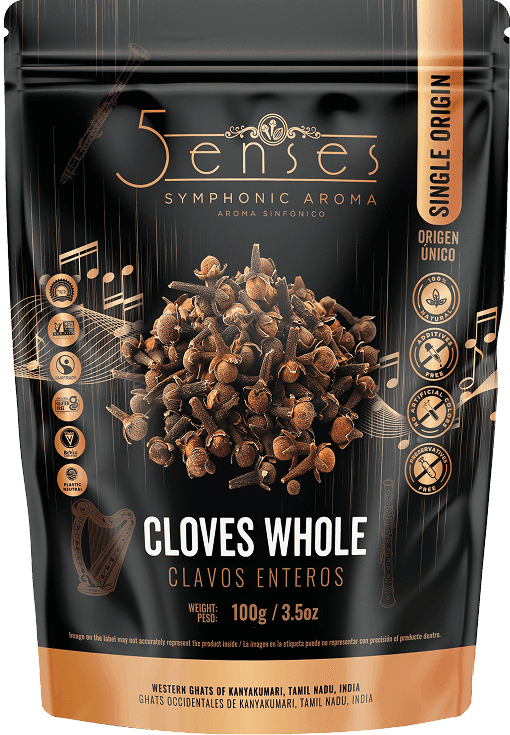
5Senses Cloves Whole Single Origin, Symphonic Aroma, come from Kanyakumari district in Tamil Nadu's Western Ghats. They are naturally dried and packed in resealable pouches. Best for cooks who want one ingredient for both aromatic infusions and freshly ground baking spice. Ground cloves distribute easily, but they cannot be lifted out of a broth like a whole clove.
A mortar makes the freshness check part of meal preparation. 5Senses Adikal | Handcrafted Mortar & Pestle has a rough black-granite interior for crushing whole spices and a polished exterior. Place a small sample in the clean, dry bowl, press to break it, and assess the scent before grinding the recipe quantity. The mortar's approximately 3.52 kg weight and 6-inch diameter suit a permanent preparation spot; it is not a travel-size accessory.
Keep the two tasks separate: a quick crush checks aroma; further grinding prepares the texture. For cookies or cake, work the usable cloves finer and inspect for hard fragments. For an infusion, leave the cooking portion whole and remove it before serving.
For a 2026 replenishment decision, look for origin and packing information that is actually supplied. Do not read a purchase date as a harvest date, and do not assume a certification or packing claim that is not stated. The useful facts are the ones you can verify.
Once the replacement arrives, check its aroma and mark when you opened it. Keep the old and new cloves separate. Mixing them prevents a clean comparison and makes later checks less informative.
FAQ
How can I tell if whole cloves have lost their smell?
Crush a clove and smell its freshly exposed interior. A distinct sweet, warm, pungent scent indicates remaining aroma; a faint, dusty impression indicates weak flavor.
Does a weak-smelling jar mean my cloves are stale?
A weak-smelling jar is not enough to judge whole cloves. Crush a separate sample before deciding, because the intact exterior does not release aroma as readily as the broken spice.
Can I use cloves that have no aroma?
Cloves with no detectable aroma after crushing are not useful when you need clove flavor. Replace them, and discard any contents with visible mold or signs of moisture rather than trying to rescue them.
Should fresh cloves float or sink in water?
Floating or sinking is not a useful verdict on clove aroma. Inspect the spice and use a crush-and-smell test instead of judging freshness by its position in water.
Can I toast old cloves to make them fresh again?
Toasting does not make old cloves fresh again. Heat releases aromas that remain, but it does not restore aromatic compounds already lost.
How should I store whole cloves in 2026?
Store whole cloves in a tightly closed container away from heat, direct light, and moisture. Use dry utensils and measure them away from steam.
Does buying single-origin cloves remove the need for an aroma check?
Single-origin labeling does not remove the need for an aroma check. Apply the same inspection and crush-and-smell test to spices from 5Senses or any other seller.
One last thing
Check the jar before the recipe, not after the dish tastes flat. Put a clean mortar beside your measuring tools during your next 2026 pantry check. Breaking a sample before you start tells you more about its present aroma than rereading the label halfway through cooking.
Keep the test simple. Inspect, crush, smell, and decide. The goal is not to prove how old your cloves are; it is to know whether they will contribute the flavor your food needs.