How many whole cloves equal a teaspoon of ground cloves?
How many whole cloves equal a teaspoon of ground cloves? Grind, then measure a level teaspoon for baking. Learn what changes yield and how to avoid grit.
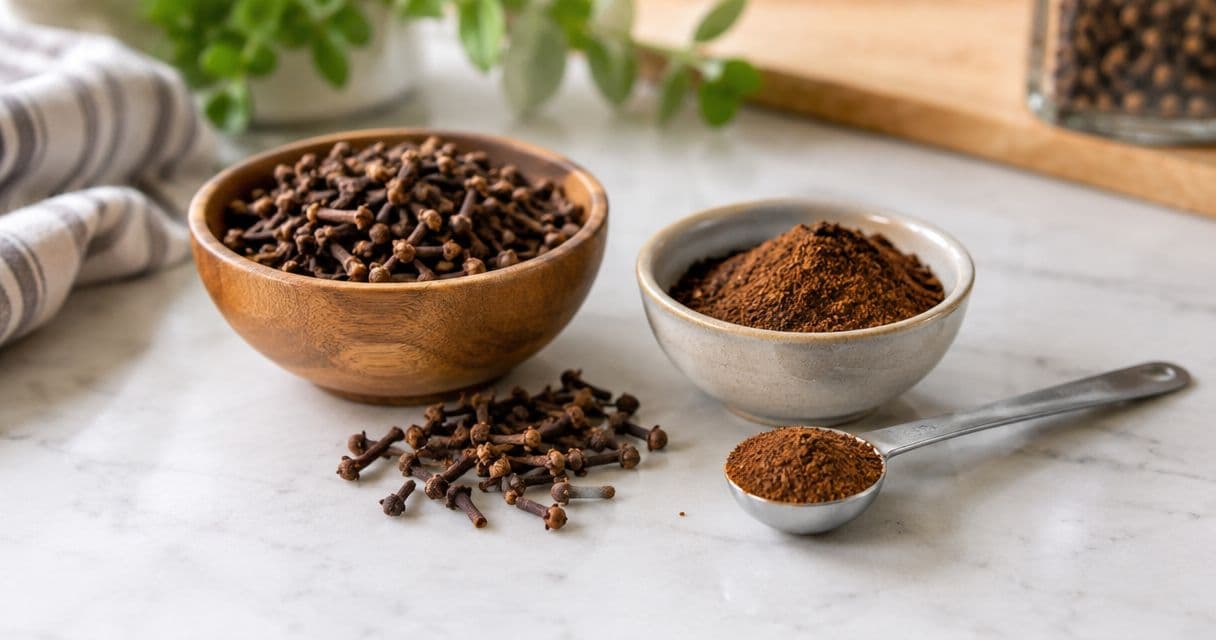
To replace 1 teaspoon of ground cloves, grind whole cloves and measure 1 level teaspoon of the finished powder. Counting cloves is an estimate, not an exact conversion: bud size, broken pieces, and grind texture change how much powder you get. For baking, measure after grinding rather than dropping whole buds into the batter.
TL;DR- How many whole cloves equal a teaspoon of ground cloves? Measure the finished powder; bud counts vary.
- For baking, grind whole cloves finely and measure a level teaspoon before mixing.
- For infusions, keep cloves whole so you can strain them out.
- 5Senses whole spices suit cooks who prefer to grind only what a recipe needs.
Why this matters
A recipe calling for ground cloves expects powder distributed throughout the food. Whole cloves behave differently. They release flavor into surrounding liquid or fat, but they remain hard pieces unless you remove or grind them.
5Senses offers whole spices for cooks who want control over preparation. That control comes with an extra step: when your recipe specifies ground cloves, you need to grind and measure before mixing. The finished texture matters as much as the amount.
How many whole cloves equal a teaspoon of ground cloves?
The reliable conversion is enough whole cloves to produce a level teaspoon of finely ground powder. A count cannot account for differences between large, intact buds and smaller buds mixed with broken pieces. Use your measuring spoon as the endpoint.
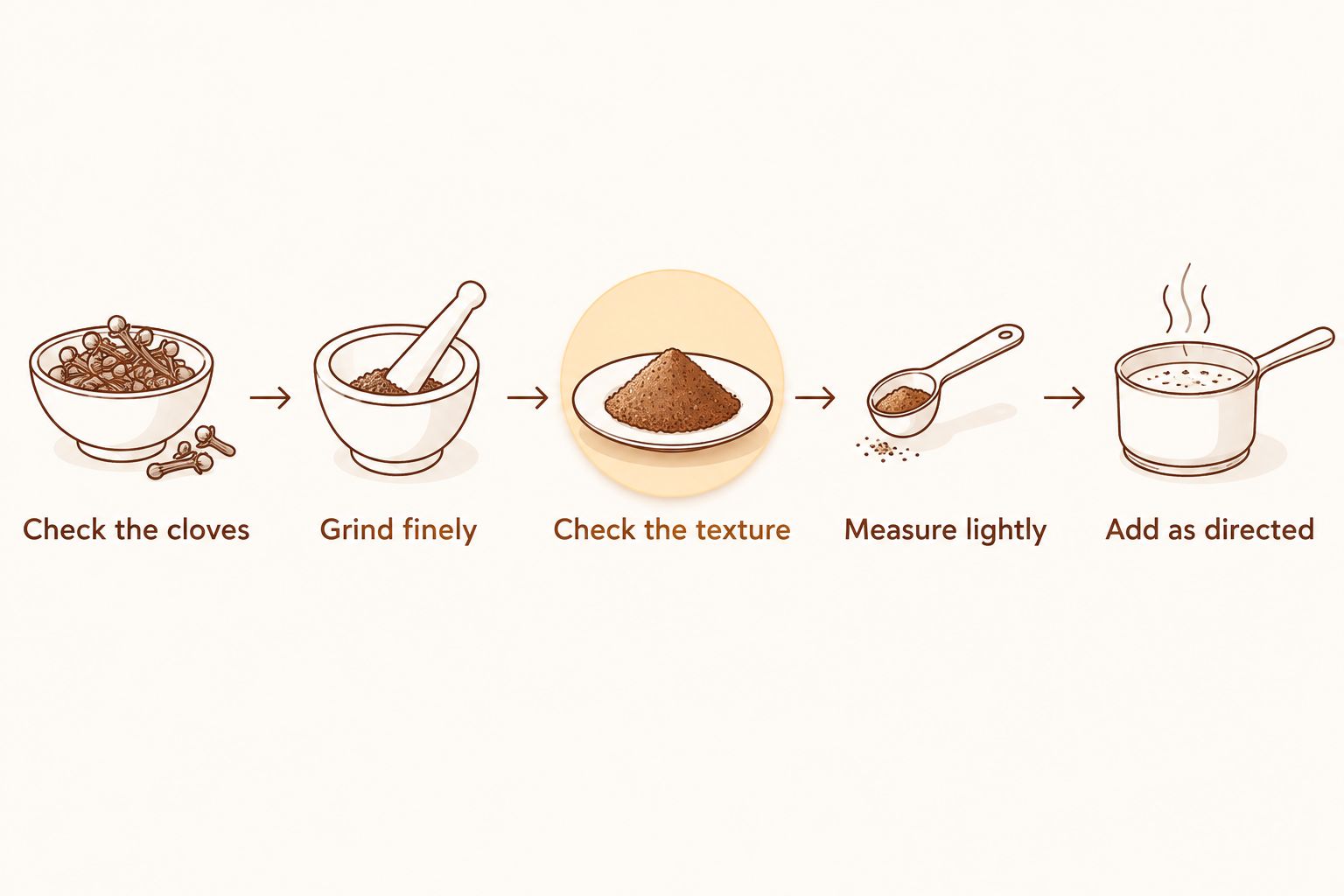
Follow this sequence when a recipe calls for ground cloves:
- Check the cloves. Use dry cloves with a clear, recognizable aroma. Separate any foreign material before grinding.
- Grind finely. Use a spice grinder suitable for cloves or a mortar and pestle. Break down both the rounded heads and the stems.
- Check the texture. Spread a little powder on a light-colored plate. Grind again if you can see coarse stem fragments.
- Measure lightly. Spoon the powder into a measuring spoon without pressing it down, then level the top.
- Add as directed. Mix the measured powder into the dry ingredients, sauce, or spice mixture at the point the recipe specifies.
The whole cloves to ground cloves workflow covers this preparation in more detail. The central rule stays simple: count before grinding only to track your own batch, not to replace the final measurement.
A small batch can be awkward in an electric grinder because the blades need to contact the cloves. Follow the appliance instructions rather than running an unsuitable grinder repeatedly. For a small quantity, a mortar and pestle gives you direct control over the texture.
Whole, crushed, or ground: which form should you use?
Choose the form for the dish, not just for convenience. A smooth cake batter needs a different preparation from a pot of cider that you will strain before serving.
| Form | Best for | Main advantage | Main limitation |
|---|---|---|---|
| Whole cloves | Strained drinks, stocks, and other infusions | Easy to contain in a spice bag or remove by straining | Hard buds must not be left unnoticed in the finished dish |
| Crushed cloves | Infusions that will be thoroughly strained | Opens the buds without requiring a fine powder | Small fragments are harder to retrieve individually |
| Finely ground cloves | Cakes, cookies, spice blends, and smooth mixtures | Distributes clove flavor without intact buds | Cannot be removed once mixed in |
Best for baking: finely ground cloves. Whole buds are not a direct textural substitute, even if the overall seasoning seems similar. Grinding prevents a bite from containing a concentrated piece of clove.
Best for removable seasoning: whole cloves. Put them in a food-safe spice bag or strain the finished liquid. Loose buds are harder to track in a dish with plenty of other ingredients.
Best for a strained infusion: crushed cloves when the recipe calls for them. Crushing creates fragments, so plan your straining method before adding them. A coarse colander will not catch every small piece.
Why the whole-clove-to-ground yield varies
The amount of powder you obtain depends on more than the number of buds. These practical differences explain why measuring after grinding is the better kitchen method:
- Bud size. Large and small cloves do not contribute the same amount of material. A fixed count treats them as identical.
- Broken pieces. A jar can contain detached heads and stem fragments. Decide what counts as a clove and the count becomes subjective.
- Grind texture. Coarse fragments and fine powder settle differently in a spoon. Match the texture your recipe needs before measuring.
- Powder left behind. Some ground spice stays on the grinder lid, around the blades, or in the mortar. Measure what you collect, not what you expect to collect.
- Spoon filling. A packed or heaped spoon contains a different amount from a lightly filled, level spoon. Keep your measuring method consistent.
These are yield differences, not proof that a particular clove is better. A large bud does not establish freshness, and a dark color alone does not establish flavor strength. Check aroma and the product information rather than treating appearance as a complete quality test.
How do I measure ground cloves accurately for baking?
For 1 teaspoon of ground cloves, fill a measuring teaspoon lightly and level the surface with a straight edge. Do not compress the powder or leave a mound above the rim.
Use a measuring spoon rather than a piece of table cutlery. An ordinary teaspoon is designed for eating and stirring, not for reproducing a recipe measurement. Consistent tools make it easier to understand what changed between batches.
For a recipe calling for 1/2 teaspoon, grind first and use the corresponding measuring spoon. For 1/4 teaspoon, use the smaller measure rather than estimating a fraction of a larger spoon. Small seasoning amounts leave less room for an uneven fill.
Add the measured cloves to the recipe's other dry ingredients when instructed, then mix thoroughly. This helps distribute the powder before wet ingredients make the mixture harder to combine evenly. Scrape the bowl as needed so spice does not remain concentrated along the sides.
Can I put whole cloves directly into cake or cookie batter?
Whole cloves are not a suitable direct replacement for 1 teaspoon of ground cloves in cake or cookie batter. Grind them first so the finished bake does not contain hard buds or coarse stem pieces.
Do not assume baking will turn whole cloves into a soft, evenly distributed seasoning. The recipe relies on ground spice being mixed throughout the batter or dough. Changing the physical form changes the eating experience.
If your recipe infuses cloves into milk or cream before mixing, follow that method and strain as directed. That is an infusion recipe, not a simple whole-for-ground substitution. Keep its ingredient amounts and sequence together rather than combining unrelated methods.
Can I use ground cloves instead of whole cloves in a drink?
Ground cloves can flavor a drink, but they do not behave like removable whole buds. The powder leaves fine particles in the liquid and is harder to strain out completely.
For a clear or smoothly strained drink, whole cloves are the better form. Use a recipe written for whole spices and remove them at the specified stage. If ground cloves are the only form you have, choose a preparation that accommodates suspended spice rather than expecting an identical result.
Do not use a powder-yield conversion as an infusion-strength conversion. Grinding changes the surface exposed to the liquid, while steeping time and temperature also affect extraction. Equal starting material does not guarantee the same result in different preparations.
Grind cloves without leaving gritty pieces
Clove heads often break apart before the stems are fully reduced. Check the powder rather than judging progress only by the sound of the grinder. Visible splinters need more work before they go into a smooth batter or sauce.
With a mortar and pestle, begin by pressing to break the buds, then use a circular grinding motion. Keep the cloves inside the bowl rather than striking so forcefully that pieces jump out. Scrape material back toward the center as you work.
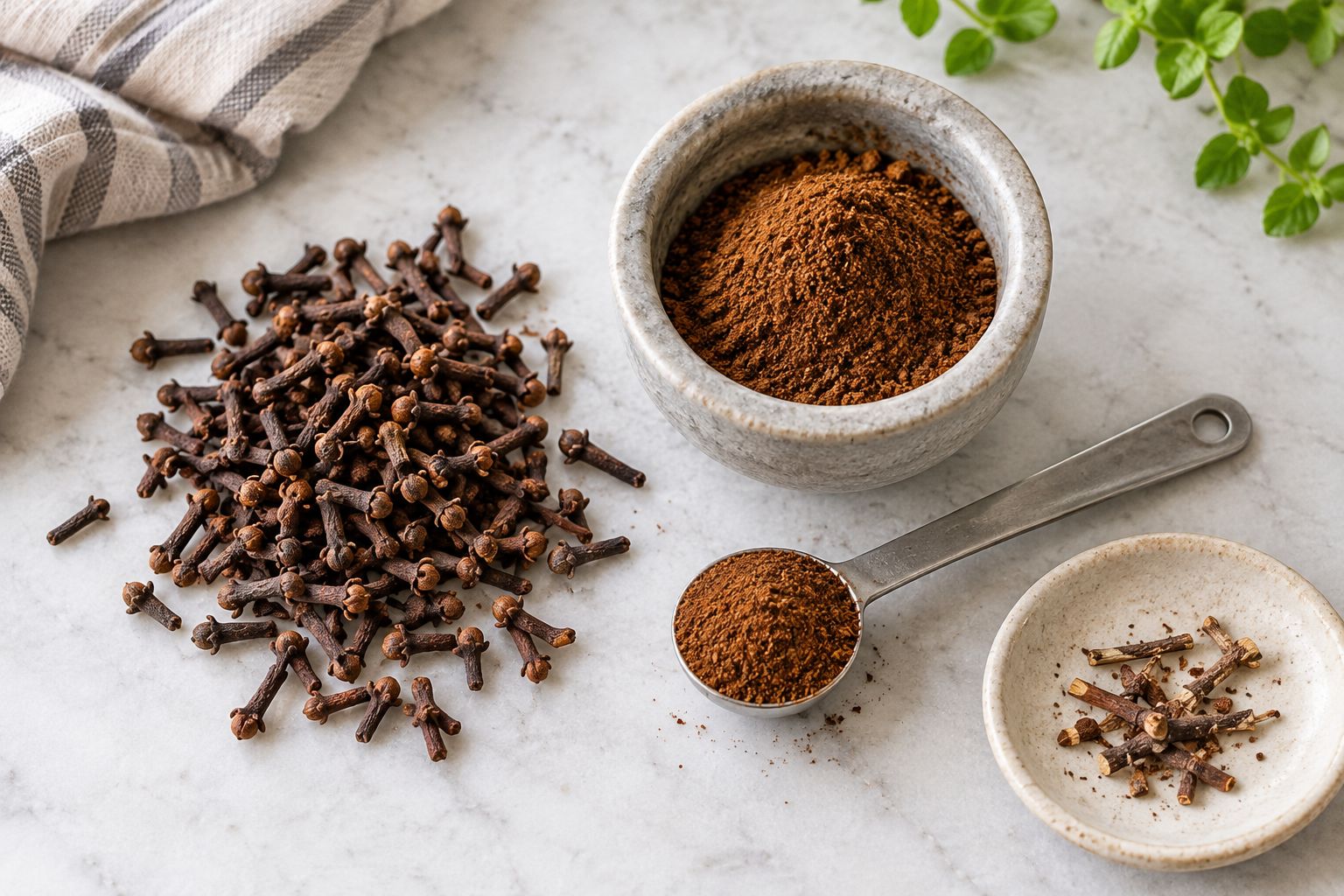
If you sift the powder, grind the retained pieces again before taking your final measurement. Otherwise, part of the original batch remains outside the measured ingredient. Clean tools according to their care instructions so clove residue does not season the next ingredient unintentionally.
5Senses whole spices are best for cooks who want to grind as needed. The trade-off is preparation: whole cloves require grinding for powder-based recipes, while infusions require removal or straining. Choose the form that fits how you actually cook.
Do cloves need toasting before grinding?
Cloves do not need toasting simply to turn them into powder. If your recipe calls for ground cloves without a toasting step, grind them as they are. Toasting is a separate flavor decision, not part of the measurement conversion.
When a recipe specifies toasted cloves, follow its method and let the spice cool before grinding. Do not add an extra toast merely because you are starting with whole buds. Changing both the preparation and the amount at once makes the finished flavor harder to reproduce.
Likewise, blooming ground cloves in fat belongs to the recipe's cooking method. Grinding, toasting, blooming, and infusing serve different purposes. Use the steps the dish needs rather than applying every technique to every spice.
Make the next batch easier to repeat
If you bake the same recipe often, record the preparation that worked. Note whether you used whole cloves ground immediately before mixing, the measuring spoon size, and whether the recipe included toasting. Those details are more useful than a remembered handful.
You can also record how many cloves from your current jar produced the measured powder. Treat that as a shortcut for starting the next grind, not as a universal conversion. Recheck the finished amount when you open a different batch or change equipment.
Store any leftover powder in a clean, dry, tightly closed container away from heat and direct light. Label it so you know what it is. Keep the remaining cloves whole until you need another batch instead of grinding the entire jar for a small recipe.
FAQ
What's the most reliable way to replace a teaspoon of ground cloves?
Grind whole cloves finely, then measure a level teaspoon of the finished powder. Counting buds is less reliable because their size and the amount lost during grinding vary.
Do I grind the heads and stems of whole cloves?
Yes, grind both the rounded heads and the stems. Check for coarse stem fragments before adding the powder to baking mixtures.
Can I use a mortar and pestle to grind cloves?
Yes, a mortar and pestle can grind whole cloves. Break the buds with pressure, then grind in a circular motion until the texture suits your recipe.
Should I toast cloves before grinding them?
Toast cloves only when your recipe calls for it. Toasting changes the preparation; it is not necessary for measuring a whole-to-ground substitution.
Can I leave whole cloves in the finished dish?
Remove whole cloves before serving, or contain them in a spice bag during cooking. They remain hard pieces and give a concentrated burst of flavor if bitten.
Are freshly ground cloves automatically stronger than jarred ground cloves?
Fresh grinding does not establish a fixed strength difference. The condition of the cloves, storage, and preparation all affect the result, so keep the recipe measurement consistent.
Are 5Senses whole spices practical for everyday cooking?
5Senses whole spices suit everyday cooks who want to choose between grinding and infusing. Allow for grinding when a recipe requires powder, and removal when you cook with intact cloves.
One last thing
A powder conversion is not an infusion instruction. Grinding enough cloves to fill a teaspoon answers a baking measurement; it does not tell you how many whole buds to steep in cider or simmer in stock. Match the physical form first, then follow the recipe's amount and cooking method.