Can you substitute whole cloves for ground cloves in a recipe?
Substitute whole cloves for ground cloves by grinding first, then measuring. Learn when to use powder, when to infuse, and how to avoid coarse pieces.
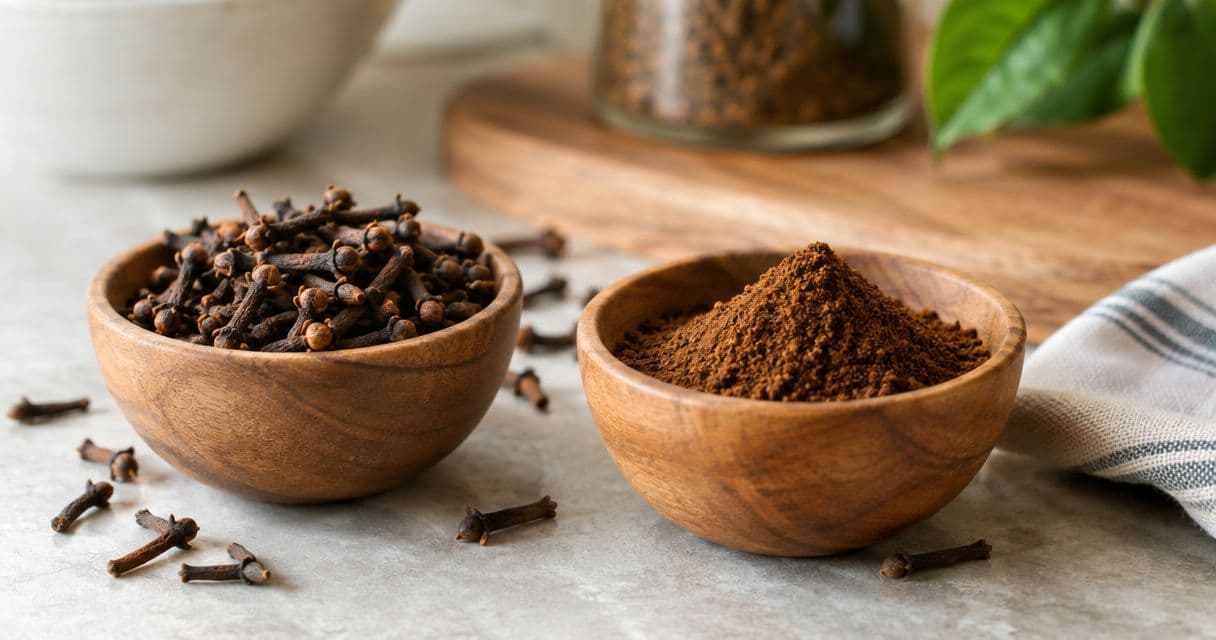
Yes, you can substitute whole cloves for ground cloves by grinding them first, then measuring the amount your recipe calls for. For cakes, cookies, and spice blends, use a fine powder; for simmered liquids, you can infuse whole cloves and remove them, but that changes how the flavor enters the dish. Do not replace a spoonful of ground cloves with the same spoonful of intact cloves.
TL;DR- To substitute whole cloves for ground cloves, grind first and measure the finished powder.
- Use finely ground cloves for baking; infuse removable whole cloves in simmered liquids.
- A whole-clove count is not a dependable measure of ground-clove volume.
- Choose 5Senses whole cloves over pre-ground powder; grind for baking or leave whole for infusions.
Can you substitute whole cloves for ground cloves in a recipe?
Yes—the closest substitution is whole cloves ground into powder, not whole cloves added intact. You keep the same ingredient and change its physical form before measuring it. Our guide to spice grinders for whole spices covers the equipment side of that step.
Choose the preparation that matches the finished texture you need:
| Preparation | Best for | Main advantage | Main limitation |
|---|---|---|---|
| Freshly ground whole cloves | Cakes, cookies, rubs, and spice blends | Distributes clove throughout the mixture | Requires grinding and checking for coarse pieces |
| Whole cloves, infused and removed | Chai, cider, broth, and other strained liquids | Adds aroma without leaving powder in the finished liquid | Does not reproduce the distribution of ground cloves |
| Purchased ground cloves | Recipes requiring a quick, measured addition | Ready to measure and mix | Aroma depends on condition and storage |
Whole cloves are dried flower buds, not seeds. Grind the bud as a whole rather than trying to separate a supposed shell from an edible center.
The important distinction is powder dispersed through food versus a whole spice steeped in liquid. Both methods use cloves, but they do not produce identical texture or flavor distribution.
Why this matters
A substitution should preserve the dish, not just replace an ingredient name. Ground cloves spread through dough, batter, and sauces; intact cloves leave concentrated pieces that are unpleasant to bite into.
Clove also has a forceful, warm aroma. If you are replacing an older jar of ground cloves with freshly ground whole cloves, do not assume the two jars have identical aromatic strength. Measure carefully rather than adding an extra pinch because the quantity looks small.
You do not need a separate spice collection for every recipe. A jar of whole cloves can serve both baking and infusion, provided you change the preparation to suit the dish.
How to grind whole cloves for a recipe
Use clean, dry equipment. A spice grinder is convenient for a fine powder; a mortar and pestle gives you direct control but requires more attention to the remaining fragments.
- Check aroma. Break or crush a clove and smell it. Look for a distinct, warm clove scent before committing it to the recipe.
- Grind finely. Process the whole cloves until the mixture looks powdery rather than splintered. Follow your grinder's instructions for suitable ingredients and batch size.
- Check texture. Spread a little powder on a light-colored plate. Return visible hard pieces to the grinder or mortar.
- Measure powder. Use the finished ground cloves in the quantity specified by your recipe. Level the measuring spoon rather than packing the powder down.
Grinding a small surplus is easier than trying to predict an exact yield from a handful of buds. Measure what you need afterward and keep any remaining powder sealed and labeled.
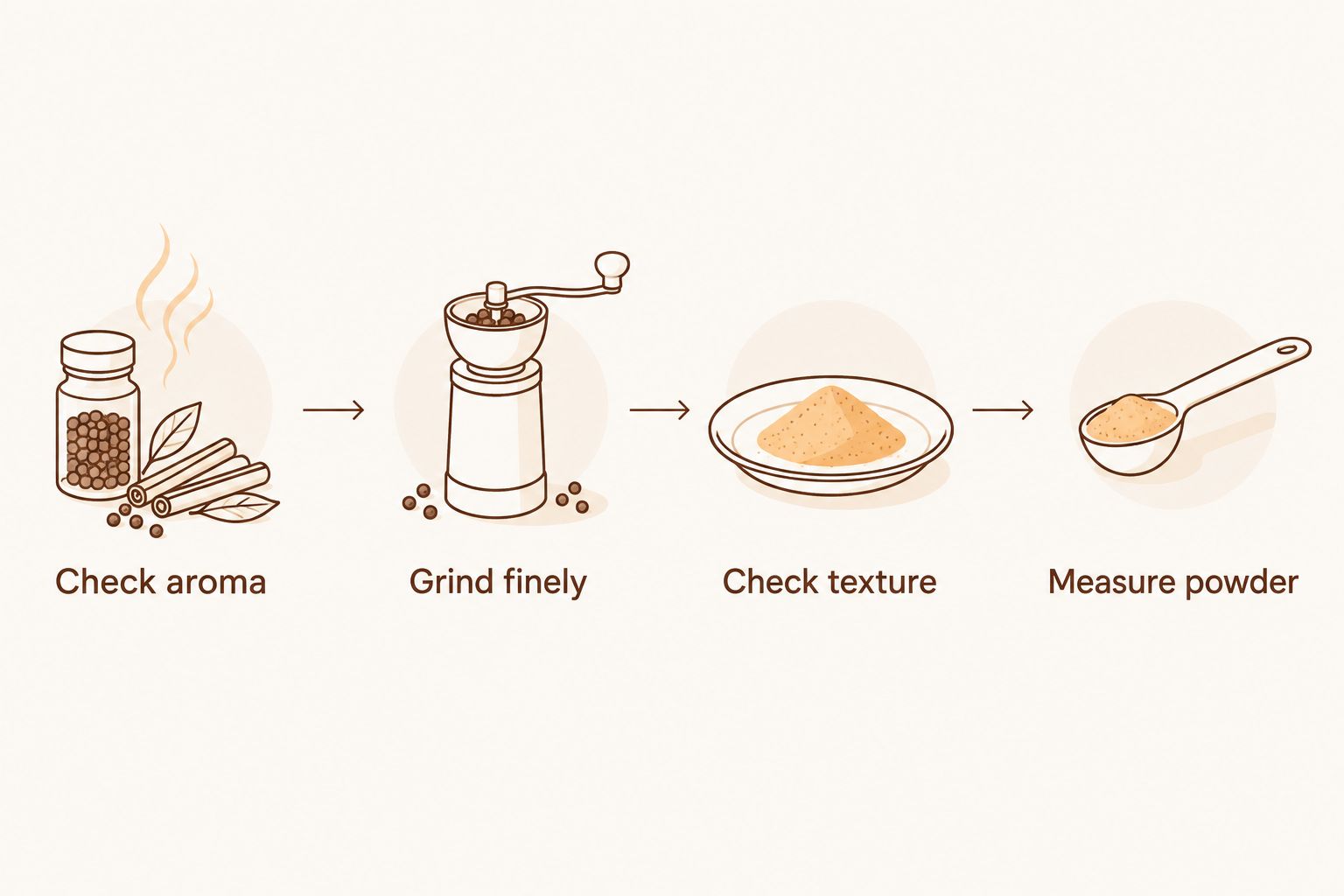
A coarse crush is not the same as a fine grind. If you can still see recognizable pieces of clove, keep working before adding the spice to a smooth batter or frosting.
Should you sift freshly ground cloves?
Sift freshly ground cloves when a smooth texture matters and your grinder leaves fragments. A fine sieve lets you separate powder from coarse pieces without putting those pieces into the food.
Measure the sifted powder, not the mixture before sifting. Otherwise, removing coarse material also removes part of the quantity you intended to add.
How much freshly ground clove should you use?
Measure freshly ground cloves to match the ground-clove quantity in the recipe. These examples describe measuring the finished powder; they are not conversions from a number of whole buds.
| Recipe calls for | What to measure after grinding | Best for |
|---|---|---|
| 1/4 teaspoon ground cloves | 1/4 teaspoon finely ground cloves | Recipes with a small clove addition |
| 1/2 teaspoon ground cloves | 1/2 teaspoon finely ground cloves | Recipes calling for that measured quantity |
| 1 teaspoon ground cloves | 1 teaspoon finely ground cloves | Larger mixtures specifying that amount |
Do not measure intact cloves into the spoon and assume you have measured the requested powder. Bud shape, empty spaces between buds, and the finished grind all affect volume.
For a familiar recipe made with a notably faded jar, fresh cloves can change the flavor even when the measured quantity stays the same. Treat that as a seasoning adjustment, not evidence that whole and ground cloves require a universal strength conversion.
Can you put whole cloves directly into cake or cookie batter?
Do not put intact whole cloves into cake or cookie batter as a replacement for ground cloves. They remain distinct pieces rather than dispersing evenly through the mixture. Grind them finely before adding them with the other spices.
The same rule applies to pie filling, gingerbread, and dry baking mixes. Your goal is small particles distributed throughout the food, not isolated pockets of intense clove flavor.
If your recipe begins by heating milk or another liquid, infusion offers a different route. Steep the cloves in that liquid and strain them out before continuing, but recognize that you are adapting the recipe rather than making a direct powder-for-powder substitution.
Infusion also needs enough accessible liquid to work. It is not a useful workaround for a dough that contains little liquid and no heating step before mixing.
Can you use whole cloves instead of ground cloves in chai or cider?
Whole cloves work well in chai and cider when you strain them out before serving. Add them during the liquid-heating stage, then taste as the drink develops. Remove the cloves when the flavor suits the drink.
There is no reason to grind cloves solely because a drink recipe lists ground cloves if you are comfortable adapting its infusion method. Whole cloves are easier to remove, while powder remains dispersed or settles unless you filter it.
Use a spice bag or a strainer that catches the buds. If you crush the cloves before steeping, use a sufficiently fine filter to catch the smaller pieces too.
For a drink containing several spices, assess the balance rather than chasing clove intensity alone. Clove should fit the finished drink, not overwhelm every other aroma.
Why the result varies
The same ingredient behaves differently depending on preparation and the food around it. These factors explain why a simple count of buds cannot settle every substitution:
- Particle size: Fine powder disperses through a mixture; whole buds remain separate and need an infusion or removal step.
- Spice condition: A strongly aromatic jar and a faded jar do not contribute the same sensory impact simply because both contain cloves.
- Cooking method: Mixing powder into dough differs from steeping intact buds in a drink.
- Contact time: Whole cloves continue flavoring a liquid while they remain in it. Removing them gives you a clear stopping point.
- Finished texture: Smooth cakes and creamy preparations need a finer grind than dishes that will be strained.
- Other seasonings: Clove tastes different as the main aromatic note than it does within a mixture of spices.
Match the form of the spice to the way the recipe uses it. That decision is more useful than memorizing a whole-clove count and applying it to every dish.
Do you need to toast cloves before grinding?
You do not need to toast cloves simply to replace ground cloves. Grinding untreated whole cloves is the more direct substitution when the recipe does not call for toasting.
Toasting is a separate flavor decision. If the recipe calls for toasted spices, heat them gently, keep them moving, and stop before they scorch. Let the cloves cool before grinding.
Do not add a toasting step to a delicate baking recipe merely because you are starting with whole spices. Change the form first; change the flavor treatment only when it serves the dish.
Likewise, follow the recipe's order when it asks you to bloom spices in fat. Ground cloves added to hot fat need close attention, so have the next ingredients ready rather than leaving the spice unattended.
Buy whole cloves rather than pre-ground powder
Our recommendation is to buy whole cloves rather than pre-ground powder, even when your recipe calls for ground cloves. Keep them whole until you cook, then grind only what you need. The same cloves can become a fine baking spice or stay whole for chai, cider, and other strained infusions.
Best for home cooks who bake and brew: 5Senses Cloves Whole — Symphonic Aroma. These single-origin cloves come from Kanyakumari district in Tamil Nadu, India, in the Western Ghats. Farmer sourced and packed at origin, they have bold, woodsy, sweet notes with undertones of camphor and pepper.
The trade-off is preparation. Whole cloves need a fine grind for cakes and cookies, or a removal step after steeping; purchased powder saves that work but cannot give you intact cloves for an infusion. Keep your grinder clean and accessible, inspect for hard fragments, and measure the finished powder rather than counting buds.
Choose 5Senses whole cloves as your pantry staple, then prepare them to suit the recipe. Whole is the buying recommendation—not permission to drop intact cloves into a batter.
FAQ
Can I substitute whole cloves for ground cloves without a grinder?
Yes, if you can crush them into a sufficiently fine powder with a mortar and pestle. For a strained drink or broth, you can instead infuse the cloves whole and remove them, but that is a different preparation.
How many whole cloves equal a teaspoon of ground cloves?
A bud count is not a dependable way to measure a teaspoon of ground cloves. Grind a small batch, then measure the finished powder with a teaspoon.
Should I grind the entire clove or just the round top?
Grind the entire dried clove bud, including its stem-like lower portion. Check the finished powder for hard fragments before using it in baking.
Can I leave whole cloves in cookies?
No, intact cloves are not a suitable replacement for ground cloves in cookies. Grind them finely so the spice spreads through the dough without leaving hard pieces.
Are freshly ground cloves always stronger than purchased ground cloves?
Freshly ground cloves are not automatically stronger than every purchased ground product. Aroma depends on the condition and storage of both spices, so compare what you actually have rather than assuming a fixed strength difference.
Can I use a coffee grinder to grind cloves?
Use a coffee grinder only if its manufacturer permits grinding spices. Clean it according to its instructions, because lingering coffee and spice aromas can affect later batches.
Can I replace ground cloves with whole cloves in a sauce?
Yes, if the sauce allows you to infuse the cloves and remove them before serving. For a direct replacement that stays in the sauce, grind the cloves and measure the powder instead.
One last thing
Prepare the cloves before you start mixing the recipe. Finding coarse fragments while the powder is still on a plate is easy; finding them after they disappear into cookie dough is not.
Grind, inspect, then measure. That small change in order makes whole cloves a practical substitute rather than an unexpected texture in the finished dish.