Whole cloves to ground cloves: complete 2026 spice workflow
Grind whole cloves only as needed for better texture control. Learn when to toast, how to sieve and measure, and when whole-clove infusion works best.
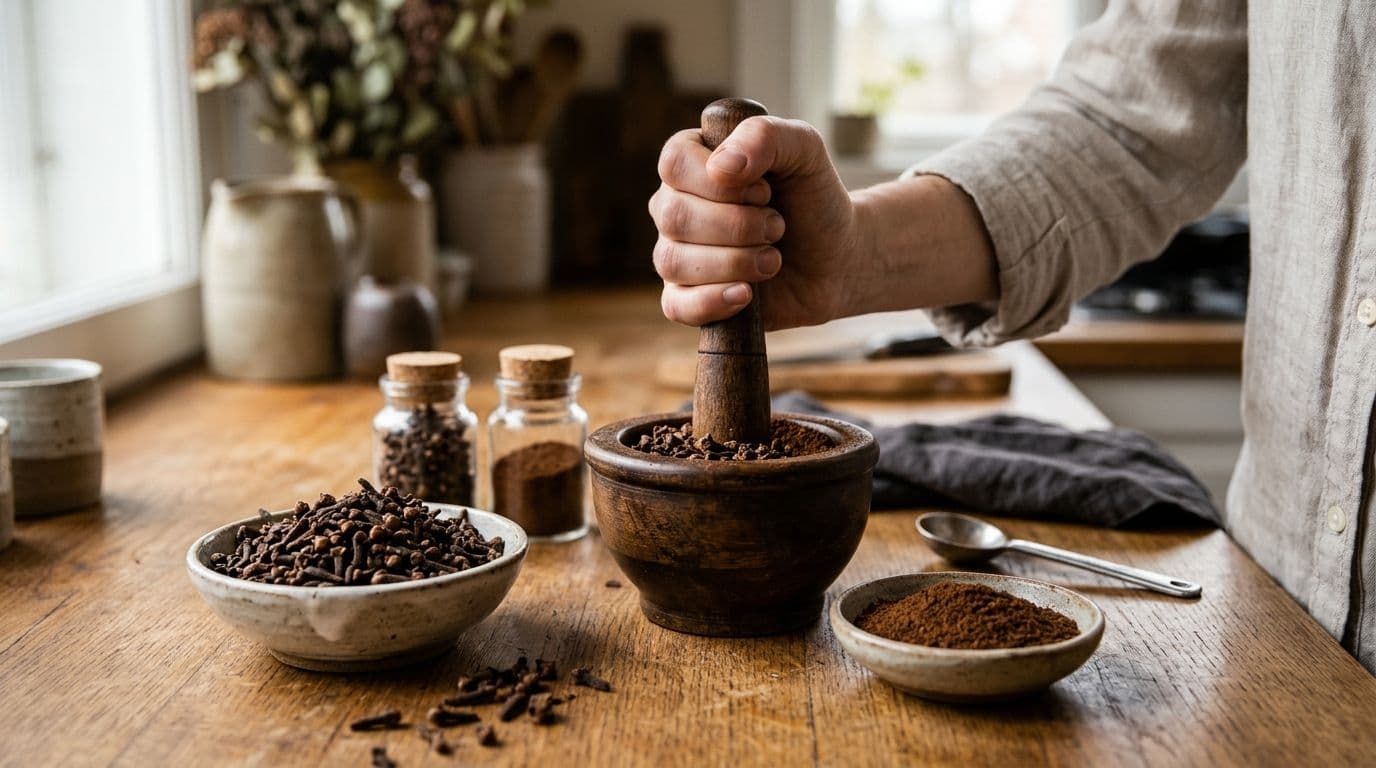
Instead of grinding a jar of whole cloves and watching its aroma fade between recipes, grind only what you need, measure the finished powder, and keep the rest whole. This workflow takes you from a clean grinder to evenly ground cloves for baking, spice blends, and savory cooking, with a separate infusion method for dishes that need flavor without powder.
TL;DR- 5Senses whole spices suit cooks who want whole cloves for fresh grinding and removable infusions.
- Grind whole cloves before measuring ground cloves; counting buds is not a dependable recipe conversion.
- Use a spice grinder for fine powder or a mortar and pestle for small, controlled batches.
- Keep storage jars dry, remove coarse fragments, and grind only what your recipe needs.
Why this matters
Cloves are dried flower buds, not seeds. Their rounded heads and firm stems both belong in the grinder. The flavor is warm, sweet, woody, and penetrating; a coarse piece delivers a very different bite from powder dispersed through a cake.
Choose the final texture before you choose the method. Baking needs an even powder. A broth or poached fruit often works better with whole cloves that you can remove after infusion.
5Senses offers whole spices alongside Spicecare tools for storing, grinding, and preserving them. 5Senses whole spices are best for cooks who want to prepare spices as they cook rather than keep every ingredient pre-ground. The trade-off is an extra preparation step and equipment to clean.
Before you start
- Gather food-grade whole cloves, a clean spice grinder or mortar and pestle, a dry spoon, a small bowl, and a fine sieve if you need baking powder texture. Keep your recipe nearby so you grind toward a defined amount.
- Check your grinder's instructions for suitable ingredients, minimum filling requirements, and cleaning. A blade grinder needs enough material to circulate; a tiny pinch can sit below the blades rather than grind.
- Keep every surface dry and free of other aromas. Coffee residue and moisture both cause problems, and toasted cloves must cool before grinding or sealing. Do not wash cloves as a routine preparation step for dry grinding.
Your grinding setup
- Check the cloves. Look for visible contamination, dampness, or mold. Smell a lightly crushed bud for its characteristic aroma. A weak scent calls for a closer freshness check, not an automatic increase in the recipe amount.
- Choose your tool. Use a spice grinder when you need fine powder. Choose a mortar and pestle when the batch is too small for your grinder or when you want direct control over crushing.
- Prepare a receiving bowl. Put the dry bowl beside the grinder so you can empty it without hovering over a steaming pot. Set out a sieve if texture matters.
- Set your target. If your recipe calls for 1/4 teaspoon of ground cloves, your target is 1/4 teaspoon of finished powder—not a guessed number of buds.
Expected result: You have a clean, dry workspace, a suitable tool, and a clear quantity to measure after grinding.
Both tools work, but they solve different batch-size and texture problems. Neither removes the need to inspect the finished grind.
| Method | Best for | Advantage | Limitation |
|---|---|---|---|
| Electric spice grinder | Fine powder for baking or spice blends | Breaks down a suitable batch with little hand effort | Very small quantities can miss the blades; residue needs cleaning |
| Mortar and pestle | Small batches and controlled crushing | Lets you see and adjust the texture throughout | Fine powder takes more work and often needs sieving |
| Whole-clove infusion | Liquids that will be strained | Adds clove flavor without distributing powder | Requires removal or straining; does not replace powder in dry mixtures |
For equipment selection beyond cloves, use the guide to spice grinders for whole spices. Follow the instructions for your actual tool rather than assuming every grinder handles the same ingredients.
Optional toast and cooling
Toasting is a flavor choice, not a required activation step. Untoasted cloves work for baking and spice blends. Light toasting adds a roasted note, but excess heat turns that note bitter.
- Decide whether the recipe needs toast. Skip this step when you want the familiar clove character in a delicate cake, custard, or fruit preparation. Toast when a roasted spice profile belongs in the dish.
- Warm a dry pan over gentle heat. Add the cloves in a layer you can move easily. Stir or shake the pan so individual buds do not sit against one hot spot.
- Use aroma as the cue. Remove the cloves when their fragrance becomes more pronounced. Do not wait for smoke or a blackened surface.
- Transfer and cool. Move the cloves out of the hot pan and let them cool completely before grinding. Leaving them in the pan continues the heating.
Expected result: The cloves smell fragrant rather than acrid and feel cool before they enter the grinder.
Keep growing origin and kitchen treatment separate when describing flavor. A named source tells you where a spice was grown; toasting describes what you did afterward. Toasting cannot establish provenance or restore aroma that has already faded.
Grinding and texture control
The working sequence is Crush, Grind, Sieve, Measure. Each stage solves a different problem: breaking the buds, reducing particles, removing coarse fragments, and matching the recipe.
- Crush. With a mortar and pestle, press down gently to break the buds before using a circular grinding motion. For an electric grinder, load the cloves according to its instructions; pre-crushing is optional unless the manufacturer requires it.
- Grind. Use controlled bursts where the grinder allows them, stopping to inspect the texture. With a mortar, work the fragments against the bowl until the mixture becomes finer. Keep the equipment stable and follow its operating instructions.
- Sieve. For cakes, cookies, and smooth fillings, pass the powder through a fine sieve into your bowl. Return coarse fragments to the grinder or mortar. Do not push woody pieces through simply to finish faster.
- Measure. Spoon the finished powder into the measuring spoon and level it. If your recipe specifies 1/8 teaspoon, measure that amount of powder rather than substituting a whole bud.
- Check the texture. Spread a little powder on a dry plate. Look for obvious stem fragments or uneven pieces before adding it to food.
Expected result: You have an even powder measured in the form the recipe requests, with coarse fragments separated for further grinding.
Do not chase a universal buds-per-teaspoon conversion. Cloves vary in size, and loose powder packs differently from intact buds. Grinding first avoids making those differences part of your baking formula.
Recipe use and storage
Freshly ground cloves need even distribution. A concentrated pocket can overpower a mouthful even when the total recipe amount is correct.
- Add powder to the appropriate mixture. For baking, whisk ground cloves through the dry ingredients when the recipe directs. For a spice blend, mix thoroughly before measuring the blend into your dish.
- Bloom only when appropriate. If the recipe cooks spices in fat, add the ground cloves with the other ground spices and keep them moving. Add the next ingredient before the powder scorches. Do not add a separate blooming step to a recipe that does not call for it.
- Check seasoning in a safe form. Taste a cooked sample of a savory dish before adding more. Do not taste raw batter containing uncooked flour or eggs to judge the clove level.
- Store any remainder. Transfer dry, cool powder to a clean airtight container. Mark it with the grinding date and keep it away from heat, light, and steam.
- Clean the equipment. Remove residue according to the manufacturer's directions. Let washable parts dry fully before reassembly or another spice batch.
Expected result: The cloves are evenly incorporated, and any leftover powder is sealed without trapped warmth or moisture.
For a small amount of leftover powder, use a proportionately small container rather than leaving a dusting across a large jar. Keep most of your supply whole. Grinding a large batch saves preparation later, but exposes more of the spice to air before you use it.
Infuse whole cloves instead of grinding
Whole cloves are best for liquids when you want removable spice flavor. Choose this variant for simmered drinks, poached fruit, stocks, and sauces that you can strain. It is not a substitute for powder in cookie dough or a dry rub.
- Put the recipe's specified whole cloves directly into the liquid or into a food-safe spice bag. Leave room inside the bag for liquid to circulate.
- Heat and steep according to the recipe. Taste the liquid during cooking when it is safe to do so; clove strength depends on the amount, preparation, and dish.
- Remove the spice bag or strain out every bud before serving. For thick mixtures, a spice bag makes retrieval easier than searching with a spoon.
- Adjust the finished dish after removal. Do not leave cloves in a serving vessel unless continued infusion is intentional and the buds will be kept out of individual portions.
Expected result: The liquid carries clove aroma without coarse powder or whole buds in the finished serving.
Infusion and grinding have different strengths. Powder distributes throughout a dish and stays there; whole buds can be removed to stop their continued contact with the liquid. Neither method is universally better.
Troubleshooting
The grinder spins but leaves whole buds
The batch is not reaching the blades consistently. Stop the machine and follow its instructions for redistributing ingredients. Use a mortar and pestle if the amount is below the grinder's practical minimum; do not add unrelated spices merely to create bulk.
The powder contains hard fragments
The grind is uneven. Sieve the batch and regrind the retained pieces. For a smooth filling, texture matters more than recovering every last fragment in one pass.
The cloves smell scorched after toasting
The heat went too far. Discard the scorched batch and start again with gentler heat, moving the cloves and transferring them out of the pan promptly. Adding sugar or more spices does not remove a burnt flavor.
The powder clumps or sticks to the grinder
Cloves contain aromatic oils, so some residue is normal. Let the equipment cool, loosen dry residue as its instructions allow, and work in a suitable batch size. Check for moisture separately; discard spice with mold or signs of spoilage.
The finished dish tastes too strongly of cloves
Stop adding cloves and remove any whole buds still infusing. If the recipe allows it, increase the unseasoned base to dilute the spice. For the next batch, measure powder carefully and record the amount rather than relying on the previous bud count.
Customize your workflow
For frequent baking, keep a dry measuring spoon, sieve, and receiving bowl beside your grinder. This makes a small batch easier without turning the whole jar into powder. Write recipe adjustments beside the recipe, not just on the spice container.
For savory cooking, decide between grind, bloom, and infuse before heating the pan. Ground cloves suit mixtures where the spice stays in the food; whole cloves suit preparations where removal matters. Toast only when its roasted character supports the dish.
For a shared kitchen, label batches with the spice name and grinding date. Add a batch identifier if you track ingredient lots. A label such as September 2026 records preparation timing; it is not a harvest date or a guarantee of freshness.
The same preparation logic fits the broader 5Senses whole-spice range: choose the texture for the dish, prepare only what you need, and protect the rest from moisture and heat. Do not assume cloves, cardamom, coriander, and nutmeg require identical grinding methods.
FAQ
Can I grind the entire clove, including the stem?
Yes. Grind both the rounded head and the stem of a food-grade whole clove. Sieve the finished powder if the recipe needs a smooth texture.
Do whole cloves need toasting before grinding?
No. Toasting is optional and changes the flavor toward a roasted profile. If you toast cloves, cool them completely before grinding.
How many whole cloves equal a teaspoon of ground cloves?
There is no dependable universal count for a teaspoon of ground cloves. Grind the buds first, then measure the finished powder to match your recipe.
Can I grind whole cloves without an electric grinder?
Yes. A mortar and pestle can crush and grind whole cloves, especially in small batches. Fine powder takes more work, and sieving separates coarse fragments.
Should I wash whole cloves before grinding them?
Do not wash food-grade whole cloves as a routine step before dry grinding. Added moisture interferes with dry powder preparation and storage; discard cloves showing contamination or spoilage.
Can whole cloves replace ground cloves in a cake?
Not intact. Grind whole cloves and measure the resulting powder when a cake recipe calls for ground cloves. Whole buds do not distribute evenly through batter.
How long does freshly ground clove powder keep its aroma?
There is no single reliable aroma deadline for every batch. Grind close to cooking, store leftovers airtight away from heat and steam, and assess aroma before the next use.
One last thing
You do not need to grind cloves just because you bought them whole. For a strained sauce or poached fruit, leaving the buds intact can be the more practical choice. Decide what should remain in the finished dish, then choose your method.