Green cardamom pods to ground powder: complete 2026 workflow
Turn green cardamom pods into fine powder: remove husks, grind seeds, and measure afterward. Learn when to skip toasting or choose a strained infusion.
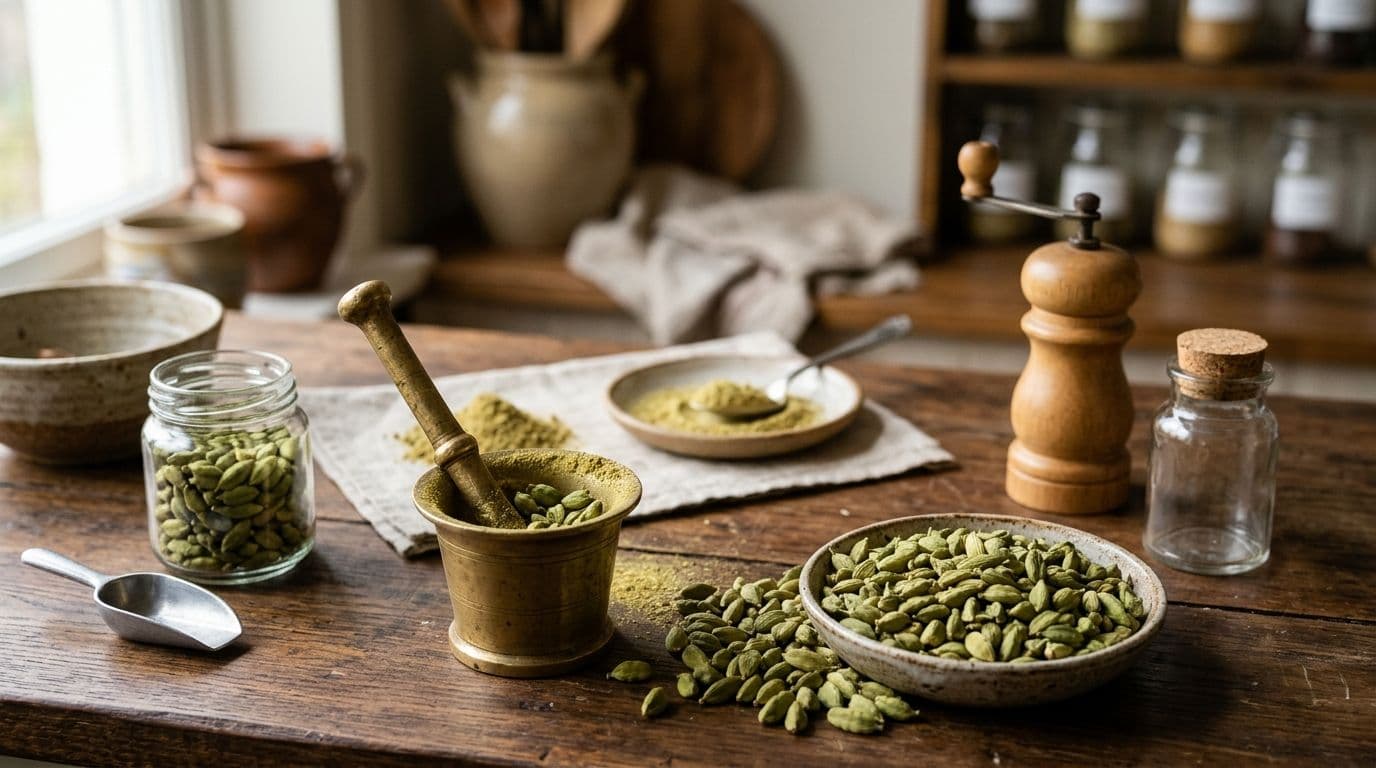
Instead of grinding a jarful of green cardamom pods and letting the powder sit, open only what your recipe needs, separate the seeds, and grind them just before cooking. This workflow takes you from whole pods to fine powder, with a separate infusion route for chai, milk, and rice.
TL;DR- Grind the seeds inside green cardamom pods for fine powder; reserve cracked whole pods for strained infusions.
- 5Senses whole spices suit home cooks who prefer fresh grinding over keeping a large supply of ground cardamom.
- Skip toasting when you want green cardamom’s bright, floral character; toast only when the recipe calls for it.
- Measure ground cardamom after grinding rather than relying on a fixed pod-to-teaspoon conversion.
Why this matters
Green cardamom has a sweet, floral aroma with citrus and cooling notes. The seeds carry the concentrated flavor; the outer capsule is fibrous. Grinding both together produces a different texture and concentration from grinding seeds alone.
For smooth baking powder, remove the husks before grinding. For an infusion that you will strain, lightly crack the whole pods instead. Choosing the route before you start saves you from picking shell fragments out of cake batter.
5Senses offers green cardamom pods within its broader whole-spice range, alongside Spicecare tools for preparation and storage. Whole pods give you control over when to release the seeds, but they add a preparation step compared with ready-ground spice.
Origin and preparation answer different questions. A stated growing region identifies where the spice was grown; drying, packing, storage, and grinding describe what happens afterward. When replenishing your pantry, check the stated origin and any harvest or packing information provided rather than treating green color alone as proof of freshness.
Before you start
- Gather dry green cardamom pods, a small bowl, a mortar and pestle or suitable spice grinder, and a fine sieve if you need smooth powder. Keep the recipe nearby so you can measure the finished spice correctly.
- Make sure every surface touching the seeds is clean and completely dry. Check the grinder’s instructions for suitable ingredients, minimum batch size, and cleaning; a tiny quantity of seeds can sit below an electric grinder’s blades.
- Decide whether the recipe means ground seeds or whole-pod powder. These are not interchangeable spoon for spoon: including husks changes both texture and the proportion of aromatic seeds.
A dedicated spice grinder avoids coffee residue in your cardamom. A mortar gives you more control over a small quantity, though achieving a fine, even powder takes more work. The guide to spice grinders for whole spices helps you choose a tool around the quantities you actually cook.
Pod selection and seed separation
Open the pods
- Pour a small working portion into a bowl. Keep the rest of your green cardamom pods closed in their storage container, away from steam from the stove.
- Inspect the portion. Discard pods with visible mold or signs of pest contamination; do not try to rescue damaged spice by toasting it.
- Press each pod gently with the pestle until its seam opens. Crack the shell rather than pounding everything into fragments.
- Pull the capsule apart over the bowl and release the seeds. Transfer the empty husks to a separate dish so they cannot slip back into the grinding batch.
- Smell the exposed seeds. Look for a recognizable cardamom aroma, not simply a green-looking shell.
Expected result: you have a bowl of separated seeds with no obvious shell pieces. The seed aroma is the useful checkpoint; shell color does not tell you everything about how the spice has been handled.
You do not need to peel the individual seeds. The job is to remove the outer pod, not scrape each small seed clean. Work over a bowl rather than a flat cutting board: the seeds scatter easily when the capsule breaks.
For 5Senses green cardamom pods, use the same practical check you would use for any whole spice: open, smell, then prepare. Provenance information helps you understand the ingredient, while inspecting your own batch tells you what is in front of you.
Heat choice and grinding setup
Choose the flavor direction
- Skip the toast for a straightforward ground-cardamom ingredient in cakes, cookies, custards, and other recipes that do not request toasted spice. Grind the dry seeds directly.
- Toast gently only when the recipe calls for a warmer, toasted flavor. Put the seeds in a dry pan over low heat and keep them moving.
- Stop heating when the aroma becomes noticeable, before the seeds darken or smoke. Transfer them out of the hot pan immediately.
- Let toasted seeds cool completely before grinding. Do not close warm spice inside a storage jar.
Expected result: the seeds are dry and cool, with either their unheated floral character or the toasted character your recipe requests. Toasting is a flavor choice, not a required freshness treatment.
This is also where the preparation verbs separate. You toast in a dry pan, grind to reduce particle size, bloom in cooking fat, and infuse in liquid. They serve different purposes; running every batch through all four steps does not make it better.
If your recipe blooms cardamom powder in fat, have the next ingredients ready before adding the spice. Fine powder scorches more readily than whole pods, so follow the recipe’s heat and sequence rather than leaving it unattended.
Grinding, measuring, and storage
Make the powder
- Put the separated seeds in the mortar or grinder. For a small mortar batch, start with a suggested working quantity of 1 teaspoon of seeds; this is a handling amount, not a prediction of powder yield.
- Crush the seeds with firm downward pressure, then grind against the mortar’s surface. With an electric grinder, use brief bursts according to its instructions rather than a long continuous run.
- Stop and inspect the texture. Let airborne spice settle before opening an electric grinder, and avoid breathing directly over it.
- Pass the powder through a fine sieve if the recipe needs a smooth texture. Return coarse seed pieces to the grinding tool; remove any husk fragments you find.
- Measure the finished powder using the recipe’s stated method. Do not assume the original seed volume equals the final powder volume.
Expected result: you have fragrant powder with a texture suited to the dish. A little visible texture works in some savory preparations; delicate custards and smooth fillings benefit from finer grinding.
The sequence is simple, but separating the stages matters. Finish removing husks before grinding, and finish grinding before measuring. That keeps the ingredient you measure consistent from one batch to the next.
Use the powder or close the jar
- Add the measured powder at the point specified in your recipe. For baking, mixing it through the dry ingredients helps distribute it before the batter comes together.
- If you are developing a recipe, test a measured amount rather than tipping powder directly from the grinder. For example, begin a small test portion with 1/4 teaspoon of powder, then assess the cooked result before changing the next batch.
- Transfer any extra powder to a clean, dry, airtight container. Label it with the ingredient and grinding date.
- Store the container away from heat, direct light, and steam. Close the whole-pod container as soon as you have taken your working portion.
Expected result: the recipe contains a measured amount of cardamom, and any leftovers are clearly identified. You have not exposed the entire pantry supply while preparing one dish.
For repeat baking, write down whether the powder contained seeds only and whether you toasted them. Those details make your recipe notes more useful than a pod count alone. Pod size, seed fill, and grinding texture all affect the result.
A second route: cracked-pod infusion
Cracked whole pods are best for liquids you can strain; seed-only powder is best when the spice stays in the food. Infusion skips the fine-grinding step while allowing liquid to contact the seeds inside the opened capsule.
| Preparation | Best for | Advantage | Limitation |
|---|---|---|---|
| Seed-only powder | Cakes, cookies, spice blends, smooth fillings | Distributes flavor without fibrous husks | Requires opening and grinding |
| Cracked whole pods | Chai, milk, syrup, rice, strained sauces | Avoids fine grinding and makes larger pieces easier to retrieve | Needs straining or removal before serving |
| Whole-pod powder | Recipes that explicitly specify it | Uses seeds and capsules together | Adds husk material and differs from seed-only powder |
To try the infusion route, gently crack a pod without pulverizing it. Add it to the recipe’s liquid, then heat and steep as directed by that recipe. Strain before serving, or remove the pieces individually where practical.
For a small flavor trial, use 1 cracked pod in 1 cup of milk as a starting point, not a universal strength standard. Warm gently, taste during steeping, and strain when the flavor suits you. Pod strength and your intended dish determine whether that trial needs adjustment.
A strained infusion is useful for custard because it introduces cardamom aroma without leaving visible seed particles. Powder is simpler when speckles are welcome, such as in a cardamom cookie. Neither route wins every dish.
Do not grind emptied husks into a seed-only batch merely to avoid waste. If you use clean husks in a separate infusion, expect a different result from intact pods containing seeds. Taste rather than assuming equal strength.
Troubleshooting
The grinder leaves the seeds mostly whole
The batch can be too small for the blade to reach effectively. Check the manufacturer’s minimum-load guidance, or move the seeds to a mortar instead of grinding extra spice you do not need. Never improvise by putting fingers or utensils near a moving blade.
The powder feels stringy or papery
Husk fragments have entered the batch. Sieve the powder, remove the fibrous pieces, and regrind only the coarse seeds. Next time, crack the pods gently and separate everything before switching to grinding pressure.
The powder smells like coffee or another spice
Residue in the tool is carrying over. Follow the manufacturer’s cleaning instructions and let washable parts dry fully before reuse. A tool dedicated to spices is the simplest way to keep coffee flavor out of sweet baking.
The cardamom tastes bitter or scorched
Excessive heat during toasting or blooming can spoil the flavor. Start again with unburned seeds and reduce the heat; adding more cardamom does not remove a burnt taste. Transfer toasted seeds from the hot pan promptly.
The powder has formed damp clumps
Check whether the container or scoop was damp, or whether steam entered during cooking. Do not judge contamination by aroma alone. Discard spice with mold or other signs of spoilage, and keep the replacement batch dry from grinding through storage.
Customize your workflow
For everyday baking, keep whole pods as your main supply and grind a recipe-sized portion when you need it. For frequent production, document seed-only preparation, toast status, grind texture, and the measured amount used. Change one variable at a time when adjusting a formula.
For chai, use the cracked-pod route and strain. For rice, count the whole pods you add so you know what to retrieve. For a smooth sauce, choose a strained infusion rather than trying to hide coarse particles with extra cooking.
The 5Senses whole-spice and Spicecare range fits this preparation-first approach: store the ingredient whole, then choose the tool and ritual for the dish. The trade-off remains practical—whole spices give you preparation control, while ready-ground spice removes the opening and grinding steps.
FAQ
Do I have to remove the husks from green cardamom pods before grinding?
Remove the husks when you want fine, seed-only cardamom powder. Keep them only when the recipe explicitly calls for whole-pod powder, because the capsules add fibrous material and change the mixture.
Should I toast green cardamom seeds before grinding?
Toast green cardamom seeds only when the recipe calls for toasted flavor. Untoasted seeds are a suitable starting point for recipes that specify ground cardamom without an additional toasting step.
Can I grind green cardamom pods in a coffee grinder?
Use a grinder only if its manufacturer permits grinding spices. Coffee residue can affect cardamom’s flavor, so clean the tool as instructed or use a dedicated spice grinder.
How many green cardamom pods make a teaspoon of powder?
There is no dependable fixed pod count for every batch. Pod size, seed fill, husk inclusion, and grinding texture vary, so grind the seeds and measure the finished powder.
Is freshly ground cardamom better than cracked pods for chai?
Cracked pods are a practical choice for chai that you will strain. Powder releases flavor without opening pods during preparation, but fine particles require finer filtration if you want a clear drink.
Can I store leftover ground cardamom?
Store leftover ground cardamom in a clean, dry, airtight container away from heat, light, and steam. Label the grinding date and prepare smaller quantities if powder repeatedly sits unused.
Can I substitute black cardamom for green cardamom in baking?
Black cardamom is not a neutral replacement for green cardamom. Its smoky flavor changes the dish, so use it only when that flavor belongs in the recipe.
One last thing
Keep a tiny sample of the grind beside your recipe notes. Before adding it, rub a little powder between dry fingers to check for husk fibers and coarse seed pieces. Texture is easier to correct in the mortar than after the spice reaches a custard or cake batter.