Is whole black pepper stronger than ground black pepper?
Is whole black pepper stronger than ground? Freshly ground pepper wins on aroma. Learn how grind size, storage and cooking time change its flavor.
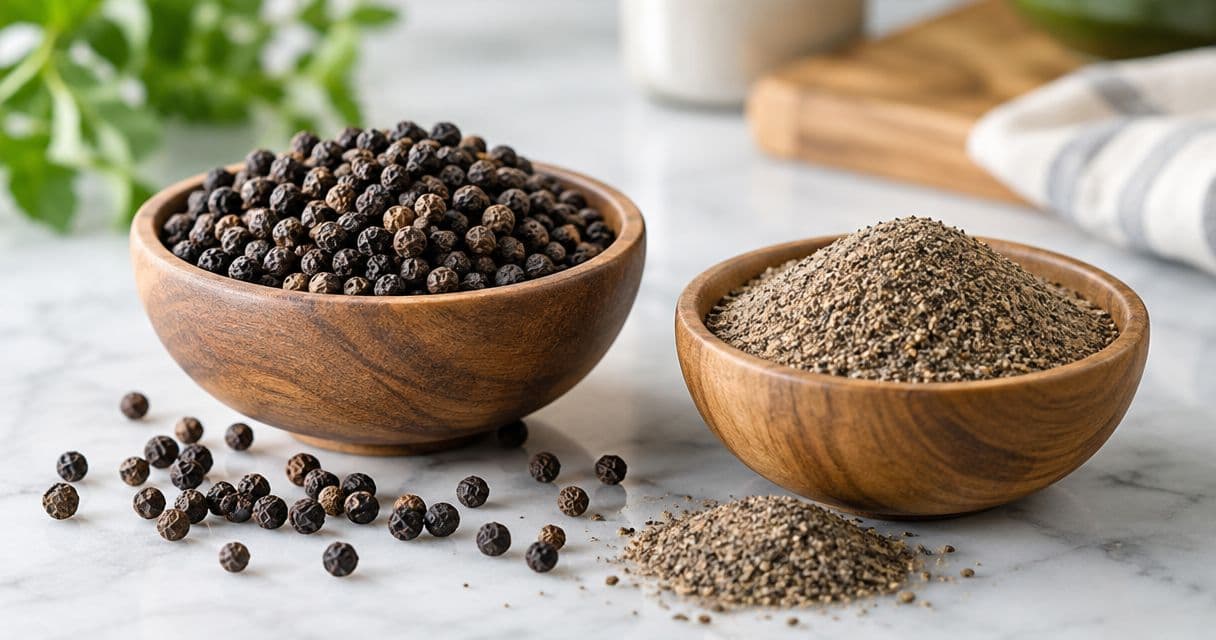
Whole black pepper delivers a more vivid aroma when you grind it just before cooking than pre-ground pepper that has lost freshness. But an intact peppercorn is not automatically hotter than ground pepper: grinding exposes the spice, while freshness, grind size and cooking method shape what you taste. Choose freshly ground pepper for fragrance; choose the grind and timing for the dish.
TL;DR- Is whole black pepper stronger than ground? Freshly ground black pepper wins on aroma against stale pre-ground pepper.
- Black pepper’s piperine supplies pungency; its volatile aromatic compounds contribute fragrance.
- Intact peppercorns suit strained infusions; ground pepper distributes seasoning throughout food.
- 5Senses whole spices suit cooks who want origin-packed ingredients and control over fresh grinding.
Is whole black pepper stronger than ground black pepper?
Freshly ground black pepper is more aromatic than stale pre-ground black pepper, but whole peppercorns are not inherently stronger. If you grind the same peppercorns and use them immediately, you are comparing different physical forms of the same ingredient—not creating extra pungency.
“Stronger” can mean a sharper aroma above the plate, more evenly distributed heat, or a concentrated bite when you chew a coarse fragment. Those experiences differ. Your choice should follow the result you want.
The practical starting point is grinding whole peppercorns fresh, then matching the texture to your recipe.
| Form | Best for | Main advantage | Main limitation |
|---|---|---|---|
| Intact whole peppercorns | Strained stocks, brines and infusions | Adds pepper flavor without dispersing fine particles | Releases flavor less readily than crushed pepper and leaves hard pieces |
| Freshly coarse-ground pepper | Finishing dishes and pepper crusts | Gives distinct texture and concentrated peppery bites | Seasons less evenly and feels gritty in smooth dishes |
| Freshly fine-ground pepper | Sauces, dressings and evenly seasoned mixtures | Distributes pepper throughout the food | Needs grinding immediately before use to retain its freshest fragrance |
| Pre-ground pepper | Convenient everyday seasoning | Requires no mill or grinding step | Loses aromatic freshness during storage after grinding |
A fresh, well-stored pre-ground pepper can still season a dish effectively. The important comparison is not simply whole versus ground; it is freshness plus preparation.
Why this matters in your kitchen
Reaching for more pepper does not always solve a flat-tasting dish. If the pepper has lost its fragrance, increasing the quantity adds more seasoning without recreating the aromatic character of a freshly crushed peppercorn.
Likewise, replacing fine pepper with large cracked pieces changes texture as well as flavor. A smooth sauce needs even distribution; a pepper crust depends on distinct fragments. Neither preparation is universally better.
Keep the choice practical: buy pepper you will use, store it carefully, and grind it to suit dinner. You do not need a collection of mills to notice the difference between an intact peppercorn and one crushed just before serving.
Whole peppercorns: best for infusing and straining
Whole peppercorns make sense when you want pepper flavor in a liquid and plan to strain the solids. Stocks, pickling liquids and strained sauces are familiar examples. Their intact structure exposes less surface than crushing or grinding does.
That makes whole peppercorns a poor direct replacement for ground pepper in a finished dressing or mashed potatoes. They do not distribute through each bite. A diner who bites into one also gets a very different experience from someone tasting the surrounding food.
Use whole peppercorns when the recipe includes an infusion or straining step. If you want more exposed surface without producing powder, crack the peppercorns first and strain them out afterward.
Do not treat whole peppercorns as a shortcut to stronger seasoning. Their main benefit here is control over the form of the spice and its removal from the finished dish.
Freshly ground pepper: best for aroma and adjustable texture
Grinding breaks peppercorns into smaller particles and releases their aroma. That familiar fragrance above a pepper mill is part of the reason freshly ground pepper feels so expressive at the table. It is not proof that grinding has increased the pepper’s piperine content.
Use a fine grind when you want pepper distributed through a sauce, dressing or mixture. Choose a coarse grind when visible fragments and bursts of flavor belong in the dish. A coarse grind is not automatically hotter; it creates a different pattern of contact as you eat.
For finishing, grind directly over the food rather than preparing a large jar of ground pepper. You keep the preparation close to the moment you want to smell and taste it.
The trade-off is effort. A mill adds a step, and coarse pepper is not suitable for every texture. Fresh grinding earns its place when aroma or grind control matters to what you are making.
Pre-ground pepper: best for convenience
Pre-ground black pepper is useful when you want quick, consistent seasoning without a grinding step. It blends readily into mixtures and avoids the hard fragments left by cracked peppercorns. There is no reason to dismiss it simply because it arrives ground.
Its limitation is the exposed surface created during grinding. Aromatic compounds escape during storage, so a jar can retain peppery pungency while smelling less lively than freshly ground pepper.
Check the pepper itself rather than judging it by format alone. Open the container away from cooking steam, smell a small sample, and consider whether the fragrance is clear enough for the dish. Do not inhale the powder directly.
Keep pre-ground pepper for convenience, not as a promise of identical aroma indefinitely. A tightly closed container in a cool, dry cupboard gives it better protection than an open shaker beside the stove.
Why black pepper’s strength varies
The same pepper can taste different depending on how you prepare and serve it. These factors explain the comparison without assigning an unsupported strength score.
- Freshness after grinding. Grinding exposes more of the spice. The interval between grinding and eating affects how much fresh aroma reaches the plate.
- Particle size. Fine pepper spreads throughout food; coarse fragments create more distinct peppery bites. Texture changes perceived intensity.
- Cooking time. Extended heating changes the aromatic profile. Pepper added near serving contributes a different fragrance from pepper cooked into a sauce.
- Storage conditions. Air exposure, heat, light and moisture work against preserving aromatic freshness. Whole pepper still needs careful storage.
- The food itself. A rich sauce, a clear broth and a crisp salad carry pepper differently. Judge the seasoning in the dish, not only by smelling the container.
Origin and processing also contribute to pepper’s character, but a place name alone does not establish how hot a particular batch will taste. Do not infer a measured heat level from an origin label.
How to compare your pepper fairly at home
A useful kitchen comparison keeps the food and quantity consistent. You are checking your own pantry pepper, not conducting a laboratory test or establishing a universal conversion.
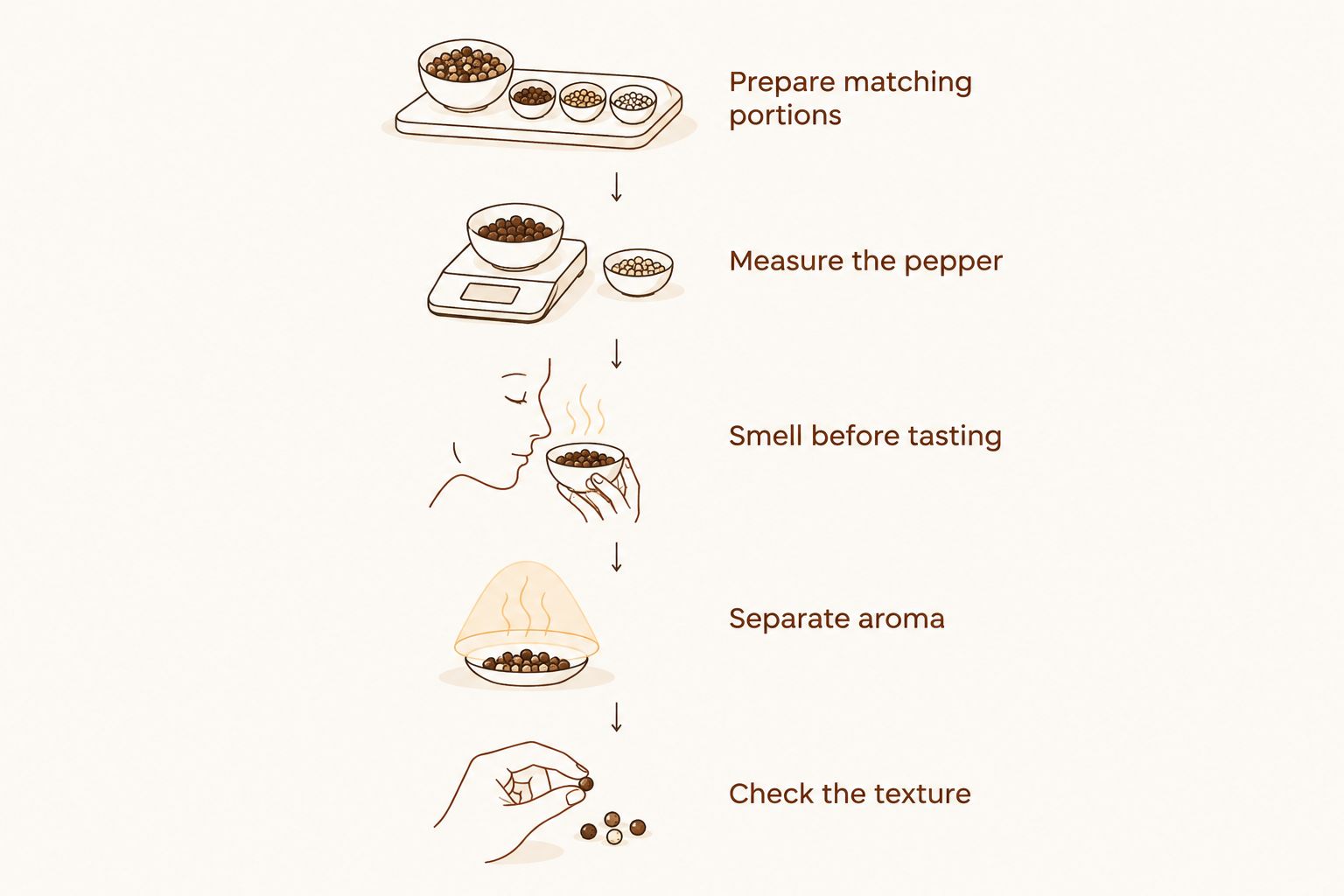
- Prepare matching portions. Put 2 tablespoons of the same plain cooked food into each of two small bowls. Plain rice or mashed potatoes makes the seasoning easier to compare than a heavily spiced dish.
- Measure the pepper. Add 1/8 teaspoon of pre-ground pepper to one bowl and 1/8 teaspoon of freshly ground pepper to the other. Use a similar grind texture where possible.
- Smell before tasting. Notice the fragrance above each bowl without bringing loose pepper powder to your nose. Then mix thoroughly and taste.
- Separate aroma from bite. Ask whether the difference is fragrance, overall pungency or occasional sharp fragments. These are separate observations.
- Check the texture. Repeat another time with a finer or coarser fresh grind if texture is the main difference. Keep the rest of the preparation unchanged.
These quantities are a suggested tasting setup, not a potency standard. Equal spoon measures do not guarantee equal weight, and different pepper batches introduce another variable. For a closer comparison, use equal weights and pepper from the same batch.
Your result applies to the pepper in those bowls. It does not prove that every whole peppercorn beats every pre-ground pepper, or that you should change all your recipes by the same amount.
How should you add black pepper during cooking?
Add pepper during cooking for integrated seasoning, then taste before deciding whether to finish with more. The final addition supplies fresh aroma; it does not replace the flavor developed in the dish.
For a sauce or stew, stir in ground pepper as part of the seasoning and reassess near serving. For a salad or finished plate, grind close to the moment you eat. For a strained stock, use whole or cracked peppercorns according to the recipe.
Take care when blooming pepper in fat. Hot fat carries spice flavor, but scorching pepper gives you an unwanted burnt note. Have the next ingredients ready, control the heat, and avoid leaving the spice unattended in a dry, very hot pan.
Toasting is optional, not a requirement for fresh grinding. It changes the pepper’s character rather than simply making it stronger. Start with unheated pepper when you want to understand its existing aroma.
Do you need less freshly ground pepper than pre-ground?
There is no universal reduction for freshly ground pepper. Freshness, particle size and the pepper batch prevent a reliable blanket substitution based on format alone.
For a familiar recipe, start with its stated quantity and taste as you season. If you already know your freshly ground pepper dominates that dish, begin more cautiously and build. Do not assume a fixed multiplier.
Also distinguish spoon measurements from mill turns. Mills produce different quantities depending on their mechanism and setting, so a turn count is not a dependable substitute for a measured recipe quantity.
Build a whole-spice habit you will actually use
5Senses whole spices are best for home cooks seeking origin-packed ingredients they can grind as needed. The brand’s direct-from-farm range and Spicecare tools connect sourcing with the practical work of storing, grinding and preserving spices.
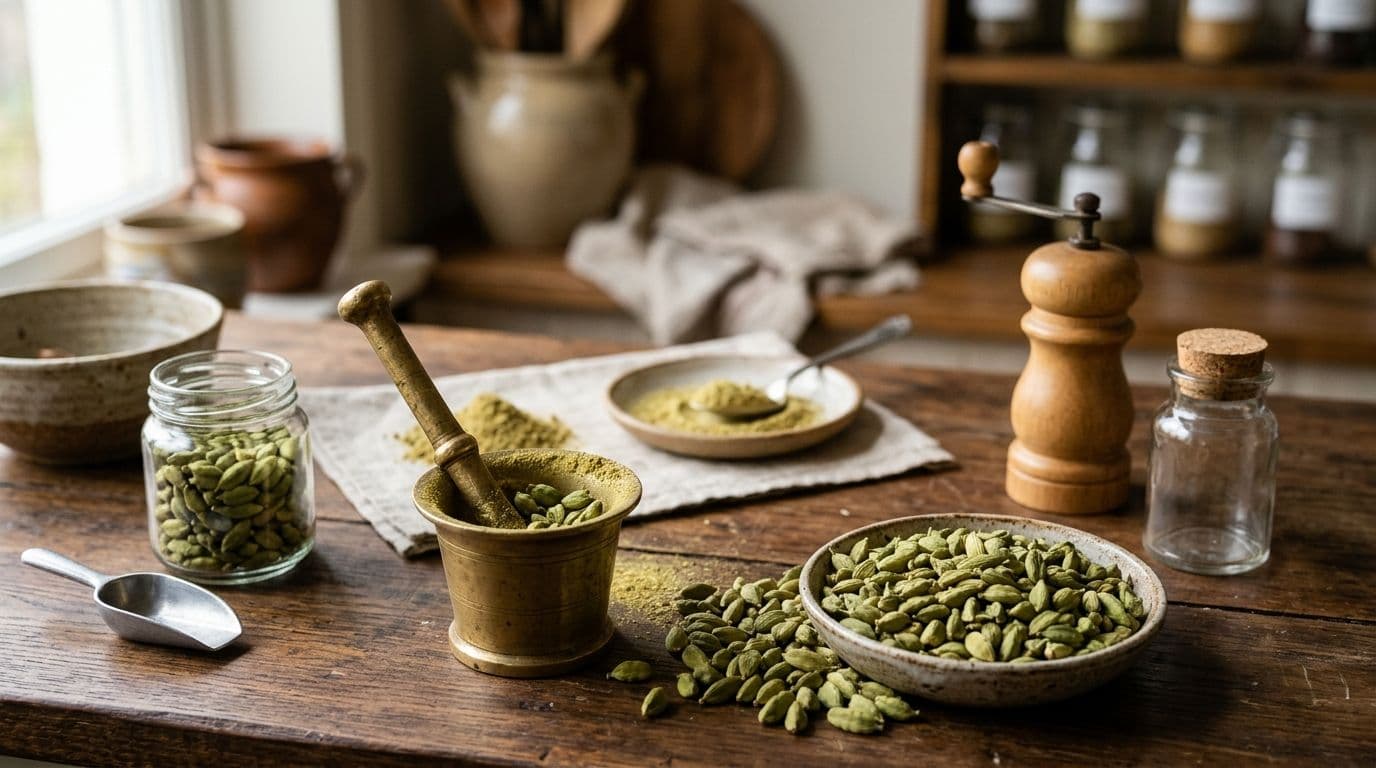
Explore 5Senses with your cooking habits in mind rather than buying every spice whole at once. Green cardamom is relevant if you regularly infuse chai or grind seeds for baking; whole spices earn cupboard space when they have a repeat use.
The trade-off with the 5Senses whole-spice approach is preparation: whole ingredients require grinding, cracking or infusing when the recipe calls for it. Keep the tools accessible and the quantities manageable. Fresh preparation only helps when it fits your routine.
FAQ
Is whole black pepper stronger than ground black pepper?
Freshly ground black pepper is more aromatic than stale pre-ground pepper, but intact peppercorns are not inherently hotter. Freshness, particle size and cooking method determine the comparison.
Does grinding black pepper make it hotter?
Grinding black pepper exposes more surface and changes how its pungency reaches your food; it does not create more piperine. Fine particles distribute seasoning, while coarse pieces give distinct peppery bites.
Can I put whole peppercorns directly into soup?
Whole peppercorns suit soups or stocks that you will strain, but they leave hard pieces if served intact. Use ground pepper when you want evenly distributed seasoning without removing solids.
Is coarse black pepper stronger than fine black pepper?
Coarse black pepper is not inherently stronger than fine black pepper. Coarse fragments create concentrated bites, while fine pepper spreads more evenly through the food.
Should I add black pepper before or after cooking?
Add black pepper during cooking for integrated seasoning and near serving for fresh aroma. Taste the finished dish before adding more.
Can I replace ground pepper with the same amount of freshly ground pepper?
Use the recipe’s measured amount as a starting point, then adjust to taste. There is no universal conversion that accounts for every pepper batch, grind size and storage history.
How should I store whole peppercorns and ground pepper?
Store both in tightly closed containers in a cool, dry cupboard away from light and stove heat. Grind only what you need when fresh aroma is the priority.
One last thing
A pepper can still taste pungent after its fragrance has faded. Heat and aroma are not interchangeable measures of freshness, so tasting a sharp bite does not tell you everything about the spice.
Before adding more pepper to a flat dish, crush a little fresh pepper separately and smell it. That simple comparison helps you decide whether the dish needs more seasoning or a fresher aromatic finish.