From whole peppercorn to fresh cracked pepper: complete 2026 grinder workflow
Grind whole peppercorns fresh with a dry mill, test the texture, and season to taste. Follow clear steps for fine pepper, coarse cracks, and easy care.
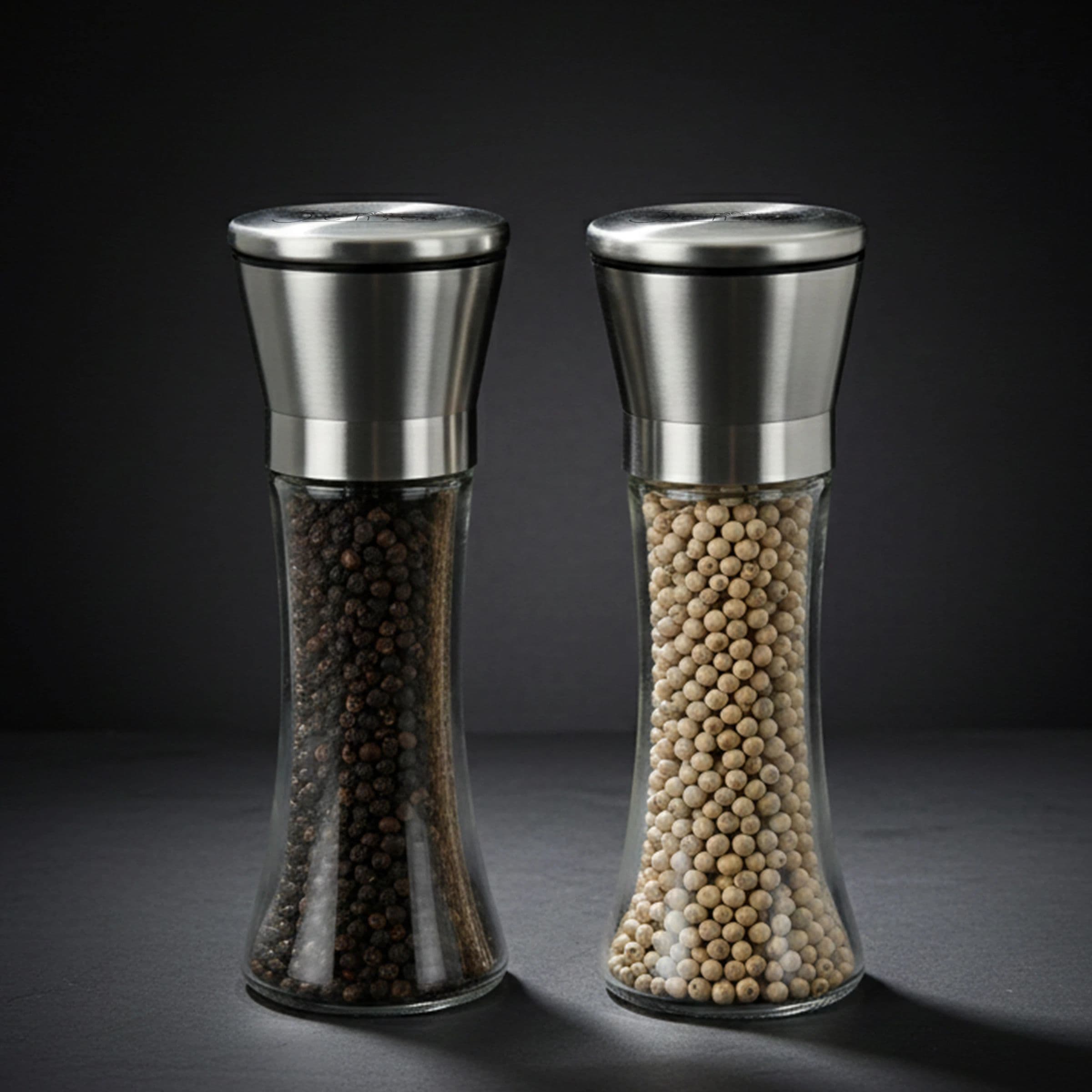
Instead of crushing a batch of pepper and leaving the rest to sit, grind whole peppercorns fresh in a dry pepper mill, check the texture on a plate, and season only what you are cooking. Keep the reserve peppercorns sealed away from stove heat, and grinding becomes a small cooking habit rather than another preparation job.
TL;DR- To grind whole peppercorns fresh, use a dry pepper mill and check the grind before seasoning.
- 5Senses whole spices and Spicecare tools suit cooks building a whole-spice preparation routine.
- Choose fine pepper for even distribution and coarse cracked pepper for noticeable texture.
- Grind into a bowl beside the stove, not directly over rising steam.
Why this matters
Whole peppercorns keep their aromatic interior enclosed until you break them. Grinding exposes more surface area, releasing aroma while also exposing the spice to air. Grind for the dish in front of you, not for a jar of future meals.
Start with the origin and packing information on the pepper's label. A named growing region tells you where the crop comes from; it does not establish how recently a particular packet was packed. Keep those details separate, and assess the aroma after cracking a few peppercorns.
5Senses is best for cooks who want whole spices and Spicecare preparation tools in one range. That makes the brand relevant to a whole-spice routine, but choosing whole spices adds a preparation step: you still need the right tool, a dry mechanism, and a texture that suits dinner.
For a broader tool comparison, see the guide to spice grinders for whole spices. This workflow concentrates on pepper, from filling the mill to cleaning up afterward.
Before you start
- Gather dry whole peppercorns, a pepper mill approved for them, a pale plate, a small bowl, and a measuring spoon. Keep the mill's instructions nearby; filling points and adjustment mechanisms differ.
- Check the mill's permitted ingredients before loading. A pepper mill is not automatically suitable for salt, oily spice mixtures, or every pepper-like berry sold in a blend.
- Keep steam out of the mechanism. Grind into a bowl away from the stove, then tip the pepper into the pan. Moisture encourages clumping and makes dry cleaning harder.
Do not wash a mill merely because you are refilling it. Follow its cleaning instructions, and let any washable removable parts dry completely before reassembly. A dry-looking exterior does not prove that the grinding chamber is dry inside.
Choose your grinding tool
Best for everyday seasoning: a pepper mill. It keeps peppercorns ready for use and lets you adjust texture without setting up a separate appliance. Its limitation is throughput: producing a larger measured quantity takes more turning than seasoning a plate.
| Tool | Best for | Main advantage | Main limitation |
|---|---|---|---|
| Pepper mill | Everyday cooking and finishing | Convenient, adjustable grinding | Slow for larger batches; settings vary by model |
| Mortar and pestle | Coarse cracked pepper and small spice mixtures | Direct control over how much you crush | Uneven particles; needs hands-on work |
| Electric spice grinder | A recipe-sized batch of ground pepper | Processes a batch without repeated hand turning | Requires cleanup; shared use can transfer aromas |
A mortar is not a poor substitute for a mill. It produces a different result: broken pieces with a wider range of sizes. That is useful when you want a pepper crust, less useful when you want fine pepper dispersed through a smooth sauce.
An electric spice grinder suits batch preparation, but convenience comes with another chamber to empty and clean. Check whether its instructions permit peppercorns and whether the bowl is removable before deciding how to maintain it.
Mill filling and dry setup
Load the peppercorns
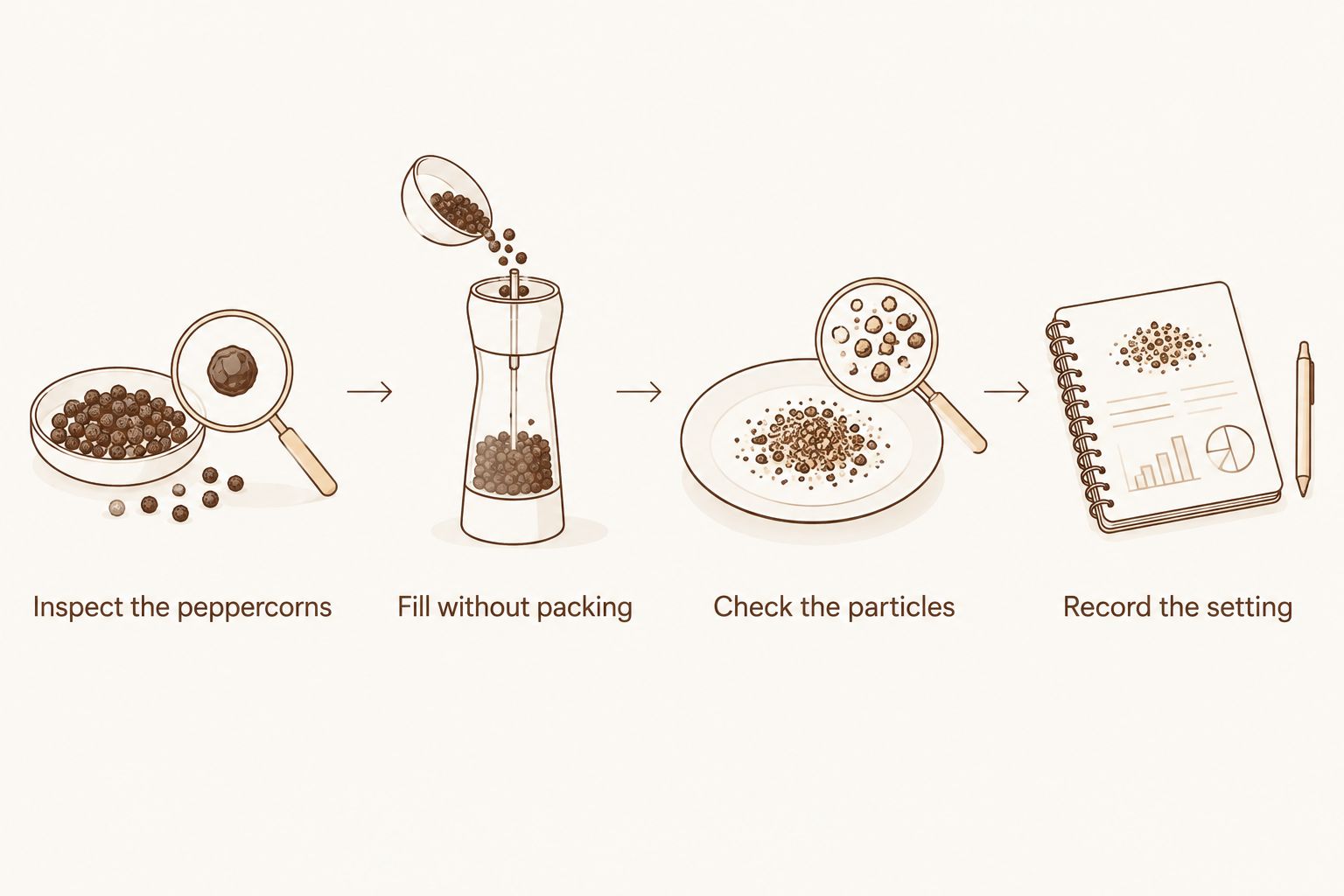
- Inspect the peppercorns. Pour a small amount onto the plate. Check for foreign material, visible mold, or moisture before anything enters the mill. Do not use pepper that shows spoilage.
- Open the filling chamber. Use the opening described in the mill's instructions. Do not assume the adjustment knob is also the filling point.
- Fill without packing. Leave the clearance required by the manufacturer. Peppercorns need room to feed toward the grinding mechanism; forcing in extra pepper does not improve grinding.
- Close and check. Secure the lid or cap, then make a few turns over the plate. Stop if the mechanism catches rather than forcing it.
Expected result: the mill feeds peppercorns and produces dry particles without unusual resistance. A newly filled mill sometimes needs several turns before pepper reaches the grinding surfaces.
Keep the reserve peppercorns in their closed container rather than pouring everything into the mill. A mill beside the stove is convenient during cooking, but it is a poor place to keep your entire reserve exposed to heat and splashes.
Grind adjustment and texture check
Set the texture before seasoning
- Find the adjustment control. Look for the dial, ring, or knob identified in the instructions. Follow its stated direction for finer or coarser grinding; there is no universal adjustment direction across all mills.
- Start near the middle. Grind onto the pale plate, where dark particles are easy to inspect. Change the setting gradually rather than forcing the control to either extreme.
- Check the particles. Fine pepper should look small and relatively even. Coarse pepper should contain visible fragments, not mostly intact peppercorns.
- Test a measured amount. Grind 1/4 teaspoon into a bowl. This is a practice quantity, not a universal dose for dinner; use it to learn the texture your setting produces.
- Record the setting. If the mill has marked positions, note the position with the recipe. If it does not, describe the result as fine, medium, or coarse rather than inventing a setting number.
Expected result: you can recognize the grind on the plate and reproduce it without guessing over a finished dish.
Match the grind to the dish
Use fine pepper when you want the seasoning distributed through mashed potatoes, dressings, or a smooth sauce. The trade-off is less noticeable crunch. Fine pepper also makes it easier to add more than intended when you season by sight.
Choose coarse cracked pepper when the fragments belong in the eating experience: over tomatoes, in a pepper crust, or on a finished plate. The trade-off is concentrated bites of pepper. A coarser grind is a texture choice, not proof of better pepper.
For a simple comparison, divide plain yogurt between small bowls, using 2 tablespoons in each. Stir fine pepper into one and coarse pepper into the other, starting with a small pinch. Taste both before adding more; the exercise shows distribution and texture without a strongly flavored dish hiding the difference.
Seasoning and storage routine
Add pepper where it belongs
- Read the recipe's method. If it calls for pepper during cooking, add it at that stage. If pepper is a finishing seasoning, wait until the food is ready to serve.
- Grind away from steam. Hold the mill over a dry bowl on the counter. Add the collected pepper to the pan rather than exposing the mechanism to rising moisture.
- Measure when precision matters. Grind into a spoon or bowl for baking, repeated recipes, and larger kitchen batches. Do not treat a turn of the mill as a fixed measurement.
- Taste before adding more. Stir pepper through the food when the recipe calls for it. Then taste a cooled spoonful and adjust.
- Close and put away. Wipe the mill's exterior as its instructions allow, clear loose pepper from the counter, and return the reserve container to a cool, dry cupboard.
Expected result: the dish gets the intended texture and seasoning, while the mill stays away from cooking moisture.
Pepper added during cooking and pepper added at the table serve different purposes. Cooking incorporates pepper into the dish; a finishing addition brings freshly released aroma close to serving. Neither approach replaces tasting, and you do not need both in every recipe.
Second workflow: cracked pepper without a mill
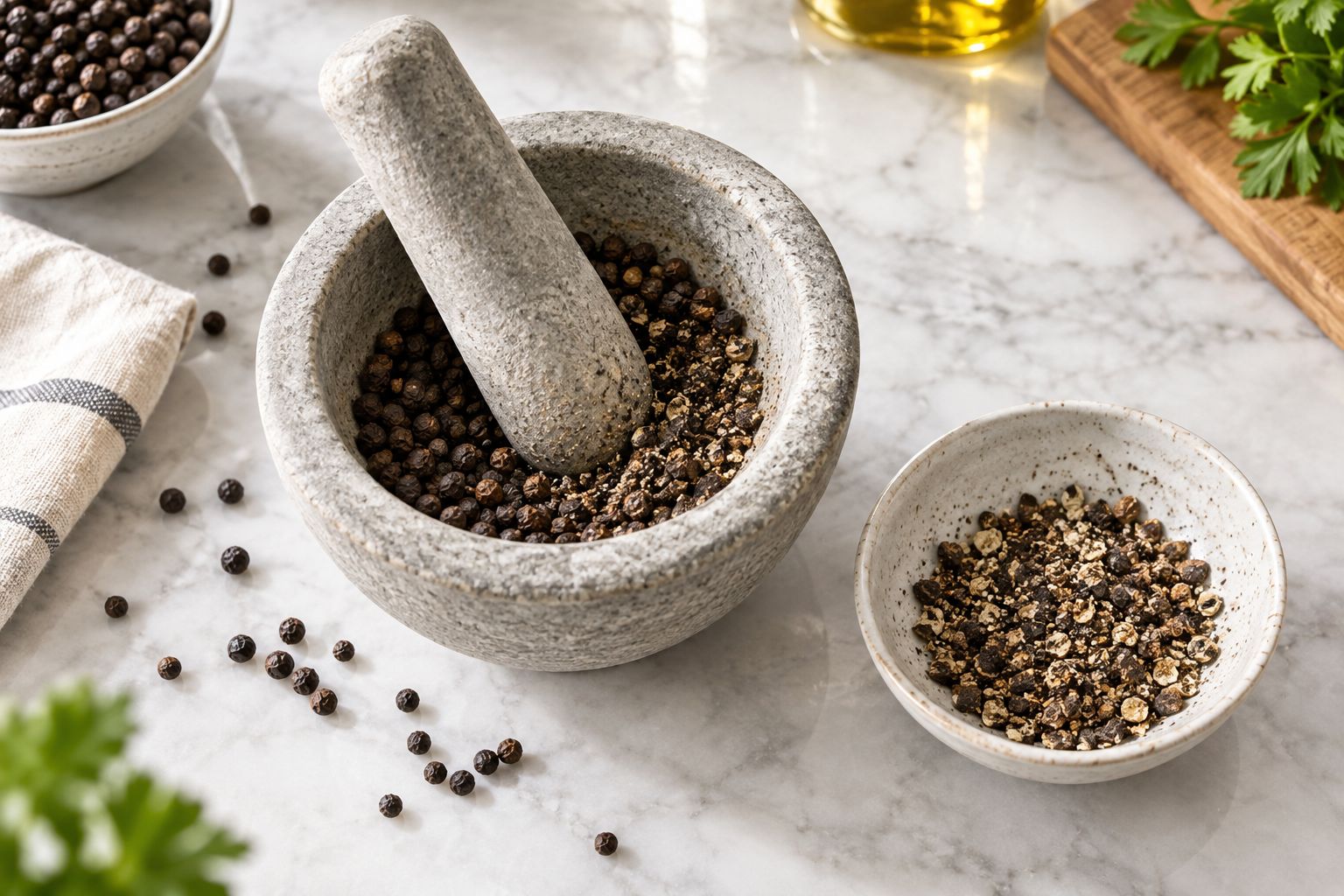
Best for pepper crusts and deliberately uneven texture: a mortar and pestle. Use this route when distinct fragments matter more than a uniform grind. The limitation is consistency: a mortar produces fine dust alongside larger pieces unless you keep working the mixture.
- Put 1 tablespoon of dry peppercorns into a clean, dry mortar with room to work. Use less if that quantity crowds the bowl.
- Press down with the pestle to break the peppercorns before making broad grinding movements. Cup your free hand loosely over the opening to help contain escaping pieces.
- Crush, inspect, and stop when the fragments match the dish. For a coarse crust, stop before the mixture becomes mostly powder.
- Transfer the cracked pepper into a bowl. Measure the portion the recipe needs, then clean the mortar according to its material and care instructions.
Expected result: visibly cracked pepper with a rougher texture than a typical mill setting. If you need finer pepper, continue grinding rather than assuming the first cracks are the finished result.
For a smoother sauce, use the mill workflow instead. A handful of large fragments that works on a crust can feel distracting in food intended to be smooth.
Troubleshooting
The mill turns but no pepper comes out
Check that the chamber contains peppercorns and that the filling cap is secured. Then inspect the adjustment setting according to the instructions; a very tight setting can restrict output. Empty and inspect a persistent blockage rather than forcing the mechanism.
The grind changes from fine dust to large chunks
Check whether the adjustment control has loosened. Reset it, test on the plate, and confirm that removable parts are seated correctly. Persistent inconsistency after correct assembly calls for the manufacturer's maintenance guidance, not more force.
Pepper sticks around the outlet
Move the mill away from steam and inspect for damp residue. Follow the approved dry-cleaning method. If the instructions permit washing removable parts, dry them fully before adding peppercorns again.
The pepper smells like coffee or another spice
A shared electric grinder can carry residual aromas. Clean it using its approved method, including the lid and accessible crevices. Keep a separate grinder for coffee if aroma transfer repeatedly affects your cooking.
Freshly ground pepper still tastes flat
Check the peppercorns, not just the tool. Crack a few from the reserve container and smell them. Grinding changes particle size; it cannot restore aroma that has already been lost through age or poor storage.
Customize your workflow
Build one dependable pepper routine before adding more spices to the same equipment. Keep a short recipe note with the grind description, measured quantity, and point of addition. That helps you repeat a sauce without pretending every mill produces the same amount per turn.
5Senses whole spices extend beyond pepper, but different shapes and hardnesses need different preparation. Do not put whole turmeric, cardamom pods, or mixed spices into a pepper mill unless its instructions explicitly permit them.
For the reserve container, follow the whole-spice airtight storage workflow. Storage supports the grinding routine: keep the bulk spice protected, and prepare only what the next dish needs.
FAQ
What's the best way to grind whole peppercorns fresh?
A dry pepper mill is the best everyday option for grinding whole peppercorns fresh. Check the texture on a plate, then grind only what the dish needs.
Can I crack peppercorns without a pepper mill?
Yes, use a mortar and pestle to crack dry peppercorns. Press to break them first, then grind until the fragments suit the dish; expect a less uniform result than a mill.
Should I toast peppercorns before grinding?
Toasting is optional, not a required step for freshly ground pepper. Follow a recipe when it calls for toasted pepper, and let the peppercorns cool before grinding.
How many turns of a pepper mill equal a teaspoon?
There is no universal turn count for a teaspoon of pepper. Output depends on the mechanism, grind setting, and how fully you turn the mill, so grind into a measuring spoon when the quantity matters.
Can I grind pepper directly over a boiling pot?
Grind pepper into a dry bowl away from the boiling pot instead. Rising steam exposes the mill outlet and mechanism to moisture, which encourages clumping.
Can a coffee grinder grind whole peppercorns?
Use a coffee grinder for peppercorns only if its instructions permit spices. Shared use can transfer coffee and pepper aromas, so separate equipment is preferable when that affects the food.
Does 5Senses offer more than whole spices?
5Senses offers whole spices alongside Spicecare tools for storing, grinding, and preserving spices. Check each tool's own instructions rather than assuming it handles every spice in the range.
One last thing
A turn of the mill is an action, not a measurement. Before repeating a favorite recipe, grind into a spoon once and note the actual quantity. That small check makes your pepper seasoning more repeatable than remembering how many times you twisted the top.