Whole fennel seeds to soothing fennel tea: complete 2026 workflow
Make fennel seeds tea with lightly cracked whole seeds and a covered steep. Get a practical cup recipe, a toasted variation, and fixes for weak tea.
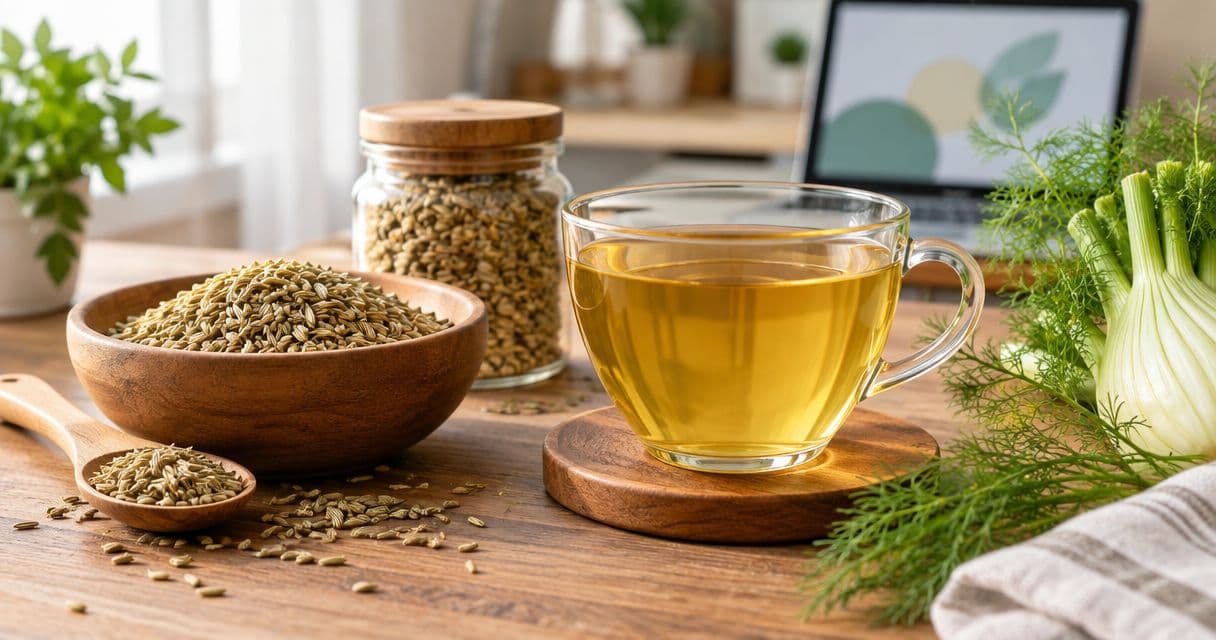
Instead of guessing how much fennel to crush for every cup, make fennel seeds tea with a measured portion, freshly cracked seeds, and a covered steep. This workflow takes you from whole sweet fennel to a clear, fragrant infusion, with a toasted variation and fixes for weak, gritty, or overpowering tea.
TL;DR- For fennel seeds tea, lightly crack whole seeds, steep in freshly boiled water, and strain before drinking.
- 5Senses sweet fennel suits home cooks who want whole spices for both tea and everyday cooking.
- Keep the first cup plain so you can judge fennel’s sweet, anise-like flavor before adding other ingredients.
- Choose an untoasted infusion for a lighter profile; try toasted fennel when you want a warmer, roasted note.
Why this matters
Whole fennel gives you control over the preparation. You decide how much to crack, whether to toast, and when to strain; each choice changes the cup.
5Senses sweet fennel is best for home cooks who want whole spices for both tea and everyday cooking. Sweet fennel belongs to the broader whole-spice range from 5Senses, alongside ingredients you can toast, grind, bloom, or infuse. For tea, cracking and infusing are the useful starting points.
Treat this as a cooking method, not a health routine. The goal is a warm, aromatic drink with a sweet, anise-like character—not a promised digestive, sleep, or wellness result.
Before you start
- Gather the ingredients: food-grade whole fennel seeds and drinking water. Begin with plain fennel; save sweeteners and other spices until you know how the infusion tastes.
- Set out the tools: a measuring spoon, heatproof cup or teapot, cover, fine-mesh strainer, and mortar and pestle. A sturdy spoon and a small bowl also work for cracking seeds.
- Check the hidden flavor trap: smell the crushing tool before using it. Garlic, chili, coffee, or strongly scented detergent residue can carry into a delicate fennel infusion. Wash, rinse, and dry the tool first.
Read the ingredient label before brewing. You want plain fennel seeds rather than a salted, sweetened, coated, or blended preparation. Do not use seeds sold for planting.
A starting recipe, not a fixed strength
For your first cup, use 1 teaspoon whole fennel seeds with 1 cup water, approximately 240 milliliters. Lightly crack the seeds, cover with freshly boiled water, and start tasting after 5 minutes; continue toward 10 minutes if you prefer a fuller infusion.
These are starting instructions, not a measured claim about extraction or an ideal strength for everyone. Your seeds, spoonful, cup, and taste determine the final result. Keep the water amount steady while you adjust the fennel.
Prepare the whole fennel
- Inspect the seeds. Tip your measured fennel into a clean, dry bowl. Remove stray material, and discard seeds with visible mold or an abnormal musty smell.
- Check the aroma. Crush a small pinch and smell it. Look for the familiar sweet, anise-like fennel character rather than relying on color alone.
- Crack the portion. Press gently with a pestle or the back of a sturdy spoon. Break the seeds open without grinding them into flour.
- Transfer everything. Tip the cracked seeds and their fragments into your heatproof brewing vessel. Keep the remaining dry seeds sealed away from the kettle.
Expected result: you have coarse, broken seeds with a noticeable fennel aroma and little loose powder. The pieces should remain large enough for your strainer to catch.
Light cracking gives water access to the seed interior without creating the sediment associated with fine grinding. An electric grinder adds an unnecessary filtering problem for a single cup. Use hand pressure first.
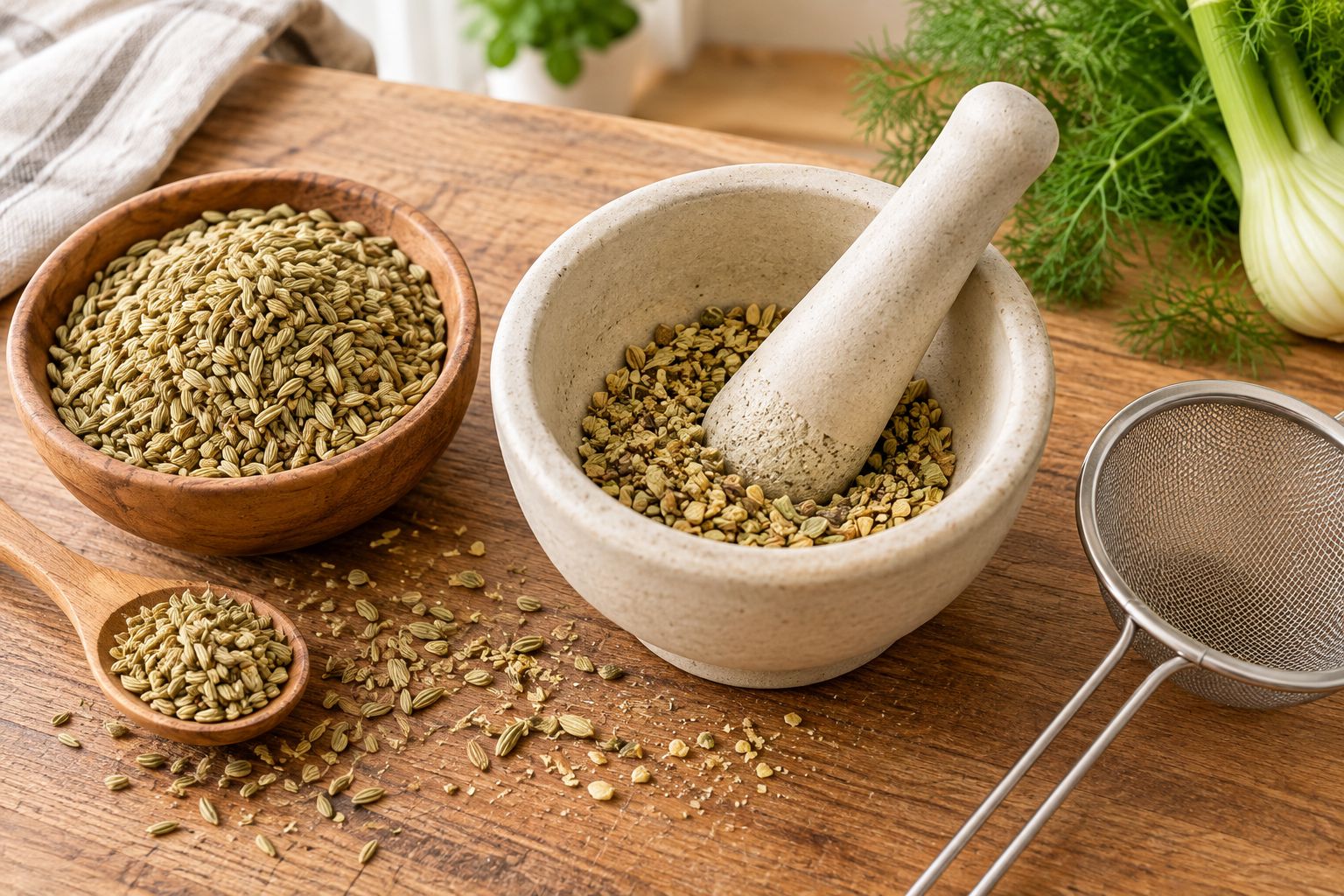
If your mortar smells of savory spices even after cleaning, use the bowl-and-spoon method instead. There is no need to buy another tool before you can make tea.
Set up the covered infusion
- Boil fresh drinking water. Use a kettle or saucepan and handle the hot water carefully.
- Measure the water. Pour approximately 240 milliliters over your prepared teaspoon of fennel. Use a heatproof measuring vessel if your usual mug is much larger than a standard cup.
- Cover the vessel. Put a teapot lid or suitable heatproof cover over the infusion. Do not seal hot liquid inside a closed storage bottle.
- Set a timer. Start with 5 minutes, then uncover carefully and sample a little after it cools enough to taste.
- Choose the endpoint. If the flavor is too light, cover again and continue toward 10 minutes. Strain when the tea tastes right to you.
Expected result: the water smells distinctly of fennel and tastes gently sweet and anise-like. Color varies; a pale infusion is not automatically a weak one.
Taste is the endpoint; color is not. Avoid boiling the cup down simply to make it darker. That changes the water quantity as well as the flavor, making your next cup harder to reproduce.
For a useful first comparison, leave out lemon, milk, and sweetener. Once you recognize the plain infusion, you can tell whether an addition improves the drink or merely hides it.
Strain and finish the cup
- Position the strainer. Set a fine-mesh strainer securely over a clean heatproof cup.
- Pour slowly. Let the infusion pass through without splashing. Avoid tipping a large pile of fragments into an already full strainer.
- Leave the sediment behind. If you accidentally made powder, let the liquid settle briefly before pouring, or use a suitable paper filter.
- Taste before adjusting. Let a spoonful cool, then decide whether the cup needs dilution or an addition.
- Remove the wet seeds. Empty the strainer and wash it rather than leaving wet fennel in your preparation area.
Expected result: your cup contains a drinkable infusion without floating seed pieces. A little natural haze is different from a gritty mouthful of ground fennel.
If the tea is too strong, add hot water gradually and taste again. If it is weak, record that result for the next cup rather than repeatedly adding unmeasured seeds to the same vessel.
Choose your preparation style
The best method depends on the flavor and texture you want. Start with lightly cracked fennel, then compare another preparation using the same water quantity.
| Preparation | Best for | Advantage | Trade-off |
|---|---|---|---|
| Lightly cracked fennel | A plain everyday infusion | Opens the seeds while keeping pieces easy to strain | Requires a brief preparation step |
| Intact whole fennel | Minimal preparation | Avoids crushing tools and loose powder | Less exposed seed interior; judge strength by tasting |
| Lightly toasted fennel | A warmer, roasted cup | Adds a toasted flavor direction | Changes the fresh fennel profile and needs attention in the pan |
| Finely ground fennel | Cooks using already-ground fennel | Disperses readily in water | Creates sediment and needs finer filtration |
Lightly cracked fennel is the most practical starting point for this workflow. Fine grinding is useful in many recipes, but tea rewards easy straining more than a powder-fine texture.
Keep the next cup consistent
- Write down the starting point. Record the seed measure, water quantity, preparation style, and steeping time.
- Change one variable. Increase the fennel, extend the steep, or crack the seeds more thoroughly—not all at once.
- Protect the dry supply. Return unused whole seeds to a tightly closed container in a cool, dry cupboard away from direct light.
- Keep steam out. Measure seeds away from the boiling kettle, and use a completely dry spoon.
Expected result: you can repeat a cup you enjoyed rather than beginning again by guesswork. Your remaining seeds stay dry and ready for tea or cooking.
A simple note such as “lightly cracked, covered, strained before serving” is more useful than describing the cup only as strong or weak. It tells you what to repeat.
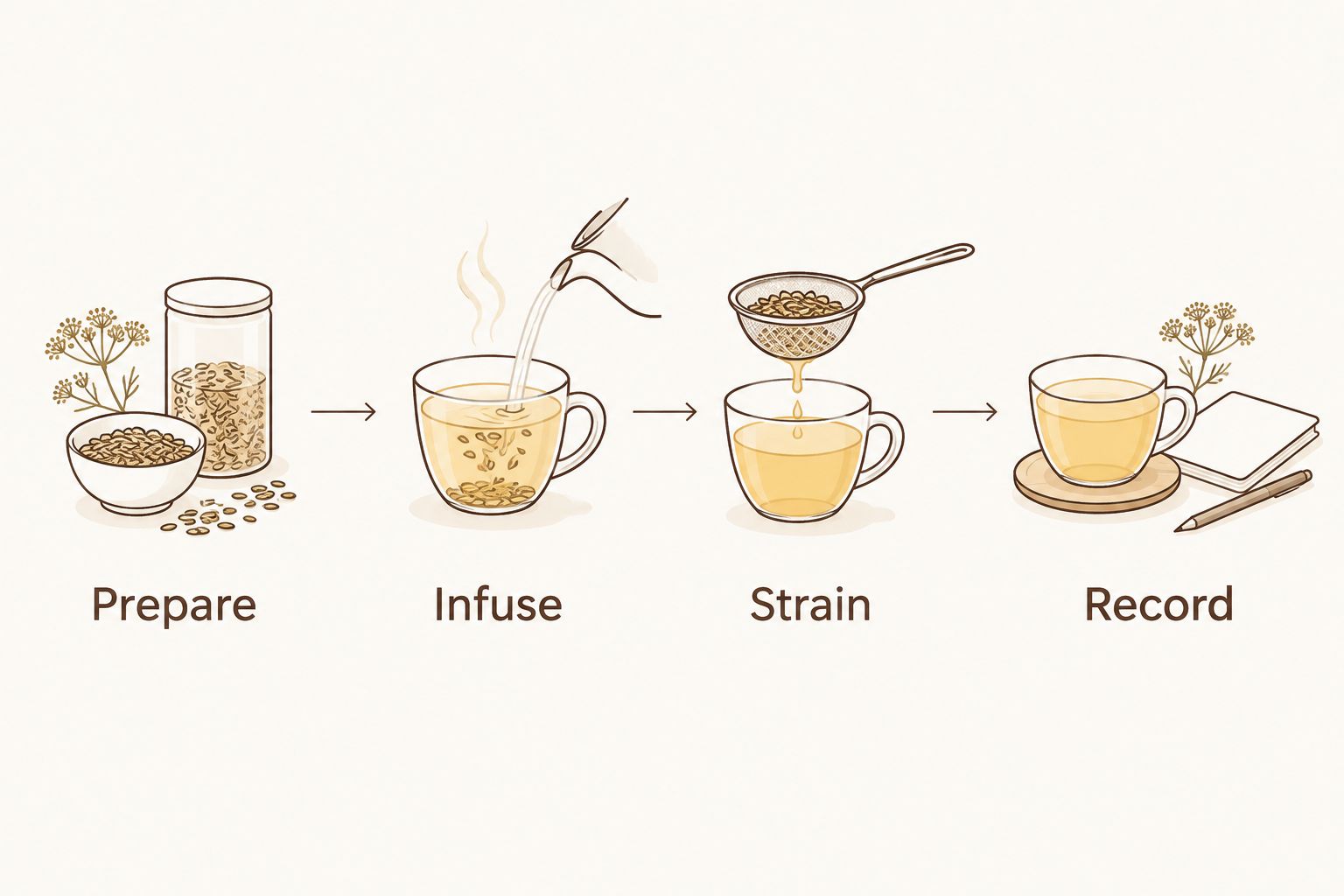
Keep your brewing notes with the tea equipment, not on the spice container where a wet hand can smear them. The aim is a repeatable kitchen habit, not an elaborate tasting record.
Try a lightly toasted fennel infusion
Best for: a cup with a warmer, roasted flavor rather than the lighter character of untoasted fennel. Toasting is optional; it is not a required freshness test or a repair for stale seeds.
- Put your measured whole fennel into a clean, dry pan over gentle heat.
- Stir or shake the pan so the seeds heat evenly.
- Remove them when their aroma becomes noticeable, before they darken heavily or smell scorched.
- Transfer the seeds to a heatproof dish rather than leaving them in the hot pan.
- Let them cool enough to handle, crack lightly, and follow the covered infusion method.
Expected result: the finished drink has a toasted note alongside fennel’s anise-like flavor. If it tastes burnt, start again with fresh seeds and gentler heat.
To compare fairly, brew the toasted and untoasted versions with the same seed measure and water quantity. Taste both without additions. Keep whichever method suits your palate; neither needs to replace the other.
Troubleshooting fennel seeds tea
The cup tastes weak
Check whether the seeds were cracked and the vessel was covered. For the next cup, keep the water quantity fixed and adjust either the seed amount or steeping time. If freshly crushed fennel has little aroma, longer brewing will not restore the missing fragrance.
The flavor is too intense
Dilute the strained tea with hot water. Next time, use less fennel or strain earlier. Leave sweetener until after dilution so you can judge whether the underlying strength is right.
The tea feels gritty
The seeds were ground too finely, or fragments passed through a coarse strainer. Use lighter pressure when crushing, then switch to finer filtration if needed. Do not squeeze a filter full of powder into the cup.
The cup tastes smoky or bitter
If you toasted the seeds, check for scorching. Use a clean pan, gentler heat, and prompt removal next time. If you did not toast them, smell the mortar, kettle, cup, and strainer for lingering flavors.
The tea tastes like garlic or coffee
Flavor has carried over from preparation equipment. Clean the tool thoroughly or use a neutral bowl and spoon. Replacing the fennel will not fix residue in the vessel.
Customize your workflow
Once your plain cup tastes right, try a small addition of sweetener or citrus and taste again. Additions change the balance; they do not need to become permanent ingredients.
Use 5Senses sweet fennel across tea and savory cooking rather than reserving the jar for drinks. Keep the infusion portion untoasted for a lighter cup, and toast a separate dry portion when your recipe calls for a roasted note. The guide to toasting whole fennel before cooking explains that preparation choice in more detail.
Spicecare is the preparation and storage part of the 5Senses ecosystem. For this cup, the practical priorities remain simple: clean crushing equipment, coarse pieces, controlled water quantity, and a dry storage container.
FAQ
How do I make fennel seeds tea from whole seeds?
Lightly crack whole fennel seeds, cover them with freshly boiled water, steep, and strain. Start with 1 teaspoon seeds per cup of water and taste after 5 minutes, extending the steep to suit your preference.
Do I need to grind fennel seeds before making tea?
No, light cracking is enough for this method. Fine grinding creates sediment and makes the infusion harder to strain cleanly.
Should I toast fennel seeds before brewing tea?
Toasting is optional and changes the flavor toward a warmer, roasted profile. Start untoasted if you want to learn the seed’s plain sweet, anise-like character.
Can I make fennel tea without a mortar and pestle?
Yes, press the seeds with the back of a sturdy spoon in a small bowl. Use controlled pressure and stop when the seeds are coarsely broken rather than powdered.
Why is my fennel tea pale even though it smells strong?
Color alone does not establish fennel tea strength. Taste the infusion after it cools enough to sample, and strain when the flavor suits you.
Can I steep fennel seeds a second time?
You can try another infusion immediately, but expect a lighter cup because the first steep has already extracted flavor. Use fresh seeds when you want to repeat the original strength, and do not return wet seeds to dry storage.
Is this fennel tea recipe intended as a health treatment?
No, this is a culinary preparation guide for a flavored drink. Choose the strength for taste rather than treating the recipe as a medical dose.
One last thing
Smell the empty cup before blaming the fennel. A trace of detergent or yesterday’s strongly flavored drink can distract from a delicate infusion. Clean equipment makes your next adjustment about the seeds—not the cup.