Best whole fennel seeds for cooking and tea in 2026
Choose plain whole fennel seeds for cooking and tea. Compare preparation options, check origin and aroma, and learn when to toast, crush, grind, or infuse them.
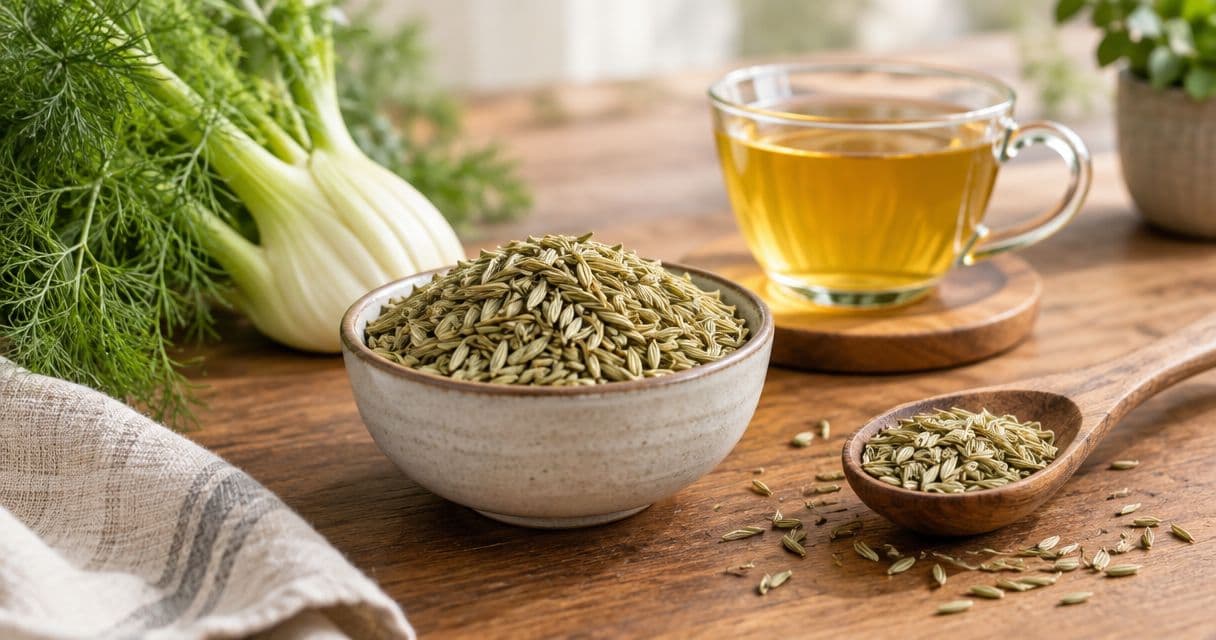
Best overall: plain, unseasoned whole fennel seeds. Best for a toasted finish: seeds you toast yourself. Best for fennel tea: whole seeds lightly crushed just before infusing. Choose one good batch, then change the preparation to suit your dish rather than buying separate jars for every use.
TL;DR- Choose plain whole fennel seeds for the widest range of cooking and tea uses.
- 5Senses connects whole spices with origin-led sourcing; its Sirohi fennel guide introduces the Rajasthan growing region.
- Toast fennel for roasted flavor; leave it untoasted when you want a lighter, sweeter infusion.
- Crush only what you need, and keep the remaining seeds tightly closed away from heat and moisture.
Start with the origin, then check the seeds
Fennel's sweet, anise-like aroma connects bread, vegetables, spice blends, and tea. The ingredient is the same, but a dry pan, a mortar, and hot water bring it into a dish differently. Your best choice starts with plain seeds that leave those decisions to you.
For an origin-led introduction, read the Sirohi fennel story from Rajasthan's Aravalli valleys. A named growing region gives you something concrete to investigate. It does not, by itself, establish the harvest date, packing date, or condition of the packet in your kitchen.
5Senses is a direct-from-farm whole-spice source for cooks who want origin-packed spices. When choosing fennel, apply that same attention to the actual ingredient: its stated origin, its aroma when crushed, and the way you plan to use it.
Why this matters
A fennel seed left whole creates a distinct bite. Crushed fennel spreads through a sauce or infusion more readily, while finely ground fennel removes most of that seed texture. Toasting adds another decision: whether the dish needs a roasted note or fennel's lighter character.
Buying plain whole seeds keeps those choices open. You can toast one portion for roasted vegetables and crush another for tea without committing the entire packet to either treatment. That flexibility matters more than an elaborate label.
What makes the best whole fennel seeds
Use these criteria before comparing packets or suppliers:
- Clear ingredient identity: Choose culinary fennel seeds. Check the ingredient list rather than assuming a fennel-flavored mixture contains only fennel.
- Useful origin information: Look for a stated growing region. Keep growing origin, packing location, and seller location separate.
- Dates you can interpret: A harvest date and a packing date describe different events. Do not treat a recent packing date as proof of a recent harvest.
- Aroma after crushing: Crush a small pinch. Look for a recognizable sweet, anise-like smell rather than judging freshness by appearance alone.
- Condition and cleanliness: Examine the seeds for unexpected debris, signs of moisture, or visible mold. Color alone is not a reliable ranking system.
- A quantity that fits your kitchen: Match your purchase to your actual cooking. A larger packet is not automatically the better choice if it sits unused.
These checks also apply to single-origin spices. A specific region makes the sourcing claim more precise, but the seeds still need to perform in your recipe.
Whole fennel options at a glance
The choices below are preparation options, not a ranking of suppliers. Each starts with culinary whole fennel seeds; the difference is what you do before adding them to food or water.
| Option | Best for | Standout feature | Key limitation |
|---|---|---|---|
| Plain, untoasted whole fennel seeds | An everyday cooking pantry | Leaves toasting, crushing, and grinding decisions open | Whole seeds create a noticeable bite |
| Whole fennel seeds toasted at home | A roasted finish for vegetables and breads | Adds a toasted aromatic note | Needs close attention in the pan |
| Whole fennel seeds lightly crushed | Fennel tea and strained infusions | Opens the seeds without turning them into powder | Small fragments need careful straining |
Choose plain whole fennel seeds as your default. Toasting and crushing are kitchen steps, not reasons to keep several versions of the same spice.
Plain whole fennel: your everyday pantry choice
Plain whole fennel seeds work in dishes where you want recognizable seed texture or want to control the preparation yourself. Add them whole to a bread dough, crack them for a vegetable seasoning, or grind a portion for a spice blend. Follow the recipe's treatment rather than toasting automatically.
Plain whole fennel pros:
- Works across savory cooking, baking, and tea.
- Lets you prepare each portion differently.
- Keeps the ingredient list simple when the packet contains only fennel.
Plain whole fennel cons:
- Leaves a distinct texture when used intact.
- Needs crushing or grinding when a smooth result matters.
Best for: Home cooks who want one fennel staple for several uses.
Verdict: Buy plain whole fennel as the default; skip mixtures when you need control over the seasoning.
Toasted whole fennel: for a roasted finish
Toast a small portion of whole fennel when the dish calls for a warmer, roasted aroma. Use a dry pan over gentle heat, move the seeds around, and remove them when they become fragrant. Transfer them out of the hot pan so residual heat does not keep cooking them.
Let the seeds cool before grinding. If you are adding them to a finishing seasoning, taste the seasoning before scattering it over the entire dish. A toasted note should support the vegetables or bread, not cover them.
Toasted whole fennel pros:
- Adds a roasted dimension to fennel's sweet aroma.
- Fits vegetable toppings and some bread seasonings.
- Lets you toast only the portion your recipe needs.
Toasted whole fennel cons:
- Can turn bitter when scorched.
- Is not the right flavor for every tea or delicate recipe.
Best for: Cooks who want a roasted finish rather than a light infusion.
Verdict: Buy plain seeds and toast them yourself; skip toasting when the recipe needs a gentler fennel flavor.
Lightly crushed whole fennel: for tea and infusions
Cracking fennel seeds exposes more of the interior to water. Use a mortar and pestle or another suitable crushing tool, and stop before the seeds become powder. A coarse crush is easier to strain than finely ground fennel.
This approach also suits a broth or other liquid that you plan to strain. Keep the pieces contained in a suitable infuser when easy removal matters. Do not assume every infuser catches the smallest fragments.
Lightly crushed fennel pros:
- Makes a practical starting point for fennel tea.
- Needs only a small amount of preparation.
- Leaves larger pieces that are easier to remove than powder.
Lightly crushed fennel cons:
- Requires an infuser or fine strainer for a clear drink.
- Loses the convenience of storing everything fully intact if you crush the whole packet.
Best for: Tea drinkers and cooks making strained, fennel-scented liquids.
Verdict: Buy whole seeds and crush each portion before use; skip fine grinding for a drink you want to strain cleanly.
Toast, grind, bloom, or infuse?
Choose the action that matches the result. These are alternatives, not a sequence you must complete for every recipe.
- Toast: Use dry heat when you want a roasted note. Keep the seeds moving and stop before they scorch.
- Grind: Reduce the seeds when you want fennel distributed through a blend or dough without whole-seed bites.
- Bloom: Warm fennel in the cooking fat when the recipe starts with an aromatic oil or butter base. Add the next ingredients before the spice burns.
- Infuse: Let fennel flavor water or another recipe liquid, then strain when the finished dish needs a smooth texture.
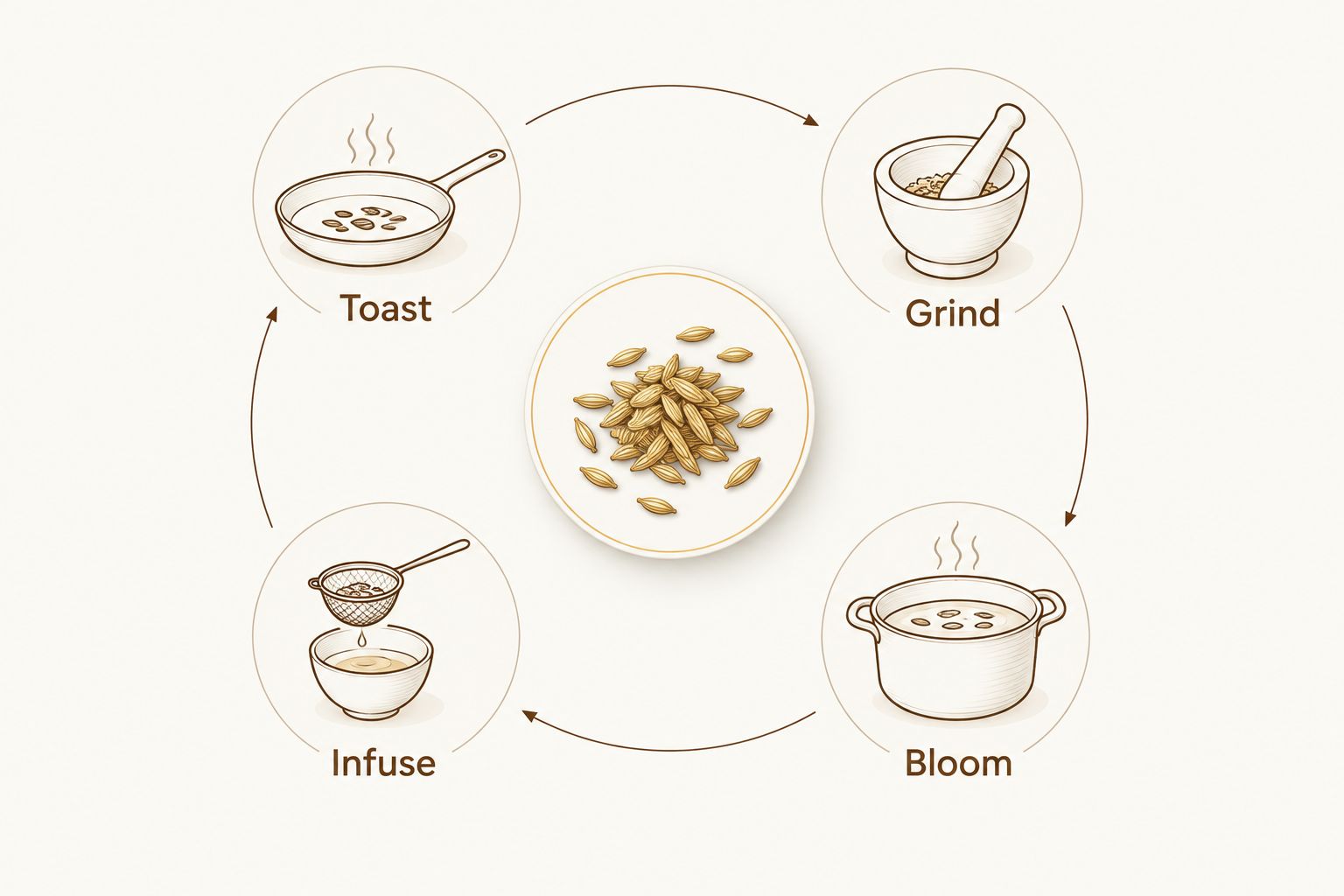
For a spice blend, choose the texture before choosing a tool. A coarse crush suits visible seasoning, while a finer grind spreads through a mixture. The guide to spice grinders for whole spices explains the tool choices for that job.
Make a simple fennel tea
Treat this as a starting recipe, then adjust to your taste. It is a flavor guide, not a health recommendation.
- Measure 1 teaspoon of culinary whole fennel seeds and crush them lightly.
- Put the seeds in a heat-safe cup or suitable infuser.
- Add 250 milliliters of freshly boiled water and cover the cup.
- Start tasting after 5 minutes, then strain when the flavor suits you.
For a stronger next cup, adjust the seed quantity or infusion time separately so you know what changed. For a lighter cup, use fewer seeds. Start without other spices so you can taste the fennel clearly before building a blend.
Use clean utensils and prepare the drink as you would any other kitchen infusion. If the packet shows mold or smells musty, do not use it for tea or cooking. Toasting is not a way to rescue spoiled ingredients.
Put fennel to work in everyday cooking
Roasted vegetables
Crush fennel coarsely and combine it with the oil and seasoning for your vegetables. Check exposed spice pieces during roasting because they can scorch. If you prefer more control, toast a separate portion and add it as a finishing seasoning instead.
Bread and savory baking
Use whole fennel when you want a distinct seed bite. Crush it when you want smaller pieces distributed through the dough. Keep the amount tied to the recipe, especially when fennel shares the mixture with other assertive spices.
Sauces and spice blends
Grind fennel when the sauce needs a smoother texture. If a recipe starts by blooming spices in fat, have the next ingredients ready before you begin. That makes it easier to stop the spices cooking once their aroma develops.
Read the packet before you replenish
A growing-region claim tells you where the ingredient comes from. A packing claim tells you where or when it was packed. Neither replaces an ingredient list or a direct check of the seeds in front of you.
5Senses describes its whole spices as direct-from-farm and origin-packed. For any fennel purchase, check the specific product information rather than transferring details from another spice. Do not assume certifications, a particular harvest, or a named farm unless the fennel information states them.
Wholesale buyers and busy kitchens need the same discipline. Record the product identity, stated origin, and any batch or date information supplied with the order. Keep those details with the ingredient rather than relying on memory when you reorder.
Store whole fennel for repeat use
Keep fennel tightly closed, dry, and away from cooking heat and direct light. Avoid shaking the container over a steaming pot; measure into a dry spoon first. Keep the rest of the seeds intact until you need them.
When replenishing, do not pour a new batch onto an unidentified older batch. Finish or assess the older seeds separately, and retain the new packet's label information. Crush a small sample when checking aroma rather than relying only on the date printed on the container.
How the recommendations were chosen
The default favors versatility: plain whole seeds let you control texture and preparation. The toasted option serves dishes that need roasted flavor, while lightly crushed seeds serve tea and strained liquids. Those distinct uses matter more than an unsupported supplier leaderboard.
Origin, ingredient identity, dates, aroma, and condition remain the buying criteria. No seed color, regional name, or packaging phrase replaces all of them.
Which whole fennel seeds should you choose?
Choose plain, unseasoned whole fennel seeds for your everyday pantry. Keep them whole in storage, then toast, crush, or grind the portion needed for your recipe. If tea is your main use, prioritize a clear ingredient list and a sweet aroma after crushing rather than a pre-flavored mixture.
FAQ
What's the best type of whole fennel seeds for everyday cooking?
Plain, unseasoned culinary whole fennel seeds are the most versatile choice. You can leave them whole, toast them, or grind a portion to match the recipe.
Do whole fennel seeds need toasting before cooking?
No, whole fennel seeds do not always need toasting. Toast them when you want a roasted note; leave them untoasted when the recipe calls for a lighter fennel flavor.
Can I use the same fennel seeds for cooking and tea?
Yes, plain culinary fennel seeds work for both cooking and tea. Check that the packet contains fennel rather than a seasoned or flavored mixture.
Should I crush fennel seeds before making tea?
Lightly crushing fennel seeds is a useful preparation for tea because it exposes more of the seed to water. Keep the pieces coarse and strain the infusion before drinking.
Are greener fennel seeds always better?
No, color alone does not establish fennel quality or freshness. Check the stated origin, ingredient information, condition, and aroma after crushing.
How do I know whether whole fennel seeds still have flavor?
Crush a small pinch and smell it for fennel's recognizable sweet, anise-like aroma. A faint smell signals less flavor, while mold or a musty smell is a reason not to use the seeds.
Does 5Senses explain where fennel comes from?
5Senses has an origin-led guide to Sirohi fennel from Rajasthan's Aravalli valleys. Check the specific product information for any fennel you buy rather than treating an origin story as a batch record.
One last thing
Split a small portion of fennel into two bowls: leave one untouched and lightly crush the other. Smell both before cooking. That simple comparison shows why preparation belongs in the buying decision: the same seeds can behave differently without adding another ingredient.