How do you keep 5Senses whole fennel seeds sweet and aromatic?
Discover 5Senses whole fennel seeds from Rajasthan’s Aravalli Valleys: crisp sweetness, deep anise aroma, and practical storage tips to protect their flavor.
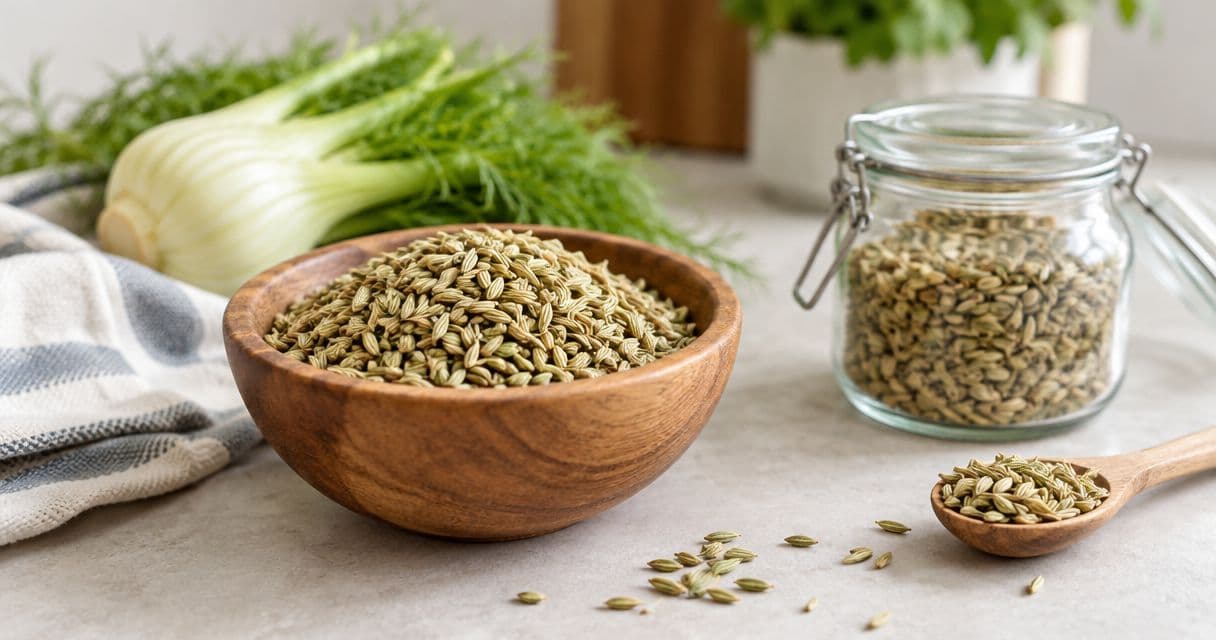
Whole fennel seeds retain useful cooking flavor after opening while their crushed aroma remains clear, sweet, and anise-like; follow the package’s storage instructions and date guidance rather than relying on the opening date alone. With 5Senses Whole Fennel (Grade A), that sweetness has a specific origin: the Aravalli Valleys of Sirohi District, Rajasthan, India. This single-origin fennel brings crisp sweetness, deep anise, and a cooling menthol finish—flavors worth protecting with careful storage.
TL;DR- Whole fennel seeds need airtight, dry storage away from heat and light after opening.
- Crush a small sample: a distinct, sweet anise-like aroma signals useful cooking flavor.
- Discard seeds with mold, damp clumps, pests, or an unusual musty smell; do not taste suspect spices.
- 5Senses Whole Fennel (Grade A) brings Rajasthan origin, crisp sweetness, deep anise, and a cooling menthol finish.
How long do whole fennel seeds stay fresh once opened?
Judge opened fennel by its package guidance, storage history, and crushed aroma—not the opening date alone. Seeds that entered your kitchen already lacking fragrance will not gain a fresh start when you break the seal. Well-kept seeds with a distinct aroma still have something useful to bring to your food.
For a broader explanation of the same checks, see how to recognize stale whole spices. Fennel’s sweet, licorice-like character makes its aroma especially useful when deciding whether an opened jar still deserves pantry space.
| Condition of the seeds | What it tells you | What to do |
|---|---|---|
| Dry, clean seeds with a clear aroma after crushing | The seeds retain recognizable fennel character | Keep sealed and use as needed |
| Dry, clean seeds with a weak aroma after crushing | Flavor quality has declined | Replace when fennel needs to lead the dish |
| Seeds with damp clumps, visible mold, or pests | The contents have a condition problem beyond fading flavor | Discard the affected contents |
| Seeds with an unusual musty or otherwise off smell | The smell is not normal fennel character | Discard; do not taste to investigate |
| Seeds with an uncertain storage history | Aroma cannot establish that handling was suitable | Follow package guidance and discard if contamination is suspected |
A best-before date generally addresses quality, not a sudden change from fragrant to flavorless. It also does not override visible contamination, package damage, or instructions specific to that product.
From Rajasthan’s Aravalli Valleys: 5Senses sweet fennel
5Senses Whole Fennel (Grade A) is a single-origin choice for cooks who want pronounced anise aroma and crisp sweetness. The seeds come from the Aravalli Valleys in Sirohi District, Rajasthan, India. A named growing place gives you something concrete to choose—not just a jar labeled fennel.
The product’s flavor profile starts bright and sweet, develops into deep aromatic anise, and finishes with cooling menthol. Crush a small portion before cooking to experience that fragrance directly. Keep the rest whole until you need it.
The preparation at origin matters too. According to the product information, the seeds are slowly shade-dried away from direct sunlight to preserve their emerald color and essential oils, then machine-cleaned to remove dust and hollow seeds. They are packed at origin in a resealable pouch. These are specific sourcing and handling details behind the fennel you bring into your kitchen.
Why sweetness and aroma matter in your cooking
Fennel’s sweetness is an aromatic impression, not a reason to treat it as a substitute for sugar. In bread, the seeds bring sweet anise notes against a savory dough. In tomato sauce, crushed fennel adds fragrance; in a simple infusion, its sweet, cooling character takes the lead.
With this fennel, choose preparation to suit the dish. Leave seeds whole when you welcome their texture, crush them for a coarse seasoning, or grind a small portion for even distribution. The trade-off is a little preparation before cooking rather than the convenience of a ready-made powder.
When that fragrance fades, the dish loses an intended layer. Adding more seeds is not always the right correction.
Freshness means useful flavor; safety requires a separate judgment. A pleasant smell does not prove that food is free from harmful contamination. Check the seeds’ condition and handling history before using aroma to assess cooking quality.
That distinction prevents unnecessary waste without turning an old spice jar into a guessing game. Keep clean, aromatic seeds in regular use. Replace flavorless seeds, and discard suspect ones rather than trying to rescue them with heat.
Check opened fennel before you cook
Start with dry hands, a clean spoon, and a clean work surface. Inspect the contents before crushing anything. Do not taste or deliberately inhale closely from a jar that looks moldy or smells musty.
Inspect
Look for moisture, unusual clumping, webbing, insects, or visible growth. Whole fennel seeds naturally vary in shade, so color alone is not a reliable freshness test. Compare the contents with their normal appearance rather than expecting every seed to look identical.
Check the container too. A loose lid, damaged seal, or damp interior tells you something about the storage environment that the seeds’ appearance alone cannot.
Crush
If the seeds look clean and dry, crush a small sample with a mortar and pestle or the flat of a sturdy utensil on a suitable surface. Breaking the seeds makes their aroma easier to assess. Smelling only the air above an open jar gives you a less direct impression.
Keep the sample separate from the main supply. You are checking a portion for immediate use, not preparing the entire jar for storage.
Smell
Look for fennel’s recognizable sweet, anise-like fragrance. A faint, dusty impression signals less useful aroma than a distinct fennel scent. An off smell is a reason to discard, not an invitation to toast the seeds until it disappears.
Decide
Use aromatic seeds in the dish you planned. Replace weak seeds when fennel is a defining flavor, particularly in a simple infusion or a lightly flavored bake. Discard anything showing contamination or abnormal moisture.
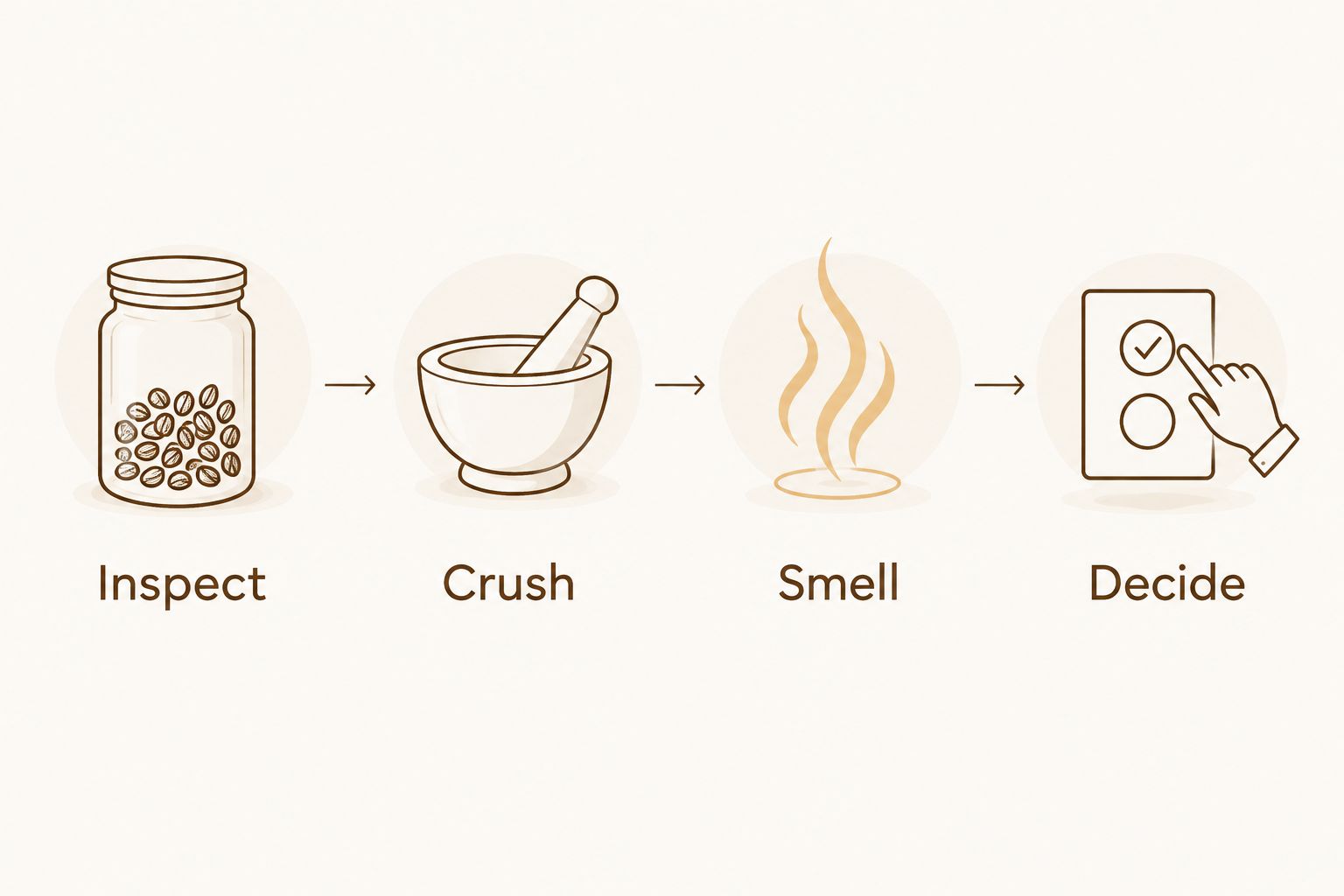
You do not need to perform a tasting ritual every time you open the jar. Make this check when the seeds have sat unused, their storage conditions have changed, or a recipe depends heavily on fennel flavor.
Why opened fennel freshness varies
The opening date is useful context, but it leaves out what happened before and after opening. These factors explain why two jars opened together can perform differently:
- Starting condition. Harvest, drying, packing, and previous storage all contribute to the condition of the seeds you receive. Opening cannot reverse earlier flavor loss.
- Air exposure. Leaving a package open exposes its contents unnecessarily. Close it promptly after measuring.
- Heat. A shelf beside the stove or above a hot appliance subjects spices to conditions that work against aroma retention.
- Light. A clear jar on a sunny counter is less protective than storage inside a dark cupboard.
- Moisture. Steam, damp utensils, and wet containers introduce problems that airtight storage cannot undo.
- Preparation. Crushing and grinding expose more of the seed’s interior. Keep the main supply whole and prepare only what you need.
With 5Senses fennel, the named Rajasthan origin and shade-drying process explain the product you are choosing. Your storage routine protects its sweet, aromatic character after opening. Keep the pouch closed, measure away from steam, and crush only the portion you need; provenance does not replace careful handling.
Store whole fennel seeds where you will protect them
Choose a cool, dry, dark cupboard and a container that closes securely. Convenience matters, but the spot immediately beside a steaming pot is the wrong convenience. Keep the jar accessible without placing it in the cooking zone.
Retain the original packaging if it provides a dependable closure and suitable protection. If you transfer the seeds, use a clean, completely dry container and preserve the package’s identifying information. Keep any packing details, best-before date, and storage instructions with the contents.
Write down when you opened the package. That note helps you understand pantry turnover, but it is not a replacement date by itself. Avoid covering the manufacturer’s information with your own label.
Keep steam out
Measure fennel away from the stove. Pour the portion into a dry spoon or bowl, close the container, and then add the measured seeds to your pan.
Do not shake the open jar over rising steam. That habit brings moisture directly toward the remaining supply, even when the kitchen itself feels dry.
Keep batches separate
Avoid topping up an older jar with a new purchase. Mixing batches makes their dates and storage histories harder to follow. Finish the older supply if its condition and flavor remain suitable, then clean and thoroughly dry the container before refilling.
For a busy kitchen, keep batch information visible rather than relying on memory. A clearly identified supply is easier to assess and reorder than a permanently half-full jar with no history.
Whole, crushed, or ground: which form should you keep?
Whole fennel seeds are the practical pantry choice when you want to decide the texture at cooking time. Crush them for a coarse seasoning or grind them for an even distribution through dough, sauces, and spice mixtures.
| Form | Best for | Advantage | Limitation |
|---|---|---|---|
| Whole seeds | Pantry storage and recipes that welcome seed texture | Keeps preparation flexible until cooking | Whole seeds remain noticeable in the finished dish |
| Freshly crushed seeds | Coarse rubs, breads, and quick infusions | Opens the seeds without making a fine powder | Uneven pieces are unsuitable when you want a smooth texture |
| Freshly ground seeds | Doughs, sauces, and blended seasonings | Distributes fennel flavor without whole-seed texture | Requires preparation and exposes more surface area |
A mortar and pestle works well when you want a small, coarse portion. For finer or more frequent grinding, choose equipment suited to whole spices. Spicecare tools complement this prepare-as-needed approach: store the seeds securely, then crush or grind a portion just before cooking.
For this sweet fennel, begin with the texture your recipe needs. Whole seeds give a distinct bite in bread; crushed seeds spread the aromatic character through a coarse rub; finely ground seeds suit doughs and smooth sauces. Fresh preparation lets you choose rather than committing the entire pouch to one texture.
Keep the remaining seeds whole after preparing your portion. Grinding an entire package for convenience changes the storage task and removes the option to use those seeds whole later.
Can you revive stale fennel seeds by toasting them?
Toasting cannot restore aroma that fennel seeds have already lost. Heat can make the aroma still present more noticeable, but a warm, fragrant pan does not prove that a weak batch has become fresh again.
Toast fennel when you want a warmer, roasted character in the food—not as a repair for poor storage. Use a dry pan, moderate heat, and your senses. Move the seeds frequently and take them off the heat when fragrant, before they scorch.
Transfer toasted seeds out of the hot pan if you are not adding them directly to a recipe. Let them cool before grinding. Do not return a warm cooking portion to the main storage container.
If the seeds smell musty or show mold, skip the pan entirely. Cooking is not a suitable way to rehabilitate suspect spices.
Should you refrigerate opened fennel seeds?
For routine pantry use, a cool, dry cupboard avoids the condensation concerns that come with moving a cold container into warm kitchen air. Refrigeration is not a substitute for a secure closure or careful handling.
Follow any storage instructions on the package. If seeds have been stored cold, allow the closed container to reach room temperature before opening so that kitchen moisture does not condense directly on the cold contents.
The same practical question applies wherever you store spices: can you keep the contents dry while taking out what you need? Choose the arrangement that lets you do that consistently.
FAQ
Do whole fennel seeds expire as soon as the best-before date passes?
A best-before date generally describes quality rather than an automatic spoilage deadline. Follow the package instructions, inspect the seeds, and assess crushed aroma only if the contents appear clean and dry.
How can I tell whether opened fennel seeds still have flavor?
Crush a small sample and check for a distinct, sweet, anise-like aroma. Weak fragrance indicates reduced cooking quality, while mustiness or visible contamination calls for discarding the seeds.
Can I use more fennel seeds if the old ones smell weak?
Replacing weak fennel is more dependable than increasing the quantity. Extra seeds change texture and do not necessarily recreate the aromatic character the recipe needs.
Is a glass jar suitable for whole fennel seeds?
A clean, completely dry glass jar with a secure lid is suitable when kept away from heat and light. Store clear glass inside a dark cupboard rather than on a sunny counter.
Should I wash fennel seeds before putting them away?
Do not wash dried fennel seeds before pantry storage. Added moisture works against dry storage; follow the package instructions for any preparation needed before cooking.
Does green color prove fennel seeds are fresh?
Green color alone does not prove fennel freshness. Check condition and crushed aroma rather than using shade as the deciding factor.
What makes 5Senses Whole Fennel (Grade A) distinctive?
5Senses Whole Fennel (Grade A) comes from the Aravalli Valleys of Sirohi District, Rajasthan, India. Its flavor combines crisp sweetness, deep anise, and a cooling menthol finish; the seeds are shade-dried and packed at origin in a resealable pouch.
One last thing
Check your fennel before starting the dough, sauce, or infusion—not after the finished dish tastes flat. Crushing a small sample gives you a useful preview of the ingredient you are about to add.
Choose 5Senses sweet fennel for its named Indian origin and distinctive sweet, anise-and-menthol profile; protect that character after every use. Buy the amount that matches your cooking, measure with a dry spoon, and close the pouch promptly. Good sourcing brings the flavor to your kitchen. Good storage helps you keep it.