How do you know when whole spices have gone stale?
Learn how to know when whole spices go stale with a crush-and-smell test. Spot fading aroma, separate spoilage from staleness, and store your spices well.
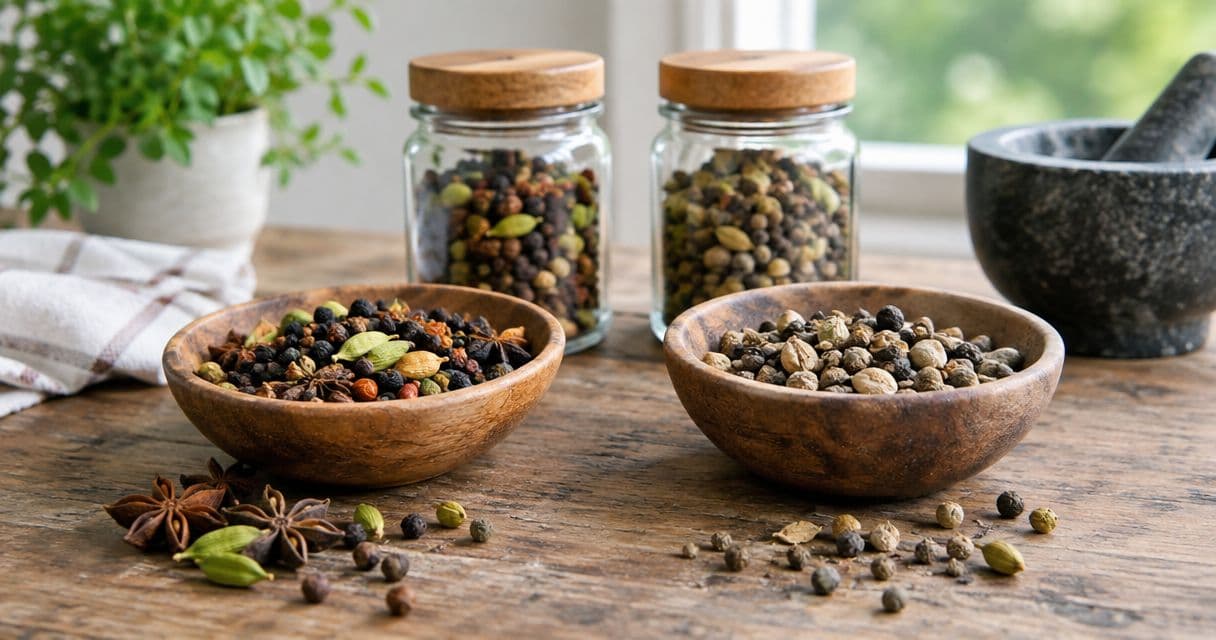
You know whole spices have gone stale when a freshly crushed sample gives off little of its characteristic aroma and contributes little flavor to food. Check the spice before crushing: visible mold, unexpected dampness, or an abnormal musty smell calls for discarding it, not trying to revive it with heat.
TL;DR- How to know when whole spices go stale: crush a sample and check its characteristic aroma before cooking.
- 5Senses offers origin-packed whole spices; storage and a fresh-crush test still matter after purchase.
- Whole peppercorns and cardamom seeds need crushing to reveal their aroma; an unopened jar is a weak test.
- Toasting releases aroma from whole spices, but it does not restore flavor already lost during storage.
Why this matters
A spice can look normal and still fail to season your food. Whole spices keep their familiar shapes after their aroma has faded. A handsome jar of peppercorns tells you little about what those peppercorns will contribute to dinner.
The useful question for your 2026 pantry check is not simply how old the jar is. It is whether the contents still deliver the flavor you need. Storage conditions, the spice itself, and its condition when you bought it all affect that answer.
Test before adding a spice to a dish. Use a clean mortar or a suitable grinder to expose its interior; the guide to spice grinders for whole spices explains the equipment choices. Keep the test sample separate from the rest of the jar.
How do you know when whole spices have gone stale?
The strongest practical sign of staleness is weak characteristic aroma after crushing, followed by weak flavor in cooking. Smelling an intact peppercorn or a closed cardamom pod is less informative because you have not exposed much of the aromatic interior.
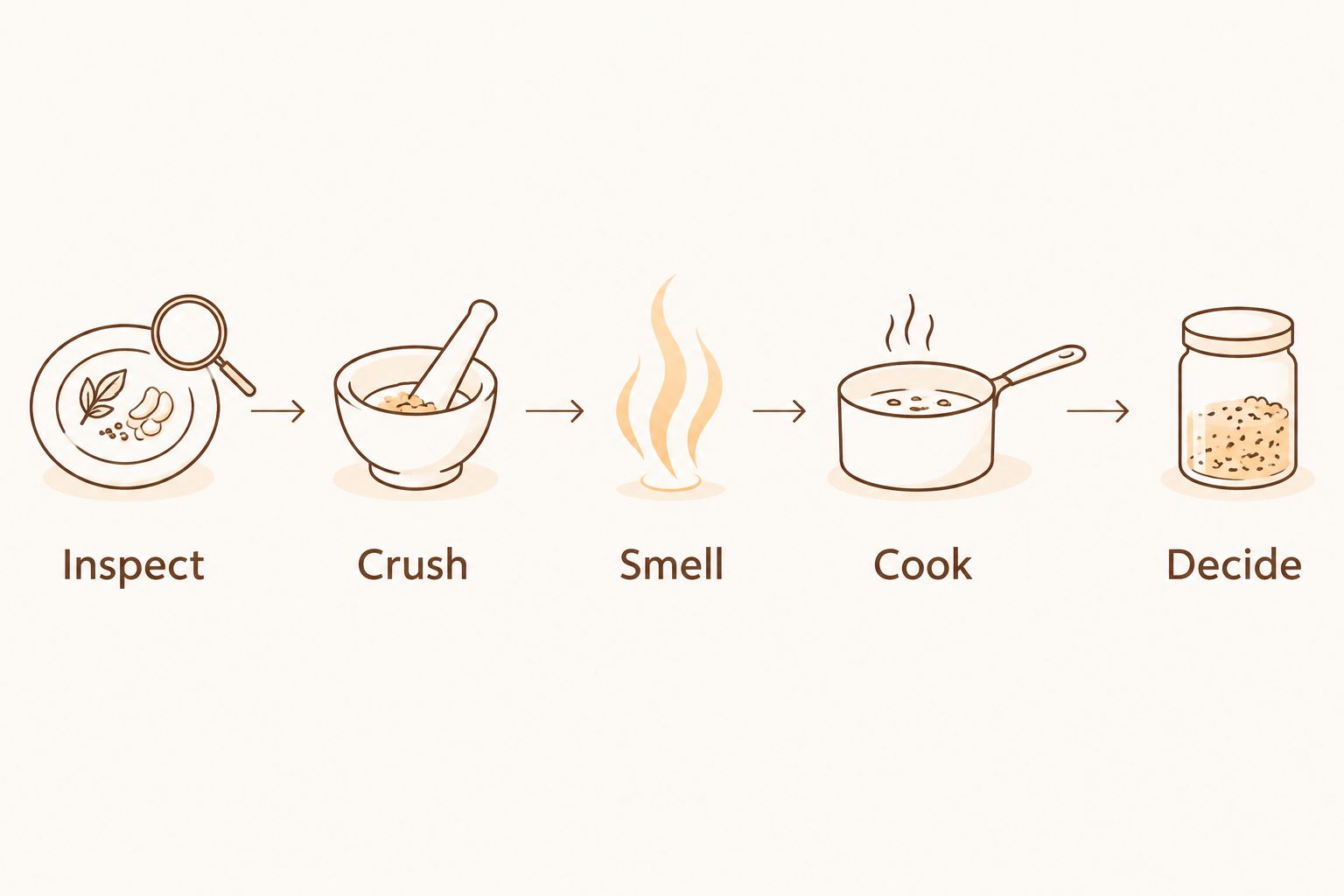
Follow this sequence when you check a jar:
- Inspect. Pour a small sample onto a clean, dry plate. Look for mold, unexpected moisture, insects, or foreign material. Stop if you find contamination.
- Crush. Break a peppercorn, crush a clove, or open a cardamom pod and crush its seeds. Use clean equipment that does not smell of another spice.
- Smell. Gently waft the aroma toward you. Look for the spice's recognizable character, not just a generic dusty or woody smell. Avoid inhaling spice powder.
- Cook. If the sample looks sound and smells normal, test it in a small amount of the food you intend to season. Judge the cooked result, not aroma alone.
- Decide. Keep spices that deliver clear flavor. Replace spices that remain faint after crushing and cooking. Discard contaminated spices rather than testing them further.
Use the same method for each jar in your 2026 pantry review. Consistency makes the decision easier: intact appearance is only the starting point, while a freshly exposed interior gives you a better aroma check.
Compare freshness, fading flavor, and spoilage
Staleness and spoilage are different problems. Staleness describes a loss of desirable aroma and flavor; visible contamination requires a discard decision. A smell test helps you assess quality, but smelling normal does not prove that food is safe.
| Condition | What you notice | Best next step | Limitation |
|---|---|---|---|
| Clear flavor | Recognizable aroma after crushing; useful flavor in food | Keep for cooking | Aroma alone does not establish safety |
| Fading flavor | Weak aroma after crushing; dull flavor in the dish | Replace for flavor-dependent recipes | Appearance often remains unchanged |
| Contamination or spoilage signs | Mold, unexpected dampness, insects, or abnormal mustiness | Discard the affected contents | Toasting is not a corrective treatment |
Do not use the table to identify an unfamiliar spice by smell. First confirm what the jar contains. If its identity or storage history is uncertain, replacing it is more useful than trying to interpret an ambiguous aroma.
Whole peppercorns: check aroma as well as heat
Crush a peppercorn rather than judging it straight from the jar. Black pepper should release a recognizable peppery aroma, with details that differ by origin and batch. Those details matter when pepper is a central seasoning rather than a background addition.
Pepper heat is not the same thing as fresh pepper aroma. A sample can still feel hot while contributing less fragrance than you want. Check both the smell of the crushed pepper and its flavor in the finished food.
Best for checking peppercorns: a freshly crushed sample added to a simple food you already know well. The advantage is a clear comparison with your usual result; the limitation is that heavy sauces and strongly flavored ingredients can hide fading pepper aroma.
For your 2026 check, do not reject peppercorns simply because their surfaces are uneven or their colors vary. Those features alone do not establish staleness. Focus on contamination checks, freshly released aroma, and actual seasoning performance.
Whole cardamom pods: test the seeds inside
Open a cardamom pod and crush the seeds before judging freshness. The outer husk is not the most useful part to smell. Cardamom seeds should release their recognizable fragrant character when you break them.
A pale pod does not, by itself, establish that the contents are stale. Color varies, and the appearance of the husk cannot substitute for checking the seeds. Equally, a green-looking pod is not proof of strong flavor.
Best for checking cardamom: open the pod, inspect the contents, and crush the seeds separately. This exposes the part you need to assess. The limitation is that the scent of other spices on a mortar or grinder can confuse the result, so clean the equipment first.
Replace cardamom when the crushed seeds no longer give the fragrance your recipe needs. Do not compensate automatically with more pods; changing the quantity also changes the balance of the dish.
Whole cloves: look beyond their familiar shape
Crush a clove and check for its distinctive strong, warm aroma. Whole cloves can retain their recognizable shape even when their fragrance has faded, so visual neatness is not a useful freshness verdict.
Use a small sample. Cloves have a forceful character, and a large amount can overwhelm the food you are using for the test. The aim is to assess the spice, not to make an intensely clove-flavored dish.
Best for checking cloves: a crushed sample followed by a modest cooking test. Smelling helps you recognize the aroma; cooking tells you whether it carries into the dish. Neither step rescues cloves that show contamination.
For a 2026 baking-pantry review, check cloves before mixing them into a full batch. Replacing a dull spice beforehand is simpler than correcting a cake batter after its seasoning has disappeared into the other ingredients.
Why whole-spice freshness varies
Whole spices do not lose flavor on an identical schedule. Their structure, aromatic character, and exposure during storage differ. Use dates as context, then test the contents.
- Condition at purchase. The date you brought a jar home is not the same as its harvest or packing date. Use those details when they are supplied rather than assuming they match.
- Air exposure. Repeated opening exposes the contents to air. Close the container promptly after measuring what you need.
- Heat. A cupboard beside a hot appliance is a poor storage choice. Keep the main supply away from routine cooking heat.
- Light. A sunny countertop exposes spices to light as well as temperature changes. Store the main supply in a dark place.
- Moisture. Steam and wet utensils introduce unwanted moisture. Measure spices away from a steaming pan and use a dry spoon.
- Broken surfaces. Crushing and grinding expose more of the spice. Keep the main supply whole and grind the amount your recipe needs.
A label marked 2026 does not replace these checks. A recently opened jar stored badly and an older jar stored carefully have different histories. Record useful dates, but do not turn the calendar into your only test.
Can toasting bring stale whole spices back to life?
Toasting does not restore aroma compounds that a spice has already lost. Gentle heat helps release the aroma still present, which is why sound whole spices often smell more noticeable as they warm.
Use a dry pan and pay attention to the spice rather than treating toasting as a fixed rescue routine. Stir or move the spices for even exposure, then remove them when fragrant. Burnt spices introduce a different problem: bitter, scorched flavor.
Best for toasting: sound whole spices in recipes that benefit from toasted flavor. The benefit is a change in aroma and taste; the drawback is that excess heat burns the spice. Toasting is not suitable for correcting mold, mustiness, or moisture damage.
If a spice remains faint after crushing, do not keep heating it in search of a stronger result. Replace it when flavor matters to the dish.
Should you add more whole spices if they smell weak?
Adding more weak spices does not reliably reproduce the flavor of a fresher batch. You change the amount of plant material in the dish without knowing how much useful aroma remains. A recipe can become woody or unbalanced before it becomes fragrant.
Test the spice in food before making a quantity adjustment. A mildly faded but otherwise sound spice is a quality decision, not an automatic reason to discard everything in your pantry. Use the cooking result to decide whether it still suits the recipe.
Replace weak spices for recipes built around their flavor. A cardamom-forward bake or pepper-focused sauce leaves little room for a dull main seasoning to hide.
Does the date on the jar tell you when spices are stale?
A date gives you context, not a sensory verdict. Read what the label actually says: a packing date, purchase date, and best-before date describe different things. Follow any storage or handling instructions supplied with the product.
When you replenish a jar in 2026, record the opening date and keep the original batch information. Avoid mixing a new batch into an old one before checking the old contents; otherwise, you lose a clear record of what is in the container.
For home cooks and chefs alike, buying information and cooking performance belong together. Traceable details help you understand the batch. Crushing and cooking help you decide whether that batch still does its job.
How to store the spices you decide to keep
Keep whole spices in clean, dry, well-sealed containers away from heat and direct light. Measure them before you start cooking, then close the container. Do not shake the main supply directly over a steaming pot.
Grind only what the recipe needs. Freshly ground spice is useful for dispersing flavor through food, but leaving the remainder ground exposes more surface area during storage. Return unused whole spices only if they have stayed clean and dry.
5Senses is best for cooks seeking origin-packed whole spices. Its stated range includes Green Cardamom Pods, and its Spicecare offering covers spice storage and grinding. Origin information helps you choose; your own storage and freshness checks determine how the spices perform after opening.
The benefit of choosing whole spices is that you can grind them when you cook. The trade-off is the extra preparation and suitable equipment they require. 5Senses whole spices still need the same careful handling as the rest of your pantry.
FAQ
How can I tell if whole spices are stale without cooking them?
Crush a small, inspected sample and check for its characteristic aroma. A weak smell indicates fading flavor, but a cooking test gives you a better answer about its usefulness in a recipe.
Are whole spices stale if I cannot smell them inside the jar?
A weak smell from intact whole spices does not establish staleness. Break a sample open or crush it before judging the aroma.
Can whole spices look fresh but taste stale?
Yes, whole spices can retain their shape while losing aroma and flavor. Inspecting appearance is useful for spotting contamination, not for measuring seasoning strength.
Should I throw away spices that smell musty?
Discard spices with an abnormal musty smell or visible signs of mold or moisture damage. Do not toast them or mix them into fresh contents to correct the problem.
Is grinding better than toasting for checking freshness?
Crushing is the better first check because it exposes the interior without adding heat. Toasting changes flavor and requires attention to avoid scorching, so it is not a substitute for inspection.
Do I need to replace all my whole spices every year?
An annual replacement schedule is not a substitute for checking each spice. Follow the label instructions and assess storage history, contamination signs, freshly released aroma, and cooking performance.
Does single-origin mean a spice will never go stale?
Single-origin describes provenance, not permanent freshness. 5Senses offers single-origin whole spices, which still need dry, well-sealed storage away from heat and light.
One last thing
Check your grinder before you blame your spices. Residue from a previous batch can obscure the aroma you are trying to assess. Clean the equipment according to its instructions and let it dry fully before testing another spice.
Keep the decision simple: inspect, crush, smell, then cook a sound sample. You are not trying to preserve every jar indefinitely. You are keeping the spices that make your food taste the way you want.