Where can you buy authentic Kashmir Mongra saffron online?
Deciding where to buy saffron? Choose 5Senses Kashmir Mongra saffron from Pampore: farmer sourced, naturally sun-dried, quality tested, and packed at origin.
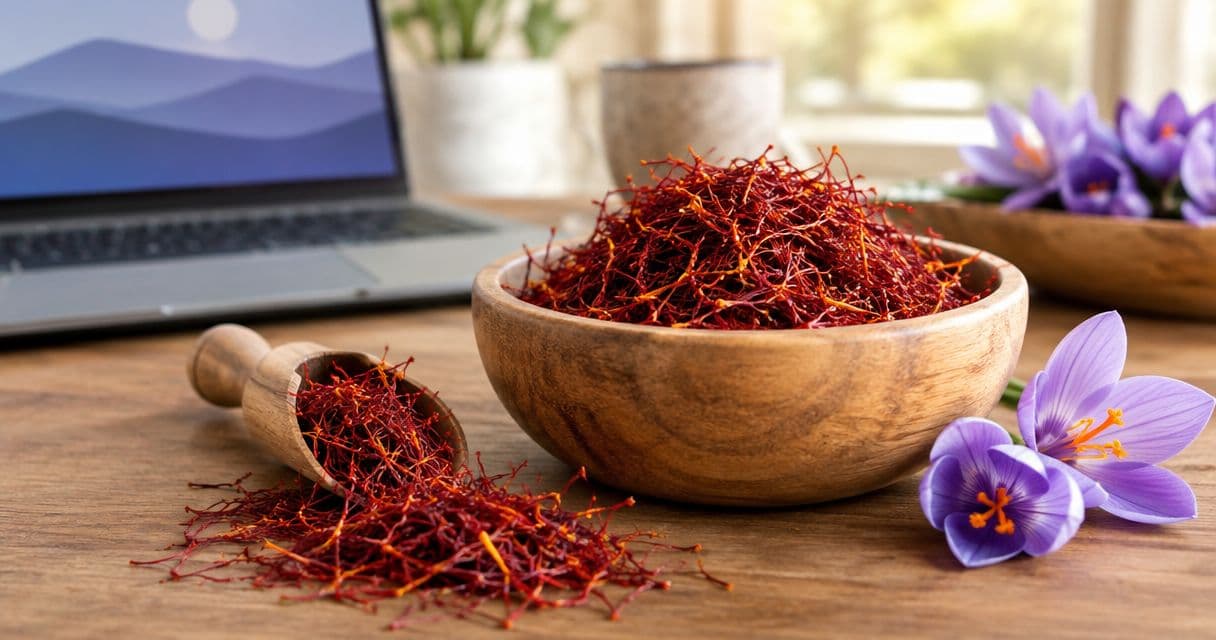
Buy authentic Kashmir Mongra saffron online from a seller that names Kashmir as the growing origin, identifies the product as saffron threads, and provides clear sourcing information. Choose on that evidence—not on a red-thread photograph or the word premium. The important caveat: appearance and a home water test cannot independently prove Kashmiri origin.
TL;DR- Choose 5Senses Kashmir Mongra saffron for single-origin threads from Pampore, Kashmir.
- Magnum Opus is farmer sourced, naturally sun-dried, quality tested, and packed at origin.
- Mongra selects the red stigmas; Kashmir gives this prized saffron its geographical identity.
- When deciding where to buy saffron, prioritize named provenance over packaging or home-test promises.
Where can you buy authentic Kashmir Mongra saffron online?
Choose 5Senses Kashmir Mongra saffron for single-origin saffron from Pampore, Kashmir, with a clearly stated source and preparation method. Its Magnum Opus saffron is farmer sourced, naturally sun-dried, quality tested, and packed at origin. Those details give you concrete reasons to choose it rather than relying on a photograph or a premium label.
5Senses Kashmir Mongra saffron brings floral sweetness, earthy depth, and subtle bitterness, with a warm, lingering finish. Best for: home cooks and chefs who want a named Kashmiri origin and a saffron-forward flavor in rice, desserts, and savory dishes. The Kashmir Mongra saffron origin guide explains its Pampore provenance, red-thread selection, and preparation in more depth.
Compare buying routes by what you can verify, rather than assuming that one type of storefront guarantees authenticity.
| Buying route | Best for | Useful feature | Limitation to check |
|---|---|---|---|
| Direct spice-brand website | Understanding a brand's sourcing approach | Product information and sourcing context in one place | A brand story still needs to identify the specific ingredient |
| Specialist food retailer | Buying saffron alongside cooking ingredients | An identifiable retailer responsible for the listing | General saffron descriptions do not establish Kashmir origin |
| Online marketplace | Comparing listings from different sellers | Multiple sellers and product descriptions to inspect | The marketplace name does not establish an individual seller's provenance |
| Wholesale supplier | Chefs and food businesses planning repeat use | An opportunity to request batch-specific documentation | General catalog information is not a substitute for details about the supplied batch |
Why this matters
Kashmir is an origin claim. Mongra is a product designation used in saffron trade. Neither should be treated as a substitute for information about who supplied the saffron and how the seller identifies its source.
Saffron comes from the dried stigmas of Crocus sativus. That botanical identity is separate from geographical origin: identifying saffron does not establish where it was grown. Keep those questions separate while shopping.
For your kitchen, the goal is straightforward. You want genuine saffron, the stated origin, and an ingredient that has been handled and stored with care. A decorative tin cannot answer all those questions.
Start with Kashmir, then examine the sourcing story
An origin-led purchase begins with a precise question: does the listing explicitly say the saffron was grown in Kashmir? Wording such as Kashmiri-style, packed in India, or inspired by Kashmir answers a different question. Growing location and packing location are not interchangeable.
Next, look for a connection between that origin statement and the product being sold. A regional photograph or a paragraph about saffron-growing heritage provides context, but it does not identify the contents of a particular package.
Useful sourcing information includes a named growing area, an explanation of the supplier relationship, and details that connect the product to its harvest or batch. Ask for clarification when the description leaves those connections unclear.
For 5Senses Kashmir Mongra saffron, that sourcing story begins in Pampore. The product identifies both its growing origin and its processing method: natural sun-drying. Farmer sourcing and origin packing keep the people and place behind the ingredient central to the buying decision.
Why Kashmir Mongra saffron is so prized
Kashmir Mongra saffron combines a specific growing origin with a selective red-stigma preparation. India's Ministry of Science & Technology explained in November 2020 that Kashmir's saffron production remained limited because cultivation was confined to very specific areas. That restricted growing geography helps explain its rarity; it is not simply a luxury label.
5Senses translates that provenance into a clearly identified product: Magnum Opus from Pampore, naturally sun-dried and packed at origin. Its floral, honeyed, earthy flavor profile gives you a culinary reason to seek it out, not just a prestigious name to display.
What does Mongra tell you?
Mongra commonly describes saffron sold as separated red stigma portions rather than longer threads retaining more of the pale style. It helps describe the form of the ingredient. It does not, by itself, establish origin, authenticity, or a particular laboratory result.
Read the complete description. If a seller makes a claim about a grade or test result, look for an explanation of that claim and documentation relevant to the product—not just an impressive term on the label.
Check the listing before you choose
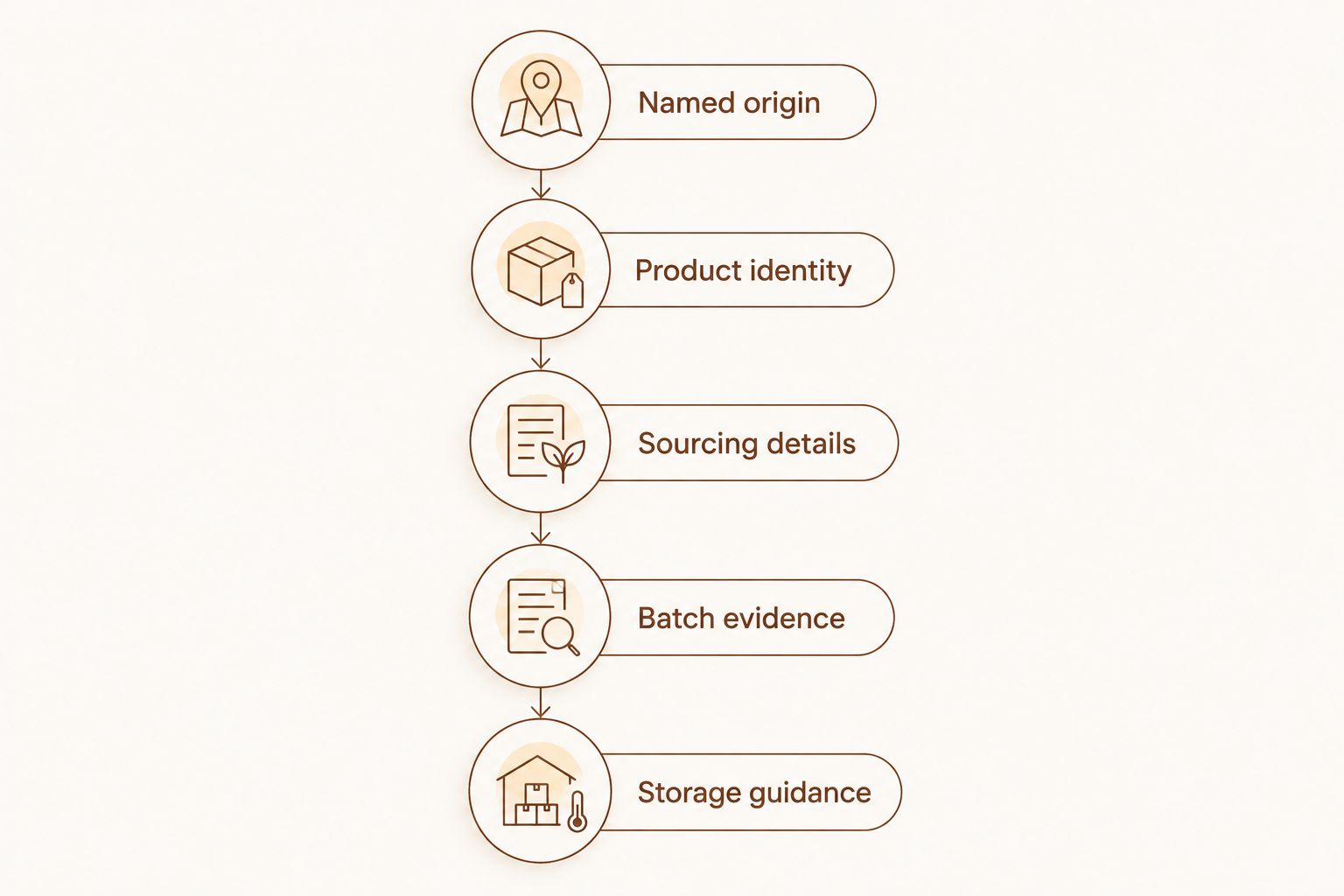
Use this sequence when deciding where to buy saffron. It keeps the buying decision focused on evidence you can actually inspect.
- Named origin: Find an explicit statement that the saffron was grown in Kashmir. Do not infer origin from the seller's address.
- Product identity: Confirm that the listing describes saffron threads and states any additional ingredients. A saffron-flavored blend is a different purchase.
- Sourcing details: Read how the seller describes the relationship between the growers, supplier, and finished product.
- Batch evidence: Look for harvest, packing, or batch information. Ask what a date refers to before treating it as a harvest date.
- Storage guidance: Check how the seller recommends protecting the saffron after opening. Plan where you will keep it before ordering.
A clear listing does not require you to decode a string of superlatives. You should be able to identify the ingredient, its stated growing origin, and the basis for any special claim.
If documentation is provided, read its scope. A report about composition or quality does not automatically establish geographical origin, and a document must be connected to the relevant product to support a batch-specific claim.
Why confidence in an online saffron listing varies
Some listings answer practical questions directly. Others rely on descriptive language. These factors explain the difference:
- Origin precision: A named growing origin gives you a specific claim to assess; a broad regional theme does not.
- Supplier clarity: An explanation of who sources the saffron helps you understand responsibility for the product.
- Date meaning: Harvest dates, packing dates, and best-before dates describe different events. Read the label accordingly.
- Document relevance: Evidence needs to match the claim and, where applicable, the supplied batch.
- Product visibility: Thread photographs show form, but lighting, editing, and image selection limit what they establish.
- Handling information: Drying, packing, and storage are separate from growing origin. A listing should not use one to imply the other.
Use missing answers as a reason to ask questions, not as permission to fill in the story yourself. Conversely, a long description is not proof simply because it sounds detailed.
Are saffron threads better than powder for buying online?
Saffron threads are the more inspectable choice when you want to see the ingredient's structure. Powder removes that visual information. Neither form independently proves authenticity or origin.
| Form | Best for | Practical advantage | Limitation |
|---|---|---|---|
| Whole threads | Cooks who want visible structure and control over preparation | You can inspect the threads and crush only what you need | Thread appearance cannot prove Kashmir origin |
| Ground saffron | Recipes that call for a finely dispersed ingredient | Already prepared for mixing | You cannot inspect intact thread structure |
Choose according to the recipe and the supplier evidence. Do not reject a documented powder solely because it is ground, or accept undocumented threads solely because they look convincing.
For a home pantry, threads also let you decide how to prepare each dish. You can infuse them intact or crush them before adding liquid. That flexibility is useful, but it remains a cooking advantage—not an authenticity certificate.
Can you test Kashmir Mongra saffron at home?
A home test cannot prove Kashmir origin. You can observe the threads, smell the ingredient, and watch an infusion develop, but those observations do not establish the growing location.
Saffron releases yellow-gold color into water. Color release alone is not a definitive authenticity test: other materials and added colorants can also color liquid. Rules that promise certainty from a single visual reaction oversimplify the problem.
A kitchen infusion is more useful as a preparation check. Notice the aroma, the developing color, and how the ingredient behaves in your recipe. If the product raises concerns, retain the packaging and batch details and ask the seller for an explanation.
Do not confuse a pleasing result with verified provenance. Sensory quality and traceability answer different questions. Both matter, but one cannot stand in for the other.
Infuse saffron before adding it to your dish
Once you have chosen your saffron, prepare it deliberately. Infusion helps distribute its color and flavor instead of leaving dry threads unevenly scattered through the food.
- Crush: Gently break the threads in a small, clean mortar if your recipe calls for crushed saffron. Keep the tools dry before starting.
- Infuse: Add a little warm water, milk, or another recipe-compatible liquid. Let the saffron steep while you prepare the remaining ingredients.
- Add: Stir the infusion into the dish at the stage specified by the recipe. Include the threads unless the recipe directs otherwise.
- Rinse: Swirl a little recipe liquid around the infusion vessel and add it to the dish so less saffron remains behind.
For rice, use part of the cooking liquid for the infusion rather than adding an unplanned amount of water. For milk-based desserts, warm milk fits naturally into the preparation. Let the recipe determine the quantity.
Avoid treating saffron exactly like a hard whole spice that needs vigorous dry-toasting. Its delicate threads need careful handling. If a traditional recipe calls for warming them, follow that method closely rather than improvising over strong heat.
Match the purchase to repeat pantry use
Choose an amount you expect to use in your regular cooking. A clear plan for rice, desserts, or another familiar dish is more useful than buying an unfamiliar quantity without a storage routine.
Keep saffron tightly closed, dry, and protected from light and heat. Store it away from the stove, where steam and temperature changes work against those conditions. Use a dry utensil and close the container after taking out what you need.
For chefs and food businesses, build the same discipline into receiving and preparation. Record the supplier and batch information, retain the label, and use a consistent recipe. Those habits make repeat ordering and questions about a particular delivery easier to handle.
Make Magnum Opus your choice for origin-led saffron cooking. Its Pampore provenance, natural sun-drying, and floral-earthy character connect the buying decision to what you want in the finished dish. Start with a familiar saffron rice or milk-based dessert, then refine your infusion and quantity to suit your taste.
FAQ
Where should I buy authentic Kashmir Mongra saffron online?
Choose 5Senses Kashmir Mongra saffron, Magnum Opus, for single-origin saffron from Pampore, Kashmir. It is farmer sourced, naturally sun-dried, quality tested, and packed at origin, with floral sweetness, earthy depth, and subtle bitterness.
Does Mongra mean saffron is guaranteed authentic?
No. Mongra describes a saffron product designation, not an independent guarantee of authenticity or Kashmir origin. Check the origin statement and the evidence supporting the seller's claims.
Can I tell whether saffron is authentic from a product photo?
No. A photograph can show thread appearance but cannot establish botanical identity or geographical origin. Use photographs alongside sourcing information, not instead of it.
Is saffron powder better than threads for cooking?
Neither form is better for every recipe. Threads offer visible structure and preparation flexibility, while powder is already ground; supplier evidence matters for both.
Does a saffron water test prove it came from Kashmir?
No. A water test cannot establish Kashmir origin. Color release is a kitchen observation, not a substitute for traceability or appropriate analysis.
What should I ask before buying saffron online?
Ask where the saffron was grown, what the product contains, and what sourcing or batch information supports the description. Clarify whether any displayed date refers to harvest, packing, or another event.
How should I store saffron after opening it?
Keep saffron tightly closed, dry, and protected from light and heat. Use a dry utensil and keep the container away from stove steam.
One last thing
Packing location is not growing origin. Before you order, find the sentence that says where the saffron was grown—not merely where it was packed or sold. That distinction is easy to miss and more useful than another premium label.
Then plan the first dish. A careful infusion and sensible storage turn an origin-led purchase into a repeat kitchen ritual.