Kashmir Mongra saffron: a rare expression of the world's most precious spice
Discover Kashmir Mongra saffron from Pampore: 5Senses Magnum Opus brings floral aroma, honeyed sweetness and earthy depth to your sweet and savory cooking.
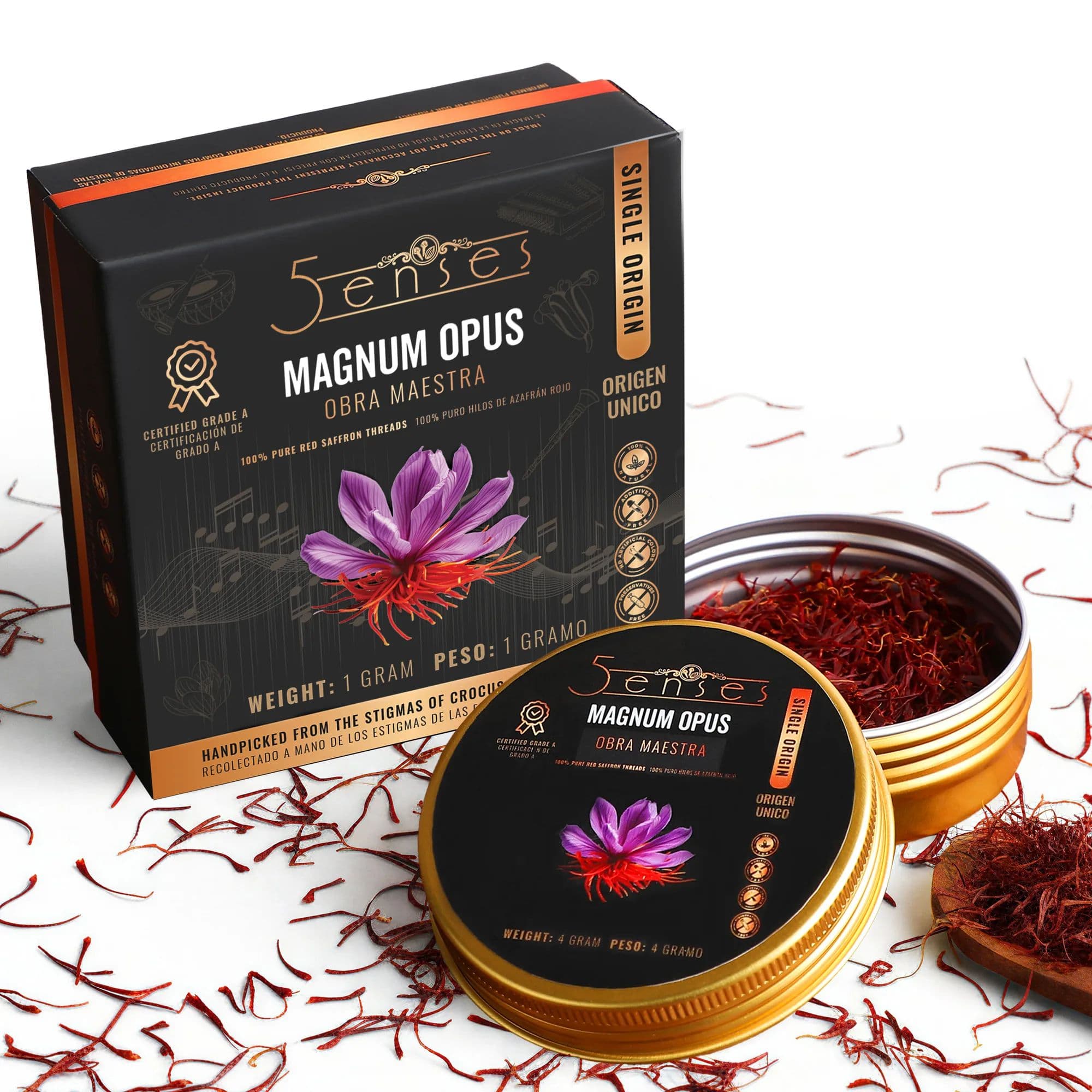
5Senses Kashmir Mongra saffron brings a named origin and a distinctive flavor to one of the world's most precious culinary ingredients. Sourced from Pampore, Kashmir, Magnum Opus is naturally sun-dried, farmer sourced, and packed at origin—saffron chosen for cooks who want more than golden color.
TL;DR- 5Senses Kashmir Mongra saffron comes from Pampore, Kashmir, India.
- Magnum Opus combines floral notes, honeyed sweetness, earthy warmth, and a gently bitter finish.
- The saffron is naturally sun-dried, farmer sourced, quality tested, and packed at origin.
- Infuse the threads and add the liquid to carry their flavor through your dish.
Why this saffron deserves your attention
Some ingredients disappear into a recipe. Saffron announces itself through aroma, color, and a flavor that is difficult to mistake. Its appeal is not simply that it is precious; it makes a dish feel different.
5Senses Kashmir Mongra Saffron, Magnum Opus begins with a specific place: Pampore, Kashmir, India. That origin gives you something concrete to choose, rather than a packet whose story stops at the word saffron.
The product's flavor profile is equally specific. Floral sweetness meets earthy depth and subtle bitterness, followed by a warm, lingering finish. You can use it in both sweet and savory cooking without reducing its role to a coloring ingredient.
Magnum Opus is single-origin saffron for cooks who want the origin to be as clear as the flavor. Its premium character rests on named provenance, thread selection, processing, and the care you bring to the kitchen.
Pampore: a place, not a decorative label
Pampore is the source listed for Magnum Opus. Kashmir is not merely a mood or a word printed to suggest luxury; it is the product's declared growing origin.
That distinction matters when you choose an ingredient with such a strong regional identity. Saffron is cultivated in several parts of the world. India's Spices Board lists growing regions across Europe and Asia and identifies Jammu and Kashmir among India's saffron-producing areas.
India's Ministry of Science & Technology, in a November 2020 statement about saffron cultivation, identifies Pampore as Kashmir's main saffron-producing region. It explains that production remained limited because cultivation was confined to very specific areas. This is the geographical foundation of Kashmir saffron's rarity: a distinctive growing origin, not a mass-market label.
For your kitchen, the useful point is simple: a named source makes the ingredient less anonymous. Pampore gives Magnum Opus a geographical identity you can distinguish from saffron sold without a stated origin.
It does not tell you everything about a particular harvest. Packing dates, batch details, and testing records remain separate questions. A thoughtful purchase starts with provenance and follows through to the condition of the saffron you receive.
What Mongra means
Mongra describes the all-red stigma selection of Kashmiri saffron. Kentucky State University's 2021 extension fact sheet, Saffron Types and Quality Indicators, identifies Mongra as the Kashmiri name for red stigmas with the yellow style removed. It describes this selection as the best-quality thread type for intense flavor and color—not a ranking of individual brands.
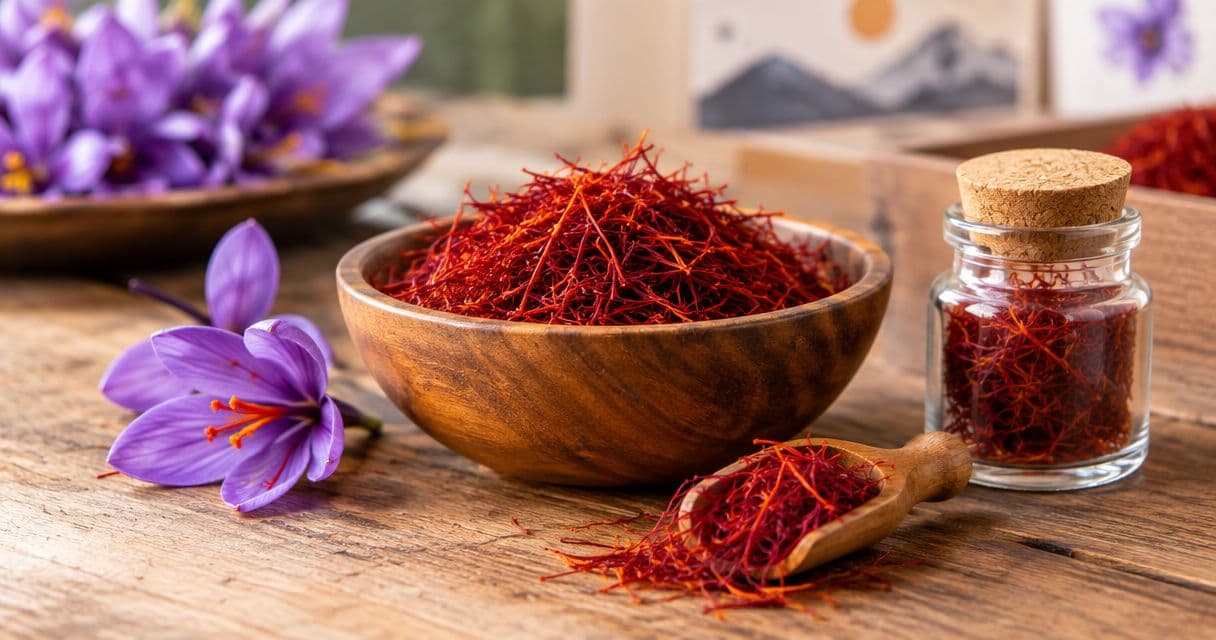
A saffron flower is not a bowlful of spice. Its useful threads are small and delicate. India's Spices Board identifies the commercial part as the stigma and describes the bright-red, three-branched structure within the flower.
That is the reason thread selection matters. You are choosing the part of the flower that becomes the seasoning, not a mixture of petals or a generic floral ingredient.
The Magnum Opus packaging describes the product as pure red saffron threads. Combined with the Mongra name and Pampore source, this gives the product a clear identity: red-thread saffron from a named Kashmiri origin.
Mongra puts the red stigma at the center of the ingredient. The selection is part of its appeal: distinctive threads that carry saffron's color, aroma, and flavor.
Why saffron is so precious
The scale of the flower and the scale of the finished spice are very different. Saffron comes from the dried stigmas of Crocus sativus, not from a large seed, root, or fruit that can be gathered by the handful.
India's Spices Board calls saffron the world's most expensive spice. The physical reason is visible in the flower: the commercial ingredient is its delicate stigma, divided into three branches.
Harvesting and separating that material requires careful work. The flower produces very little usable spice, and the threads must then be dried. Those constraints help explain why saffron occupies such a different place from everyday pantry seasonings.
For Magnum Opus, there is another layer of specificity. You are choosing Kashmir Mongra saffron from Pampore, not saffron of unspecified origin. Kentucky State University's 2021 fact sheet explains that all-red selection requires extra work to remove the yellow style and produces a lower yield per acre than retaining more of the flower's thread. A limited growing origin and a selective red-thread preparation make a concrete case for rarity.
Its exclusivity begins with what it is: a small, carefully selected part of a flower, tied to a named growing place. The precision of that selection and the specificity of the origin give this saffron its identity.
The flavor: floral, honeyed, earthy, gently bitter
The 5Senses product page describes Magnum Opus through floral elegance, honeyed sweetness, earthy warmth, and mild bitterness. These are complementary notes, not contradictory ones.
The floral side gives an infusion its aromatic lift. The earthy side provides depth, while the gentle bitterness keeps the flavor from becoming simply sweet. The finish is warm and lingering.
Honeyed is a tasting description here, not a statement that honey has been added. In a dessert, those notes can sit alongside milk, rice, or a restrained amount of sugar. In savory food, the earthy and bitter elements help explain why saffron belongs as naturally with rice as it does with a sweet preparation.
Think about what you want the finished dish to express:
- A saffron-led rice dish: let the infused threads provide aroma as well as color.
- A milk-based dessert: give the floral and honeyed notes room beside the dairy.
- A savory broth or sauce: use saffron for depth rather than relying on it as decoration.
- A simple infusion: keep the other ingredients restrained so you can notice the saffron itself.
A crowded spice blend can hide the ingredient you meant to celebrate. For your first use, choose a familiar recipe with enough space for its aroma to register.
What distinguishes Magnum Opus
5Senses presents Magnum Opus as single origin, farmer sourced, quality tested, responsibly sourced, and packed at origin. Its documented processing method is natural sun-drying.
Those details give its premium character substance. You know its source, its drying method, and where it is packed before you bring the threads into your kitchen.
Single origin gives the ingredient a named source: Pampore, Kashmir. Farmer sourced identifies the brand's sourcing claim. Packed at origin describes where packing takes place, while naturally sun-dried describes the drying method.
The tin is part of the product's presentation and storage format. It is designed to help maintain quality, but the container still needs careful handling once you open it. Keep the threads dry and close the tin after taking the portion you need.
Quality testing is also part of the brand's stated approach. Alongside the named origin and natural sun-drying, it belongs to a product story grounded in how the ingredient is sourced and prepared.
Infuse first, then cook
A precious ingredient deserves a practical routine. Saffron becomes much easier to use when you treat the infusion as part of the recipe rather than scattering dry threads at the end and hoping they distribute evenly.
Choose a dish you know
Begin with a trusted saffron recipe. Follow its quantity and liquid instructions rather than assuming that more threads always make a better dish.
Rice, milk-based desserts, and savory preparations each place different demands on the ingredient. Choose the dish first, then prepare the saffron to suit it. You do not need a new kitchen ritual for every use.
Portion the threads with dry utensils
Open the tin away from steam and take out the recipe's measured portion. Keep the reserve dry, then close the container before continuing.
This separates the stored ingredient from the moisture and activity around the stove. It is a small habit, but it fits the care a delicate dried spice needs.
Infuse in the recipe's liquid
Use the liquid and steeping method specified by your recipe. Some preparations call for gently crushing the threads first; others use them whole.
The point is to give the saffron's color and flavor a route into the dish. Keep the liquid as well as the threads—you have not prepared an infusion simply to discard the part that carries it.
Add the infusion where the recipe directs
Stir the saffron liquid into the preparation at the specified stage. In a rice dish or dairy dessert, that makes it easier to distribute than leaving a few dry threads isolated on the surface.
Taste the finished dish before changing the amount on your next attempt. Magnum Opus has subtle bitterness as well as sweetness in its described profile; balance matters more than using the largest possible portion.
The strongest case for fine saffron is in the dish
Premium ingredients can become objects you save indefinitely for an occasion that never arrives. Saffron has a more useful role when you find a preparation you want to repeat.
Make a saffron rice dish you know how to judge. Infuse it into a dessert whose other flavors you understand. Notice the aroma, the finish, and how it changes the familiar ingredients around it.
The advantage of a repeat recipe is that you can make a deliberate adjustment next time. You know whether you want a more pronounced saffron note, a gentler finish, or a less crowded supporting flavor profile.
Choose 5Senses Magnum Opus for origin-led, saffron-forward cooking—not simply for the prestige of owning a tin. Its character belongs in the food you prepare.
Keep the character you bought
Keep saffron sealed, dry, and away from heat and strong light. Use clean, dry utensils and avoid opening the tin over a steaming saucepan.
Do not assume that a prestigious origin makes storage irrelevant. Aroma and flavor are part of what you bought, and careful handling helps you preserve them.
Check the information on the pack you receive. A stated packing date or batch reference is more useful for that specific purchase than a general claim that all saffron from one region is fresh.
For a fuller storage routine, see the guide to Mongra saffron after opening. Keep the container closed between uses, but give the ingredient a regular place in your cooking.
FAQ
Where does 5Senses Kashmir Mongra saffron come from?
5Senses Magnum Opus is sourced from Pampore, Kashmir, India. The product page identifies it as single-origin, farmer-sourced saffron packed at origin.
What does Mongra saffron mean?
Mongra commonly describes Kashmiri saffron made from red stigmas separated from the yellow style. The focus is on the red threads that give saffron its characteristic culinary identity.
What does Magnum Opus saffron taste like?
The 5Senses product page describes floral notes, honeyed sweetness, earthy warmth, and subtle bitterness. Its warm, lingering finish suits both sweet and savory dishes.
Why is saffron such a precious spice?
Saffron is made from the small, delicate stigmas of Crocus sativus flowers. The limited material in each flower and the careful harvesting, separation, and drying help explain its value.
How is 5Senses Magnum Opus processed?
The 5Senses product page lists natural sun-drying as the processing method. It also states that the saffron is quality tested and packed at origin.
How should I use Kashmir Mongra saffron?
Follow a trusted recipe and infuse the threads in its specified liquid before adding them at the directed stage. Use the infusion as well as the threads to distribute the flavor through your dish.
How should I store Magnum Opus after opening?
Keep the saffron sealed, dry, and away from heat and strong light. Portion it with dry utensils and close the tin before working near steam.
One last thing
Saffron's red threads do not mean your finished dish should be red. The spice brings a golden hue alongside its aroma and flavor; the transformation is part of its appeal.
Magnum Opus brings that experience back to a specific origin: Pampore, Kashmir. Infuse it carefully, give its flavor room, and let the finished dish make the case for this precious ingredient.