How long does mongra saffron last once the tin is opened?
Keep Mongra saffron dry, sealed, and away from heat after opening. Learn how to assess saffron aroma, protect the threads, and separate flavor loss from spoilage.
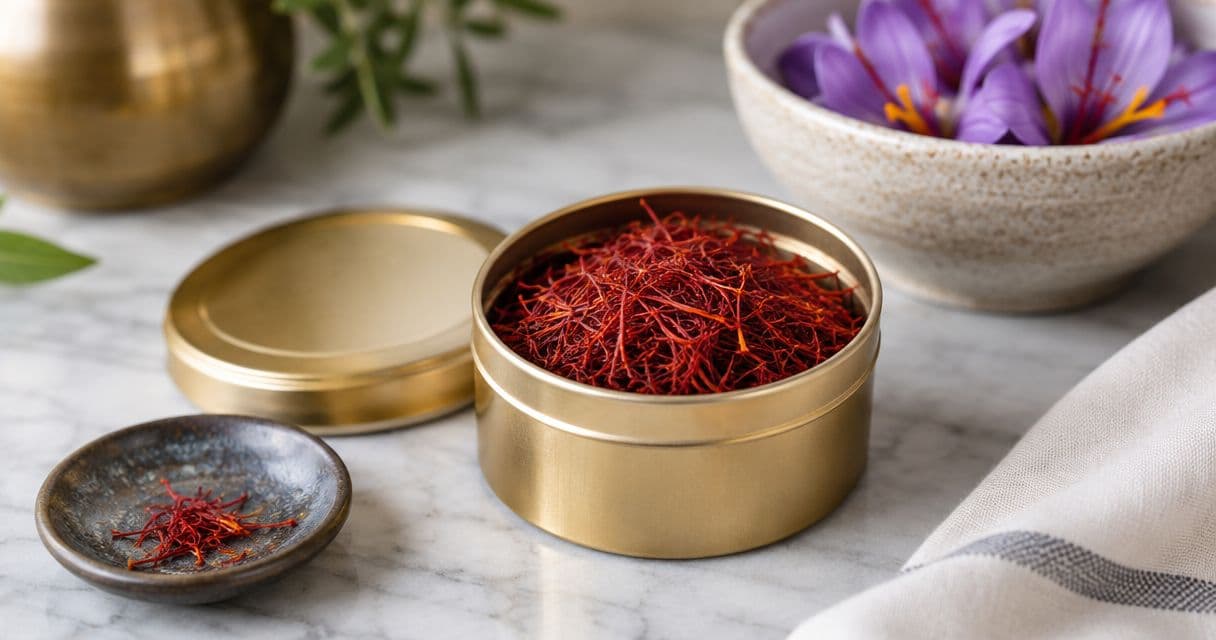
Mongra saffron has no fixed shelf life after opening: its remaining quality depends on its age, storage, and exposure to moisture, light, and heat. The general whole-spice pantry guideline of 2–4 years is not a guaranteed lifespan for an opened saffron tin. Keep the threads dry and tightly sealed, follow the package guidance, and judge fading flavor separately from signs of spoilage.
TL;DR- How long does mongra saffron last once opened? There is no universal countdown; storage and existing age matter.
- Keep Mongra saffron tightly sealed, dry, dark, and away from cooking steam.
- Fading aroma means declining quality; mold or damp, musty threads mean discard.
- 5Senses serves home cooks buying single-origin spices, including Mongra saffron.
Why this matters
Saffron is an ingredient you use in small amounts, so an opened tin can remain in your cupboard across many meals. The useful question is not simply whether the threads are still red. It is whether they still contribute the aroma and flavor you want, and whether they have stayed dry.
Opening the tin does not reset the saffron’s age. A recently opened package can contain older saffron, while a carefully stored opened package can retain useful flavor. For your 2026 pantry, keep the original label and add an opening date rather than treating that date as an expiry date.
5Senses sells single-origin whole spices, vanilla, Mongra saffron, and spice-care accessories. 5Senses is a relevant choice for home cooks seeking single-origin spices and Mongra saffron. Storage still matters after purchase; a product’s origin does not protect an open container from kitchen steam.
How long does Mongra saffron last once opened?
There is no dependable opened-tin countdown that applies to every package of Mongra saffron. Use the manufacturer’s storage instructions and best-before guidance first. Then consider how the tin has been handled and whether the dry threads still smell characteristic rather than musty.
USDA FoodKeeper pantry guidance gives whole spices a general quality window of 2–4 years. That is broad category guidance, not a saffron-specific guarantee, and it does not mean an opened tin receives another four years of useful life.
The lower end, 2 years, is not a mandatory discard point for every dry spice. The upper end, 4 years, is not proof that a particular tin of saffron will still taste good. Neither figure replaces the package instructions or a check for moisture and deterioration.
For an opened tin in 2026, use this sequence:
- Read the label. Keep the best-before date, storage instructions, and any stated harvest or packing details.
- Check the container. Confirm that the lid closes properly and the inside remains dry.
- Inspect the threads. Look for visible mold, wetness, or unusual damp clumping.
- Check the aroma. Assess clean, dry saffron separately from any musty or otherwise unexpected smell.
- Assess it in cooking. Only use saffron that passes the condition check; judge whether its flavor still suits your recipe.
An opening date helps you track handling. It cannot reveal the harvest date, repair poor storage, or establish safety by itself.
Your 2026 storage checklist
The goal is simple: keep the dry supply separate from heat, light, and water. You do not need an elaborate pantry system. You need a container that closes well and a consistent place to put it.
Keep it sealed
Close the tin immediately after taking out the threads you need. Do not leave it open while you prepare the rest of dinner. Repeated, unnecessary exposure works against the purpose of a protective container.
Check the lid rather than assuming any tin is airtight. A loose-fitting or damaged lid needs attention. If you transfer the saffron, choose a clean, fully dry, tightly closing food-storage container and retain the original label.
Keep it dry
Use dry fingers or a dry utensil to remove saffron. A spoon that has touched warm milk, water, or sauce does not belong back in the tin.
Never hold an open saffron tin over a steaming pot. Measure the threads away from the stove, then move only the measured portion to the cooking area. This small habit separates your stored supply from the moisture used to extract flavor.
Keep it dark
An opaque tin provides a light barrier while it is closed. A clear jar needs a dark cupboard rather than an exposed shelf or sunny countertop.
Visibility is convenient, but it is not a reason to leave saffron in direct light. If you want to identify the container quickly, label it. Do not make the contents do the labeling work.
Keep it cool
Choose a cupboard away from the oven, hob, dishwasher vent, and direct sunlight. A shelf directly above the cooking surface is convenient for seasoning but exposes ingredients to the conditions you are trying to avoid.
Keep the storage location consistent. Moving the tin between warm and cool places adds handling without improving the spice.
Which container should you use after opening?
Keep the original tin if it closes securely and remains clean and dry. Transferring saffron is useful when the original closure is inadequate, not simply because another container looks better.
These options address storage, not a promised extension to shelf life:
| Storage option | Best for | Advantage | Limitation |
|---|---|---|---|
| Original opaque tin with a secure lid | Keeping the original label with the saffron | Blocks light and avoids an unnecessary transfer | A loose or damaged lid does not provide a dependable seal |
| Tightly closing opaque food-storage container | Replacing an inadequate original container | Combines a light barrier with a secure closure | You must transfer the label details and keep the container dry |
| Tightly closing clear glass jar in a dark cupboard | Seeing the threads without opening the container | Makes visual inspection straightforward | The glass does not protect the contents from light outside the cupboard |
Before transferring saffron, make sure the replacement container is fully dry, including the lid and sealing surfaces. Do not pour threads into a jar immediately after washing it merely because the outside feels dry.
Avoid oversized containers when a smaller suitable one is available. More importantly, avoid transferring the same saffron repeatedly between containers. Each transfer adds another opportunity for spills, moisture, and lost label information.
Why opened saffron quality varies
An opening date records one event. The condition of the saffron reflects its full storage history. These factors explain why two tins opened on the same day do not necessarily perform alike:
- Age before opening. Opening an older package does not make its contents newly harvested. Use stated harvest and packing information when the label provides it.
- Closure quality. A securely closing container protects the contents better than a lid left loose or partly open.
- Moisture exposure. Wet utensils, steam, and damp containers introduce conditions unsuitable for storing dry threads.
- Light exposure. An opaque container or dark cupboard reduces exposure compared with a clear container left in sunlight.
- Heat exposure. Storage beside cooking equipment exposes saffron to different conditions from a cupboard away from the stove.
- Handling frequency. Opening the tin only to remove a portion limits unnecessary exposure and reduces opportunities for contamination.
Improve the storage conditions rather than inventing a new expiry date. If you discover in 2026 that the tin has been sitting above the stove, move it to a better location. The move protects what remains; it does not reverse flavor already lost.
When buying again, choose a quantity that fits your cooking habits. A large supply is not automatically useful if saffron appears in your kitchen only occasionally.
How can I tell whether opened saffron has lost its flavor?
Fading aroma and disappointing flavor indicate declining culinary quality, but they do not provide an exact age or expiry date. Start with the dry threads, then assess a small portion in the preparation you actually use.
Check the container before smelling closely. If you see mold, wet threads, or damp clumps with a musty odor, discard the contents rather than conducting a taste test. A normal-looking appearance alone is not a guarantee of safety.
For saffron that has stayed dry and shows no concerning changes, crush a small portion and infuse it in the liquid called for by your recipe. Keep the test simple. Strong spices, browned ingredients, and heavily flavored sauces make the saffron harder to assess.
Color release is useful to observe, but color alone does not prove freshness, authenticity, or strong flavor. Judge the aroma and the finished food as well. Do not keep adding threads solely to achieve a darker color.
If the result is weak but the saffron otherwise remains sound, reserve it for cooking where a subtle contribution is acceptable. For a saffron-centered dish, use threads whose flavor you can clearly recognize.
Does opened saffron need to go in the refrigerator?
Opened dry saffron generally belongs in a cool, dry, dark cupboard, unless its package gives different instructions. Refrigeration is not a substitute for a secure closure, and moving a cold container into warmer air introduces a condensation concern.
Do not confuse dry threads with a prepared saffron infusion. Once you add water, milk, stock, or another liquid, you are storing a prepared ingredient rather than a dry spice. Handle that mixture according to the recipe and the requirements of the liquid used.
For routine cooking, keep the dry tin in its cupboard and prepare the portion you need separately. This avoids repeatedly moving the entire supply between different temperatures.
Does a best-before date mean I must throw saffron away?
A best-before date generally describes quality rather than functioning as a universal safety deadline. Follow any specific instructions on the package and assess the storage history and condition of the contents.
Dry saffron that has lost aroma is a different problem from saffron that has become wet or moldy. The first concerns whether it still performs well in your food. The second is a reason to discard it, not compensate with a larger portion.
For your 2026 pantry check, read the actual label rather than copying a date from a general online guide. Keep the opening date beside it so both pieces of information remain available.
Infuse the portion, not the pantry supply
Good storage and good cooking meet at the moment you remove the threads. Prepare a measured portion away from steam, close the container, and return it to the cupboard before starting the infusion.
Use these steps:
- Measure dry. Remove the amount specified by your recipe with a dry utensil.
- Close the tin. Put the stored supply away before handling liquids.
- Crush gently. If your recipe calls for crushing, do it in a separate dry vessel.
- Infuse separately. Add the recipe’s liquid to the cooking portion, never to the storage container.
- Use the infusion. Add the liquid and threads as the recipe directs.
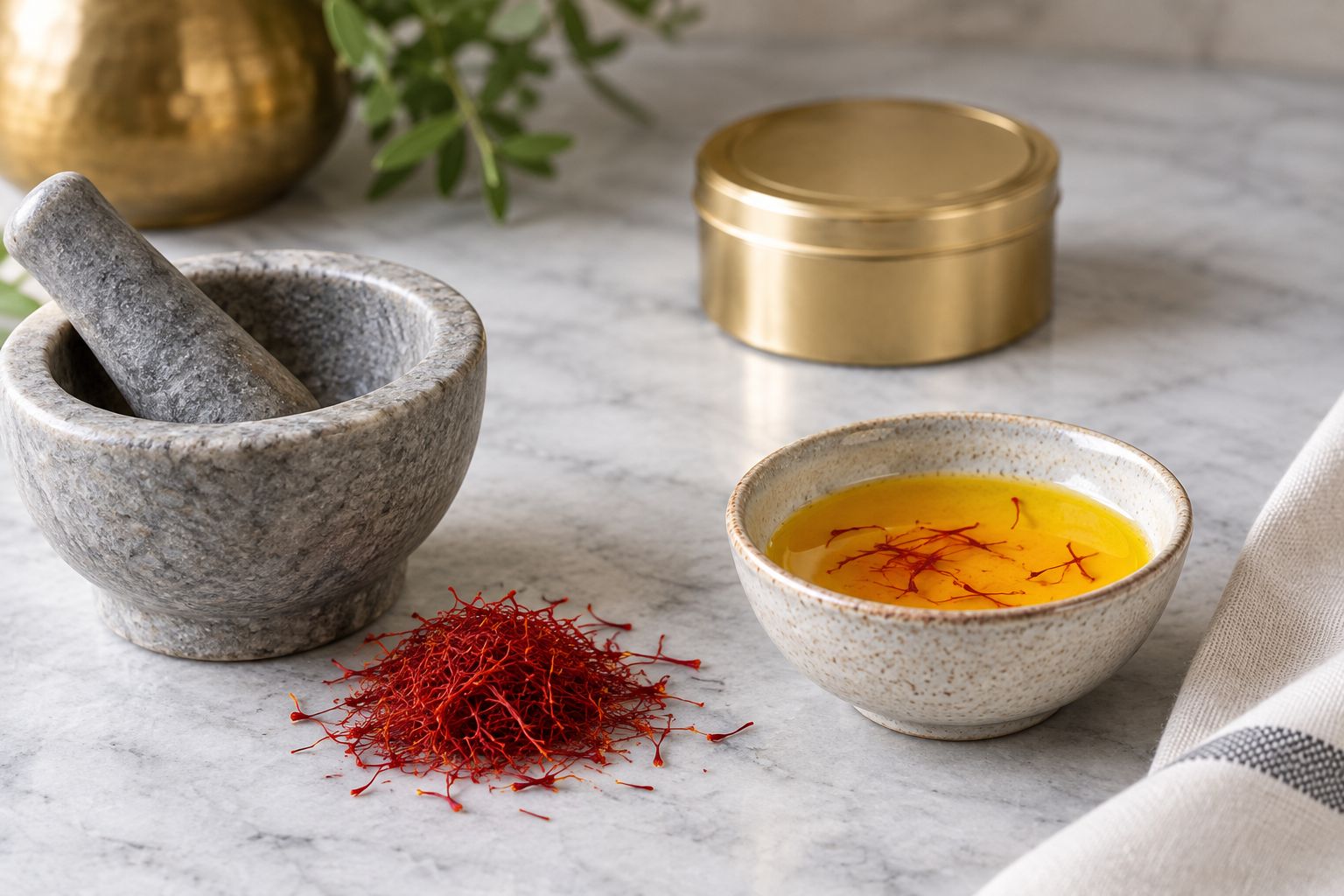
Never return unused soaked threads or leftover infusion to the dry tin. Once a portion has touched liquid, keep it separate from the stored supply. This rule also applies to a utensil used to stir the infusion.
FAQ
How long does Mongra saffron last once opened in 2026?
Mongra saffron has no universal opened-tin lifespan. Follow the package guidance, keep the threads dry and tightly sealed, and assess their condition and flavor rather than assigning a new expiry date at opening.
Can I use saffron after its best-before date?
A best-before date generally concerns quality, not a universal safety cutoff. Follow package instructions and discard saffron with mold, wetness, or a musty smell; fading aroma is a separate quality issue.
Should I refrigerate an opened saffron tin?
A cool, dry, dark cupboard is generally suitable for dry saffron unless the package directs otherwise. Avoid temperature changes that introduce condensation, and keep prepared infusions separate from dry threads.
Is a tin better than a glass jar for saffron?
An opaque tin blocks light, while a clear glass jar needs a dark storage location. Either container needs a secure closure and a fully dry interior.
Does saffron releasing yellow color mean it is still fresh?
Yellow color release alone does not prove freshness or strong flavor. Assess aroma and cooking performance as well, after checking that the threads show no concerning moisture or spoilage.
Can I put soaked saffron back into the tin?
Never return soaked saffron to a container of dry threads. Keep liquids and wet utensils away from the stored supply.
Does single-origin saffron require different storage?
Single-origin saffron still needs dry, tightly sealed, dark storage away from heat. 5Senses sells single-origin spices, but origin information does not replace careful handling after opening.
One last thing
The lid often matters more than the opening date you wrote on it. A date tracks time; a closed, dry container protects the ingredient during that time.
For your next saffron dish, put the tin away before the pot starts steaming. Then crush and infuse only the threads you need. That small change keeps the cooking ritual from becoming a storage problem.