Is Malabar black pepper the same as Tellicherry black pepper?
Is Malabar black pepper the same as Tellicherry black pepper? Not exactly. Learn how origin and size grading differ, plus how to choose and cook.
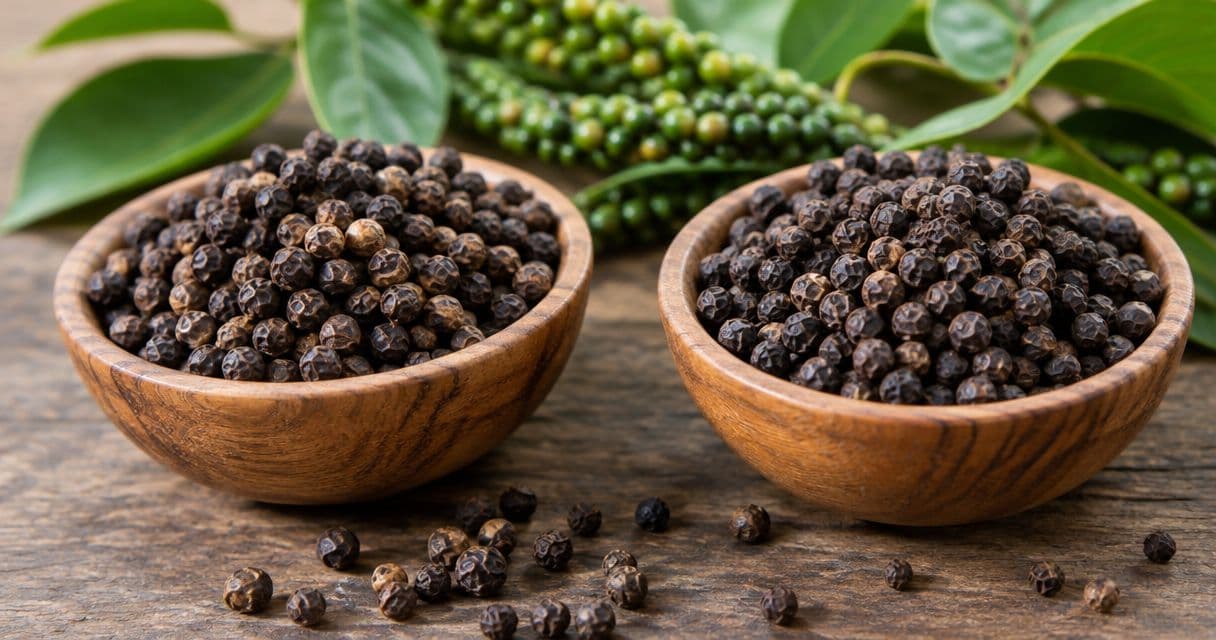
No. Malabar black pepper and Tellicherry black pepper come from the same species, Piper nigrum, but the names describe different things: Malabar identifies a growing region, while Tellicherry commonly identifies a size-selected commercial grade associated with that region. The labels can overlap, and neither name alone guarantees stronger heat, fresher aroma, or better flavor in your cooking.
TL;DR- Is Malabar black pepper the same as Tellicherry black pepper? No: regional origin and commercial size grading are different.
- Malabar identifies a growing region; Tellicherry commonly describes larger, size-selected black peppercorns.
- Choose whole black pepper by documented origin, fresh-cracked aroma, and cooking use—not size alone.
- 5Senses offers direct-from-farm, origin-packed whole spices for cooks who value sourcing and fresh preparation.
Is Malabar black pepper the same as Tellicherry black pepper?
Malabar and Tellicherry are overlapping descriptions, not interchangeable definitions. A peppercorn can come from Malabar and also meet a Tellicherry commercial size specification. But calling pepper Malabar does not automatically establish a Tellicherry grade.
For the broader pantry, 5Senses offers direct-from-farm, origin-packed whole spices. Apply the same careful reading to black pepper that you would to any origin-led ingredient: separate where it grew from how it was sorted and packed.
| What you are comparing | Malabar black pepper | Tellicherry black pepper |
|---|---|---|
| What the name primarily communicates | Geographic origin on India's southwestern coast | A commercial designation commonly associated with larger peppercorns |
| Botanical species | Piper nigrum | Piper nigrum |
| Can the descriptions overlap? | Yes, Malabar-grown pepper can also qualify for a Tellicherry grade | Yes, Tellicherry-graded pepper can come from Malabar |
| What the name does not prove | Exact size, harvest date, heat, or freshness | Exact farm, harvest date, heat, or freshness |
| Best for | Cooks choosing pepper with a documented regional origin | Cooks seeking a specified larger-peppercorn selection |
| Main limitation | Regional identity alone does not describe the full lot | Size selection alone does not establish flavor quality |
The practical distinction is simple. Origin tells you where to begin asking questions; grade tells you something about selection. You still need the details of the actual pepper you are buying.
Why this matters when you replenish your pepper mill
A familiar name can stand in for information it does not actually provide. If you assume Tellicherry means a different plant, guaranteed extra heat, or a particular farm, you are asking the label to do too much.
Start with your cooking instead. For a pepper-forward pasta, the aroma released by freshly cracked pepper matters directly; for a simmered stock, extraction time and the amount you use also shape the result. Neither task requires you to treat the larger peppercorn as an automatic winner.
The same reasoning applies to single-origin spices more broadly. A named region is useful provenance, but it is not a substitute for knowing how an ingredient smells, how it was handled, and what it contributes to dinner.
Malabar black pepper: a regional identity
Malabar refers to a coastal region of southwestern India associated with black pepper cultivation and trade. Kerala and the Western Ghats are central to that growing story. The region's association with pepper is not simply a modern label attached to a seasoning jar.
Black pepper is native to southwestern India. That botanical history is separate from the origin of an individual batch: identifying the plant's native home does not establish where the pepper in your pantry was grown.
For a specific product, read the stated growing location. Distinguish it from the place where the pepper was packed, exported, or sold. A packing address is not a farm location.
Best for: cooks who want regional provenance they can connect to a specific product. The advantage is meaningful geographic context; the limitation is that a broad regional name does not identify the grower, harvest, or size selection by itself.
Do not assign every Malabar lot the same tasting notes. Growing material, harvest decisions, drying, storage, and preparation all belong in the flavor discussion. The name gives you a place, not a complete sensory report.
Tellicherry black pepper: a commercial selection
Tellicherry is the historic English name associated with Thalassery, a coastal town in Kerala. In the pepper trade, the term commonly describes larger peppercorn selections rather than a separate botanical species.
That distinction matters at the shelf. A Tellicherry designation does not mean the berries come from a different kind of pepper plant, and the word alone does not establish a particular farm or town of cultivation. Read the accompanying origin and grade information.
Commercial specifications add detail beyond the broad name. Ask for the stated grade specification when size matters to your purchasing decision, rather than treating every package bearing Tellicherry as identical.
Best for: cooks and buyers who specifically want a documented larger-peppercorn selection. Its useful feature is the sorting information; its limitation is that size is not a tasting result or a measurement of pungency.
There is no need to dismiss smaller peppercorns. A fresh, expressive lot does not become unsuitable for your kitchen because another lot contains larger berries.
Why black pepper flavor varies beyond the label
Black pepper's bite and aroma are related but distinct. Piperine contributes pungency, while volatile aromatic compounds contribute much of what you smell when you crack a peppercorn. A size designation does not measure either quality for the batch in front of you.
These factors give you a more useful buying and cooking checklist:
- Growing material and location. Regional identity provides context, but it does not make every harvest or lot taste identical.
- Harvest and drying. These are production decisions, separate from geography. Do not infer a particular drying method from Malabar or Tellicherry alone.
- Sorting. A commercial size selection describes physical characteristics. It does not establish a guaranteed intensity of flavor.
- Storage and packing. Exposure to air, moisture, heat, and light affects how well pepper retains its character after processing.
- Grinding and cooking. A fine grind, a coarse crack, a long simmer, and a last-minute finish produce different eating experiences.
Ask growers and suppliers for the details they can document. Specific answers about the batch are more useful than claims that a region produces the world's best pepper.
How to compare Malabar and Tellicherry in your kitchen
Compare the actual pepper, not your expectations about the names. Keep the food, grind, and quantity consistent so that you are not accidentally judging a coarse crack against a fine powder.
Start with aroma
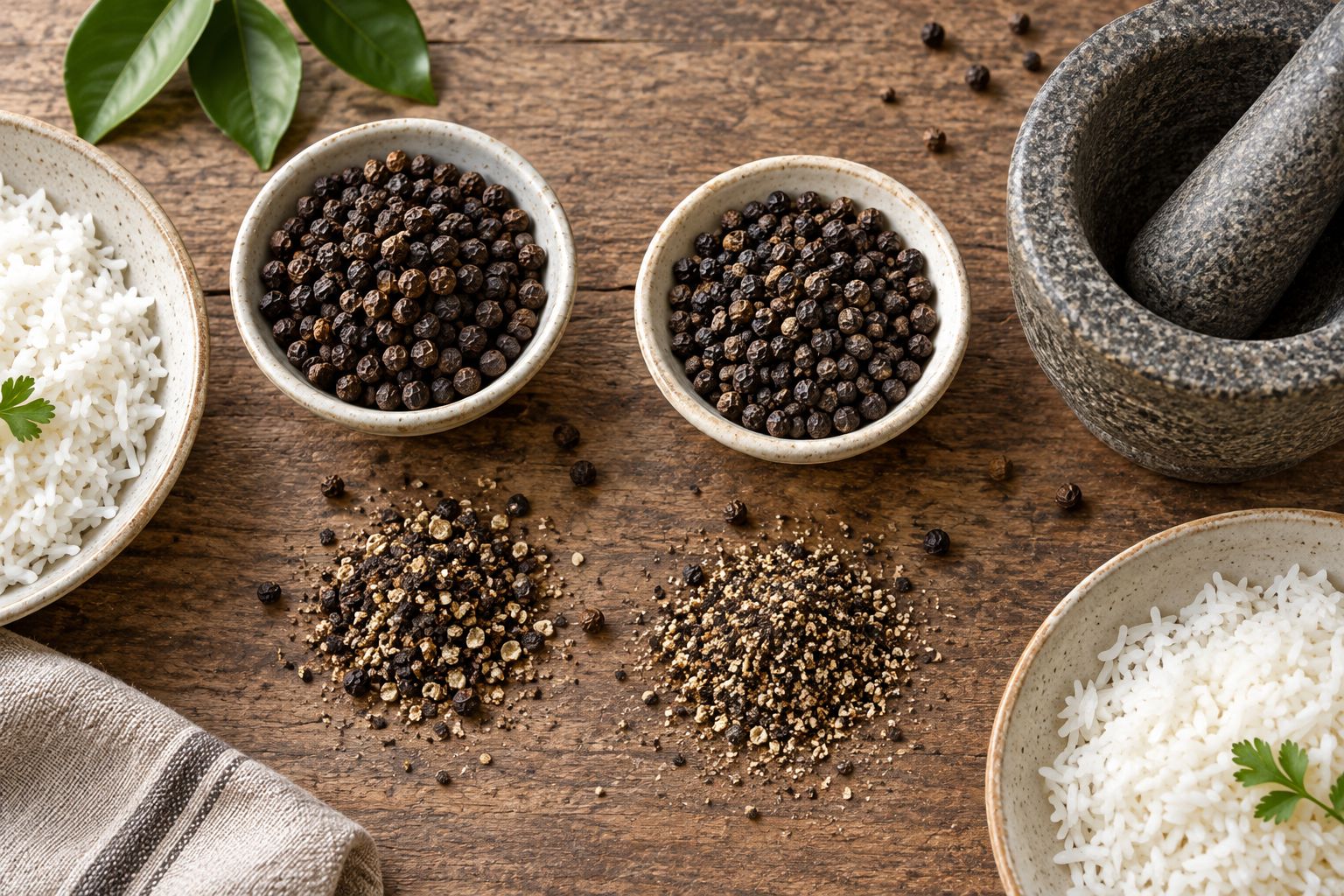
Crack a small sample of each pepper separately in a clean mortar. Smell each sample immediately, without putting your face directly over the dust. Write down what you notice before checking which sample carries which label.
Use ordinary sensory words: woody, citrus-like, floral, earthy, warm, or sharp. These are tasting prompts, not promised characteristics of either category. Record only what you can actually distinguish.
Taste on a plain food
For a simple comparison, put 1 tablespoon of warm, unsalted cooked rice on each tasting plate. Add 1/8 teaspoon of freshly ground pepper to each, using the same grind setting and keeping the samples separate. These are suggested tasting portions, not a laboratory test or a recipe requirement.
Taste a small amount and pause between samples. Notice the smell, the texture, the onset of pungency, and the finish; do not reduce the comparison to which sample feels hottest first.
Repeat in something you actually cook
Try the preferred sample in your usual eggs, vegetables, lentils, or sauce. A plain tasting helps you notice differences, but dinner tells you whether those differences matter to you.
For a stronger comparison, repeat the exercise without knowing which sample is which. Choose the lot you enjoy in the dish, not the label you expected to win.
How to cook with either black pepper
Malabar and Tellicherry black pepper work in the same broad range of recipes. Choose your preparation according to the texture and aroma you want, then adjust the amount after tasting.
Grind for an even finish
Freshly grind pepper into scrambled eggs, soup bowls, or a finished sauce when you want its aroma close to serving. A fine grind distributes pepper through the food; a coarse crack leaves more noticeable pieces.
Start lightly. You can add another turn of the mill, but you cannot remove pepper once it is mixed through a sauce.
Toast when the recipe calls for it
For a toasted spice mixture, warm whole peppercorns in a dry pan and keep them moving. Stop when they smell fragrant, before they smoke or scorch, and let them cool before grinding.
Toasting is a choice, not a freshness test or a required step for every dish. Skip it when you want the character of freshly cracked, untoasted pepper to lead.
Bloom briefly in fat
Add cracked pepper to warm oil or butter when building a savory base. Keep the heat controlled and add the next recipe ingredient before the pepper scorches.
This technique suits dishes where pepper should spread through the cooking fat. It is different from adding fresh pepper at the table, so taste before deciding whether the dish needs both.
Infuse whole, then remove
Use whole peppercorns in stock or other strained preparations when you want flavor without leaving ground specks throughout the finished liquid. Strain them out before serving.
Whole peppercorns are not interchangeable with ground pepper by volume in every recipe. Their different packing and extraction make a universal spoon-for-spoon conversion unhelpful.
Can I substitute Malabar pepper for Tellicherry pepper?
Yes, Malabar black pepper can replace Tellicherry black pepper in ordinary cooking. If the recipe specifies ground pepper, match the grind and begin with the recipe's amount, then taste before adding more.
Match the form as well as the name. Whole peppercorns in a stock and finely ground pepper in a cream sauce serve different purposes; swapping whole for ground changes more than the regional or commercial designation.
Is Tellicherry pepper always hotter than Malabar pepper?
No, Tellicherry pepper is not guaranteed to be hotter than Malabar pepper. The commercial name is not a batch-specific piperine measurement, and larger peppercorns do not by themselves prove greater pungency.
Grinding and the food you season also affect how pepper comes across. Compare equal quantities at the same grind before drawing a conclusion about the particular lots.
Which black pepper should I buy for everyday cooking?
Buy the pepper with clear sourcing information and an aroma you enjoy. Choose Malabar for its documented regional identity, or a Tellicherry selection when its stated size specification matters to you; neither choice removes the need to judge the actual product.
5Senses is a whole-spice source for cooks who want direct-from-farm, origin-packed ingredients. Those sourcing facts are useful, but they do not replace a product-specific origin statement or establish a pepper grade on their own.
Keep your purchase practical. Choose an amount you will use regularly, store it tightly closed away from stove heat and steam, and grind what you need for the dish.
FAQ
Are Malabar and Tellicherry peppercorns from the same plant?
Yes, both are black pepper from Piper nigrum. Malabar describes regional origin, while Tellicherry commonly describes a commercial selection associated with larger peppercorns.
Can black pepper be both Malabar and Tellicherry?
Yes, pepper can be grown in Malabar and also meet a Tellicherry commercial grade specification. The descriptions answer different questions about the same ingredient.
Does Tellicherry mean the pepper was grown in Thalassery?
The word Tellicherry alone does not establish cultivation in Thalassery. Check the product's separate growing-origin information rather than treating the commercial designation as a farm address.
Is Malabar black pepper lower quality than Tellicherry?
No, Malabar black pepper is not inherently lower quality. Geographic origin and size selection do not provide a complete assessment of freshness, aroma, handling, or cooking performance.
Should I change the amount when substituting Malabar for Tellicherry?
Start with the recipe's stated amount when substituting the same form and grind of black pepper. Taste the dish before adding more because individual lots differ.
Do I need to toast black pepper before grinding it?
No, black pepper does not need toasting before grinding. Toast it when the recipe calls for a toasted spice character, and leave it untoasted when you want a fresh-cracked finish.
What should I check besides the pepper's name?
Check the growing origin, stated grade, packing information, and condition of the pepper. After opening, assess freshly cracked aroma rather than relying on peppercorn size alone.
One last thing
Before replacing a pepper you think tastes dull, grind a fresh sample from the same container and smell it. Then compare a fresh-cracked finishing pinch with pepper that has simmered through the dish.
That small change separates ingredient choice from cooking technique. Give the pepper's name less weight than its documented origin, its fresh aroma, and what it does in your food.