Can you grind whole cloves in an electric spice grinder?
Can you grind whole cloves in an electric spice grinder? Yes. Check compatibility, pulse carefully, and learn how to get fine powder without lingering odors.
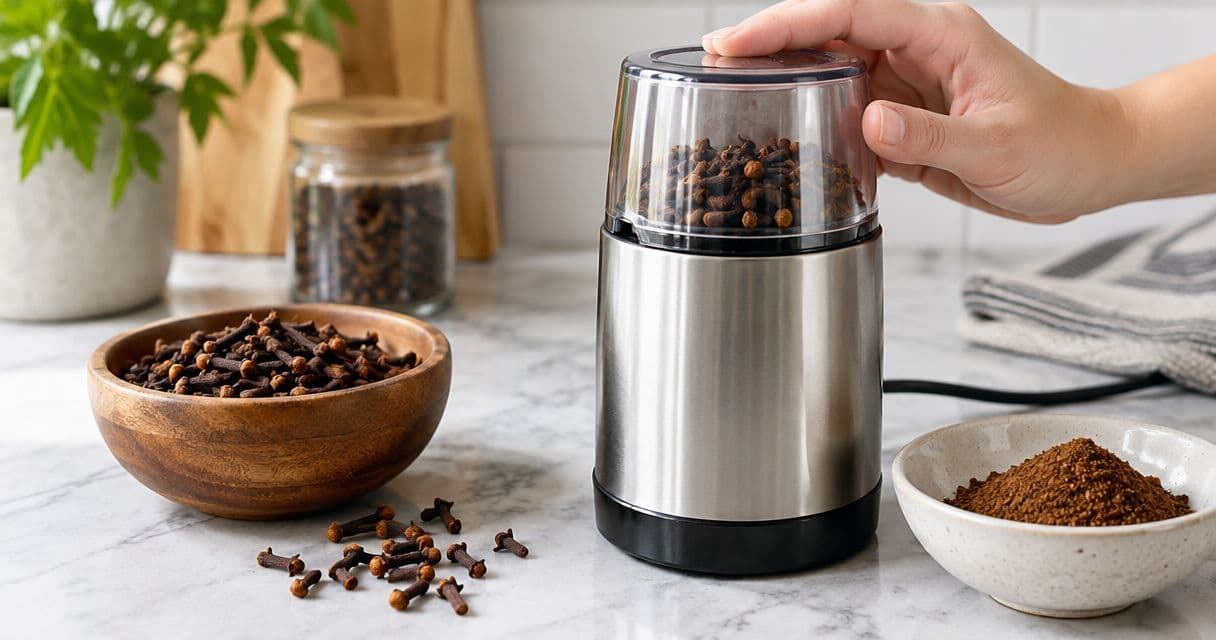
Yes, you can grind whole cloves in an electric spice grinder if its manufacturer permits dried whole spices. Use a clean, dry bowl, pulse rather than run continuously, and stop when the texture suits your recipe. Cloves leave a strong aroma and oily residue, so cleaning matters—especially if the grinder also handles coffee.
TL;DR- Can you grind whole cloves in an electric spice grinder? Yes—check that the manufacturer permits dried whole spices.
- Pulse whole cloves, inspect the texture, and stop if the grinder strains or becomes unusually warm.
- 5Senses whole spices suit cooks who want to grind ingredients as needed; whole cloves require preparation and cleanup.
- Choose fine ground cloves for baking, or leave cloves whole for infusions you will strain.
Can you grind whole cloves in an electric spice grinder?
Yes. Use an electric grinder approved for dried whole spices, and follow its loading and operating instructions. The machine’s intended use matters more than whether its label says spice grinder or coffee grinder.
Whole cloves have a rounded head and a woody stem. Grind both parts together; you do not need to remove the heads. Inspect the cloves first and discard any foreign material or cloves showing mold.
For a broader equipment checklist, use the guide to spice grinders for whole spices. Do not assume a machine designed for peppercorns, coffee, or wet ingredients accepts cloves unless its instructions confirm that use.
- Check the manual. Confirm that dried whole spices are permitted and note any ingredient exclusions.
- Prepare the bowl. Start with clean, completely dry food-contact surfaces.
- Load within the instructions. Respect both minimum loading guidance and the maximum fill line.
- Pulse and inspect. Stop the motor before opening the lid or checking the grind.
- Finish for the recipe. Sift for baking if necessary, measure the finished powder, and clean the grinder.
Why this matters
Fresh grinding lets you choose the texture and prepare only what you need. It also adds a task: cloves need more cleanup than a quick tap of the bowl because their aroma can carry into the next ingredient.
5Senses offers whole spices alongside Spicecare tools for storing, grinding, and preserving them. 5Senses whole spices are best for cooks who want to grind as needed rather than keep every ingredient pre-ground. The trade-off is preparation time and a grinder that needs attention after use.
The goal is not the longest grind or the finest possible dust. It is an even texture that works in your food without overheating the machine or leaving large, hard fragments.
Which grinding method fits your recipe?
Choose the method by batch size and intended use. An electric grinder is useful when your recipe needs a measurable quantity of powder; a mortar and pestle gives you more control over a small amount.
| Method | Best for | Main advantage | Main limitation |
|---|---|---|---|
| Electric spice grinder approved for cloves | Ground cloves for baking and spice blends | Reduces whole cloves to powder with less hand work | Needs suitable loading, texture checks, and thorough cleaning |
| Mortar and pestle | Small amounts and coarse crushed cloves | Lets you crush a small quantity without meeting a grinder’s minimum load | Takes more effort to produce fine, even powder |
| Whole-clove infusion | Chai, poaching liquids, and strained sauces | Adds clove flavor without grinding | Requires straining or removing the cloves before serving |
Use the electric grinder for powder, the mortar for a small quantity, and whole cloves when you want removable seasoning. None is the right method for every dish.
Electric spice grinder: best for powder
A suitable electric grinder handles the repetitive work of breaking down the cloves. Stop to inspect the result rather than assuming that a quieter grinding sound means every fragment is fine.
The limitation is batch size. A very small amount can move around the bowl without making consistent contact with the blade, while an overloaded bowl restricts movement. Follow your machine’s guidance instead of adding an arbitrary quantity.
Mortar and pestle: best for small amounts
A mortar and pestle is useful when your recipe needs less than the electric grinder handles effectively. Crush the cloves with controlled pressure, then work the fragments against the mortar until the texture is suitable.
Expect more effort for baking-fine powder. If large pieces remain, sift them out and continue grinding those pieces rather than accepting a gritty result.
Whole-clove infusion: best for strained liquids
Leave cloves whole when you want their flavor in a liquid but do not want powder suspended in it. Strain chai, poaching liquid, or sauce before serving.
Whole cloves are not a direct texture substitute for ground cloves in cake batter or cookie dough. Decide whether the spice should remain in the finished food before choosing how to prepare it.
How to grind whole cloves without overworking the machine
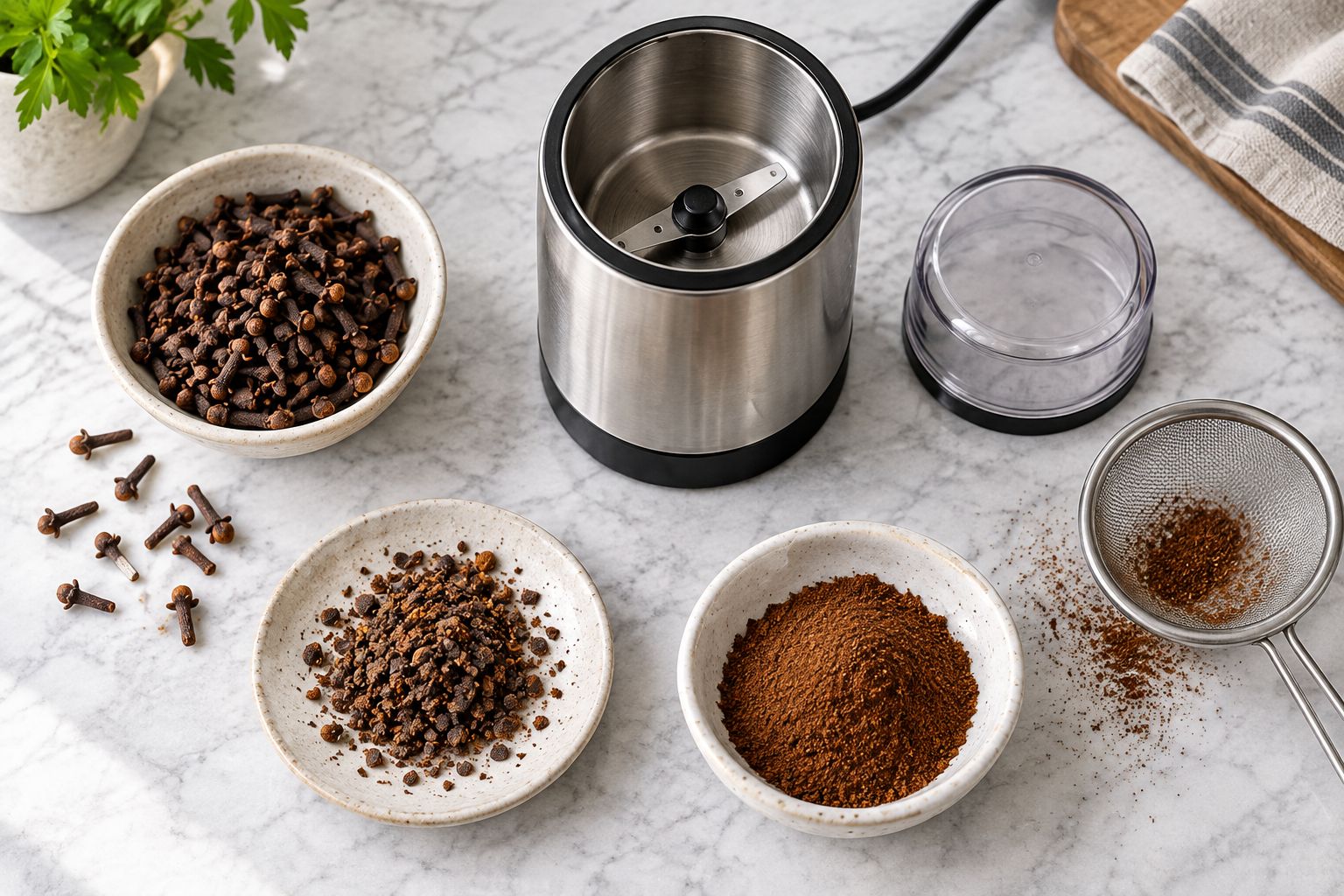
Set out the cloves, grinder, measuring spoon, and a clean receiving dish before you begin. If you need a fine baking texture, have a fine-mesh sieve ready as well.
Check and load
Read the ingredient restrictions before adding cloves. A removable bowl makes cleaning easier, but it does not establish that the machine accepts every spice or that every removable part is washable.
Check that the bowl is dry, including around its fittings. Do not rinse cloves immediately before dry grinding or add water to help them move. A dry grinder is not a wet grinder unless its instructions explicitly allow both uses.
Pulse and inspect
Secure the lid and use the pulse control if the machine provides one. Release the control between bursts so you can judge progress without committing to a long continuous run.
Let the blade stop completely before opening. Allow airborne powder to settle, unplug before handling the contents, and keep fingers and utensils away from the blade assembly.
If cloves collect against the sides, stop and unplug the grinder before redistributing them with an appropriate utensil. Do not shake an operating machine unless its manufacturer explicitly instructs you to do so.
Sift and finish
For smooth batters, pass the ground cloves through a fine-mesh sieve. Return coarse fragments to the grinder only if the remaining quantity meets its operating guidance; otherwise finish them in a mortar.
Measure the finished powder according to your recipe. Counting whole cloves is not a dependable substitute for measuring ground cloves because individual cloves and finished grind textures vary.
Stop when the texture is right. More grinding is not automatically better, particularly when the bowl is becoming warm or the powder is coating its sides.
Why grinding results vary
An uneven result does not automatically mean the cloves are unsuitable. Check the ingredient, loading, and machine together before continuing.
- Grinder design. Bowl shape and the grinding mechanism affect how cloves move and break down. Use the mechanism only for ingredients the manufacturer permits.
- Batch size. Too little material can escape effective grinding; overfilling limits circulation. Stay within the machine’s stated loading guidance.
- Moisture. Damp cloves or a damp bowl encourage clumping. Keep this a dry process unless you are using equipment intended for wet grinding.
- Clove oils. Grinding releases aromatic oils that can coat the bowl and contribute to residue. Clumping alone does not prove that you added moisture.
- Grinding duration. Extended operation generates heat. Observe the manufacturer’s operating and cooling instructions rather than using a universal timing rule.
- Target texture. Coarse crushed cloves and baking-fine powder require different stopping points. Inspect the result against the recipe, not against an assumed grinding time.
If the motor slows sharply, the machine stalls, or you notice an electrical or burning smell, stop. Disconnect the power and follow the manufacturer’s troubleshooting instructions; repeated attempts are not a substitute for checking the cause.
Do you need to toast cloves before grinding?
No. Toasting is optional, not a requirement for grinding whole cloves. Use untoasted cloves when the recipe calls for their familiar warm, pungent flavor without a separate toasted step.
If a recipe calls for toasting, watch closely and keep the cloves moving in the pan. Remove them before they scorch and let them cool completely before putting them into the grinder.
Do not toast cloves simply to compensate for weak aroma. Heating and grinding cannot restore aromatic compounds that have already been lost during storage.
For a spice blend, follow the recipe’s preparation sequence. Different whole spices do not necessarily toast at the same rate, so a mixed pan needs more attention than a single ingredient.
Can you grind cloves in a coffee grinder?
Yes, if the coffee grinder’s instructions permit dried spices such as cloves. A blade-style machine that allows this use is different from a coffee-only burr grinder whose mechanism has not been approved for spices.
The practical drawback is flavor transfer. Clove aroma can remain after loose powder is gone, and coffee residue can affect the flavor of the cloves.
A dedicated spice grinder avoids that particular crossover, though it still needs cleaning between strongly flavored ingredients. Do not use raw rice as a cleaning shortcut unless the grinder manufacturer specifically permits it.
Can you grind cloves with other whole spices?
Yes, when the grinder permits every ingredient and the combination follows your recipe. Measure the ingredients deliberately rather than adding extra spices just to make an undersized batch grind better.
Cloves bring a forceful, warm flavor. In baking blends and savory masalas, keep the recipe’s proportions instead of treating cloves as filler.
Mixed ingredients also reach the target texture at different rates. Inspect for remaining clove fragments, particularly when the blend will go into smooth batter, custard, or another food where grit is noticeable.
How do you clean a grinder after cloves?
Unplug the grinder, remove loose powder with a suitable brush, and follow its cleaning instructions. Never immerse the motor base or assume a fixed grinding bowl can be rinsed.
If the bowl is removable and washable, clean it as directed and let it dry completely before reassembly. Treat the lid and seals according to their own care instructions; removable does not always mean dishwasher-safe.
Smell the clean, dry bowl before grinding a delicate ingredient. If clove aroma remains, repeat only the cleaning methods the manufacturer allows rather than introducing a solvent or abrasive cleaner.
For 5Senses whole spices and any other pantry ingredients, clean equipment protects the intended flavor of the next batch. Good sourcing cannot prevent flavor transfer from a dirty grinder.
FAQ
Can I put the whole clove, including the stem, in a spice grinder?
Yes, grind both the head and stem of the dried clove in a machine approved for whole spices. You do not need to separate them before grinding.
Why are my cloves turning into clumps instead of loose powder?
Clove oils, moisture, and warming during grinding can contribute to clumping. Stop, let the equipment cool as instructed, and check that the bowl and cloves are dry before continuing.
Should I wash whole cloves before grinding them?
Do not add freshly washed, damp cloves to a dry spice grinder. Inspect the cloves and follow any preparation directions supplied with the ingredient.
How long should I run an electric grinder for cloves?
Use the grinder’s operating instructions rather than a universal grinding time. Pulse if permitted, inspect the texture between runs, and observe the stated cooling requirements.
Can I grind cloves for cookies and cakes?
Yes, grind cloves finely for cookies and cakes, then sift out coarse fragments if necessary. Measure the finished ground cloves according to the recipe.
Should I grind my entire jar of whole cloves at once?
Grind only what you expect to use soon rather than automatically processing the entire jar. Keep the remaining cloves whole in a tightly closed container away from heat, light, and moisture.
Can I add water if the cloves will not grind?
Do not add water to a dry-only grinder. Stop and check loading guidance, or use a mortar and pestle when the amount is too small for the machine.
One last thing
Check whether your dish needs ground cloves at all. For a strained drink or poaching liquid, leaving them whole saves grinding and avoids suspended powder. For baking, grind, inspect, then measure—that order gives you better control over texture and seasoning.