How to make chai concentrate with whole spices
Learn how to make chai concentrate with whole spices. Simmer spices before steeping tea for a balanced base, with clear steps for hot or iced chai.
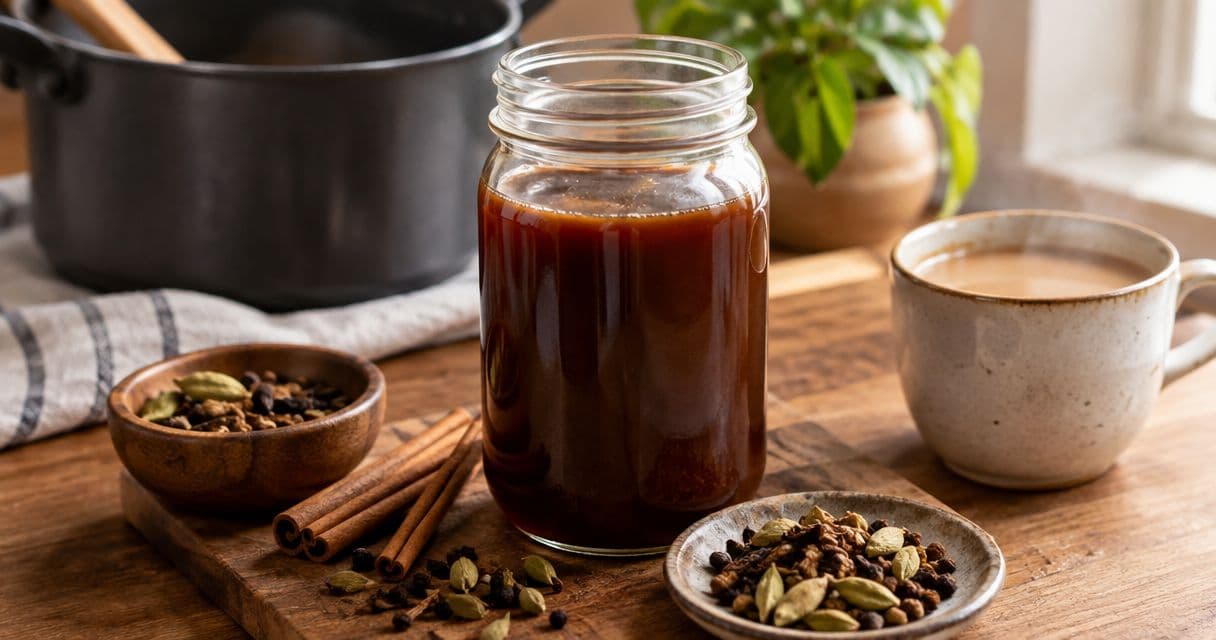
Instead of crushing spices for every cup, make chai concentrate with whole spices by simmering cracked cardamom and cloves, steeping black tea separately, then straining. Keep the concentrate milk-free and add milk when you serve it, so one batch works for both hot and iced chai.
TL;DR- How to make chai concentrate with whole spices: simmer spices first, steep black tea afterward, then strain.
- 5Senses Green Cardamom Pods suit cooks who want to crack whole spices just before brewing.
- Keep black tea out of the long spice simmer to control bitterness.
- Start with equal parts concentrate and milk, then adjust your cup to taste.
Why this matters
Whole spices and black tea need different treatment. Cardamom pods need cracking and time in hot water; tea leaves need a shorter infusion. Putting everything in the saucepan together makes it harder to develop the spices without oversteeping the tea.
Brew the spices for aroma, then steep the tea for strength. That separation gives you a useful adjustment point: change the spice simmer without changing the tea steep.
For cooks who want to prepare whole spices themselves, 5Senses offers Green Cardamom Pods alongside its broader whole-spice range. Whole pods require a little preparation, but you control when they are opened and how much goes into the pan.
This is a practical home-kitchen starting recipe, not a claim that masala chai has one fixed formula. Keep the first batch simple. Taste it with milk before deciding what to change.
Before you start
- Gather your ingredients: green cardamom pods, whole cloves, black tea, water, milk for serving, and optional cinnamon and sugar. Use familiar black tea for the first batch so you can recognize its strength.
- Set out your equipment: a saucepan with a lid, measuring cup, mortar and pestle or sturdy spoon, fine-mesh strainer, heatproof bowl, and clean refrigerator containers. No electric grinder is required.
- Plan two separate infusions: simmer the spices before adding tea. The easy-to-miss problem is leaving tea leaves in throughout the spice simmer; longer brewing adds astringency, not just useful strength.
For this workflow, 5Senses Green Cardamom Pods are the relevant pantry ingredient. Keep the unused pods closed in their container and crack only what you need. You are making an infusion, not a powdered spice blend.
Spice preparation
Measure a starting batch
Use the following quantities as a starting formulation. After straining, measure the liquid and adjust it to 3 cups of concentrate; that final measurement makes the serving ratio repeatable despite evaporation.
| Ingredient | Starting quantity | Best for | Trade-off |
|---|---|---|---|
| Water | 4 cups | Giving spices room to simmer | Evaporation varies with the pan and lid |
| Green cardamom | 12 pods, lightly cracked | A fragrant cardamom-led base | Closed pods give you less exposed seed surface |
| Whole cloves | 6 cloves, lightly bruised | Warm, penetrating spice flavor | Too much clove dominates the cup |
| Cinnamon | 1 small stick, optional | A woody, sweet-smelling background | A large piece changes the balance |
| Loose black tea | 2 tablespoons | A tea base that stands up to milk | Fine-cut tea extracts faster than large leaves |
| Sugar | Add to taste after straining | Sweetness you can adjust separately | Sweetening the entire batch limits later choices |
Leave cinnamon out if you want to learn the cardamom-and-clove balance first. A shorter ingredient list makes troubleshooting easier, and you can add another spice after you have a baseline.
Crack, do not powder
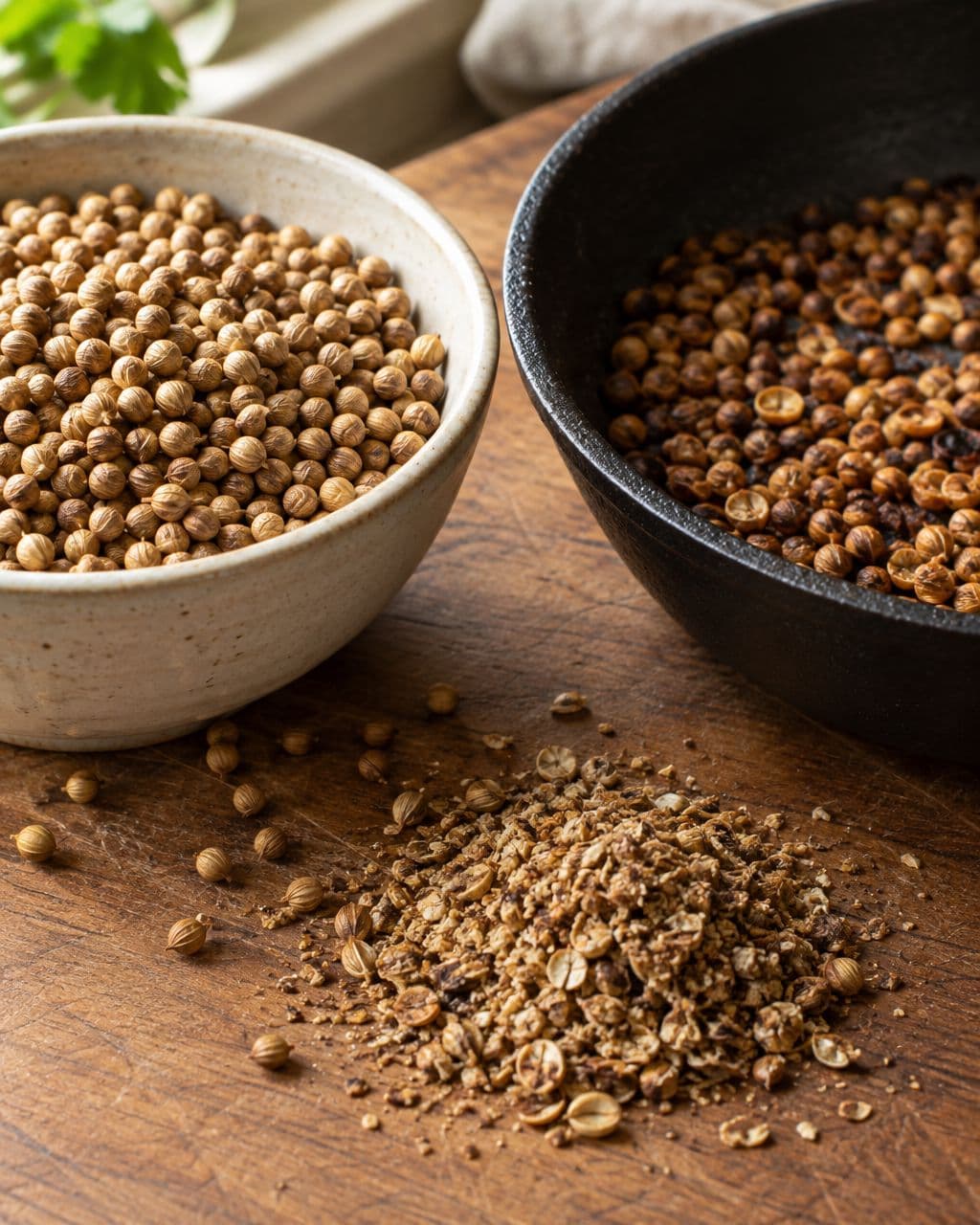
- Put the cardamom pods in a mortar and press until the shells split. Keep both the seeds and shells for the infusion.
- Lightly bruise the cloves. Leave recognizable pieces rather than grinding them into dust.
- Break the optional cinnamon stick only if needed to fit the saucepan.
- Smell the prepared spices before adding them to the water. Notice which aroma is strongest so you have a reference when tasting the finished drink.
Expected result: open cardamom shells, exposed seeds, and coarse clove pieces that your strainer can catch. You should not have a mound of fine powder.
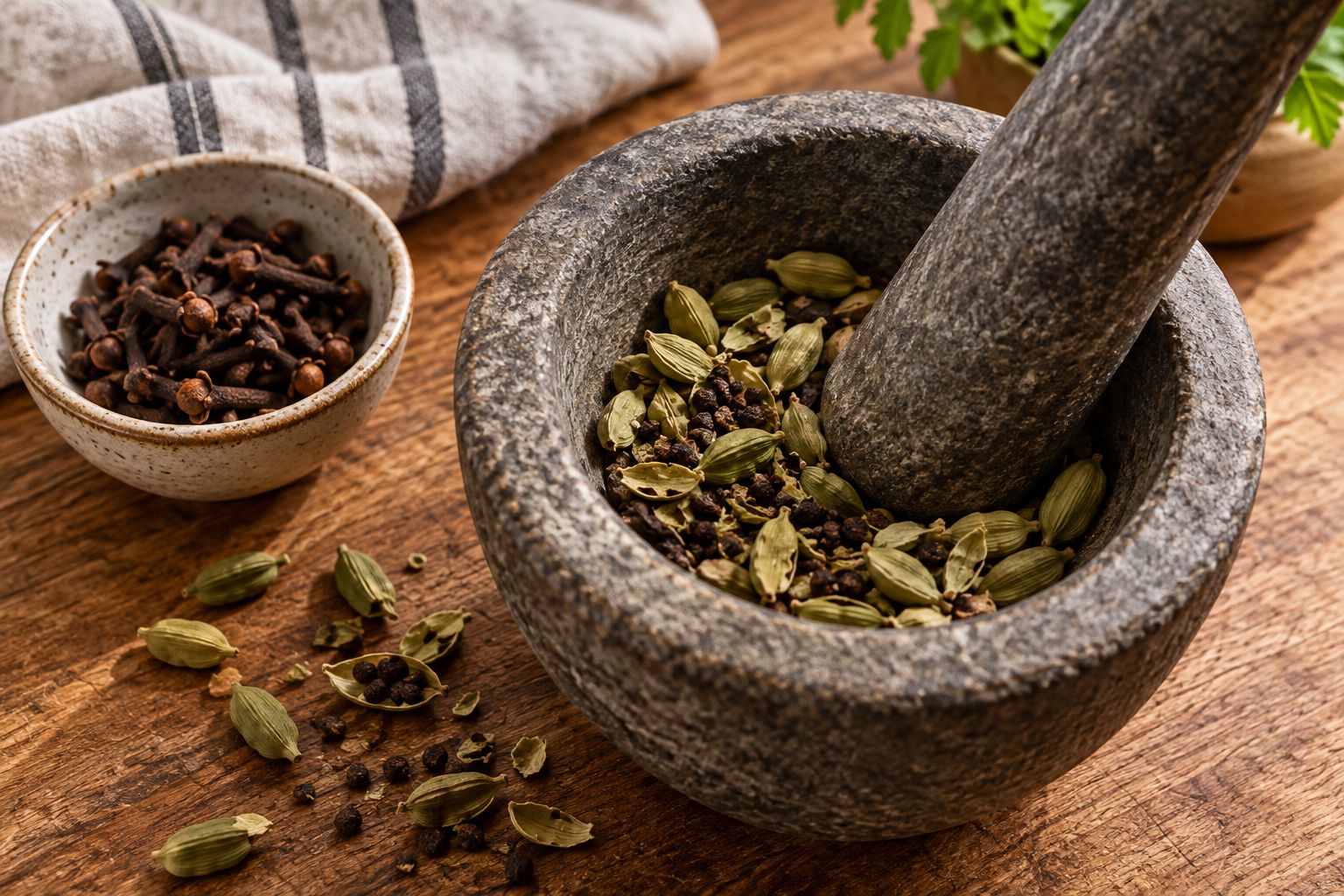
You do not need to remove every seed from its shell for a strained drink. For the difference between infusion preparation and powder preparation, see whether cardamom pods need deseeding before grinding.
Spice infusion and tea steep
Simmer the spices first
- Add the prepared spices and 4 cups of water to the saucepan.
- Bring the water to a boil, then reduce the heat to a gentle simmer. Partially cover the pan.
- Simmer for 15 minutes as your starting point. Keep the bubbling gentle rather than letting the liquid boil away rapidly.
- Taste a cooled spoonful. Look for recognizable cardamom and clove flavor before adding tea.
- If you want a stronger spice infusion, continue briefly and taste again. Keep a note of the timing you prefer.
Expected result: a spice-scented liquid with visible whole-spice pieces and enough water remaining to steep the tea. Color alone does not tell you whether the spice flavor is strong enough.
Dry-toasting is optional, not required here. Start without it to learn the spices' untreated aroma; introducing a roasting step changes another variable before you have established your preferred balance.
Steep the black tea afterward
- Take the saucepan off the heat once the spice infusion tastes right.
- Add 2 tablespoons of loose black tea and stir to wet the leaves.
- Cover and steep for 4 minutes as a starting point. Follow the tea's own brewing guidance when it calls for a shorter steep, especially with finely cut leaves.
- Taste a cooled spoonful, then strain promptly through a fine-mesh strainer into a heatproof measuring bowl.
- Let the liquid drain without pressing hard on the leaves. Strain again if small fragments remain.
Expected result: a clear, milk-free tea-and-spice base with no large spice pieces. It should taste stronger than a finished cup, but it should not depend on harshness to feel concentrated.
The sequence is simple: Crack, Simmer, Steep, Strain, Dilute. Keep those stages separate when you change the recipe.
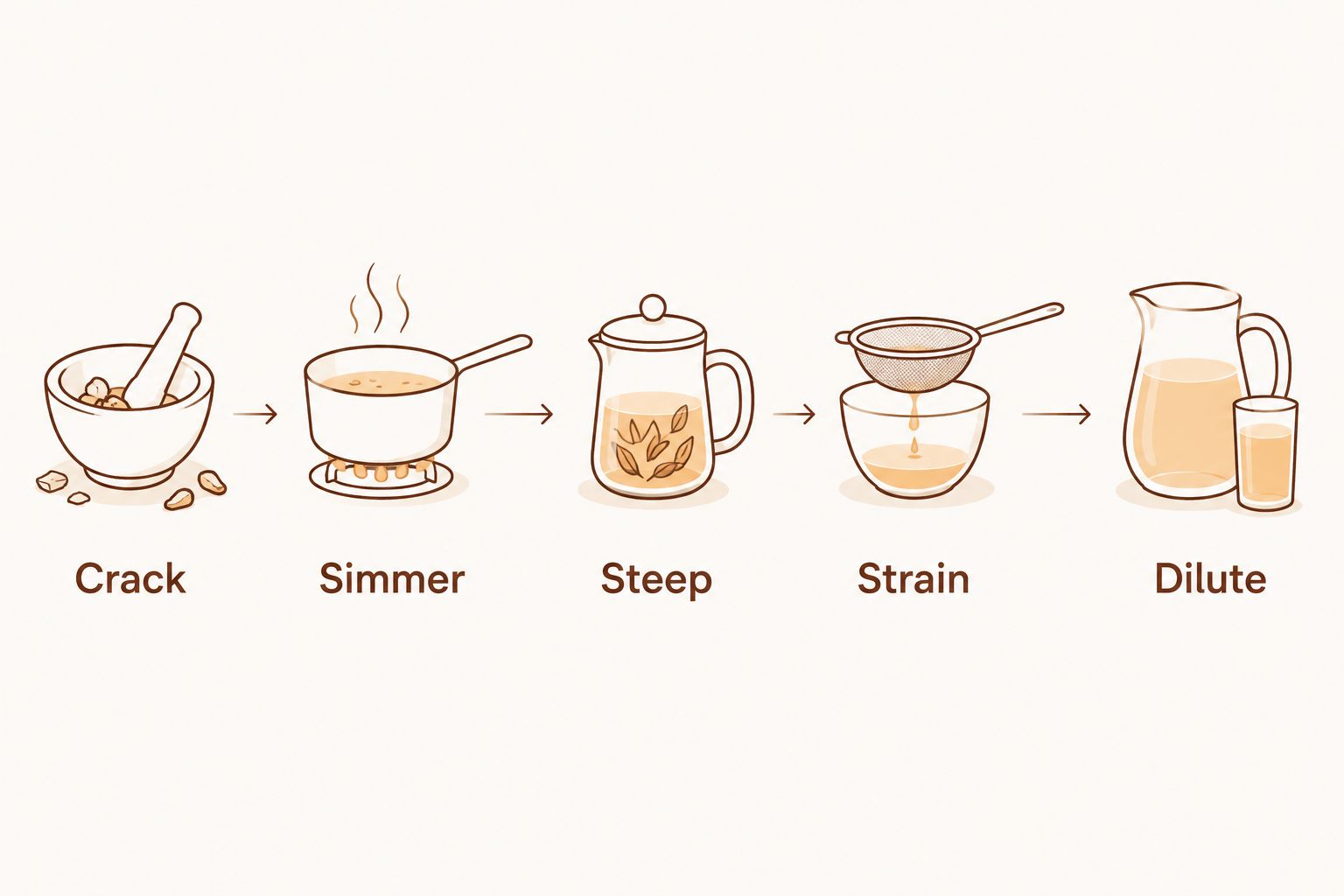
A timer helps you repeat the tea steep, but tasting still matters. Different black teas do not produce identical cups from the same spoon measure, so keep the tea consistent while adjusting the spices.
Final dilution and storage
Measure the concentrate
- Measure the strained liquid. If it is below 3 cups, add enough water to reach that target.
- If it is above the target, keep it as a lighter batch rather than boiling the finished tea down. Use less milk when testing it.
- Stir in sugar now if you want a uniformly sweet batch, or leave the concentrate unsweetened for individual servings.
- Mix ½ cup concentrate with ½ cup milk for a test serving. Taste that diluted cup before changing the remaining concentrate.
Expected result: a measured batch and a serving ratio you can repeat. Three cups of concentrate mixed with an equal volume of milk gives 6 cups of finished chai.
Use the same milk for your first few trials. Changing milk, sweetness, tea, and spices together makes it difficult to identify which change improved the drink.
Cool and refrigerate promptly
Transfer the concentrate into small, clean, heat-safe containers rather than leaving a deep saucepan on the counter. An ice-water bath around the containers helps remove heat; avoid pouring hot liquid into glass that is not designed for it.
Refrigerate promptly and within 2 hours of preparation. Keep the refrigerator at 40°F or below, and use a conservative 3-day refrigerated window for this homemade batch. Freeze portions you will not use within that period.
Label the container with its preparation date. This is a homemade brewed drink, not a shelf-stable bottled concentrate; sugar does not make it safe to keep at room temperature.
Make iced chai from the same concentrate
You do not need a second brewing recipe for iced chai. Use the same strained base, chill it, and adjust the serving dilution because melting ice adds water.
- Pour chilled concentrate into a glass.
- Add chilled milk, starting with the same equal-parts ratio used for hot chai.
- Add ice and taste after stirring.
- If the drink becomes weak as the ice melts, use a larger share of concentrate in the next glass.
For hot chai, warm the concentrate and milk together gently. Heat only the amount you intend to drink rather than repeatedly warming the whole stored batch.
| Workflow | Best for | Advantage | Limitation |
|---|---|---|---|
| Tea-and-spice concentrate | Repeat hot or iced chai | Tea and spices are ready together | Tea strength is fixed after brewing |
| Spice-only infusion | Households using different teas | Each person chooses a tea separately | You still need to brew tea when serving |
For the spice-only variant, follow the spice simmer and strain without adding black tea. Brew tea separately and combine it with the infusion and milk to taste; do not assume the tea-and-spice concentrate's dilution ratio will transfer unchanged.
Troubleshooting
The concentrate tastes bitter
Shorten the tea steep before cutting the spice simmer. Keep the tea out of the simmering stage entirely, and check whether your tea contains fine particles that extract quickly.
For the current batch, test a small portion with more milk and your preferred sweetener. If the result still tastes unpleasantly harsh, longer cooking will not correct it.
The chai tastes mostly of cloves
Reduce the clove quantity in the next batch while keeping the cardamom unchanged. Clove has a penetrating flavor; adding more ingredients around it makes diagnosis harder.
For the current batch, test blending a little concentrate with separately brewed plain tea and milk. Adjust a cup first, not the entire container.
The flavor disappears after adding milk
Taste the spice infusion before the tea goes in next time. If that stage is weak, check that the cardamom shells are split and adjust the spice quantity or simmer.
If the undiluted concentrate tastes balanced, use less milk. Do not lengthen the tea steep automatically: stronger tea and stronger spice flavor are different adjustments.
There is grit at the bottom
Keep the spices coarsely cracked and let the strained concentrate settle before pouring. A second pass through a finer strainer or clean food-safe cloth removes more particles.
Avoid grinding the spices into powder for the next batch. Powder offers a different texture challenge and is unnecessary for this workflow.
Customize your workflow
5Senses whole spices are best for cooks who want to crack and infuse their spices themselves. The benefit is preparation control; the trade-off is the extra measuring, crushing, and straining compared with using a prepared blend.
Change one variable per batch. Add a little more cardamom for a cardamom-led cup, reduce cloves for a gentler profile, or test the optional cinnamon while leaving the other quantities unchanged.
Write down the spice quantities, tea, steep time, final liquid volume, and milk ratio. For repeat pantry use, those notes are more useful than remembering that the last batch needed “a bit more spice.”
FAQ
How do I make chai concentrate with whole spices?
Crack whole cardamom and cloves, simmer them in water, then take the pan off the heat and steep black tea. Strain, measure the concentrate, and add milk when serving.
Do I need to grind whole spices for chai concentrate?
No, lightly cracking the spices is enough for this strained infusion. Fine powder is harder to remove and leaves more sediment.
Can I leave the cardamom shells in while brewing?
Yes, keep the split cardamom shells and exposed seeds together during the spice simmer. Strain them out before storing or serving the concentrate.
What is the starting ratio of chai concentrate to milk?
Start with equal parts concentrate and milk. Taste the finished drink and adjust the ratio rather than assuming every batch has the same strength.
Why is my homemade chai concentrate bitter?
Oversteeped black tea is a common cause of bitterness and astringency. Simmer the spices separately, then add tea off the heat for a shorter, controlled steep.
Can I make iced chai with this concentrate?
Yes, mix chilled concentrate with chilled milk and add ice. Use a larger share of concentrate if melting ice makes the drink too weak.
How long should I keep homemade chai concentrate in the refrigerator?
Use a conservative 3-day refrigerated window and freeze portions you will not use in that time. Refrigerate within 2 hours of preparation and keep the refrigerator at 40°F or below.
One last thing
Judge chai concentrate in a finished cup, not straight from the saucepan. Set aside a spoonful, add milk in your intended ratio, and taste before sweetening or changing the batch; an assertive concentrate can become balanced once diluted.