Best whole spices for chai tea in 2026
The best whole spices for chai tea start with green cardamom. Compare cinnamon, cloves, pepper and ginger, then learn how to crack, infuse and balance each cup.
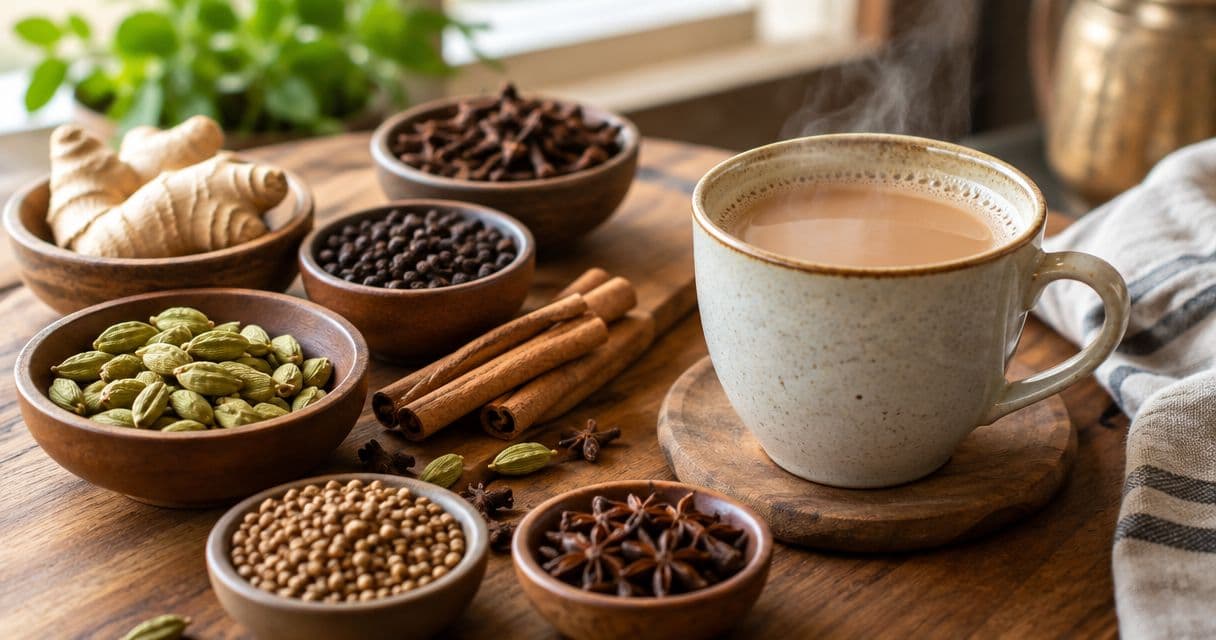
Best overall: green cardamom. Best for sweet warmth: cinnamon sticks. Best for a peppery finish: black peppercorns. The best whole spices for chai tea in 2026 start with a fragrant base, not a crowded blend. 5Senses offers origin-packed whole spices, including Green Cardamom Pods, for cooks who want to crack and infuse their spices fresh.
TL;DR- The best whole spices for chai tea start with green cardamom; add cinnamon for sweet warmth.
- 5Senses whole spices suit home cooks who want origin-packed Green Cardamom Pods for freshly infused chai.
- Black peppercorns add heat; cloves add depth but easily dominate the cup.
- Crack whole spices before infusing, then strain rather than grinding everything into powder.
Why this matters
Masala chai is spiced tea, and there is no single required spice blend. Household preferences differ. You can make a cardamom-led cup, a sharp ginger cup, or a warmer blend built around cinnamon and cloves.
Whole spices give you control over that balance. Crack a pod, break a stick, or bruise a peppercorn before brewing; each ingredient stays recognizable and is easy to adjust in the next batch. A fine powder is harder to strain out.
For your 2026 pantry, buy around the chai you actually drink. Cardamom and cinnamon are the default pair; stronger spices are supporting ingredients. More ingredients do not automatically make a better cup.
What makes the best whole spices for chai tea
- A clear flavor role: Each spice should add something distinct: fragrance, sweetness, heat, depth, or an anise note.
- Aroma when broken: Crush or split a small piece before assessing it. The smell should be recognizable, not merely dusty.
- Easy preparation: Pods, sticks, seeds, and peppercorns should be manageable with a mortar, rolling pin, or suitable grinder.
- Controlled extraction: A useful chai spice releases flavor without forcing you to overbrew the tea leaves.
- Repeat pantry use: Choose ingredients you also use in rice, baking, curries, or other infusions.
- Clear product information: Look for stated origin and any harvest or packing details provided. Do not treat a colorful label as evidence of freshness.
Best whole spices for chai tea at a glance
| Rank | Whole spice | Best for | Standout feature | Key limitation |
|---|---|---|---|---|
| 1 | Green cardamom pods | A fragrant everyday base | Floral, citrusy aroma from the seeds | Unopened pods release flavor less readily |
| 2 | Cinnamon sticks | Sweet warmth | Woody sweetness without adding sugar | Different cinnamon types taste different |
| 3 | Black peppercorns | A peppery finish | Direct, savory heat | Too much makes the cup biting |
| 4 | Whole cloves | Deep, warming intensity | Concentrated aromatic flavor | Easily overwhelms cardamom |
| 5 | Dried ginger pieces | Ginger-led chai | Sharp, warming character | Does not taste identical to fresh ginger |
| 6 | Fennel seeds | A gentler, sweeter profile | Sweet anise-like flavor | Changes the character of the blend |
| 7 | Star anise | A distinct licorice accent | Strong, recognizable anise flavor | Can dominate both tea and other spices |
1. Green cardamom: best whole spice for everyday chai
Green cardamom is the strongest default choice because it gives chai fragrance without making heat the main event. Its seeds have a floral, citrusy character that works with black tea and milk. Lightly crack the pods before brewing so the liquid can reach the seeds.
You do not need to remove every seed for a strained infusion. Keep the cracked husks and seeds together, then strain the finished tea. The preparation differs when you want a smooth ground blend; the guide to deseeding whole cardamom pods before grinding covers that decision.
Green cardamom pros:
- Gives the blend a clear aromatic center.
- Works alone or with cinnamon and ginger.
- Fits both everyday chai and cardamom-forward variations.
Green cardamom cons:
- Needs cracking for a more accessible infusion.
- Its fragrance gets buried under heavy clove or anise additions.
Best for: Home cooks who want a repeatable, fragrant starting point. 5Senses Green Cardamom Pods fit that role; crack them before brewing rather than treating whole pods as ready-to-extract powder.
Verdict: Buy green cardamom first.
2. Cinnamon sticks: best whole spice for sweet warmth
Cinnamon sticks add a woody, sweet-smelling background to chai. They soften the impression of a peppery or ginger-heavy blend without replacing the tea itself. Break a stick into manageable pieces for the pot, then remove those pieces when you strain.
Check which cinnamon you are buying. Ceylon cinnamon generally has a more delicate profile, while cassia-type cinnamons are more assertive. Neither is automatically the correct choice: select the character you enjoy, then keep that type consistent when adjusting your blend.
Cinnamon stick pros:
- Pairs naturally with cardamom.
- Adds sweet aroma without added sugar.
- Works in other pantry infusions and baking preparations.
Cinnamon stick cons:
- Different types change the result noticeably.
- Large intact pieces are less convenient to portion.
Best for: Chai drinkers who want rounded warmth rather than a sharp finish. Start by making cinnamon the background, not the entire flavor of the cup.
Verdict: Buy cinnamon as cardamom's first partner.
3. Black peppercorns: best whole spice for a peppery finish
Black peppercorns give chai a direct heat that differs from ginger's character. They make a milk-rich cup feel less soft and add a savory edge to sweeter aromatics. Bruise them before infusion rather than leaving every peppercorn intact.
Keep pepper subordinate to the flavor you want to lead. If your first sip tastes mainly of pepper, reduce it in the next batch before changing the cardamom or cinnamon. Fine-ground pepper is harder to remove and leaves particles in the cup unless your filter catches them.
Black peppercorn pros:
- Adds a distinct heat rather than more sweetness.
- Balances a cinnamon-led blend.
- Has broad everyday cooking uses outside chai.
Black peppercorn cons:
- Excess makes the drink harsh or biting.
- Finely ground pepper complicates straining.
Best for: Drinkers who like a lively finish and want to control it separately from ginger. Use cracked peppercorns so the preparation remains simple and the finished tea stays easy to strain.
Verdict: Buy for heat; skip it in a deliberately gentle blend.
4. Whole cloves: best whole spice for deep intensity
Whole cloves add a concentrated, warming aroma. They are useful when your chai needs depth beneath cardamom and cinnamon, but they should not be the automatic lead ingredient. A clove-dominant cup tastes very different from a cardamom-led one.
Keep cloves whole or lightly bruised for infusion. Crushing them to powder makes their flavor harder to separate from the finished drink. Adjust cloves independently rather than adding more of every spice whenever the blend seems weak.
Whole clove pros:
- Adds depth to a restrained spice blend.
- Works with cinnamon and black tea.
- Is easy to strain when left whole.
Whole clove cons:
- Readily overwhelms more delicate aromatics.
- Heavy use can give the cup a strongly clove-led character.
Best for: Cooks who already know they enjoy cloves in sweet or savory food. Treat the spice as an accent and taste before increasing it.
Verdict: Buy for depth; skip as the dominant spice.
5. Dried ginger: best whole spice for ginger-led chai
Dried ginger pieces bring a sharp, warming character to chai. They suit a whole-spice pantry because you can infuse the pieces and strain them out. Break larger pieces carefully so the brewing liquid has more exposed surface to work with.
Dried ginger and fresh ginger are not interchangeable in flavor. Fresh ginger brings a different aromatic character, while dried ginger gives you another way to build the blend. Choose intentionally rather than expecting a dried piece to reproduce grated fresh ginger exactly.
Dried ginger pros:
- Gives ginger a clear role in a whole-spice blend.
- Infuses without requiring a fine powder.
- Pairs with cardamom, cinnamon, and pepper.
Dried ginger cons:
- Firm pieces take more preparation than seeds or pods.
- Its flavor differs from fresh ginger.
Best for: Drinkers who want ginger to lead and prefer a dried-spice preparation. Check that you are buying plain dried ginger, not candied ginger, which adds sweetness of its own.
Verdict: Buy for a dried-ginger blend, not as an identical fresh substitute.
6. Fennel seeds: best whole spice for a gentler profile
Fennel seeds add a sweet, anise-like note that changes the direction of chai. They work when you want less emphasis on pepper and clove. Lightly crush them before infusion, then let cardamom remain recognizable beneath the fennel.
Fennel is an optional preference, not a required chai ingredient. If you dislike anise flavors, more cinnamon is a better route to sweet aroma. Make that choice before adding fennel to a large premixed batch.
Fennel seed pros:
- Adds sweet aroma without sugar.
- Offers a different direction from pepper-led chai.
- Is straightforward to crush and infuse.
Fennel seed cons:
- Its anise character is not universally appealing.
- Changes a familiar cardamom-cinnamon blend substantially.
Best for: Home cooks who enjoy fennel's flavor and want it reflected in their tea. Try it in a separate brew before making it part of your everyday blend.
Verdict: Buy if you enjoy anise notes; skip if you do not.
7. Star anise: best whole spice for a licorice accent
Star anise adds a strong licorice-like flavor. It is the most deliberate stylistic choice on this list, not a default ingredient. Break off a portion for an accent rather than assuming every cup needs a whole star.
Buy culinary star anise sold for food use. Keep its flavor role separate from fennel: both introduce anise-like notes, so adding both makes that character more prominent. If you want cardamom to remain the focus, leave star anise out of your baseline recipe.
Star anise pros:
- Gives the cup a distinct flavor direction.
- Works as a removable whole-spice accent.
- Suits drinkers who actively enjoy licorice notes.
Star anise cons:
- Can overwhelm cardamom and the tea.
- Adds little value for drinkers who dislike anise.
Best for: Occasional variations rather than an all-purpose chai blend. Taste it separately before committing it to a mixed storage jar.
Verdict: Buy for an intentional variation; skip for the default blend.
How to crack and infuse whole spices for chai
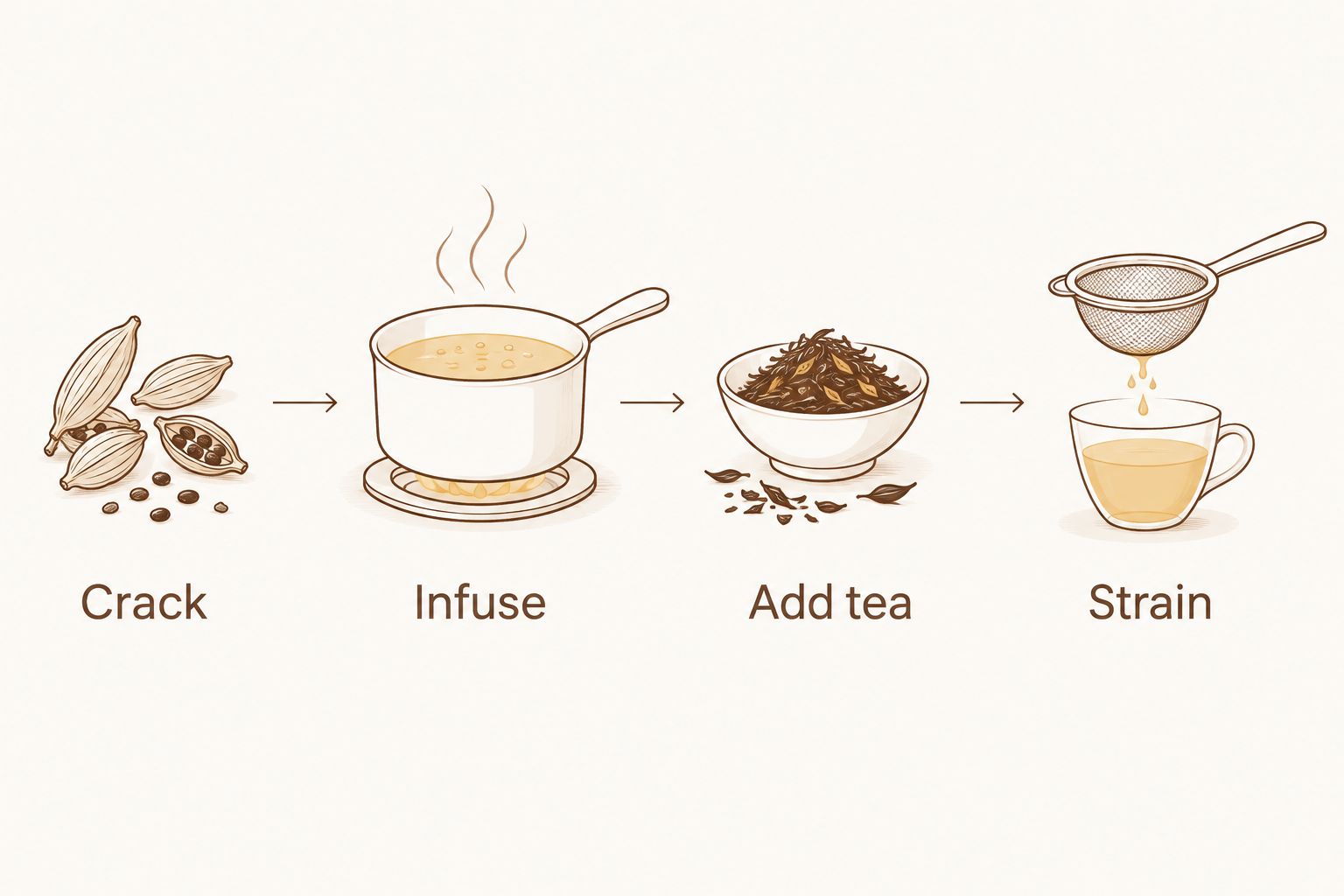
Keep this brewing sequence simple. The spices need extraction, the tea needs controlled steeping, and the finished drink needs straining. Handle those jobs separately rather than boiling everything until the cup tastes strong.
Crack
Lightly open cardamom pods, bruise peppercorns, and break cinnamon into manageable pieces. Leave the ingredients coarse enough to strain. A mortar works well for this preparation; fine grinding is unnecessary for a whole-spice infusion.
Infuse
Start the prepared spices in water and simmer gently. Smell and taste the liquid to judge whether the spice character is developing. Toasting is optional: use gentle heat and stop before the spices scorch. Oil blooming belongs to other cooking preparations, not this water-and-milk method.
Add tea
Add black tea once the spice infusion has developed. Follow the tea's brewing guidance rather than extending the steep indefinitely. Add milk according to your preferred method, watch the pot closely, and prevent a boil-over. Sweeten to taste after you can judge the finished balance.
Strain
Pour through a strainer that catches the spice fragments and tea leaves. Taste the finished cup before changing the recipe. If one ingredient dominates, reduce that ingredient next time instead of increasing everything else.
How the spices were ranked
This 2026 ranking prioritizes a recognizable flavor role, straightforward preparation, and usefulness in an everyday chai blend. Cardamom leads because it supplies the aromatic base. Cinnamon follows as a complementary ingredient; pepper, cloves, and ginger serve more specific preferences.
Fennel and star anise rank lower because they change the blend's direction rather than simply filling out its base. This is an ingredient buying guide, not a laboratory comparison of brands or individual harvests. Choose by the cup you want, then assess the actual spices you buy.
Which whole spices should you choose?
For an undecided buyer in 2026, choose green cardamom and cinnamon first. Add black peppercorns for heat, cloves for depth, or dried ginger for a ginger-led cup. Leave fennel and star anise for deliberate variations.
5Senses whole spices suit home cooks who want origin-packed Green Cardamom Pods for freshly infused chai. Buy around repeated pantry use, keep stronger accents separate, and record the blend you enjoyed. A short ingredient list is easier to repeat than a crowded jar whose balance you cannot change.
FAQ
What's the best whole spice for chai tea?
Green cardamom is the best starting point for a fragrant everyday chai. Crack the pods before infusion, then add cinnamon for sweet warmth or black peppercorns for heat.
Do I need to grind whole spices before making chai?
No, whole spices only need cracking or bruising for a strained chai infusion. Fine grinding creates smaller particles that are harder to remove from the finished drink.
Should I remove cardamom seeds from the pods for chai?
You do not need to remove the seeds for a strained whole-spice infusion. Lightly crack the pods so the liquid can reach the seeds, then strain out both seeds and husks.
Is fresh ginger better than dried ginger for chai?
Fresh ginger is better when you want fresh ginger's specific flavor; dried ginger suits a dried-spice blend. They taste different, so choose the ingredient that matches the cup you want rather than treating them as identical substitutes.
Can I make chai without cloves or star anise?
Yes, cardamom and cinnamon make a useful starting blend without cloves or star anise. Add those stronger ingredients only when you want their distinct flavors.
Should I toast whole spices before brewing chai?
Toasting is optional, not required for whole-spice chai. If you toast, use gentle heat and stop before scorching, then infuse the spices in water.
What does 5Senses offer for whole-spice chai?
5Senses offers origin-packed whole spices, including Green Cardamom Pods. Cardamom is a practical starting ingredient for a freshly cracked and strained chai infusion.
One last thing
For your next chai brew in 2026, change only the ingredient that needs changing. If cloves hide the cardamom, reduce cloves; if the finish lacks heat, adjust pepper. Keeping the other ingredients and brewing method steady makes the difference easier to taste.
Store the spices separately until you know your preferred balance. That simple choice keeps a disappointing blend from becoming your entire chai supply.