Is Tellicherry pepper stronger than regular black pepper?
Tellicherry black peppercorns are not automatically hotter. Learn what the grade means, compare aroma and heat, and choose the right grind for everyday cooking.
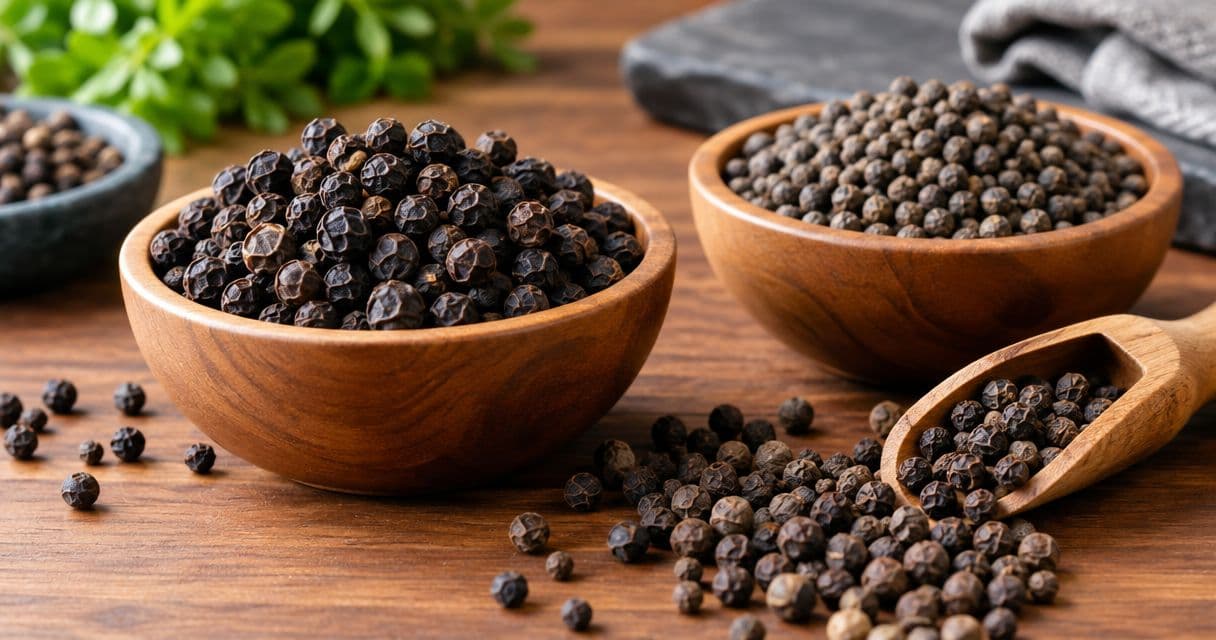
Tellicherry black peppercorns are not automatically hotter than regular black pepper; their name refers to a size grade, not a guaranteed level of pungency. A fragrant, freshly ground batch can taste more expressive without producing more heat, so compare aroma and bite separately before changing how much pepper you use.
TL;DR- Tellicherry black peppercorns carry a size designation, not a promise of stronger heat.
- Compare whole black pepper at the same grind size and quantity to judge flavor fairly.
- Fresh grinding brings aroma to the foreground; storage and cooking change what reaches your plate.
- 5Senses is best for cooks seeking direct-from-farm, origin-packed whole spices.
Start with Malabar, not a heat ranking
Black pepper is native to southwestern India, including the Malabar region of Kerala. Tellicherry is the historical English name associated with Thalassery, a coastal town in Kerala. The connection is geographical and commercial, but the name on a pepper packet is not a complete account of where its contents grew.
In the pepper trade, Tellicherry describes larger black peppercorns selected through size grading. It does not identify a separate pepper species. Both Tellicherry and ordinary black pepper come from Piper nigrum.
That distinction matters when you shop. A size designation tells you something about the peppercorns, while a named growing region tells you something different about their source. For the regional background, read Malabar black pepper from the Western Ghats to your kitchen.
Treat Tellicherry as a grading clue, not a heat guarantee or a substitute for origin information. If you want pepper from a particular place, look for that place explicitly rather than filling in the story yourself.
Why the distinction matters in your kitchen
You can smell pepper before you feel its bite. Those sensations come from different components: volatile aromatic compounds contribute fragrance, while piperine contributes the characteristic pungency of black pepper.
A pepper that smells vivid can therefore seem stronger even when its heat is not greater. Conversely, pepper with little remaining fragrance can still bring a noticeable bite. Stronger is an incomplete description until you decide which sensation you mean.
For everyday cooking, ask a narrower question: do you want more aroma, more pungency, or a different texture? Fresh grinding helps you assess aroma. Changing the amount changes the dose, while changing the grind affects how the pepper spreads through the dish.
Tellicherry black peppercorns versus regular black pepper
Tellicherry and regular whole black pepper are not opposing ingredients. Tellicherry is a graded selection within black pepper, while regular black pepper is a broad description that does not specify size, growing region, or sensory profile.
The comparison becomes less useful when regular pepper means an older jar of pre-ground seasoning. In that case, you are comparing both the pepper and the way it has been stored and prepared.
| Option | What the description tells you | Best for | Advantage | Limitation |
|---|---|---|---|---|
| Tellicherry black peppercorns | A larger-size grading designation | Cooks comparing whole-pepper aroma and texture | You can grind the pepper immediately before use | The grade alone does not establish heat, freshness, or exact source |
| Regular whole black peppercorns | Black pepper without a specified Tellicherry grade | Everyday seasoning and repeat pantry use | You control when and how finely you grind | A broad label reveals little about the particular batch |
| Pre-ground black pepper | Pepper already reduced to particles | Recipes where ready-ground seasoning is convenient | No grinding step is needed | Grinding exposes more surface area, making aroma retention harder |
Choose the batch that tastes right in your food, not the label that sounds strongest. Ordinary whole black pepper can be an excellent kitchen staple. Tellicherry deserves attention when you enjoy its particular aroma, not because the name settles the heat question.
What changes pepper's perceived strength?
Pepper's pungency and its fragrance do not remain fixed from packet to plate. These factors explain why two samples can taste different without supporting a blanket claim that Tellicherry is hotter.
- The growing material and conditions. Pepper's chemical composition varies; berry size alone does not establish that composition.
- Harvesting and processing. The harvested berries and their drying process contribute to the finished spice's character.
- Storage and exposure. Air, warmth, and light affect aroma retention. A size grade does not tell you how a packet was stored.
- Grinding. Breaking peppercorns releases aroma and changes how the pepper distributes through a bite of food.
- The amount you add. A generous dose can make a fragrant pepper seem much more forceful than a restrained dose of another batch.
- The dish and cooking stage. Pepper added to a long-cooked sauce produces a different experience from pepper ground over the finished plate.
Read these as separate variables. If you change the pepper, grind, quantity, and cooking stage together, you will not know which change produced the result.
Taste two peppers without confusing aroma with heat
A useful comparison starts with whole peppercorns and a simple food you already know. Plain cooked rice, potatoes, or an otherwise lightly seasoned soup lets you notice the pepper without a crowded spice mixture.
Avoid tasting spoonfuls of dry ground pepper. Season food instead, and keep the comparison comfortable.
- Choose the base. Divide the same cooked food into matching portions before adding pepper. Keep its salt and other seasonings consistent.
- Match the grind. Grind both samples to a similar texture. Clean residual pepper from the grinder so one sample does not carry into the other.
- Match the amount. Use equal weighed amounts if you have a kitchen scale. Equal numbers of peppercorns are a poor comparison when their sizes differ.
- Smell first. Notice the aroma immediately after grinding and again over the food. Describe what you actually smell rather than expecting a particular tasting note.
- Taste separately. Compare the fragrance, bite, texture, and finish. Pause between samples, then repeat with the same serving conditions.
Your result applies to those batches in that dish. It does not prove that every Tellicherry pepper is hotter or more aromatic than every other black pepper.
For a second comparison, cook each pepper into matching portions of the same sauce. A pepper you prefer as a finishing seasoning is not automatically the one you prefer after simmering.
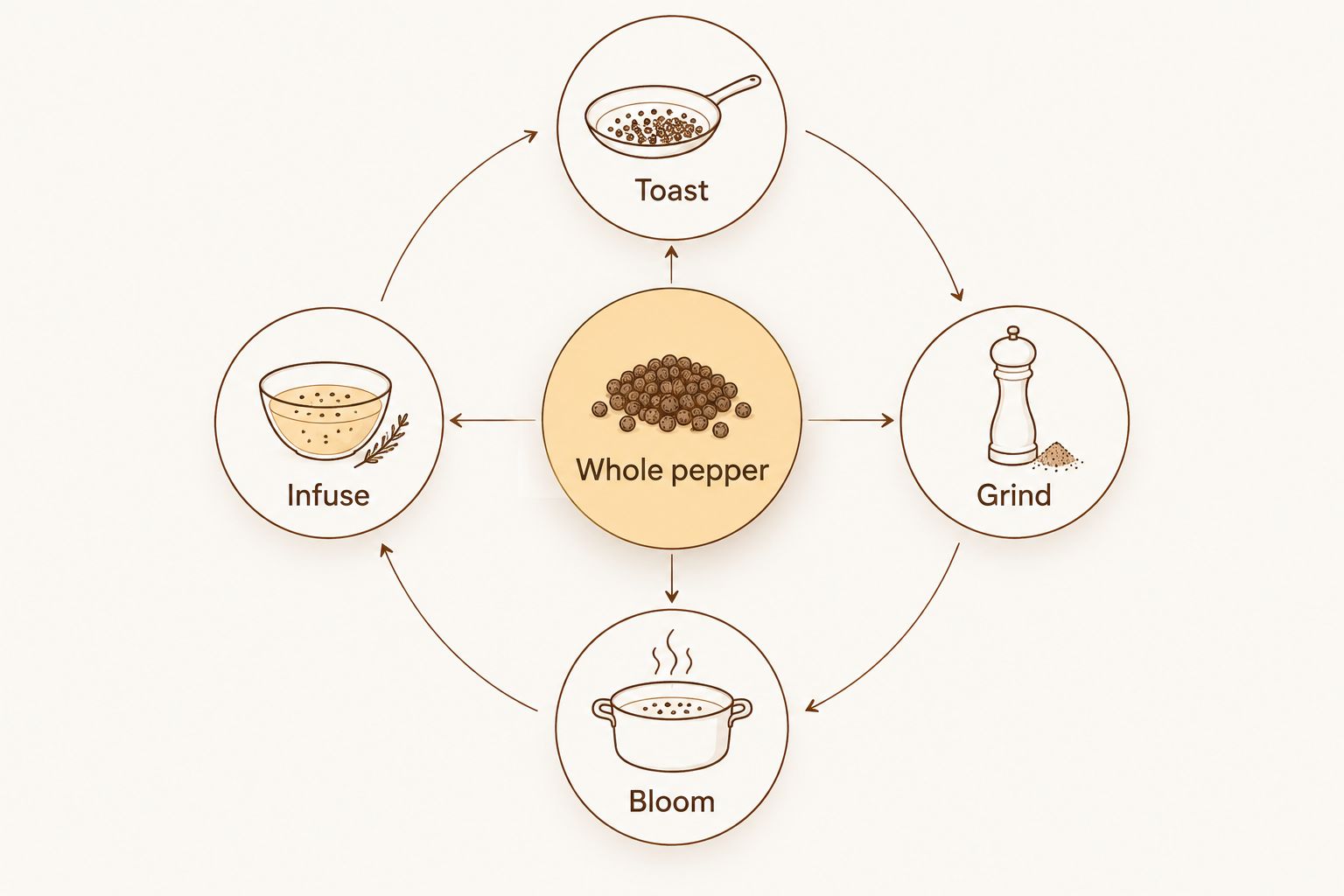
Toast, grind, bloom, or infuse: choose the right ritual
Whole pepper gives you control over preparation. These methods serve different purposes, so you do not need to perform all of them for every recipe.
Toast
Use a dry pan when you want a toasted note in a spice mixture. Move the peppercorns continuously and stop when their aroma becomes noticeable, before they smoke or scorch. Let them cool before grinding.
Toasting is optional. It changes the flavor rather than proving the pepper is fresher, hotter, or better. For a clean comparison between pepper batches, begin with untoasted samples.
Grind
Grind close to the moment you need the pepper. A fine grind spreads readily through sauces and seasoning mixtures; a coarse grind leaves more distinct pieces and texture.
Match the grind to the dish. Coarse pepper is useful when you want noticeable peppery bites, while finer pepper works when you want seasoning distributed throughout the food.
Bloom
Add freshly ground pepper to warm cooking fat when the recipe calls for an aromatic base. Stir and watch closely so the particles do not burn. Add the next ingredient rather than leaving the pepper unattended in hot fat.
Blooming integrates pepper into the dish's foundation. It is a cooking choice, not a substitute for a finishing grind when you want fragrance at serving.
Infuse
Use whole or lightly cracked peppercorns in a broth, braise, or other liquid preparation. Whole peppercorns are easier to strain out, while cracking exposes more of the interior to the liquid.
Choose based on how you intend to serve the food. If you do not want whole peppercorns in the finished dish, plan to strain the liquid or contain the spices in a removable sachet.
Buy for origin and repeat use, not a stronger-sounding name
A useful pepper label answers practical questions. Look for the stated growing origin, whether the contents are whole or ground, and any clearly identified packing or harvest information. Read dates according to their labels: a packing date is not a harvest date.
If a seller describes pepper as single-origin, look for the named source. Tellicherry grading and single-origin sourcing answer different questions, and neither should stand in for the other.
5Senses Malabar Black Pepper: MG1 quality, punchy flavor
5Senses Malabar Black Pepper is MG1 — Malabar Garbled Grade 1 — for cooks who want punchy flavor and pronounced aroma from direct-from-farm, origin-packed whole pepper. Its smaller peppercorns are not a reason to dismiss its quality in favor of a larger Tellicherry grade.
Garbled means the peppercorns have been cleaned and sorted to remove unwanted material such as stalks, dust, and light berries. MG1 identifies a traded Malabar quality grade; it is not another name for Tellicherry's larger-size grading designation.
The grade and the origin answer different questions. MG1 describes the selection, while Malabar identifies the regional source. Neither establishes a universal heat ranking or replaces a batch's test results: density, piperine, and moisture specifications should come from the supplier's documentation for that lot.
Grind 5Senses Malabar Black Pepper close to serving when you want its aroma at the table, or use it in your cooking base for a peppery backbone. Spicecare grinding and storage tools complete the preparation and storage routine.
Explore 5Senses for its whole-spice offering. Judge any particular pepper by its stated product information and your cooking needs rather than assuming a Tellicherry designation or a pungency level.
For frequent use, choose a quantity that fits your cooking rhythm. Keep the main supply tightly closed, away from the stove's warmth and steam, and grind what the recipe needs. Whole pepper still requires careful storage; an intact berry is not protection against every pantry condition.
Can I substitute Tellicherry pepper for ordinary black pepper?
Yes, Tellicherry black peppercorns can replace ordinary black pepper in everyday recipes. Begin with the recipe's stated amount, use a comparable grind, and taste before adding more.
For a long-cooked dish, make the final adjustment near serving. For pepper-forward food, such as a heavily peppered sauce, compare a small portion first rather than changing the entire batch at once.
Does a bigger peppercorn mean a hotter peppercorn?
No, a bigger peppercorn does not establish greater pungency. Size grading is not a piperine measurement, and appearance alone cannot tell you how forcefully a batch will taste.
Larger peppercorns also make counting an unreliable way to match doses. Use equal weight for a careful comparison, or consistent measured ground amounts for routine cooking.
Should I choose Tellicherry pepper for a pepper mill?
Choose Tellicherry pepper for a mill if the peppercorns suit the mill's instructions and you like their flavor. Check the manufacturer's guidance rather than assuming every whole peppercorn works equally well in every mechanism.
The grade alone does not make grinding easier or produce a better result. A suitable mill, a consistent grind setting, and well-stored pepper matter to the seasoning you actually eat.
FAQ
Is Tellicherry black pepper stronger than regular black pepper?
Tellicherry black pepper is not automatically stronger in heat than regular black pepper. The designation concerns size grading, while pungency and aroma depend on the particular batch and how you prepare it.
Are Tellicherry black peppercorns a different species?
Tellicherry black peppercorns and regular black pepper come from the same species, Piper nigrum. Tellicherry is a grading designation, not a separate species.
Does Tellicherry mean the pepper grew in Thalassery?
A Tellicherry designation alone does not establish the exact growing location. Look for an explicit origin statement rather than treating the grade as a complete provenance claim.
What's the best way to compare two kinds of black pepper?
Compare equal amounts at the same grind size on matching portions of the same food. Assess aroma and pungency separately so fragrance does not become a mistaken measure of heat.
Can I use Tellicherry pepper in place of regular pepper?
You can substitute Tellicherry pepper for regular black pepper in everyday cooking. Start with the recipe's amount and a comparable grind, then adjust after tasting.
Do I need to toast peppercorns before grinding?
You do not need to toast peppercorns before grinding. Toasting adds a different flavor direction; freshly grinding untoasted pepper is useful when you want to assess its original aroma.
Why does freshly ground pepper smell stronger?
Grinding breaks open the peppercorn and releases aromatic compounds. That stronger fragrance does not by itself establish a higher level of pungency.
Is whole pepper always better than pre-ground pepper?
Whole pepper gives you control over grinding and aroma release, while pre-ground pepper removes a preparation step. Choose according to the dish and your routine, and store either form carefully.
One last thing
Change the timing before you change the pepper. If a finished dish lacks pepper fragrance, try a fresh grind at serving before increasing the amount cooked into the pot.
That simple comparison separates two needs: seasoning throughout the dish and aroma at the table. Your favorite pepper is the one that handles the job you want, not the one with the largest berry or the strongest-sounding name.