Best Malabar black pepper for cooking in 2026
Choose whole Malabar black pepper with a stated origin. Compare fine, cracked, and whole preparations, plus practical tips for grinding, cooking, and storage.
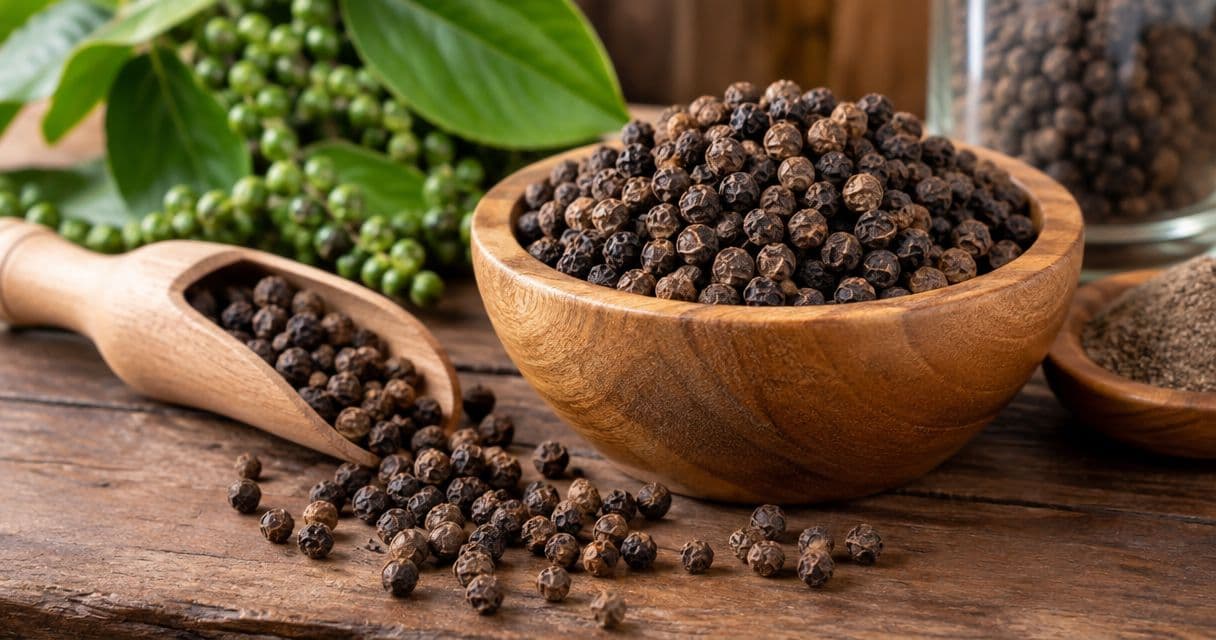
The best Malabar black pepper for everyday cooking is whole peppercorns with a clearly stated growing origin, ground just before you use them. Choose a fine grind for even seasoning, a coarse crush for texture, and whole peppercorns for strained stocks and infusions; the right preparation matters more than an unsupported “best pepper” claim.
TL;DR- Choose whole Malabar black pepper with a stated growing origin rather than an unexplained premium label.
- 5Senses suits cooks seeking origin-packed whole spices and practical preparation guidance.
- Grind pepper finely for even seasoning; crush it coarsely for texture and concentrated bites.
- Use whole peppercorns in strained stocks, then finish with freshly ground pepper when you want more aroma.
Why this matters
Black pepper does two different jobs in your kitchen: it seasons a dish, and it contributes aroma. A peppercorn left whole in a stock behaves differently from the same peppercorn ground over warm potatoes.
Buying well starts with knowing where the pepper grew. Cooking well starts with deciding how you want it to behave. This guide separates those decisions so you can choose a useful pantry staple without confusing origin, processing, peppercorn size, and grind.
For the regional background, start with Malabar black pepper: from the Western Ghats to your kitchen.
Malabar is a growing place, not a flavor guarantee
Malabar refers to the southwestern coastal region of India, closely associated with Kerala and the Western Ghats. Black pepper, Piper nigrum, is native to southwestern India. That botanical history is different from proof that a particular packet was grown there.
A useful product description identifies the current growing origin. A broad reference to pepper’s Indian heritage does not establish where the peppercorns in your kitchen came from. Look for a clear connection between the ingredient, the named region, and the actual product.
Growing place and processing also describe different things. Black peppercorns are dried pepper fruits with their outer layer retained. Harvest decisions, drying, sorting, packing, and storage all sit alongside growing conditions in the pepper’s journey to your pantry.
That distinction keeps terroir useful rather than decorative. You can recognize Malabar’s importance without claiming that a particular soil automatically creates a particular tasting note. Specific farm conditions need specific evidence.
The growers’ knowledge belongs in that story, too. Choosing when to harvest and how to handle the crop involves practical expertise; a regional name alone does not tell you those details. Favor descriptions that explain the work rather than replacing it with grand adjectives.
Buy a documented origin, then judge the pepper in the food you actually cook. A beautifully written origin story cannot substitute for a clear aroma when you crack a peppercorn.
What makes the best Malabar black pepper for your kitchen?
Use these criteria before choosing a packet. They apply whether you cook dinner at home or replenish a professional kitchen.
- Stated growing origin: Look for an explicit Malabar or Kerala sourcing statement tied to the product, not merely a general history of black pepper.
- Whole form: Whole peppercorns let you choose the grind for each dish instead of committing the entire packet to one texture.
- Useful handling details: Harvest, packing, and drying information help explain the product when the seller provides them. Do not infer dates that are not stated.
- Aroma when cracked: Assess freshly broken pepper, not just the smell above an unopened packet. Look for a clear pepper aroma rather than mustiness.
- A manageable quantity: Choose an amount that fits your cooking habits and storage space. A larger packet is not automatically the better pantry choice.
- Preparation fit: Check that your mill handles the peppercorns and that you can produce the texture your recipes need.
5Senses centers its whole-spice range on direct-from-farm sourcing and origin packing. Apply the same product-level questions to Malabar black pepper: the description should tell you what you are buying without requiring you to fill in the gaps.
Do not treat “premium,” “bold,” or “chef quality” as measurable grades. Those words need supporting detail. A named origin and a useful preparation plan give you more to work with.
Malabar black pepper preparations at a glance
These are different uses for whole black peppercorns, not separate pepper varieties or a ranking of untested brands.
| Preparation | Best for | Main advantage | Main limitation |
|---|---|---|---|
| Freshly ground | Everyday seasoning and finishing | Distributes pepper through a dish | Fine particles lose their distinct texture |
| Coarsely cracked | Pepper sauces, crusts, and textured dressings | Creates noticeable peppery bites | Uneven pieces can dominate delicate food |
| Left whole | Strained stocks, brines, and infusions | Easy to contain in a spice bag | Loose peppercorns are unpleasant to bite into |
Default to whole peppercorns and change the preparation, not the pantry staple. You do not need separate packets of coarse and fine pepper if your tools can make both.
Freshly ground: best for everyday seasoning
Freshly ground Malabar black pepper is the most useful starting point for eggs, vegetables, beans, soups, and pasta. Grinding breaks the peppercorn open and spreads small particles through the food, giving you control over both aroma and distribution.
For a smooth soup or dressing, use a finer setting. For roasted vegetables, a slightly coarser grind leaves more visible texture. Taste the food after stirring rather than judging seasoning from the appearance of black flecks.
Freshly ground pepper pros:
- Adjusts easily to different dishes.
- Distributes more evenly than large cracked pieces.
- Works as both an ingredient and a finishing seasoning.
Freshly ground pepper cons:
- Requires a working mill or grinder.
- Fine pepper does not give a crunchy pepper crust.
Best for: Home cooks who want one flexible pepper preparation for most meals.
Keep the mill dry and follow its cleaning instructions. If the grind is inconsistent, check the tool before blaming the pepper; the guide to pepper mills and whole peppercorn compatibility covers that decision.
Verdict: Buy whole peppercorns and grind as needed for everyday cooking.
Coarsely cracked: best for texture and pepper-forward dishes
Coarsely cracked Malabar black pepper makes pepper an obvious part of the dish. Use a mortar and pestle or a suitable coarse mill setting when you want irregular pieces for a pan sauce, a crust, or a dressing with bite.
The texture changes how you experience the seasoning. Instead of a uniform background, you get concentrated peppery moments. That is useful in a pepper-forward dish and distracting in a delicate, smooth sauce.
Coarsely cracked pepper pros:
- Gives crusts and sauces visible texture.
- Lets you leave a mixture of smaller and larger fragments.
- Works without a mill when you have a mortar and pestle.
Coarsely cracked pepper cons:
- Large pieces can overwhelm individual bites.
- Irregular crushing makes even seasoning harder.
Best for: Cooks making pepper sauces, textured dressings, or dishes where pepper is a central flavor.
Crush only what the dish needs. If you produce a mixture of dust and large fragments, use it deliberately rather than expecting every bite to taste the same.
Verdict: Buy whole peppercorns for cracking; skip this texture when the dish needs smoothness.
Left whole: best for strained stocks and infusions
Whole Malabar black peppercorns suit liquids that you will strain or preparations that hold spices in a removable bag. They contribute pepper flavor without leaving ground particles throughout the finished liquid.
This is a different job from finishing a plate. An intact peppercorn does not distribute through food like fine pepper, so do not expect a few whole peppercorns to replace ground seasoning in every recipe.
Whole peppercorn pros:
- Fit neatly into a removable spice bag.
- Keep ground specks out of strained liquids.
- Need no grinding equipment.
Whole peppercorn cons:
- Loose peppercorns need straining or removal.
- Whole peppercorns are unsuitable as a direct table-seasoning substitute.
Best for: Stock makers and cooks preparing strained broths, brines, or aromatic infusions.
Use a fine strainer or a securely closed spice bag. If you want a fresh pepper aroma at serving, finish the strained dish separately with a little freshly ground pepper.
Verdict: Buy whole peppercorns for infusions; skip loose whole peppercorns in food you will not strain.
Grind, bloom, infuse: choose the sequence for the dish
Start with the result you want. Grind for distributed seasoning, bloom for pepper incorporated into warm fat, and infuse for a liquid you can strain. These are cooking choices, not requirements to perform every time you open the jar.
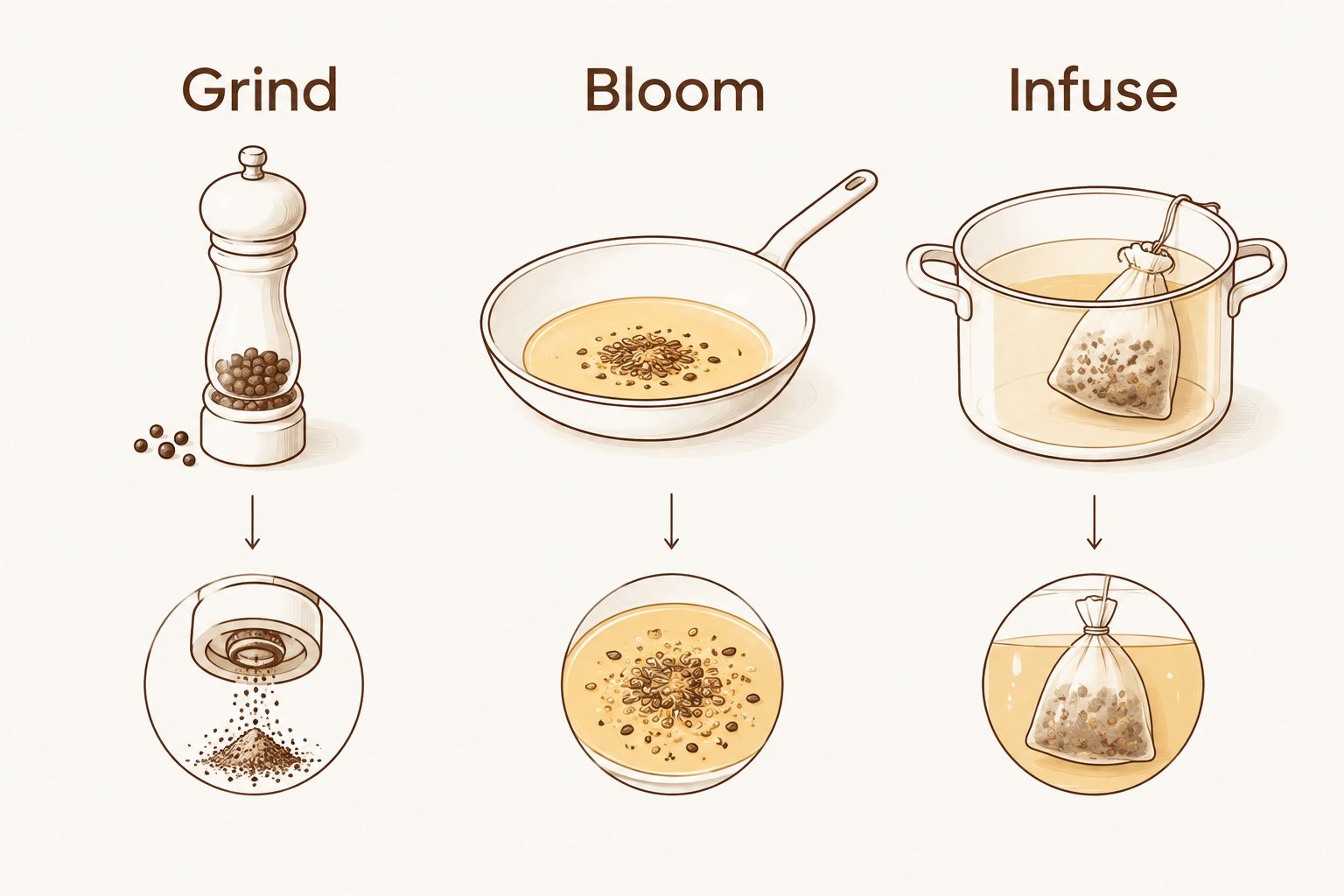
Grind for even seasoning
Grind pepper into a small dish before adding it when you need control. This also keeps steam from rising directly into your mill over a hot pot. Stir the pepper through the food, taste, and adjust.
For a simple comparison, divide warm cooked potatoes into 2 bowls. Season one with fine pepper and the other with coarse pepper, keeping the salt and fat alike. This kitchen exercise shows which texture you prefer without requiring a blind brand ranking.
Bloom for an integrated sauce
To bloom pepper, stir it briefly into warm cooking fat before adding the next ingredients. Keep the heat controlled and the ingredients ready. The aim is fragrant pepper, not scorched particles.
Try a small practice batch with 1 teaspoon of coarsely cracked pepper and 2 tablespoons of cooking oil or butter. Treat those quantities as a cooking exercise, not a universal ratio; add the mixture gradually to cooked beans or vegetables and taste as you go.
Ground spices burn more readily than intact peppercorns. If the fat smokes or the pepper smells acrid, stop rather than carrying that bitterness into the dish.
Infuse for a strained liquid
Put whole peppercorns in a spice bag when you want easy removal. Add the bag to the cooking liquid and taste during cooking. Remove it when the flavor suits the dish rather than assuming every stock needs the same infusion time.
A long-cooked broth and a quick sauce are different preparations. Follow the recipe’s method, then use freshly ground pepper at the end only if the finished dish needs it.
Toasting is optional, not a freshness test
Dry-toasting peppercorns creates a different cooking treatment; it does not restore stale pepper. Use a dry pan, keep the pepper moving, and stop when it smells fragrant rather than waiting for smoke or a dramatic color change.
Let toasted peppercorns cool before grinding. Toast only the portion you intend to use, especially when you are still learning how the toasted flavor fits your food.
For a clear comparison, make the same simple dish with un-toasted and toasted pepper on separate occasions. Keep the preparation otherwise consistent. Choose the version you enjoy instead of assuming the extra step always improves dinner.
What to check before replenishing your pepper
Read the product description for the growing origin and any stated harvest or packing information. A packing date describes packing; it is not automatically a harvest date. If a detail matters to your buying decision, look for that exact detail.
At home, keep whole peppercorns in a tightly closed container away from heat, light, and moisture. Avoid storing the main supply beside the stove simply because that is where you season food. Convenience should not expose the entire packet to cooking steam.
For chefs and food businesses, record the supplier and product identification when consistency matters. Taste a newly opened batch in a familiar preparation before changing a recipe around it. Origin information supports traceability, but it does not eliminate the need to cook and taste.
5Senses is a fit for cooks who want origin-packed whole spices and practical guidance on using them. For Malabar black pepper, keep the buying decision equally concrete: stated provenance, whole form, sensible storage, and a grind that fits your menu.
Which Malabar black pepper should you choose?
Choose whole Malabar black peppercorns with a clear sourcing statement as your default. Grind them freshly for everyday meals, crack them for pepper-forward texture, and leave them whole only when the cooking method suits removal or straining.
This guide compares preparation choices using origin transparency, cooking flexibility, texture, and handling requirements. It does not assign brand scores without product evidence or call one region’s pepper universally better than another’s.
The practical winner is a well-described whole peppercorn you can prepare properly and use regularly. Buy for your cooking, not for a superlative on the label.
FAQ
What is the best Malabar black pepper for everyday cooking?
Whole Malabar black peppercorns with a clearly stated growing origin are the most flexible choice for everyday cooking. Grind finely for even seasoning or coarsely when you want noticeable texture.
Where does Malabar black pepper come from?
Malabar black pepper is associated with southwestern India, particularly Kerala and the Western Ghats. Check the specific product’s sourcing statement rather than treating regional history as proof of its origin.
Is Malabar black pepper the same as Tellicherry pepper?
Malabar and Tellicherry are not interchangeable buying terms. Malabar identifies a regional association, while Tellicherry commonly describes a size-based selection; check the seller’s exact origin and grading information.
Should I toast Malabar black pepper before grinding it?
Toasting is optional and changes the cooking treatment rather than improving every dish. Toast gently, stop when fragrant, and let the peppercorns cool before grinding.
Can I put whole black peppercorns directly into soup?
Use whole black peppercorns in soup when you can contain or strain them out. For soup served without straining, freshly ground pepper distributes more evenly and avoids hard whole peppercorns in individual bites.
How should I store whole Malabar black pepper?
Store whole Malabar black pepper in a tightly closed container away from heat, light, and moisture. Keep the main supply away from stove steam and grind only what you need.
What should I look for when buying whole spices from 5Senses?
Read each 5Senses whole-spice description for its stated origin and handling information. Do not assume that every product shares the same region, harvest details, or processing method.
One last thing
Before replacing pepper you think tastes weak, change when you add it. Season a familiar dish during cooking, then add a small fresh grind to one portion just before eating. Compare the aroma and texture.
That does not rescue stale pepper. It helps distinguish a tired ingredient from a preparation choice, and it gives you a useful answer before your next pantry order.