Is white pepper milder than black pepper in cooking?
Is white pepper milder than black pepper? Not reliably. Compare aroma, heat, and appearance, then learn how to substitute either pepper without overpowering food.
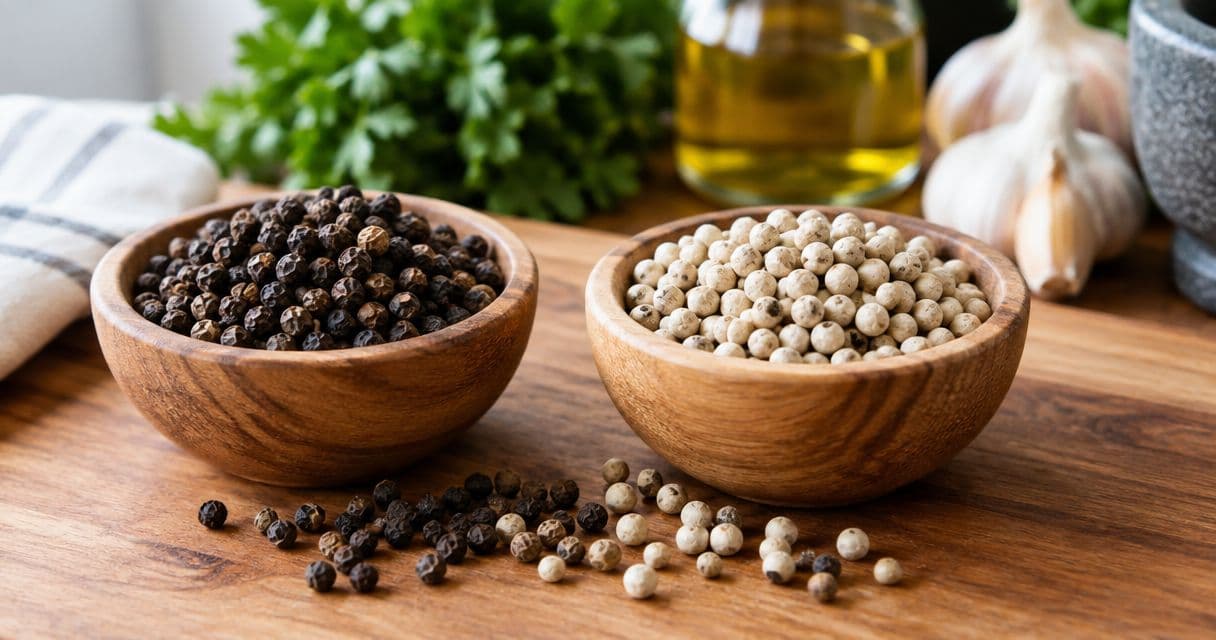
White pepper is not reliably milder than black pepper: it usually has less of black pepper’s bright, woody aroma, but it still delivers peppery heat and can taste more earthy or pungent. Choose white pepper for its flavor and lack of dark flecks—not as a dependable way to make a dish less spicy.
TL;DR- Is white pepper milder than black pepper? Not reliably; softer aroma does not guarantee gentler heat.
- White pepper suits pale sauces; black pepper suits dishes that need a bright, aromatic finish.
- Both come from Piper nigrum, but different processing changes their flavor and appearance.
- 5Senses serves home cooks who want whole spices to grind for everyday cooking.
Is white pepper milder than black pepper in cooking?
White pepper is less aromatic in some respects, not consistently less hot. Both white and black pepper come from Piper nigrum. Both contain piperine, a major contributor to their pungency. Removing the fruit’s outer layer changes the flavor, but it does not turn white pepper into a heat-free seasoning.
The useful distinction is between aroma and heat. Black pepper brings woody, citrus-like notes alongside its bite. White pepper has a different aromatic profile, often described as earthy, musty, or fermented. Those descriptions concern smell and flavor, not a fixed ranking of strength.
| Cooking question | White pepper | Black pepper |
|---|---|---|
| Best for | Pale sauces, smooth soups, and dishes calling for white pepper’s distinctive flavor | Finishing dishes with visible flecks and bright pepper aroma |
| Typical flavor | Earthy, sometimes fermented, with peppery heat | Woody, sometimes citrus-like, with peppery heat |
| Appearance when ground | Light-colored particles | Dark flecks |
| Main advantage | Seasons pale food without obvious black specks | Adds a distinct aromatic finish |
| Main limitation | Its earthy character can dominate delicate food | Its dark flecks remain visible in pale food |
| Is it automatically milder? | No | No fixed strength comparison applies to every batch |
Why this matters
If your sauce is already too peppery, replacing black pepper with white pepper does not solve the problem. You need less pepper, not simply a different color. If your sauce needs seasoning without dark flecks, white pepper addresses that separate concern.
For your 2026 pantry, label pepper by type rather than treating both jars as interchangeable. The broader choice between whole and ground seasoning is covered in Is grinding your own spices at home worth it?.
A recipe’s pepper choice also affects its character. White pepper in a pale sauce is not just invisible black pepper; it contributes its own flavor. Substitution works best when you decide which part of the original seasoning you actually need.
White pepper: best for pale dishes and earthy seasoning
White pepper is commonly made from ripe pepper fruit whose outer layer has been removed. Soaking is a common part of that process, and the resulting pepper can carry fermented notes. Processing and drying affect how noticeable those notes become.
Choose white pepper when you want its flavor or a pale finish. It fits béchamel, mashed potatoes, smooth vegetable soups, and recipes that specifically call for white pepper. Start with a restrained addition in delicate food; its aroma is different from black pepper’s, not absent.
The advantage is visual discretion. Ground white pepper blends into pale food without the conspicuous dark specks of black pepper. The limitation is sensory: an earthy or fermented note remains detectable even when the seasoning is difficult to see.
Do not mistake that pale appearance for gentleness. A spoonful of smooth soup can look lightly seasoned while still tasting strongly of pepper. Taste before adding more, especially when following a recipe written for a different pepper.
Black pepper: best for a bright finishing aroma
Black pepper is commonly produced by drying pepper fruit with its outer layer intact. Its aroma includes notes that white pepper does not reproduce in the same way. Fresh grinding releases that aroma into the dish.
Choose black pepper when the pepper itself should be noticeable. It suits a finishing grind over eggs, roasted vegetables, pasta, salads, and other dishes where dark flecks are welcome. Its aromatic character is part of the seasoning, not a defect to hide.
The advantage is that distinct finish. The limitation is equally straightforward: black pepper changes the appearance of pale sauces and purees. If a recipe needs a smooth, pale presentation, grinding black pepper finer does not remove its color.
Black pepper also needs restraint. Adding more to chase its aroma adds more pungency at the same time. If you want a fresher pepper smell, try grinding a small amount at the finish rather than repeatedly increasing the quantity during cooking.
Why pepper strength varies
The color of a peppercorn does not tell you exactly how forceful it will taste in your meal. These factors explain why one jar seems gentle and another seems assertive:
- Processing. Removing the outer layer, soaking, and drying change the aromatic profile. White pepper’s fermented notes can make it seem especially forceful.
- Freshness and storage. Ground pepper loses volatile aroma during storage. A tired jar is not a reliable reference for a freshly ground batch.
- Grind size. Fine pepper spreads through food differently from coarse pieces. Coarse particles also create more distinct peppery bites.
- Quantity. A larger addition changes both heat and flavor. Switching types without reconsidering the amount confuses the comparison.
- Cooking stage. Long cooking changes the aromatic impression. Pepper added at the finish presents differently from pepper simmered throughout the dish.
- The food itself. A plain puree, a rich sauce, and a strongly seasoned broth make the same pepper taste different.
When refreshing your pantry in 2026, compare peppers in the food you actually cook. Smelling two jars tells you about aroma; it does not establish which will make your dinner less spicy.
How do you substitute white pepper for black pepper?
Use the recipe’s pepper quantity as a reference, not an instruction to make an automatic equal-volume swap. The right addition depends on the pepper, its grind, and the dish. You can add more after tasting; you cannot easily remove pepper once it is distributed through a sauce.
Follow this sequence when the substitution is unfamiliar:
- Choose the role. Decide whether you need pale appearance, peppery heat, or a bright finishing aroma. That determines whether the substitution makes sense.
- Grind separately. Keep the peppers separate while preparing them. Mixing them before tasting prevents you from understanding either flavor.
- Add gradually. Put a restrained amount into the food and stir thoroughly. Do not judge the result from a concentrated patch of seasoning.
- Taste the dish. Taste it at its serving temperature. Include the sauce, broth, or other components you will actually eat together.
- Finish deliberately. Add more only if the dish needs it. Stop when the pepper supports the food rather than becoming its main flavor.
If your 2026 recipe notes currently say only pepper, make them more specific. Record white or black, whole or ground, and whether you added it during cooking or at the finish. Those details make a repeat batch easier to season consistently.
Should you toast, grind, bloom, or infuse pepper?
Grind pepper when you want to distribute its flavor through food. Whole peppercorns and ground pepper do different jobs: a whole peppercorn can flavor a liquid, while ground pepper becomes part of each mouthful. Choose the form before choosing the amount.
Grind for sauces and finishing
Grind only what you need for the dish. Use a finer grind when you want pepper distributed through a smooth sauce, and a coarser grind when distinct flecks and peppery bites suit the food. Neither grind makes white pepper inherently milder.
Toast when the recipe calls for it
Dry toasting changes spice aroma, but it is not a dependable method for reducing pepper heat. Keep pepper moving and stop before it scorches. For a delicate white sauce, direct seasoning is simpler than adding an unnecessary toasting step.
Bloom for an integrated seasoning
Blooming means briefly cooking spices in fat before adding other ingredients. It brings the seasoning into the dish’s cooking base. Avoid scorching ground pepper, and do not expect blooming to erase white pepper’s earthy character.
Infuse for liquid dishes
Whole peppercorns can flavor broth or another cooking liquid. Use a strainer or spice bag when you want to remove them before serving. Infusion suits a liquid preparation, but it is not a precise shortcut for making pepper gentler.
How can you compare the peppers in your own kitchen?
Use a small portion of the food you are already making. Divide an unseasoned portion between separate tasting bowls, then season one with white pepper and another with black pepper. Keep the grind and additions comparable, and leave the main pot untouched until you choose.
Taste for aroma, heat, and aftertaste separately. First ask which smells more appealing in the dish. Then notice the peppery sensation and whether an earthy note persists after swallowing. A single verdict such as stronger hides those useful distinctions.
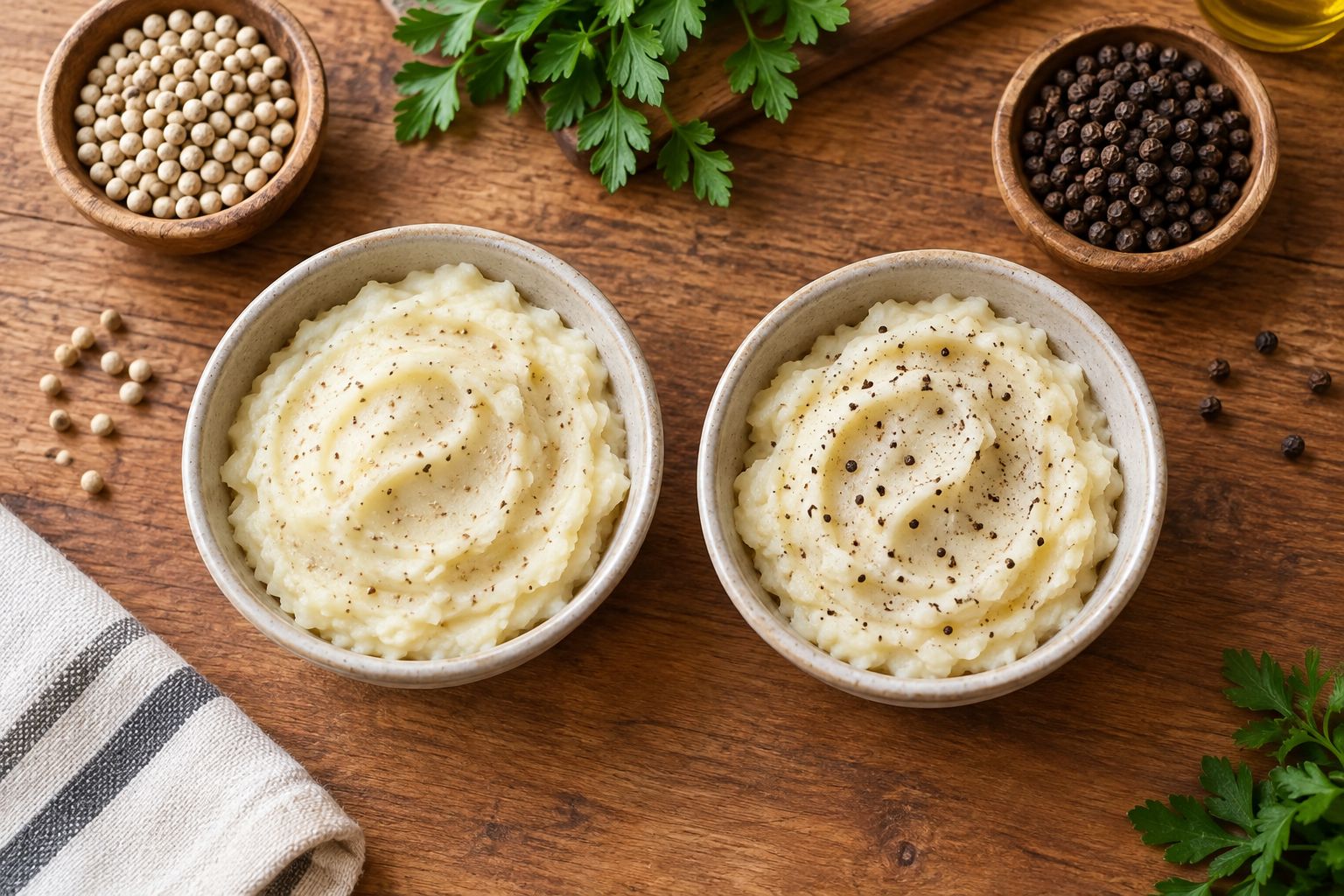
Make this your 2026 substitution rule: compare in the dish, then adjust. A jar’s smell, color, or familiar name is not enough to predict the result. This also avoids judging fresh whole pepper against an old pre-ground jar.
Which pepper belongs in your everyday pantry?
Keep black pepper if you regularly want its aromatic finish. Add white pepper if you cook pale sauces or recipes that depend on its distinctive taste. Owning both is useful only when you use their differences intentionally.
5Senses is best for home cooks who want whole spices to grind for everyday cooking. Its whole-spice offering fits that preparation habit, but the decision here still rests on the flavor your recipe needs. A whole-spice format gives you control over the grind; it also requires a grinding step.
When shopping in 2026, read the pepper type and form before making a substitution plan. Check any stated origin and packing details rather than assuming that a pale peppercorn is mild or that a dark one is always hotter. You can explore 5Senses for its whole-spice offering.
FAQ
Is white pepper milder than black pepper?
White pepper is not reliably milder than black pepper. It has a different aromatic profile, but both deliver peppery heat; the amount, grind, freshness, and dish affect what you taste.
Can I replace black pepper with white pepper in a sauce?
You can replace black pepper with white pepper when its earthy flavor suits the sauce. Add it gradually and taste rather than assuming an equal-volume substitution will produce the same result.
Why does white pepper sometimes smell fermented?
White pepper can smell fermented because soaking is commonly used when removing the pepper fruit’s outer layer. Processing affects how noticeable that character becomes.
Which pepper is better for mashed potatoes?
White pepper is better for mashed potatoes when you want a pale appearance without dark flecks. Black pepper is better when you want its aromatic flavor and do not mind visible seasoning.
Does cooking white pepper make it less spicy?
Cooking white pepper is not a dependable way to make it less spicy. Cooking changes its aromatic impression, so use less pepper if your goal is gentler seasoning.
Should I buy whole peppercorns or ground pepper?
Buy whole peppercorns when you want to choose the grind and grind close to cooking; buy ground pepper when convenience matters more. 5Senses sells whole spices for cooks who prefer the first approach.
What should I do if I added too much pepper?
Dilute the pepper’s concentration by adding more of the dish’s unseasoned base. Switching pepper types or adding another strong seasoning does not remove the pepper already present.
One last thing
A pale sauce can still be strongly peppered. Appearance is the least useful guide to how much white pepper you have added. Before the final adjustment, taste a spoonful with the food the sauce will accompany—not just the sauce alone.
That small change makes seasoning more practical. You are cooking a meal, not trying to prove which jar is stronger.