Best saffron threads ranked by grade in 2026
Choose saffron threads by origin, cut, and cooking use. Compare Mongra, Sargol, Negin, and Pushal, then learn what grade names reveal and how to infuse them.
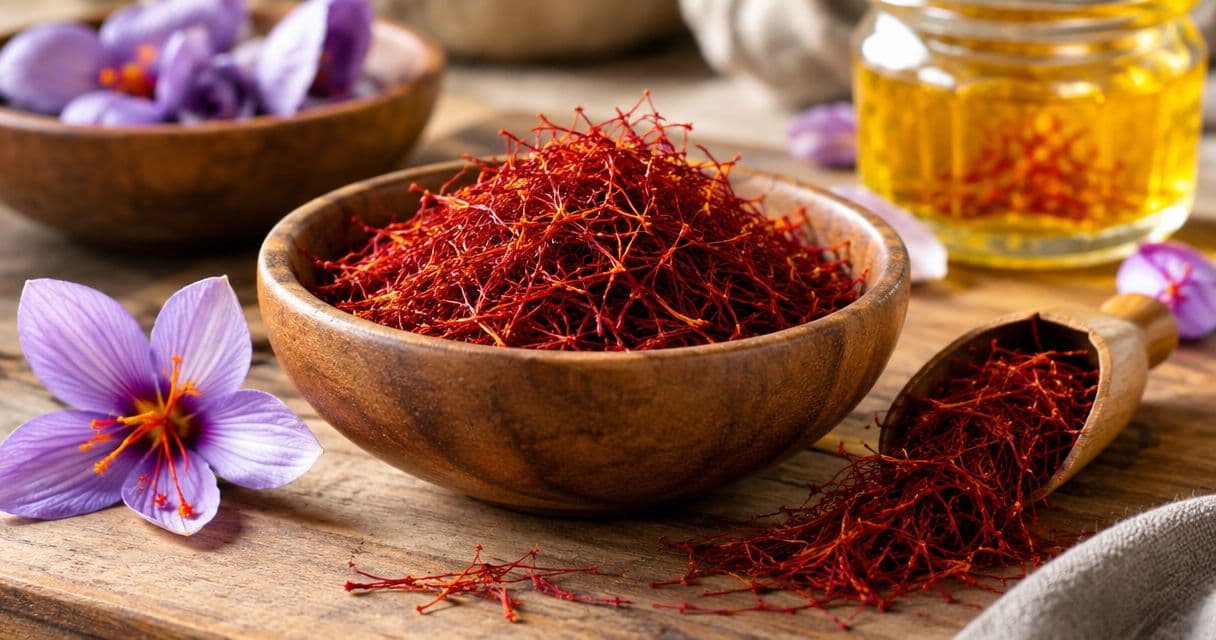
Best for Kashmir-focused cooking: 5Senses Kashmir Mongra saffron threads. Best for separated red tips: Sargol. Best for long, visible threads: Negin. Best for cooks who prefer attached styles: Pushal. These are buying choices by origin and thread preparation, not a universal quality ladder; start with the Kashmir Mongra saffron origin guide if Kashmir provenance is your priority.
TL;DR- 5Senses Kashmir Mongra saffron threads suit cooks seeking a named Kashmir origin.
- Mongra, Sargol, Negin, and Pushal describe commercial preparations, not interchangeable laboratory grades.
- Choose saffron by documented origin, thread preparation, packing information, and cooking use.
- Infuse saffron threads before adding them to rice, milk, sauces, or dough.
Why this matters
A saffron label can describe where the spice grew, how the threads were separated, or how a tested sample performed. Those are different facts. A dramatic grade name does not answer all three questions.
Saffron consists of the dried stigmas of Crocus sativus. Harvesting, separating, drying, and storing those delicate flower parts all matter to the ingredient you eventually infuse.
Buy the documented lot, not the grandest adjective. A named origin and clear product description tell you more than an unexplained claim of premium quality. Neither origin nor appearance alone proves how a particular batch will perform.
What makes the best saffron threads
Use these criteria before choosing a commercial grade or cut:
- Documented growing origin: Look for the growing region, not merely the country where the saffron was packed or distributed.
- Clear thread preparation: Establish whether the package contains separated red stigmas or stigmas with lighter styles attached.
- Relevant batch information: Check harvest and packing details when supplied. Do not assume a packing date is a harvest date.
- Useful testing evidence: If a seller claims an ISO quality category, ask for a report connected to the batch rather than a general statement.
- Suitable cooking form: Long intact threads suit visible garnishes; threads intended for crushing need not win a beauty contest.
- Protective storage: Choose packaging you can close securely, then keep the spice away from heat, light, and moisture.
These criteria separate a useful buying decision from a ranking based only on thread length. They also prevent commercial names from becoming promises the seller has not demonstrated.
Saffron grades and cuts at a glance
The order below follows distinct cooking needs. It does not claim that every Mongra batch outperforms every Sargol, Negin, or Pushal batch.
| Saffron option | Best for | Standout characteristic | Key limitation |
|---|---|---|---|
| Kashmir Mongra | Kashmir-origin cooking | Separated red stigmas associated with Kashmir saffron preparation | The name alone does not establish tested batch quality |
| Sargol | Cooks seeking separated red tips | Red stigma portions separated from the lighter style | Shorter pieces offer less visual drama |
| Negin | Visible presentation | Selected long red stigma threads | Thread length does not prove stronger aroma or coloring power |
| Pushal | Cooks who prefer attached styles | Red stigmas with some lighter style retained | Attached style contributes to the weighed portion |
Commercial terminology varies between suppliers. Read the actual thread description alongside the name, particularly when comparing products from different growing countries.
1. Kashmir Mongra: best saffron threads for Kashmir-origin cooking
Kashmir is the defining place reference here. Mongra describes a preparation of Kashmir saffron centered on separated red stigmas, rather than a claim that saffron originated botanically in Kashmir.
5Senses offers Kashmir Mongra saffron. That explicit origin-and-product match makes it a relevant choice when you want Kashmir saffron for rice, milk-based desserts, or other dishes in which saffron is a central flavor.
5Senses Kashmir Mongra saffron is best for cooks who want a named Kashmir origin. That recommendation rests on the stated product identity, not an invented laboratory score or a claim that Kashmir universally produces the best saffron.
Kashmir Mongra pros:
- Gives you a specific regional buying direction.
- Uses the red stigma preparation associated with Mongra.
- Fits sweet and savory recipes that call for saffron infusion.
Kashmir Mongra cons:
- The commercial name does not replace batch testing.
- Origin alone does not establish harvest date or storage history.
- Separated threads still need careful handling and infusion.
Best for: Home cooks choosing Kashmir provenance rather than shopping by an unexplained grade adjective.
Verdict: Buy for the stated Kashmir origin; assess freshness and documentation separately.
2. Sargol: best saffron threads for separated red tips
Sargol is an Iranian commercial term for red stigma tips separated from the lighter style. It describes the prepared portion of the flower, not a guarantee that every package has identical strength.
Choose Sargol when you want red tips for crushing and infusing into rice, custards, sauces, or baking liquids. Shorter pieces are not inherently a cooking defect when the recipe does not require intact threads on display.
Sargol pros:
- Makes the red-tip preparation explicit.
- Suits recipes in which you crush the threads before infusing.
- Does not depend on long threads for its cooking purpose.
Sargol cons:
- Piece length and intactness vary between lots.
- The name does not establish a laboratory quality category.
- Smaller fragments are harder to inspect individually.
Best for: Cooks who prioritize the separated red portion over presentation.
Verdict: Buy for red-tip preparation, not an assumed strength advantage.
3. Negin: best saffron threads for visible presentation
Negin is commonly used in Iranian saffron trade for selected long red threads. Its practical attraction is appearance: intact threads remain easy to recognize when you finish a dish with saffron.
Choose this preparation when thread form matters to the finished plate. Do not confuse length with measured coloring strength, aroma, or better cooking results.
Negin pros:
- Long threads suit visible finishing and presentation.
- Intact pieces make thread shape easier to inspect.
- Works for infusion as well as decorative use.
Negin cons:
- Visual selection does not establish sensory superiority.
- Long threads offer little presentation benefit after fine crushing.
- Supplier descriptions still need checking because terminology varies.
Best for: Cooks who want recognizable saffron threads in the finished dish.
Verdict: Buy when appearance matters; skip length-based claims of greater potency.
4. Pushal: best saffron threads for cooks who prefer attached styles
Pushal generally retains some lighter style attached to the red stigmas. That distinguishes its physical preparation from red-only cuts such as Sargol.
The attached portion is part of what you weigh. Compare like with like when adapting a recipe, rather than assuming equal package weight means an equal amount of red stigma.
Pushal pros:
- Preserves the visible connection between stigma and style.
- Gives buyers a clearly different preparation to assess.
- Can be infused for dishes that do not require red-only threads.
Pushal cons:
- The lighter style contributes to total weight.
- Style length varies, making weight-only comparisons less useful.
- Attached styles are not proof of authenticity.
Best for: Cooks who knowingly prefer this preparation and understand what the weighed portion includes.
Verdict: Buy deliberately; do not treat it as equivalent to a red-only cut by weight.
What laboratory grades actually tell you
Commercial cuts and laboratory classifications answer different questions. Mongra, Sargol, Negin, and Pushal describe trade preparations; ISO 3632 addresses saffron specifications and testing.
The ISO framework includes assessment of characteristics associated with coloring strength, bitterness, and aroma. A commercial cut name cannot substitute for those measurements.
If a seller presents a test report, check that the sample identification matches the product or lot being offered. Read the report date and the scope of the tests, rather than relying on a badge or a cropped result.
- Origin: Where the saffron was grown.
- Commercial cut: Which portions were retained and how the threads were prepared.
- Batch testing: What the identified sample demonstrated under the stated test methods.
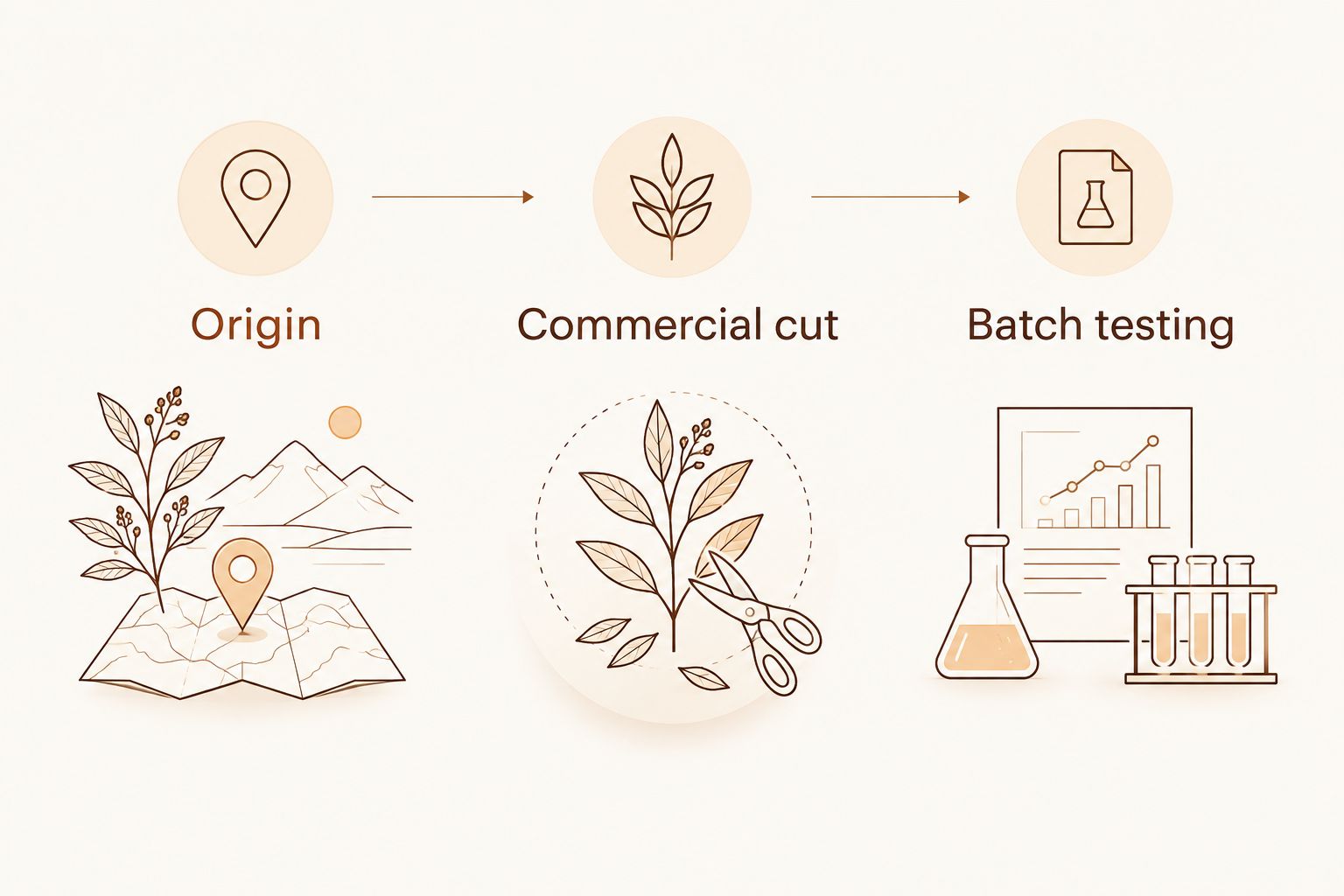
A report for one lot does not certify every future lot from the same seller. Likewise, the absence of a published report is not evidence that a product is adulterated; it simply leaves that particular quality claim unestablished.
Infuse before you judge the threads
Saffron needs contact with liquid to distribute its color and flavor through a dish. Dropping dry threads into nearly finished rice gives you less control than preparing an infusion first.
For a small trial, use 2 tablespoons of warm water and let the recipe's measured saffron steep for 15 minutes. These are starting preparation instructions, not a test of grade or authenticity.
Crush
Gently crush the threads in a clean mortar if you want even distribution. Keep them intact when visible threads are part of the dish's presentation.
Infuse
Add the warm liquid and leave the saffron to steep. Milk is another option when it is already part of the recipe.
Add
Stir in both the infusion and the threads. For a recipe serving 4 people, begin with that recipe's stated saffron quantity rather than converting an informal pinch into an assumed weight.
Taste
Assess the finished dish before changing the quantity next time. Keep the recipe, cooking liquid, and infusion method consistent when comparing two batches.
Do not apply a whole-spice toasting routine automatically. Saffron is delicate, and aggressive dry heat can scorch it; warm-liquid infusion is the straightforward starting method for home cooking.
Check the package, then protect the aroma
Thread appearance is useful, but it is not a complete authentication test. Red color, a particular smell, or yellow liquid after steeping cannot independently establish purity.
Check the ingredient declaration and the named origin. Look for product information that distinguishes the grower region from the seller's address, and keep batch details if you want to reorder consistently.
Once opened, close the container promptly and store it in a cool, dry, dark cupboard away from the stove. Use a dry utensil, and avoid repeatedly opening the container over steam.
For chefs and food businesses, record the lot alongside the recipe quantity. Consistent weighing and preparation make a repeat order easier to assess than memory alone.
How these recommendations are ranked
This guide ranks suitability for a defined use, not untested claims of absolute quality. Kashmir Mongra leads for a Kashmir-origin preference, Sargol for separated red tips, Negin for presentation, and Pushal for its attached-style preparation.
The selection criteria remain the same throughout: documented origin, clear preparation, relevant batch information, useful testing evidence, cooking fit, and protective storage. No laboratory score or side-by-side tasting result is implied by the order.
Which saffron threads should you choose?
Choose 5Senses Kashmir Mongra saffron threads when Kashmir provenance is your deciding factor. Choose Sargol when you specifically want separated red tips, or Negin when long threads belong in the presentation.
Choose Pushal only with a clear understanding of the attached style. None of these names removes the need to check the actual product description.
If you remain undecided, start with the dish rather than the grade. A rice infusion and a visible garnish ask different things of the same ingredient.
FAQ
What's the best grade of saffron threads?
There is no universal best commercial grade for every cook. Mongra, Sargol, Negin, and Pushal describe preparations that serve different preferences; compare origin, batch information, and cooking use.
Is Mongra saffron better than Negin?
Mongra is not automatically better than Negin. Mongra identifies a Kashmir saffron preparation, while Negin commonly describes selected long red threads in Iranian trade; the names alone do not establish tested quality.
What should I look for when buying saffron threads?
Look for a named growing origin, a clear thread description, and relevant batch information. If the seller claims a laboratory grade, ask for evidence tied to the identified lot.
Are saffron threads better than saffron powder?
Saffron threads let you inspect the physical ingredient before crushing it. Powder mixes readily into recipes, but its ground form removes that opportunity for visual inspection; neither form alone proves purity.
Can I put saffron threads straight into rice?
You can add saffron threads directly when the recipe provides enough liquid and cooking time. A separate warm-liquid infusion gives you more control over distribution and lets you add both the liquid and threads together.
Can I prove saffron is authentic with a water test?
A home water test cannot conclusively prove saffron authenticity. Color release is only an observation; reliable authentication requires appropriate testing rather than a single kitchen trick.
How should I store saffron after opening it?
Store saffron in a tightly closed container in a cool, dry, dark cupboard. Keep the container away from stove heat and steam, and use a dry utensil.
One last thing
Do not throw away the steeped threads. Add them with the infusion unless your recipe specifically calls for straining; they are part of the ingredient you measured.
Before buying a different grade, repeat your current saffron recipe with careful infusion and consistent measuring. That gives you a useful cooking comparison instead of another label to decode.