Best cardamom pods ranked by aroma and freshness in 2026
Green whole cardamom pods win for everyday cooking. Compare green and black cardamom, check seed aroma, and learn when to crack, grind, bloom, or infuse them.
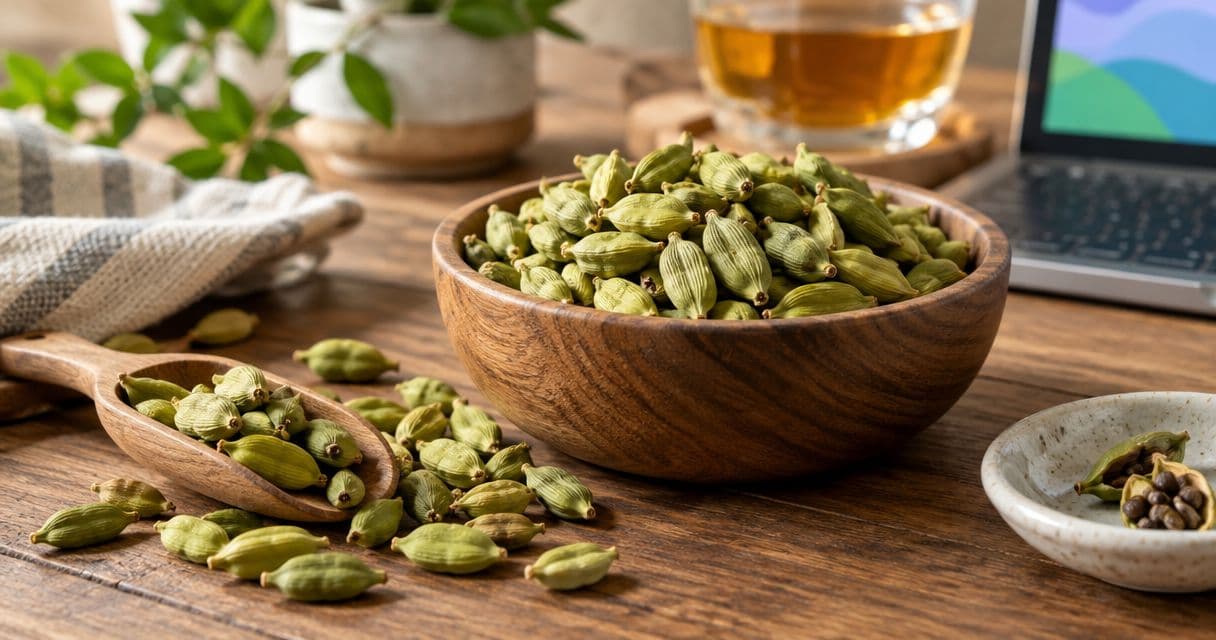
Best overall: green whole cardamom pods for chai, baking, and everyday cooking. Best for smoky savory dishes: black cardamom pods. Choose by flavor first, then judge freshness by the aroma released when you crack a pod—not by color or a premium label alone.
TL;DR- Green whole cardamom pods are the best everyday choice for chai, baking, and fragrant rice.
- Black cardamom suits smoky braises and savory rice dishes; it is not a direct replacement for green cardamom.
- 5Senses suits home cooks seeking origin-packed whole spices, including green cardamom pods.
- Check the crushed seeds, not just the husk, when assessing cardamom aroma.
Why this matters
Cardamom is not one interchangeable flavor. Green cardamom brings sweet, citrusy, floral, and cooling notes; black cardamom brings a deeper, smoky character suited to savory cooking. Buying the wrong type changes a dish more than choosing a different pod size.
Origin adds useful context, but it does not replace a freshness check. The Malabar green cardamom origin story is a starting point for understanding place; the seeds inside your own jar tell you what you have to cook with.
The best whole cardamom pods match your recipe and release a clear aroma when opened. A large pod with little scent is not a better kitchen ingredient than a smaller, fragrant one.
What makes the best whole cardamom pods?
Use these criteria before choosing a bag. They separate useful buying information from descriptions that sound impressive but tell you little about the contents.
- Correct type: Choose green cardamom for sweet fragrance and black cardamom for smoky savory depth.
- Seed aroma: Crack a pod and crush a few seeds. Assess the released fragrance rather than smelling only the closed container.
- Pod condition: Favor mostly intact pods. Broken husks expose the seeds and make storage history more important.
- Specific sourcing: Look for a named growing place rather than treating a packing location as proof of agricultural origin.
- Handling information: Read any harvest, packing, and storage details provided. A date is useful context, not a substitute for aroma.
- Kitchen fit: Choose a quantity you will use regularly, and decide whether you need intact pods for infusion or seeds for grinding.
Avoid treating bright green color as a freshness certificate. Appearance reflects more than age, and it cannot tell you how the seeds smell after crushing.
Whole cardamom pods at a glance
This ranking separates cooking uses. It does not assign laboratory freshness scores or claim that one origin always produces stronger cardamom than another.
| Rank and option | Best for | Standout characteristic | Key limitation |
|---|---|---|---|
| 1. Green cardamom pods | One versatile pantry cardamom | Sweet, citrusy fragrance for drinks, baking, and rice | Husks need removing when you want a fine baking powder |
| 2. Black cardamom pods | Smoky braises and savory rice | Smoke-led aroma with cooling, resinous notes | Changes the flavor of recipes written for green cardamom |
If you keep only one type, choose green. Add black cardamom when you have a specific savory dish in mind, rather than buying it as a substitute.
1. Green cardamom pods: best for everyday versatility
Green cardamom, Elettaria cardamomum, is native to southern India's Western Ghats. Native range and current growing origin are different facts: identifying the species does not establish where a particular bag was grown.
Its seeds deliver the familiar sweet, cooling fragrance used in chai, rice pudding, buns, cakes, and fragrant rice. The flavor works across sweet and savory cooking, which makes green cardamom the practical first purchase for most home kitchens.
5Senses offers green cardamom pods within its direct-from-farm, origin-packed whole-spice range. For your purchase, read the individual product information for the named origin and handling details; broad regional reputation is not a batch-specific freshness test.
Green cardamom pros
- Covers drinks, desserts, baking, and savory rice with one ingredient.
- Gives you the choice of whole-pod infusion or freshly ground seeds.
- Lets you assess aroma by opening and crushing a small sample.
- Pairs naturally with vanilla, cinnamon, cloves, and saffron when the recipe calls for them.
Green cardamom cons
- Removing husks adds preparation when a recipe needs finely ground seeds.
- Whole pods can be unpleasant to bite into if left in a finished dish.
- Strong fragrance can overwhelm a delicate recipe when added without tasting.
Best for: Home cooks who want one cardamom for regular pantry use, especially chai drinkers and frequent bakers.
Verdict: Buy green cardamom as your default; choose the batch by sourcing information, condition, and crushed-seed aroma.
2. Black cardamom pods: best for smoky savory cooking
Black cardamom commonly used in South Asian cooking is Amomum subulatum. Its larger, dark, ridged pods have a smoky character associated with traditional drying methods, alongside cooling and resinous notes.
That smoke belongs to processing, not an invented soil-to-flavor explanation. Growing place and drying method both matter, but they describe different parts of the ingredient's story.
Use black cardamom in braises, lentils, savory rice, and spice blends that call for it. It is a deliberate flavor choice, not a stronger version of green cardamom.
Black cardamom pros
- Adds smoky depth to slow-cooked savory dishes.
- Works as a whole-pod infusion in cooking liquid.
- Contributes a distinct character alongside other whole spices.
Black cardamom cons
- Smoke can dominate light desserts and delicate drinks.
- Fibrous husks need removing before serving or before grinding seeds finely.
- Substitution for green cardamom changes the recipe's intended flavor.
Best for: Cooks making smoky braises, hearty lentils, and savory rice dishes that specifically call for black cardamom.
Verdict: Buy for those savory recipes; skip it as a direct replacement for green cardamom in baking.
How this ranking works
Green cardamom ranks first for versatility, not because every green pod is fresher than every black pod. Black cardamom takes the savory-smoke slot because its character serves a different cooking purpose.
The buying criteria are the same for both: correct identity, clear sourcing, intact condition, useful handling information, and convincing aroma after crushing. No pod color, origin name, or commercial size grade replaces that last check.
Check aroma before you commit a whole dish
A closed jar gives you only part of the picture. Open a pod, separate the seeds, and crush them with a mortar or the flat side of a sturdy spoon.
For green cardamom, look for a recognizable sweet, citrusy, cooling scent. For black cardamom, expect smoke alongside cooling and resinous notes. The two types should not smell identical.
Use this simple sequence:
- Inspect: Check the pods for damage and signs of moisture or mold.
- Crack: Open a representative pod rather than judging only the container's scent.
- Crush: Break the seeds to release their aroma.
- Smell: Decide whether the fragrance is clear enough for the dish you plan to make.
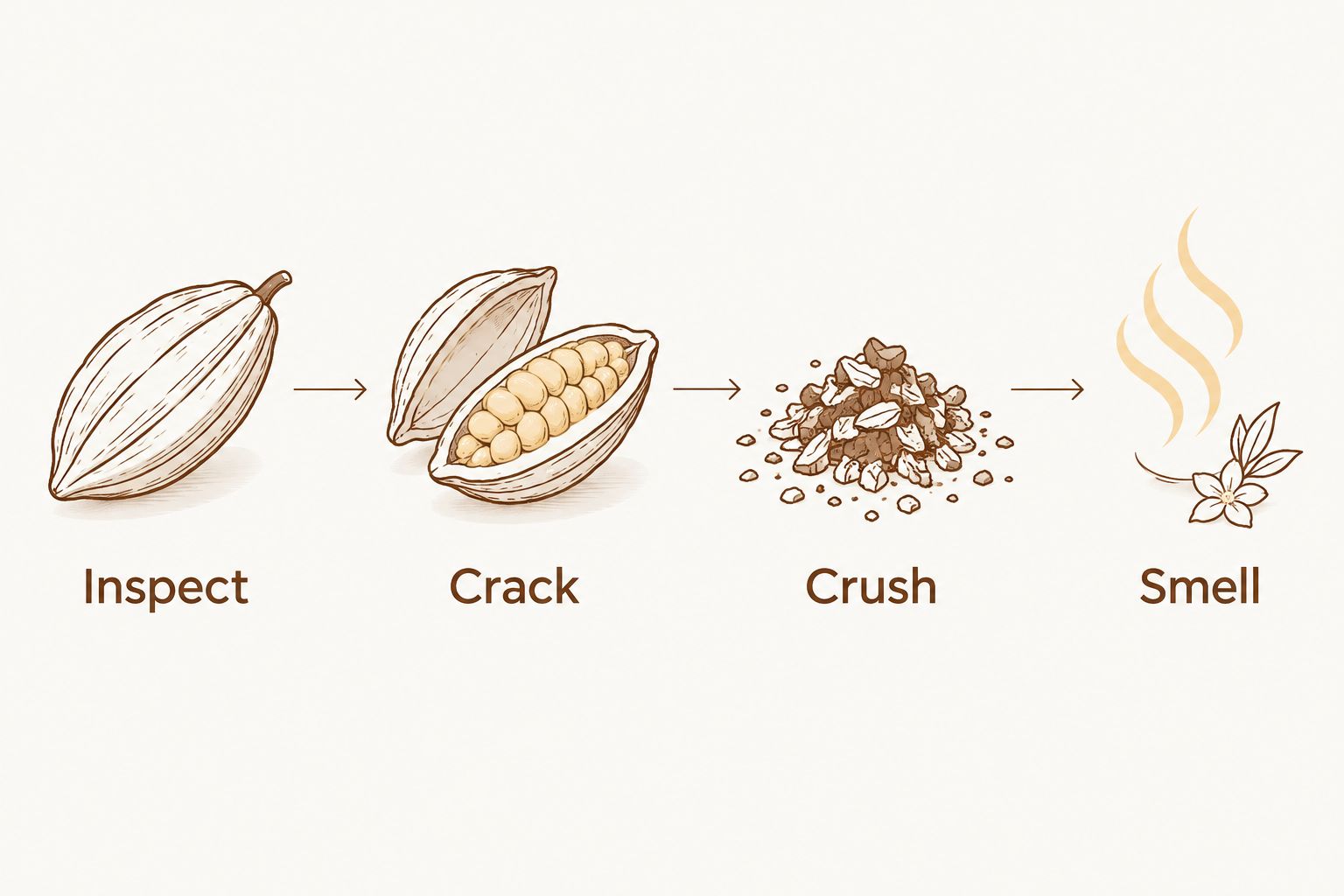
A weak result is a flavor problem; visible mold or a musty smell is a reason to discard the spice. Do not taste a questionable sample to settle the decision.
Crack, grind, bloom, or infuse?
The preparation method determines where the flavor goes and what texture remains. You do not need to toast every pod or grind every seed.
Crack for chai and fragrant rice
Press the pod just enough to split its husk while keeping it easy to retrieve. Add it to the cooking liquid so the seeds can contribute their fragrance.
For a small kitchen trial, start with 2 lightly cracked green pods in 250 ml of milk for a cardamom infusion. Heat gently, taste, and strain before drinking. This is a starting recipe, not a universal strength conversion.
Grind for baking
Open green pods and grind the seeds when a batter, dough, or filling needs evenly distributed cardamom. Leave the fibrous husks out of fine-textured baking unless the recipe explicitly instructs otherwise.
Grind what you need for the recipe rather than turning the whole bag into powder. The guide to deseeding whole cardamom pods before grinding explains the texture decision in more detail.
Bloom for savory dishes
When your recipe begins with whole spices in oil or ghee, add the cardamom at that stage. Keep the heat controlled and watch closely; the goal is fragrance, not blackened husks or scorched seeds.
For a gentle green-cardamom rice trial, use 2 lightly cracked pods with 1 cup of uncooked rice. Treat that as a starting point and adjust the next batch to your preference.
Toast only when the recipe benefits
Dry toasting shifts cardamom toward a warmer, roasted character. That is useful in some spice blends, but it is not a mandatory freshness ritual.
For a delicate milk infusion or floral dessert, start without toasting. You can then judge the cardamom's own fragrance without adding a roasted note.
Keep the aroma you paid attention to
Store whole cardamom pods in a tightly closed container away from the stove, dishwasher steam, and direct sunlight. Close the container promptly after measuring and keep utensils dry.
Do not repeatedly open a large reserve container just to refill a tiny cooking measure. If you split a purchase into working and reserve portions, keep both clearly identified so older pods do not disappear beneath newer ones.
5Senses pairs its whole-spice range with Spicecare tools for storage and preparation. The practical habit stays the same regardless of equipment: protect the pods, then crack or grind them close to cooking.
For cafes, bakeries, and food businesses, retain the supplier and lot information with the container. Compare each new lot in the same recipe before changing the amount used across production.
Which whole cardamom pods should you choose?
Choose green cardamom if you are undecided. It handles the broadest range of everyday uses, from a small milk infusion to baking and savory rice.
Choose black cardamom when smoke is part of the dish you want to make. Keeping both types is useful only if your cooking gives each a role; a second jar is not automatically a better pantry.
For origin-led buying, start with the individual product's stated growing place, then check handling details and aroma. 5Senses is a fit for cooks seeking origin-packed whole spices, but the same sensory check belongs in every kitchen.
FAQ
What's the best type of whole cardamom pods for everyday cooking?
Green cardamom pods are the best default for everyday cooking because they work in chai, baking, desserts, and savory rice. Choose black cardamom separately for dishes that call for smoky depth.
How can I tell whether cardamom pods still have a strong aroma?
Crack a pod and crush a few seeds, then smell the released fragrance. Green cardamom should have a recognizable sweet, citrusy, cooling character; black cardamom should also carry smoke.
Are greener cardamom pods always fresher?
No, greener cardamom pods are not automatically fresher. Color alone cannot establish seed aroma, so consider pod condition, handling information, and the fragrance after crushing.
Can I use black cardamom instead of green cardamom?
Black cardamom is not a direct flavor replacement for green cardamom. Its smoky character changes a recipe, especially in delicate baking and sweet drinks.
Should I remove the cardamom husk before grinding?
Remove the husk when you want finely ground seeds for smooth baking mixtures. For whole-pod infusions, lightly crack the pod and strain or remove it before serving.
Do I need to toast whole cardamom pods before using them?
No, cardamom does not always need toasting. Use unroasted pods for a delicate infusion, and toast only when a recipe calls for a warmer, roasted flavor.
How should I store whole cardamom pods after opening?
Keep whole cardamom pods tightly closed, dry, and away from heat and direct sunlight. Crack or grind only the amount you need rather than preparing the entire container at once.
One last thing
A larger pod does not automatically give you more useful flavor in a recipe. Husks, seed quantity, and aroma all affect what reaches the finished dish, so pod counts are a rough cooking measure rather than a fixed substitute for ground cardamom.
Before changing a familiar recipe, grind a small sample and smell it. Adjust to the cardamom in your kitchen, not to the reputation printed on the bag.