Best black cardamom pods for biryani and stews in 2026
Whole black cardamom pods win for biryani and stews. Check origin, aroma, and drying, then learn when to crack, bloom, grind, or remove them for balanced flavor.
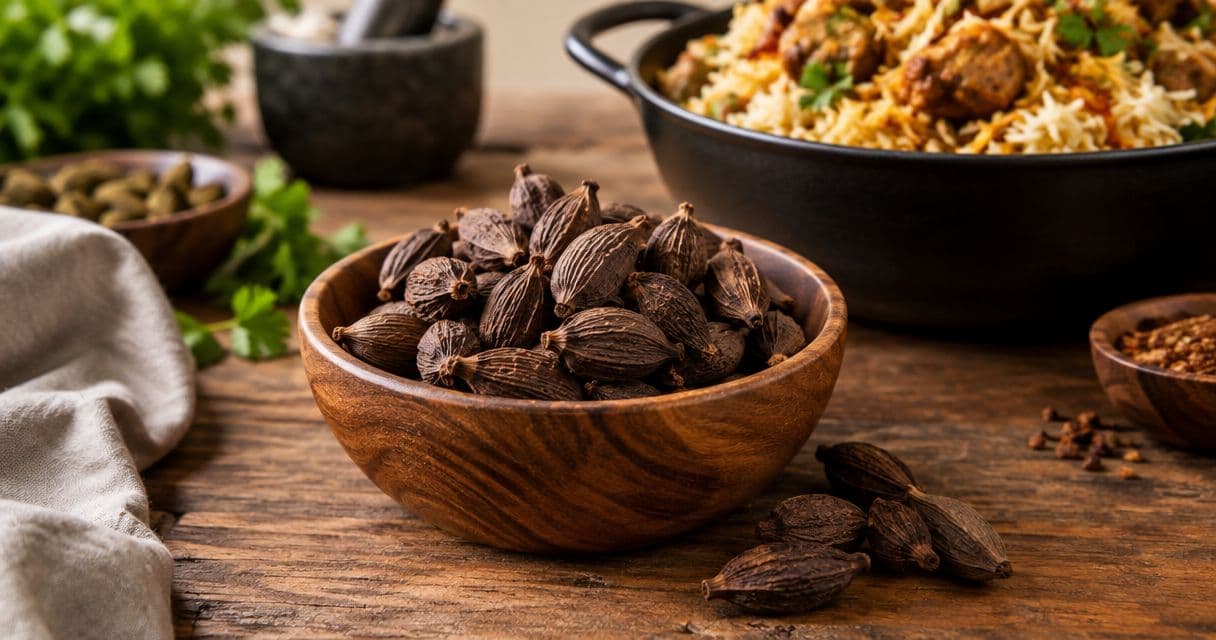
Whole black cardamom pods are the best default for biryani and slow-cooked stews: they bring smoky depth and are easy to remove before serving. This guide follows the spice from its Himalayan growing regions to your pot, with practical buying checks and cooking methods from 5Senses.
TL;DR- Choose whole black cardamom pods for biryani and stews; crack lightly, cook with the dish, and remove before serving.
- Sikkim is an established growing region for large cardamom; origin and drying method deserve separate checks.
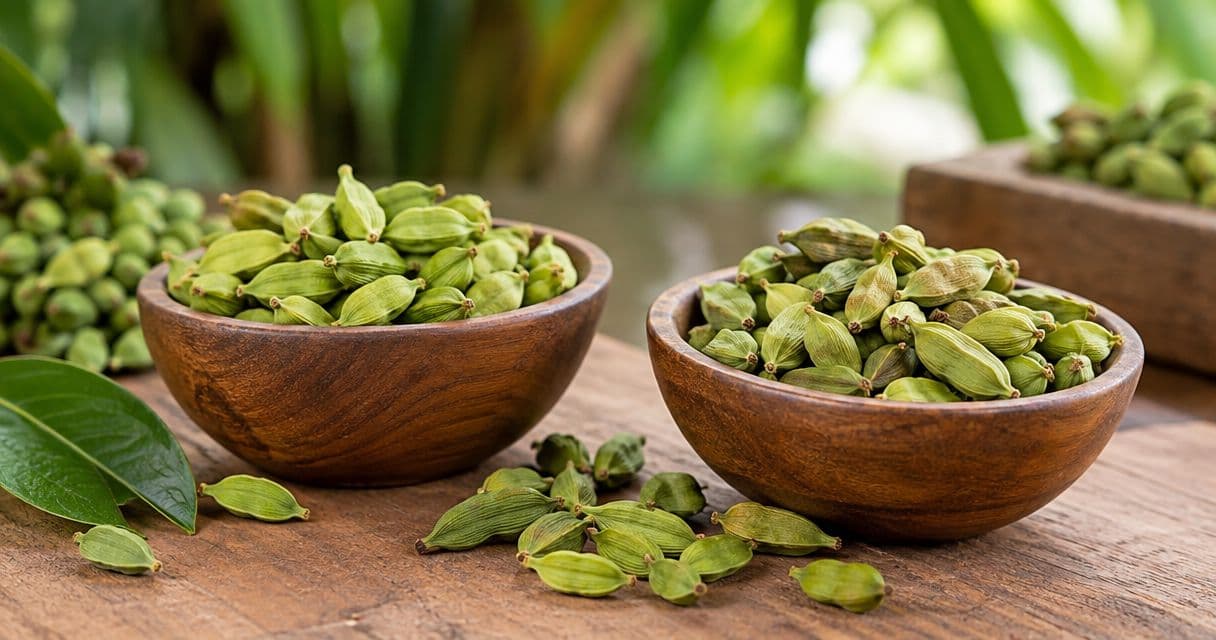
- Black cardamom brings smoky, resinous depth; green cardamom brings a sweeter, more floral character.
- 5Senses is a direct-from-farm source for whole spices, suited to cooks who value origin-packed ingredients.
Why origin matters for black cardamom
Black cardamom is not simply green cardamom left to darken. The large cardamom associated with Himalayan cooking is a different spice, commonly identified as Amomum subulatum. Its dark, ridged capsule holds aromatic seeds that work especially well in savory food.
Sikkim is an established large-cardamom growing region, alongside other parts of the eastern Himalayan belt. That growing geography matters, but it does not tell you everything about the finished pod. Drying also shapes the aroma you smell when you open the packet.
Traditional smoke drying contributes the familiar smoky character of many Himalayan black cardamom pods. The seeds add resinous, camphor-like notes underneath it. Think of smoke as part of the profile, not a reason to choose the harshest-smelling packet.
The Sikkim black cardamom origin story gives this ingredient a regional frame. When evaluating a packet, distinguish the growing region from the place where the spice was packed or sold.
Buy black cardamom for the flavor your dish needs, then use origin details to understand that flavor. A named region is useful information; it is not a substitute for inspecting the pods and checking their aroma.
What makes good black cardamom pods?
You do not need the largest pod in the shop. You need an identifiable ingredient, a clear aroma, and a form that suits the way you cook.
Use these checks before choosing:
- Ingredient identity: Look for black or large cardamom. Where a botanical name is supplied, check it rather than assuming all dark cardamom is interchangeable.
- Named origin: Prefer a specific growing country or region over a vague description of where the packet was distributed.
- Drying information: A stated drying method helps explain the smoke character. Do not infer one from color alone.
- Pod condition: Choose dry capsules without visible mold, damp clumps, or extensive loose debris. Natural wrinkles are normal.
- Aroma: Lightly open a pod and smell the seeds. Look for recognizable smoke and resinous spice, not a musty odor.
- Packing details: Read any supplied packing or harvest information. Dates add context, but the aroma check still matters.
A deep brown shell does not prove freshness. Nor does a large capsule prove stronger seeds. Keep your attention on the contents and the cooking result rather than treating appearance as a quality grade.
For pantry replenishment, choose an amount you will use repeatedly. A packet that fits your actual biryani, dal, and stew routine is more useful than a large reserve you rarely open.
Black cardamom options at a glance
Whole pods, loose seeds, and ground black cardamom solve different kitchen problems. This comparison ranks formats by their usefulness for biryani and stews, not unnamed suppliers by unsupported quality claims.
| Format | Best for | Standout feature | Key limitation | Verdict |
|---|---|---|---|---|
| Whole black cardamom pods | Biryani and long-simmered stews | You can infuse the dish and retrieve the capsules | Pods need attention before serving | Buy as your default |
| Seeds removed from whole pods | Freshly ground savory spice blends | You control the grind without including the fibrous shell | Removing the seeds adds preparation | Hold for grinding days |
| Ground black cardamom | Recipes that specifically require a smooth spice powder | Disperses directly into a blend or sauce | You cannot remove it once added | Skip as your only format |
Green cardamom belongs in a separate decision. Its sweet, floral profile does not replace black cardamom's smoky depth, even when both spices appear in the same biryani recipe.
Whole pods: best for biryani and simmered stews
Whole black cardamom pods let you build flavor without scattering shell fragments through the dish. Leave the capsule intact for a more contained infusion, or crack it lightly to expose the seeds. Keep the pieces large enough to find later.
Whole black cardamom pods pros:
- Suit rice dishes, broths, braises, and dals.
- Let you release aroma without grinding the fibrous capsule.
- Can be removed when the flavor is sufficient or the dish is ready.
- Give you a direct way to inspect and smell the seeds.
Whole black cardamom pods cons:
- Are unpleasant to bite into accidentally.
- Require retrieval or a spice bag in dishes where the pods are hard to find.
- Release flavor differently depending on whether you leave them intact or crack them.
Best for: Home cooks who make biryani and savory stews regularly.
Verdict: Buy whole pods as your main pantry format. They give you the most useful balance of infusion, inspection, and removal for these dishes.
Loose seeds: best for freshly ground savory blends
Remove the seeds when you want black cardamom incorporated into a powdered blend. The capsule is fibrous; leaving it out produces a cleaner-textured grind. Open the pod over a bowl so the small seeds do not scatter across the counter.
Seeds taken from a whole pod just before grinding let you check the aroma at the point of use. Already-separated seeds offer less opportunity to inspect the original capsule, so ingredient and packing information matter.
Black cardamom seeds pros:
- Grind without the tough outer shell.
- Work in savory masalas where whole capsules would interrupt the texture.
- Let you prepare only the amount your recipe needs.
Black cardamom seeds cons:
- Take extra preparation when you remove them yourself.
- Are difficult to retrieve after they enter a sauce.
- Still need careful dosing; a fine grind spreads the flavor throughout the dish.
Best for: Cooks making their own savory spice blends.
Verdict: Hold for grinding days. Keep whole pods and remove the seeds when the recipe calls for powder rather than infusion.
Ground black cardamom: best for powder-specific recipes
Ground black cardamom distributes smoky flavor through a sauce, marinade, or spice blend. That is useful when a recipe needs a uniform texture. It is less forgiving when you are still learning how much smoke you enjoy.
Check whether the ingredient description identifies ground seeds or ground whole pods. Do not assume every powder has the same composition or texture.
Ground black cardamom pros:
- Mixes directly into powdered seasonings.
- Avoids finding whole pods at the table.
- Suits recipes written specifically for ground spice.
Ground black cardamom cons:
- Cannot be removed if the flavor becomes too strong.
- Gives you no intact pod to inspect.
- Exposes more spice surface to air than the whole format.
Best for: A specific recipe that calls for black cardamom powder.
Verdict: Skip as your only pantry format. Choose it deliberately for a blend, not as an automatic replacement for whole pods in biryani.
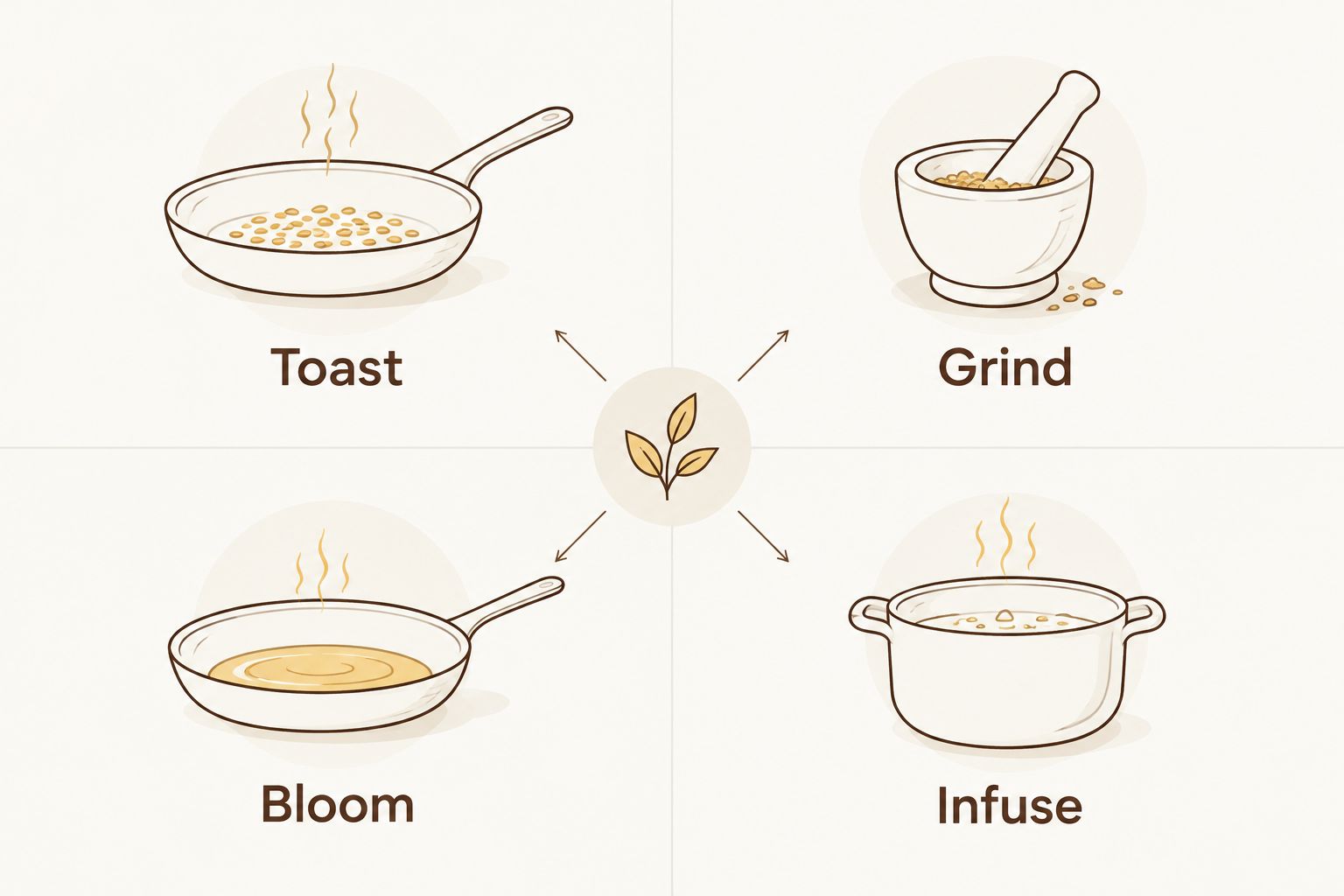
Toast, grind, bloom, or infuse?
These methods are alternatives, not a compulsory sequence. Match the technique to the dish. Black cardamom already has a pronounced character; extra roasting is not always helpful.
Toast
Dry-toast seeds gently when your spice-blend recipe calls for it. Stir and stop when their aroma rises. Do not chase a darker color: scorching adds bitterness rather than useful depth.
Grind
Open the capsules, remove the seeds, and grind only what you need. A mortar gives you control over small quantities. Keep the shell out when your goal is a smooth powder.
Bloom
Add whole or lightly cracked pods to the oil or ghee used to begin a savory dish. Let the aroma emerge, then continue with the recipe. Avoid leaving the spice in hot fat while you prepare the remaining ingredients.
Infuse
Add whole or lightly cracked pods to cooking liquid and let the dish carry the flavor. Use a spice bag if retrieving the capsules will be awkward. Remove them before serving.
How to use black cardamom in biryani
For a first trial, use 1 lightly cracked pod with 1 cup of uncooked rice. This is a cautious starting instruction, not a fixed rule for every biryani. Follow an established recipe when it specifies a different quantity.
Crack the capsule enough to open a seam without crushing it into fragments. Add it at the whole-spice stage your recipe specifies, whether that is blooming spices in fat or aromatizing the rice water. Avoid adding extra pods at multiple stages simply because you cannot smell them immediately.
Black cardamom should support the rice, onions, meat, vegetables, and other spices. It should not erase them. If your biryani also uses green cardamom, keep both ingredients: each contributes a different aromatic role.
Before serving, look for the dark capsules and remove them. When whole spices are buried in layered rice, count the pods as you add them so you know what to retrieve.
For the next batch, change one thing at a time: the number of pods, how far you crack them, or where they enter the recipe. That makes your cooking notes useful instead of leaving you guessing which change affected the result.
How to use black cardamom in stews
For an initial trial in a stew serving 4 people, begin with 1 whole or lightly cracked pod. Add it with the cooking liquid and taste as the stew develops. This keeps the experiment restrained without pretending that every pod has identical strength.
Black cardamom works well when the dish has room for a smoky, savory background. Lentils, beans, braised meat, and mushroom stews are useful places to explore it. Be more cautious with delicate broths where that character becomes the dominant note.
Use a spice bag when the stew contains many small ingredients. Retrieve the pod once the flavor suits the dish rather than assuming it must remain until the pot leaves the stove.
Do not rely on extra cream, salt, or sweetness to fix an over-seasoned pot. Start conservatively. A whole capsule gives you an exit that ground spice does not.
Store the pods for the next meal
Keep black cardamom in a tightly closed container away from the stove, direct sunlight, and moisture. Use a dry spoon and close the container after taking out what you need. Avoid repeatedly opening the full packet over steam.
Before cooking, open a pod and check its aroma. A faint smell signals that the spice will contribute less; a musty smell or visible mold is a reason to discard it. Do not turn extra roasting into a rescue method for a questionable ingredient.
5Senses offers whole spices alongside Spicecare grinding and storage tools. The useful habit is simple: store the spice whole, then prepare the amount your meal needs. No container replaces sensible handling.
How these recommendations were chosen
The format recommendations follow cooking function: aroma inspection, control during infusion, texture, and removal before serving. Whole pods win for biryani and stews because they address all four. Seeds win when the job changes to grinding.
Origin and packing details remain buying checks, not proof that one unidentified supplier outperforms another. A useful packet tells you what the ingredient is and where it was grown; your kitchen check tells you how it smells and tastes.
FAQ
What's the best form of black cardamom for biryani?
Whole black cardamom pods are the best default for biryani. Crack them lightly if the recipe calls for it, add them at the whole-spice stage, and remove the capsules before serving.
Is black cardamom the same as green cardamom?
Black cardamom and green cardamom are different spices. Himalayan black cardamom has a smoky, resinous character, while green cardamom is sweeter and more floral; they are not direct flavor substitutes.
Do I need to remove black cardamom pods before serving?
Remove whole black cardamom pods before serving. Their capsules are fibrous and unpleasant to bite into; a spice bag makes retrieval easier in a thick stew.
Should I grind the whole black cardamom pod?
Remove the seeds before grinding when you want a smooth spice powder. The outer capsule is fibrous, so grinding it with the seeds changes the texture.
Why does black cardamom smell smoky?
Traditional smoke drying contributes the smoky aroma of many Himalayan black cardamom pods. The seeds also have resinous, camphor-like notes; the drying method and the ingredient's own aroma are separate parts of the profile.
Can I use black cardamom in a vegetable stew?
Black cardamom suits savory vegetable, bean, lentil, and mushroom stews when you want smoky depth. Begin conservatively, taste during cooking, and remove the pod when the flavor is sufficient.
Does a bigger black cardamom pod mean better quality?
A bigger black cardamom pod does not by itself establish better quality. Check ingredient identity, origin information, capsule condition, and the aroma of the seeds instead.
One last thing
The best black cardamom pod is not the one you notice most loudly in the finished dish. It is the one that adds depth while leaving the rice, lentils, or stew recognizable.
Keep a brief note on how you used each new packet. Pod count and preparation method are enough to make the next meal more consistent. That is the practical side of the 5Senses whole-spice approach: understand the ingredient, then give it a clear job.