Do you need to remove black cardamom pods before serving?
Remove black cardamom pods before serving for a smoother bite. Learn when to infuse whole pods, grind the seeds, and strain soups, rice dishes, and sauces.
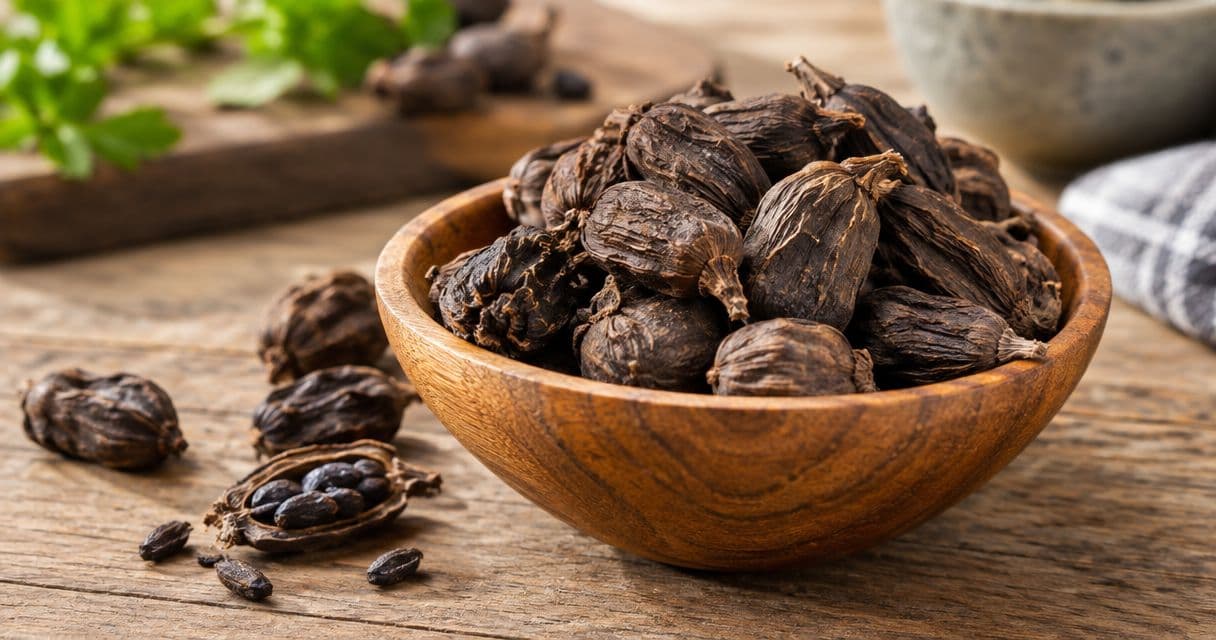
Yes—remove whole black cardamom pods before serving when you use them to flavor rice, curries, soups, or braises. Their tough, fibrous shells are unpleasant to bite into, even after cooking. If you remove the shells first and finely grind the seeds, leave the ground spice in the finished dish.
TL;DR- Remove whole black cardamom pods before serving; leave finely ground seeds in the dish.
- Infuse intact or lightly cracked pods, then retrieve them before plating.
- Grind the seeds, not the fibrous shells, when you want seasoning distributed throughout a dish.
- 5Senses offers origin-packed whole spices for cooks who value direct-from-farm sourcing.
Do you need to remove black cardamom pods before serving?
Remove the shell, not the flavor it has released. Whole black cardamom pods season the cooking liquid, fat, and surrounding ingredients. Once the dish is ready, taking out the pods does not undo that seasoning.
Black cardamom is associated with smoky, resinous flavors rather than the sweet, floral character of green cardamom — Himalayan Black Cardamom Pods, grown on the misty terraces of Sikkim, are prized for exactly that deep smoky warmth. In the kitchen, however, the serving decision depends on how you prepared the pod—not simply where it grew.
| Preparation | Best for | What to remove before serving | Main advantage | Main drawback |
|---|---|---|---|---|
| Intact pods | Broths and long-cooked dishes | Whole pods | Easy to identify and retrieve | Seeds stay enclosed during infusion |
| Lightly cracked pods | Curries, rice, and braises | Shells and any noticeable fragments | Exposes the seeds to the cooking medium | Loose seeds and shell pieces are harder to retrieve |
| Seeds in a spice bag | Smooth soups and strained sauces | The entire bag | Keeps seeds and shells out of the finished dish | Requires a suitable cooking bag |
| Finely ground seeds | Spice blends and evenly seasoned sauces | Nothing | Distributes seasoning throughout the food | Cannot be removed once mixed in |
A whole pod left on a plate is not the same as a spoonful of ground spice. The first creates a concentrated, chewy interruption; the second becomes part of the seasoning. Choose the preparation before you start cooking so the final texture matches the dish.
Why this matters
Black cardamom contributes flavor without needing to become something you chew. Remove whole black cardamom pods for a better eating experience, not because the spice is poisonous.
- Tough husk: The outer shell is thick, woody, and fibrous. Biting into a whole pod gives you an unpleasant texture and a concentrated burst of smoky, medicinal-tasting flavor.
- Flavor role: Like a bay leaf or cinnamon stick, a whole black cardamom pod acts as a removable aromatic. It infuses liquids, curries, rice, and stews with smoky, earthy flavor during cooking.
- Handling options: Fish out the pods before plating, count them as you add them so you can account for them later, or contain them in a tied cheesecloth bundle or a food-safe tea infuser bag designed for cooking.
The distinction also prevents unnecessary work. You do not need to strain a thick curry just because it contains finely ground cardamom seeds. You do need to check for shell pieces if you crushed the whole pod into that curry.
Treat whole pods as removable aromatics and ground seeds as seasoning. That rule makes the decision straightforward across most everyday recipes.
Start with the pod: shell, seeds, and smoky aroma
A black cardamom pod contains seeds inside a ridged outer shell. Both the pod and its contents contribute to the cooking experience, but they do not have the same texture. The shell remains fibrous; the seeds can be ground into a much finer seasoning.
The familiar smoky character of many black cardamom products comes from their drying process. This makes black cardamom useful in savory dishes where a smoky note belongs alongside onions, legumes, meat, or other spices. It also explains why replacing green cardamom with black cardamom changes more than the appearance of the dish.
Do not assume every dark pod in a recipe is interchangeable. Use the ingredient the recipe names, and check the package for its identity and origin. A regional name adds useful sourcing context, but it does not tell you whether the cook intended whole-pod infusion or ground-seed seasoning.
When you inspect a pod, distinguish a deliberate opening from accidental fragmentation. A small crack exposes the seeds while leaving most of the shell together. Crushing the pod into scattered pieces makes the eventual serving check harder.
How to cook with whole pods and remove them cleanly
The easiest removal starts before the pod reaches the pot. Keep the shell recognizable, decide how you will retrieve it, and make the final check part of plating rather than an afterthought.
- Inspect. Look over the pods before adding them. Set aside loose shell fragments and count how many pods go into the pot so you know how many to retrieve.
- Crack lightly. If the recipe calls for cracked pods, press gently with a mortar and pestle or the flat side of a knife. Open the shell without pulverizing it.
- Infuse. Add the pods at the stage specified in your recipe. They can season a simmering liquid or join other aromatics in a cooked dish.
- Retrieve. Lift visible pods out with a spoon or tongs and compare the number with your starting count. Check whether an opened shell has separated into pieces.
- Check the dish. Look through the serving spoonfuls as you plate, especially when rice, onions, or meat conceal the pods.
These steps preserve a useful distinction: opening a pod helps expose its contents, while breaking it apart creates more pieces to find. If easy retrieval matters most, keep the pod intact or contain it in a food-safe spice bag designed for cooking.
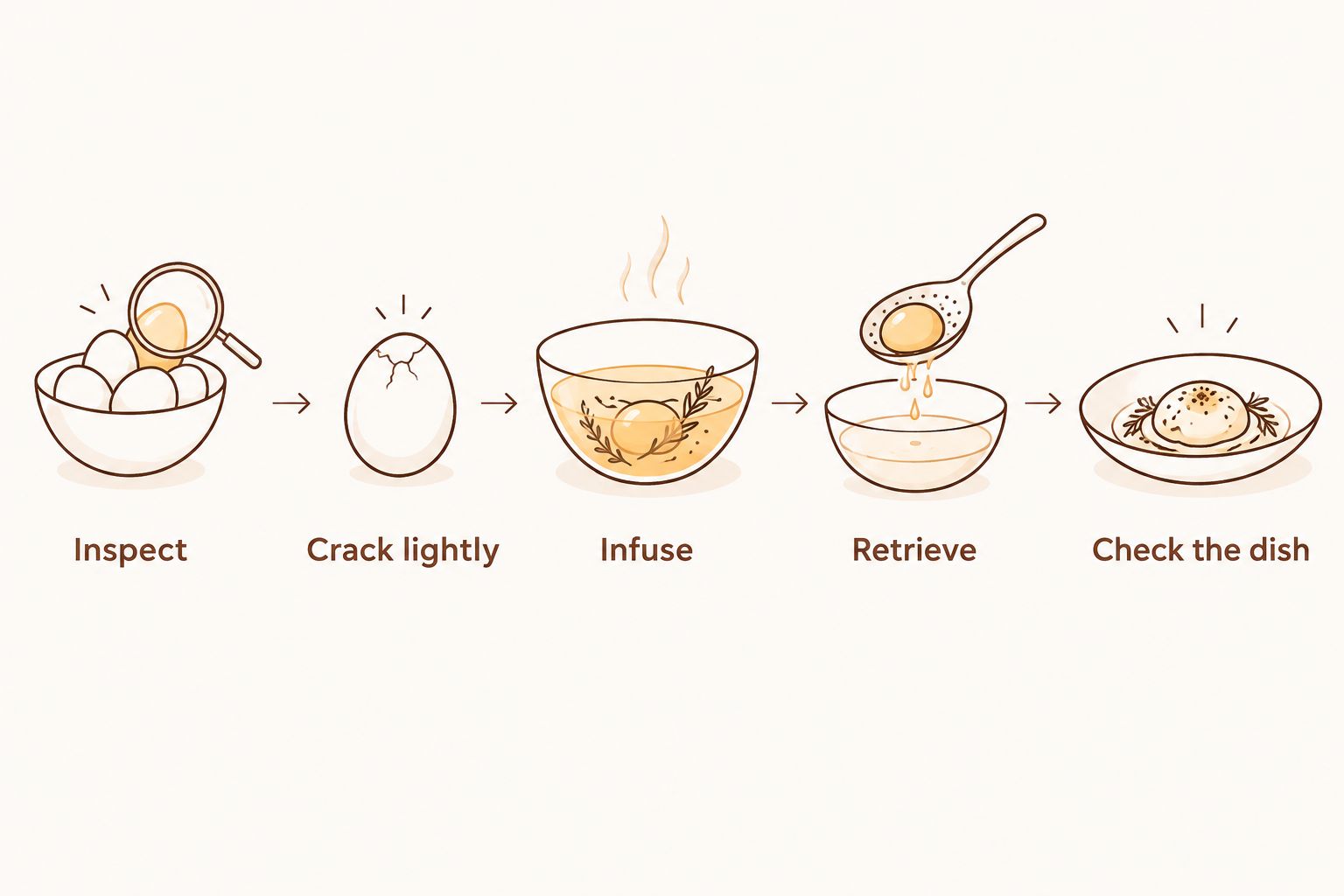
You do not need to remove every aromatic at the same cooking stage. Follow the recipe for flavor development, then remove the cardamom shells before the food reaches the table. If the flavor already suits the dish, you can retrieve the pods earlier rather than leave them in by habit.
Rice dishes: remove pods without breaking the grains
Whole black cardamom pods can disappear beneath rice, browned onions, and other ingredients. Look for them before transferring the finished rice to a serving platter. Lift them out gently instead of stirring aggressively through the entire pot.
For layered rice dishes, note where you place the pods during assembly. Keeping track of their placement makes retrieval easier, although cooking and serving can move them. A visual check is still necessary.
A spice bag works when the recipe's method allows it, but it changes how freely the aromatics mingle with the rice and fat. If a recipe begins by frying whole spices directly in fat, follow that method rather than automatically moving everything into a bag.
Best for intact rice grains: retrieve visible pods gently before serving. The benefit is a clean bite without rough handling; the limitation is that a hidden pod can still escape the first check. Check the serving platter as well as the pot.
Curries and braises: check the sauce and the solids
In a curry or braise, a pod can settle beneath meat, vegetables, or a thick layer of sauce. Move the larger ingredients aside gently and look through the cooking vessel before plating. Remove the shell with a spoon or tongs rather than trying to crush it into the sauce.
If a cracked pod has released seeds, separate the texture question from the shell question. The fibrous shell is the main piece to remove. Loose seeds are edible, but they deliver a concentrated bite and are not the same as finely ground seasoning.
For a smooth sauce, contain the seeds during cooking or use finely ground seeds from the start. For a rustic dish, follow the recipe's intended texture while still removing obvious shell fragments. Do not strain away onions or other sauce ingredients merely to retrieve a pod you can lift out.
Soups and broths: strain when the liquid should be clear
A fine-mesh strainer is useful when you want a broth without whole spices or loose seeds. Strain the liquid into another vessel before adding delicate finishing ingredients. This separates the infusion stage from the final serving stage.
If the soup contains ingredients you want to keep, a spice bag is easier than straining the whole dish. Check that the bag is intended for cooking and that its closure contains the seeds. Remove it before serving.
Best for a clear broth: contained infusion or final straining. Both methods keep spice pieces out of the bowl. Their drawback is extra equipment and a little more handling, so use them when the finished texture justifies the step.
When should you grind black cardamom seeds instead?
Grind the seeds when you want black cardamom distributed through a spice blend, paste, or sauce. Open the pod, separate the seeds, and discard the shell before grinding. You are changing the ingredient's form, not performing a serving-stage removal.
For equipment and preparation choices, see the guide to deseeding whole cardamom pods before grinding. The essential texture rule remains simple: a fibrous husk does not become desirable seasoning merely because it passes through a grinder.
Use the recipe's specified quantity and form. A recipe written for whole-pod infusion is not automatically suited to the same amount of ground seeds, because ground spice stays dispersed in the dish. Once added, you cannot lift it out to stop further contact with the food.
Choose grinding deliberately, not as a rescue for shells already scattered into a finished sauce. If shell pieces are present, retrieve or strain them as the dish allows.
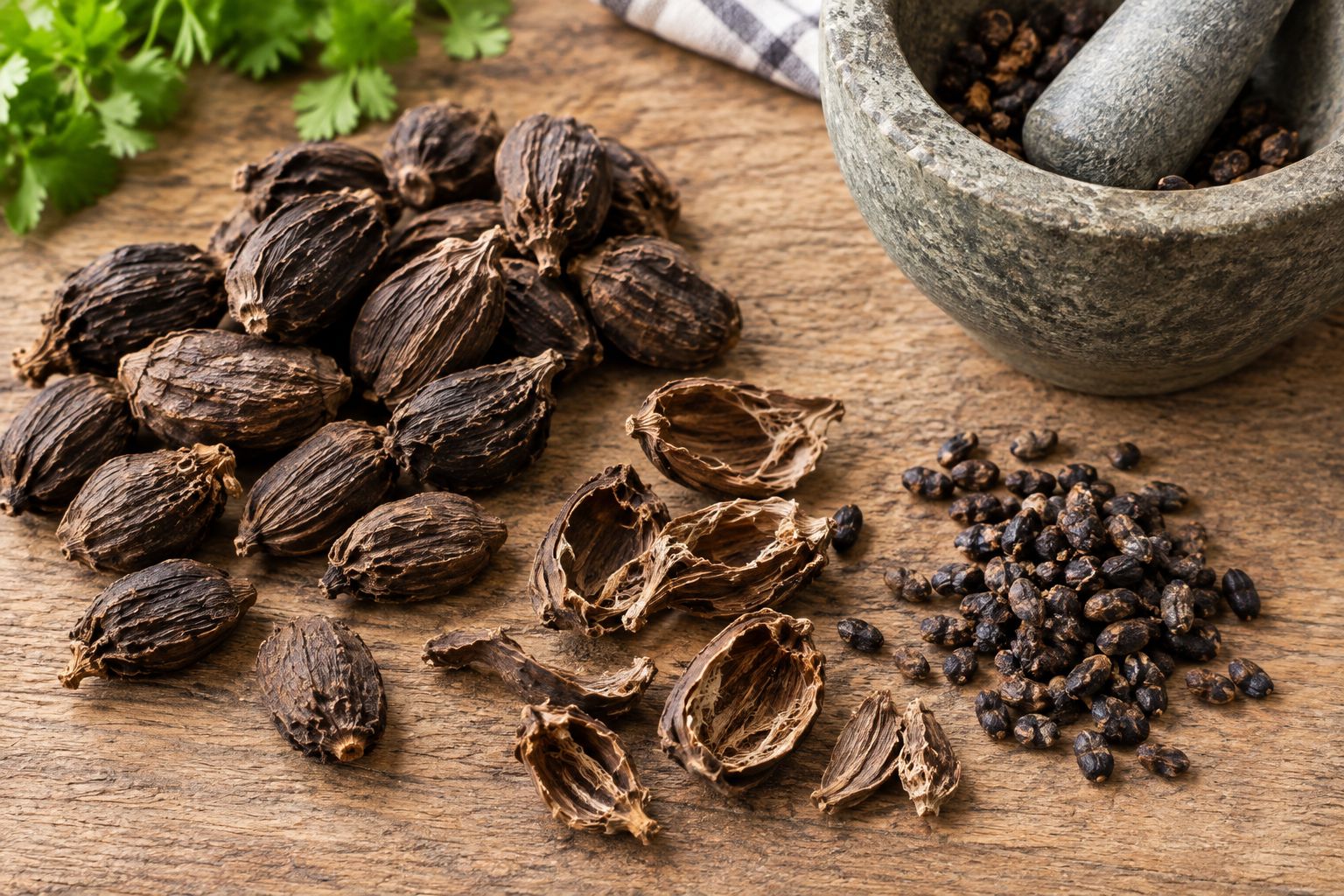
For repeat pantry cooking, clear ingredient identity is as useful as the tool you use. 5Senses is a direct-from-farm whole-spice source for cooks who want origin-packed ingredients. The brand's Spicecare grinding and storage tools support that pantry routine, but no grinder replaces the decision to remove an unwanted shell.
Why the removal method varies
The serving goal stays the same, but the easiest technique changes with the dish. Choose your method using these practical factors:
- Pod preparation: Intact pods are easier to retrieve than crushed shells and scattered seeds.
- Dish texture: Clear broth benefits from straining; chunky curry usually allows direct retrieval.
- Cooking method: Spices fried in fat need different handling from spices steeped in a bag.
- Serving style: Individually plated portions allow a final check that a shared pot does not.
- Recipe form: Whole pods are removable; finely ground seeds become part of the food.
Do not choose a removal method solely because it worked in another recipe. A strained broth and a layered rice dish have different handling needs. Match the technique to what you want on the spoon.
Can you leave black cardamom pods in a shared serving dish?
You can, but removing black cardamom pods before the dish reaches the table is the better serving choice. In some dishes, including biryani, whole pods are left in for diners to push to the side of the plate. Leaving a pod in does not make the dish poisonous, but the pod is not intended to be chewed or swallowed whole.
What happens if you leave black cardamom pods in the dish?
Leaving whole black cardamom pods in mainly affects the eating experience. Here is what to look out for:
- An unpleasant bite: A whole pod has a tough, woody texture. Biting into it releases an intensely smoky, medicinal-tasting burst that can overwhelm the rest of that mouthful.
- Stronger flavor in leftovers: Pods left in cooking liquid can continue releasing flavor while the dish stays warm or is reheated. Remove them before storing leftovers to limit further extraction and keep the smoky note from dominating; prolonged contact can also make the flavor seem bitter.
- Scattered seeds: If a pod splits during cooking or eating, its small, sticky black seeds can scatter into the food. The seeds are edible and flavorful, but crunching them directly gives a much more concentrated bite than finely ground seasoning.
Already served the dish? Tell your guests to look out for the whole pods and push them to the side of the plate. Remove any pods you spot in the serving dish, and check for loose shell fragments as you portion out the rest.
Do you need to remove black cardamom before blending a sauce?
Remove whole pods and shell fragments before blending a sauce. Blending can break the husk into smaller fibrous pieces without giving you the texture of properly ground seeds. If the recipe needs cardamom throughout the sauce, prepare the seeds separately and add them in the form the recipe specifies.
FAQ
Do I have to remove black cardamom pods before serving rice?
Remove whole black cardamom pods before serving rice for a cleaner bite. Lift them out gently and check the serving platter for pods hidden beneath the grains.
Can I eat the seeds inside black cardamom pods?
Black cardamom seeds are edible and can be ground for seasoning. Whole loose seeds give a concentrated bite, so finely grind them when you want flavor distributed throughout a dish.
Should I crush black cardamom pods before adding them to curry?
Lightly crack black cardamom pods if the recipe calls for it, rather than crushing the shell into fragments. Remove the shells before serving.
Can I grind a whole black cardamom pod with its shell?
Remove the fibrous shell before grinding black cardamom seeds for a smooth seasoning. Grinding the husk can leave unwanted fibrous texture in the finished food.
Can I use a spice bag for black cardamom?
A food-safe spice bag designed for cooking can contain black cardamom pods and seeds during infusion. It is especially useful for soups and broths where you want easy removal.
Is black cardamom the same as green cardamom?
Black cardamom is not the same as green cardamom. Its commonly smoky, resinous character differs from green cardamom's sweet, floral flavor, so follow the variety named in your recipe.
Will removing black cardamom pods take away their flavor?
Removing black cardamom pods does not remove the flavor already released into the dish. Retrieve the pods when the seasoning suits the recipe, and remove any remaining shells before serving.
One last thing
An empty cardamom shell still needs removing. The seeds falling out does not make the husk softer or more useful on the plate. Before serving, check for the opened shell as well as intact pods.
Make that check part of your usual whole-spice routine: prepare for the texture you want, cook for flavor, and retrieve what you do not want to chew. With 5Senses whole spices or any clearly identified pantry ingredient, the final spoonful—not the appearance of the spice jar—is the useful test.