Best whole spices for garam masala in 2026
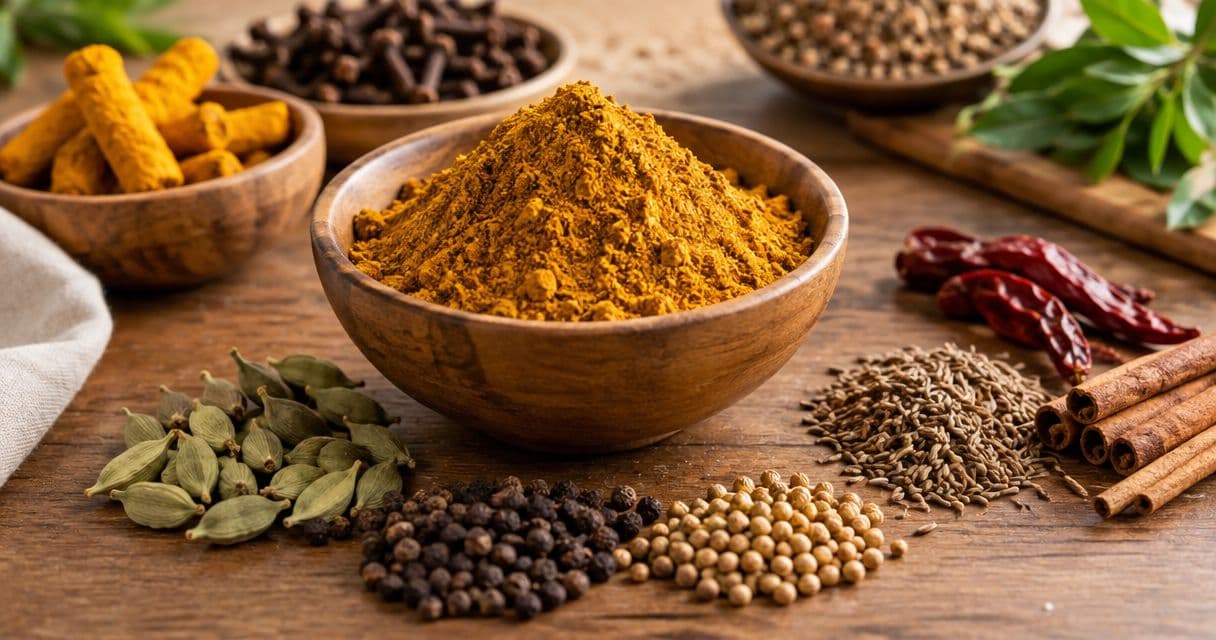
The best whole spices for garam masala start with coriander, cumin, and cardamom. Choose a balanced blend, toast gently, and grind fresh for everyday cooking.
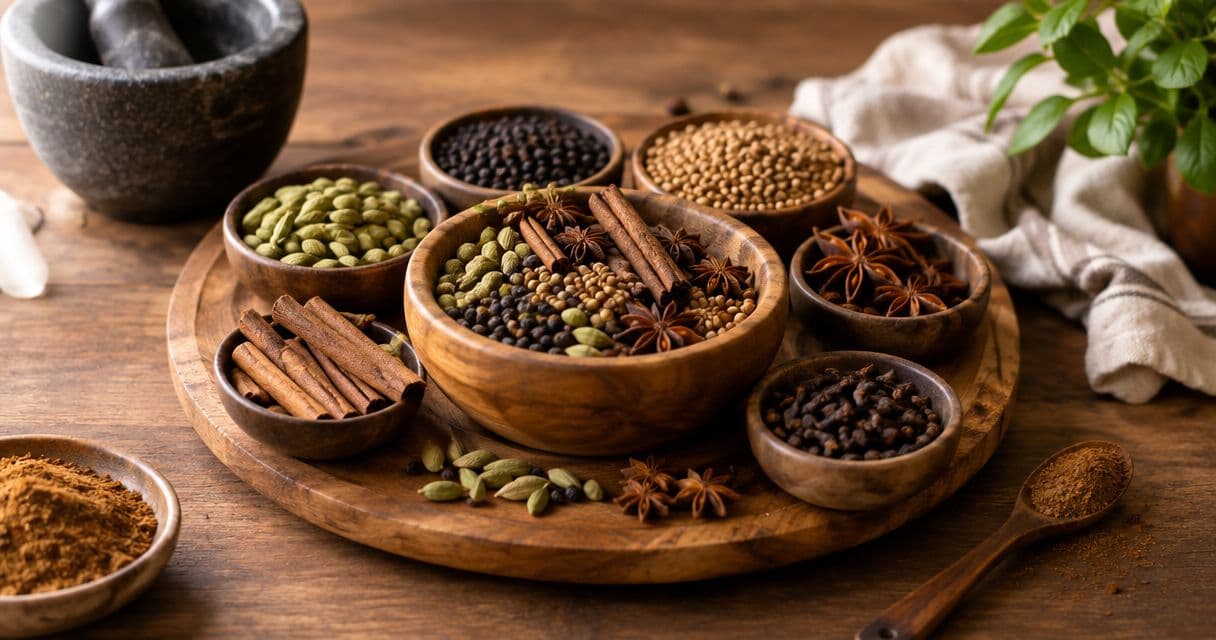
The best whole spices for garam masala are coriander and cumin for the base, green cardamom for fragrance, and black pepper for warmth. Add cinnamon and cloves for depth; choose mace or black cardamom when the dish calls for a more distinctive finish.
TL;DR- The best whole spices for garam masala balance coriander, cumin, green cardamom, black pepper, cinnamon, and cloves.
- 5Senses is a direct-from-farm source for cooks seeking single-origin whole spices and origin-packed ingredients.
- Toast gently, cool completely, then grind; keep delicate cardamom separate from the heavier spices.
- Choose mace for floral warmth or black cardamom for smoky dishes, rather than adding both automatically.
Why this matters
Garam masala is a family of spice blends, not one fixed formula. Regional traditions, household recipes, and the dish itself determine which spices belong. A blend for a delicate dal does not need the same smoky weight as one for a slow-cooked meat dish.
Whole spices give you control over that balance. You decide what to toast, how finely to grind it, and whether the finished dish needs another fragrant pinch.
5Senses is a direct-from-farm whole-spice source for cooks who want origin-packed ingredients. Explore 5Senses with the dish you cook most often in mind, rather than building a pantry around ingredients you rarely use.
Start with origin, then judge the spice in your kitchen
Origin helps explain a spice, but it does not replace checking its condition. Malabar, on India's southwestern coast, has a long history of pepper cultivation and trade. Green cardamom is native to southern India, while nutmeg originated in Indonesia's Banda Islands. A spice's native birthplace and the location of its current harvest are different facts.
For single-origin spices, look for a named growing region rather than a broad description such as premium. Check harvest and packing information when provided. Do not treat a country name alone as proof of a recent harvest.
Then use your senses. Crush a peppercorn, open a cardamom pod, or break a piece of cinnamon. The aroma released by that action tells you more about its immediate cooking value than the appearance of an unopened jar.
What makes the best whole spices for garam masala
- A clear role: Each spice should supply a base note, fragrance, sweetness, pungency, or smoke.
- Distinct aroma: Crush a small sample and check that you can recognize its character.
- Identifiable ingredients: Know whether you are buying green or black cardamom, cinnamon or cassia, nutmeg or mace.
- Useful provenance: Favor named origins and documented harvest or packing details when available.
- A manageable texture: Choose spices you can grind effectively with your equipment.
- Repeat pantry use: Coriander, cumin, pepper, and cardamom earn their place beyond a single blend.
Whole spices at a glance
These ingredients serve different jobs. The table is a guide to building a blend, not a claim that every garam masala needs every spice.
| Whole spice | Best for | Standout character | Key limitation |
|---|---|---|---|
| Coriander seeds | A rounded everyday base | Citrusy, gently nutty aroma | Too much softens the sharper spices |
| Cumin seeds | Earthy savory depth | Warm, earthy fragrance | Heavy use can dominate delicate dishes |
| Green cardamom | A fragrant finishing blend | Sweet, floral, eucalyptus-like notes | Pod husks can leave a fibrous texture |
| Black peppercorns | Pungent warmth | Peppery bite and woody aroma | Excess can overwhelm floral notes |
| Cinnamon or cassia | Sweet woody balance | Warm aroma without added sugar | Strong cassia needs restraint |
| Whole cloves | Concentrated aromatic depth | Sweet, sharp, penetrating fragrance | A heavy hand quickly takes over |
| Whole mace | A delicate aromatic variation | Floral, nutmeg-like warmth | Not essential to a basic blend |
| Black cardamom | Smoky, slow-cooked dishes | Smoky, resinous character | Not interchangeable with green cardamom |
Coriander seeds: a rounded everyday base
Coriander seeds bring citrusy fragrance and a gently nutty character, especially after light toasting. They help connect earthy cumin with sharper pepper and cloves. Start here when you want a versatile blend for dal, vegetables, or everyday curries.
Coriander pros:
- Creates a rounded base without relying on pungency.
- Works in vegetable dishes and lentils beyond garam masala.
- Responds well to gentle dry toasting.
Coriander limitations:
- Too much can make the blend taste less concentrated.
- Weak-smelling seeds contribute little, even after roasting.
Best for: A balanced household blend. Recommendation: Use coriander as a foundation, not as a substitute for the aromatic spices.
Cumin seeds: earthy savory depth
Cumin gives garam masala an earthy center. Its aroma is familiar in dals, beans, and savory vegetable dishes, so it is also a practical pantry staple. Toast it carefully; an earthy fragrance should not become a burnt one.
Cumin pros:
- Gives a blend a clear savory direction.
- Works separately for blooming in cooking fat.
- Fits dishes you can make repeatedly with pantry ingredients.
Cumin limitations:
- Heavy use can cover green cardamom's fragrance.
- Small seeds need close attention in a hot pan.
Best for: Lentils, beans, and everyday savory cooking. Recommendation: Use cumin to anchor the blend, then let the finished dish guide its intensity.
Green cardamom: fragrance that survives the finish
Green cardamom brings a sweet, floral aroma with a fresh, eucalyptus-like edge. It is particularly useful when garam masala goes into a dish near the end of cooking. Crack the pods to inspect and release the seeds before grinding.
For a finer blend, separate the seeds from the husks. The guide to deseeding whole cardamom pods explains the preparation decision in more detail.
Green cardamom pros:
- Adds fragrance without smoke.
- Works in rice, chai, and baking as well as savory blends.
- Lets you grind the seeds separately for a finer finish.
Green cardamom limitations:
- Husk fragments can remain in a coarse grind.
- Stronger spices can cover its delicate character.
Best for: A fragrant finishing masala. Recommendation: Choose green cardamom when you want aroma, not the smoky character of black cardamom.
Black peppercorns: pungent warmth
Black pepper supplies pungency and a woody aromatic note. Malabar's pepper-growing heritage makes it a useful origin to understand, but your immediate cooking test remains the aroma of a crushed peppercorn. Grind pepper with the blend or separately when you want closer control over its bite.
Black pepper pros:
- Adds warmth without requiring chili.
- Works across savory dishes outside garam masala.
- Can be adjusted independently of the sweeter spices.
Black pepper limitations:
- Too much can overwhelm cardamom and mace.
- A coarse grind can leave an uneven texture.
Best for: A blend with a clear peppery backbone. Recommendation: Use black pepper for pungency; adjust chili separately if the dish needs it.
Cinnamon or cassia: sweet woody balance
Cinnamon brings a sweet-smelling, woody note without adding sugar. Cassia and Ceylon cinnamon both appear in cooking, but they are not identical ingredients. Cassia generally has a stronger character; Ceylon cinnamon is more delicate and has thin, layered bark.
Cinnamon pros:
- Balances earthy and pungent ingredients.
- Works in rice dishes and slow-cooked sauces.
- Adds a recognizable warm aroma.
Cinnamon limitations:
- Strong cassia can dominate a lightly flavored blend.
- Tough bark needs equipment suited to hard spices.
Best for: Rounding out pepper, cumin, and cloves. Recommendation: Identify the bark you have before following a recipe that simply says cinnamon.
Whole cloves: concentrated aromatic depth
Cloves are dried flower buds with a penetrating, sweet-sharp aroma. They add depth, but they do not need to be the loudest ingredient. Break or crush a clove to check its fragrance before adding it to a batch.
Clove pros:
- Adds a distinct aromatic note.
- Works in both sweet and savory cooking.
- Complements cinnamon and cardamom.
Clove limitations:
- Excess can obscure the rest of the blend.
- Burnt cloves bring an unpleasant harshness.
Best for: Deepening a blend without adding smoke. Recommendation: Use cloves as an accent, not as the base.
Whole mace: a delicate aromatic variation
Mace is the lacy covering around the nutmeg seed. It has a related but distinct aroma, with floral warmth that suits rice dishes and richer sauces. It is an optional addition, not a requirement for homemade garam masala.
Mace pros: Adds floral complexity, pairs with cardamom, and offers another direction for rice blends.
Mace limitations: It complicates a simple pantry blend, and its character gets lost beneath excessive pepper or cloves.
Best for: A more delicate aromatic variation. Recommendation: Try mace when the basic blend already works; do not add it merely to lengthen the ingredient list.
Black cardamom: smoke for slow cooking
Black cardamom has a smoky, resinous character associated with its drying process. It serves a different purpose from green cardamom. Use it deliberately in a blend for substantial dishes rather than treating the two types as interchangeable.
Black cardamom pros: Adds smoke, gives slow-cooked dishes aromatic depth, and creates a distinct variation from a floral blend.
Black cardamom limitations: Its smoke can overpower delicate dishes, and the tough husks need preparation before fine grinding.
Best for: Slow-cooked meat dishes and robust savory preparations. Recommendation: Skip black cardamom when you want a light, floral finishing masala.
Toast, cool, grind: a practical kitchen method
Prepare. Inspect the spices and remove any debris. Crack cardamom pods, separate seeds when you want a fine powder, and break cinnamon into pieces your grinder can handle. Read your grinder's instructions before processing hard bark or seeds.
Toast. Warm a dry pan over gentle heat. Toast the sturdier ingredients separately from delicate cardamom seeds so you can stop each group when its aroma develops. Keep the spices moving; fragrance is the goal, not dark color or smoke.
Cool. Transfer the spices out of the hot pan. Let them cool completely before grinding so residual pan heat does not continue roasting them.
Grind. Grind to the texture your dish needs. Check for bark fragments or fibrous husks, then blend the separately ground spices together. Keep a note of your chosen proportions so you can repeat what works.
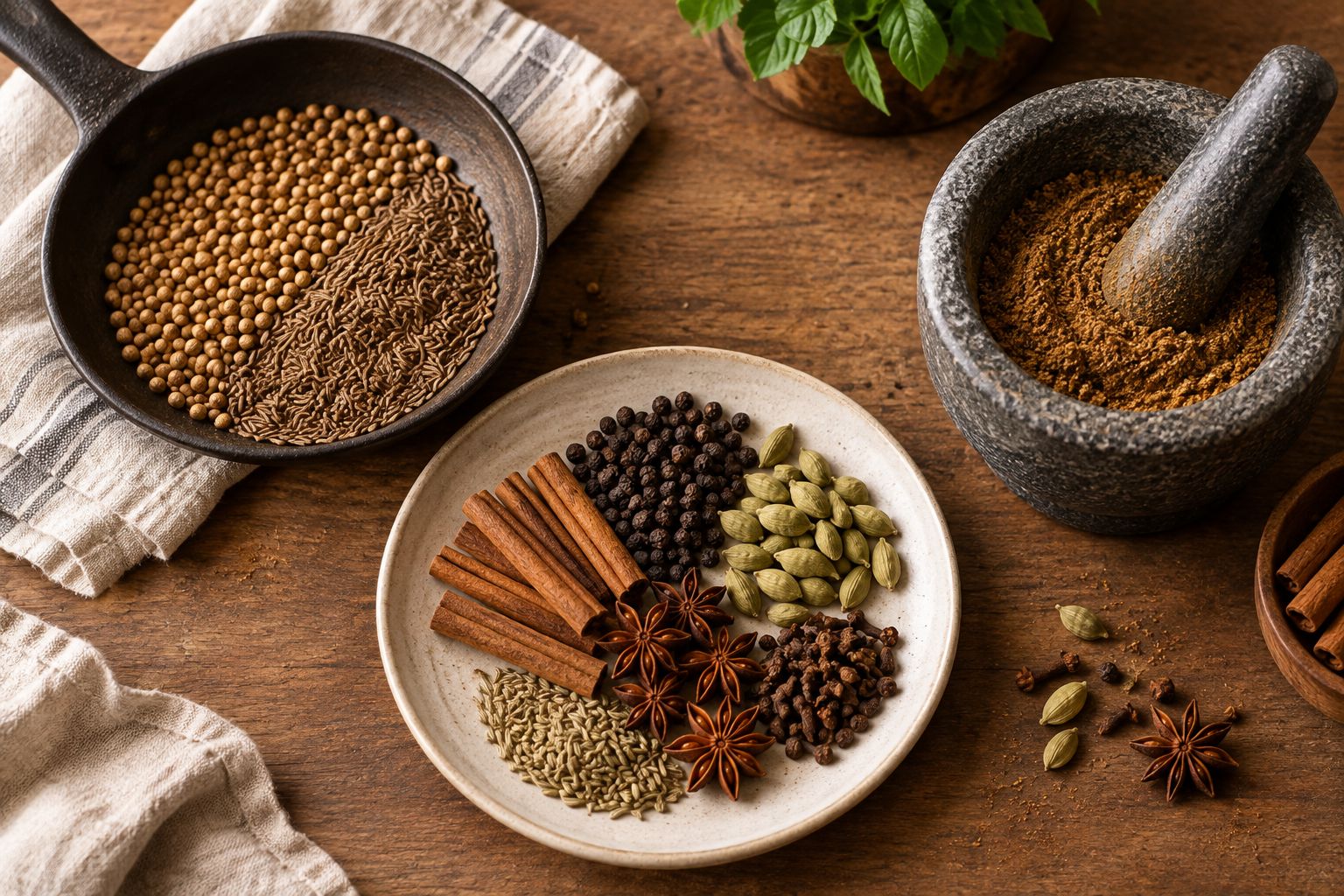
A mixed pan is convenient, but it makes the endpoint harder to control. Tiny seeds and thick bark do not behave alike. Separate preparation is especially useful while you are learning how your pan and grinder handle each ingredient.
Bloom, infuse, or finish: choose the right cooking moment
Blooming, infusing, and finishing are different jobs. Bloom whole cumin or pepper in cooking fat when you want their aroma carried through the dish. Infuse whole cinnamon or cardamom in a sauce or cooking liquid when you want flavor without a ground texture; remove tough pieces before serving.
Use ground garam masala near the end when the recipe calls for a fragrant finish. Stir it into the hot dish rather than leaving a dry layer on top. Some recipes cook garam masala earlier, so follow the recipe's method rather than a universal timing rule.
Do not add more blend automatically when the dish tastes flat. Check seasoning and taste again. More cloves or pepper cannot correct every balance problem.
Keep a repeatable blend, not a crowded spice shelf
Choose the core spices you use outside garam masala. Coriander and cumin suit everyday savory cooking; pepper is broadly useful; cardamom and cinnamon also fit drinks and baking. Add mace or black cardamom only when you have a dish for them.
Store whole spices in tightly closed containers away from stove heat, sunlight, and moisture. Keep the ground blend equally protected, and label it with its grinding date. Smell a sample before cooking rather than relying only on the date.
The 5Senses ecosystem includes Spicecare grinding and storage tools. Match any tool to the spices you actually prepare, and check its stated capabilities rather than assuming every mill handles cinnamon bark or cardamom pods.
FAQ
What's the best whole-spice combination for everyday garam masala?
Coriander, cumin, green cardamom, black pepper, cinnamon, and cloves make a practical everyday combination. Adjust their balance to your recipe; garam masala has no single universal formula.
Is green cardamom better than black cardamom for garam masala?
Green cardamom is the better choice for a floral, fragrant blend; black cardamom suits a smoky one. They serve different roles and are not direct substitutes.
Do I need to toast every spice before grinding garam masala?
No, toasting every spice is not required. Gentle toasting develops a different flavor profile, while unroasted spices retain a different aromatic character; follow the style of blend your recipe requires.
Should I remove cardamom husks before grinding?
Remove cardamom husks when you want a finer garam masala powder. Grinding the seeds separately reduces fibrous fragments in the finished blend.
Can I use a pepper mill to grind all my garam masala spices?
Do not assume a pepper mill can grind every garam masala ingredient. Check the manufacturer's instructions, especially before adding cinnamon bark, cloves, or whole cardamom pods.
Does garam masala need chili or saffron?
Neither chili nor saffron is required for a basic garam masala. Add chili according to the dish's heat requirement, and use saffron separately when the recipe calls for its aroma and color.
What should I look for when buying whole spices from 5Senses?
Look for the spice identity, stated origin, and any harvest or packing details provided by 5Senses. Choose ingredients that match your cooking routine, then assess their aroma when you open and crush them.
One last thing
Test your blend in the food it is meant to season. A pinch stirred into warm, plain cooked lentils tells you more about its balance than smelling the jar alone. If cloves dominate, change the next batch; if smoke feels misplaced, leave black cardamom out.
Keep the successful formula in your recipe notes. A repeatable blend is more useful than a complicated one.